

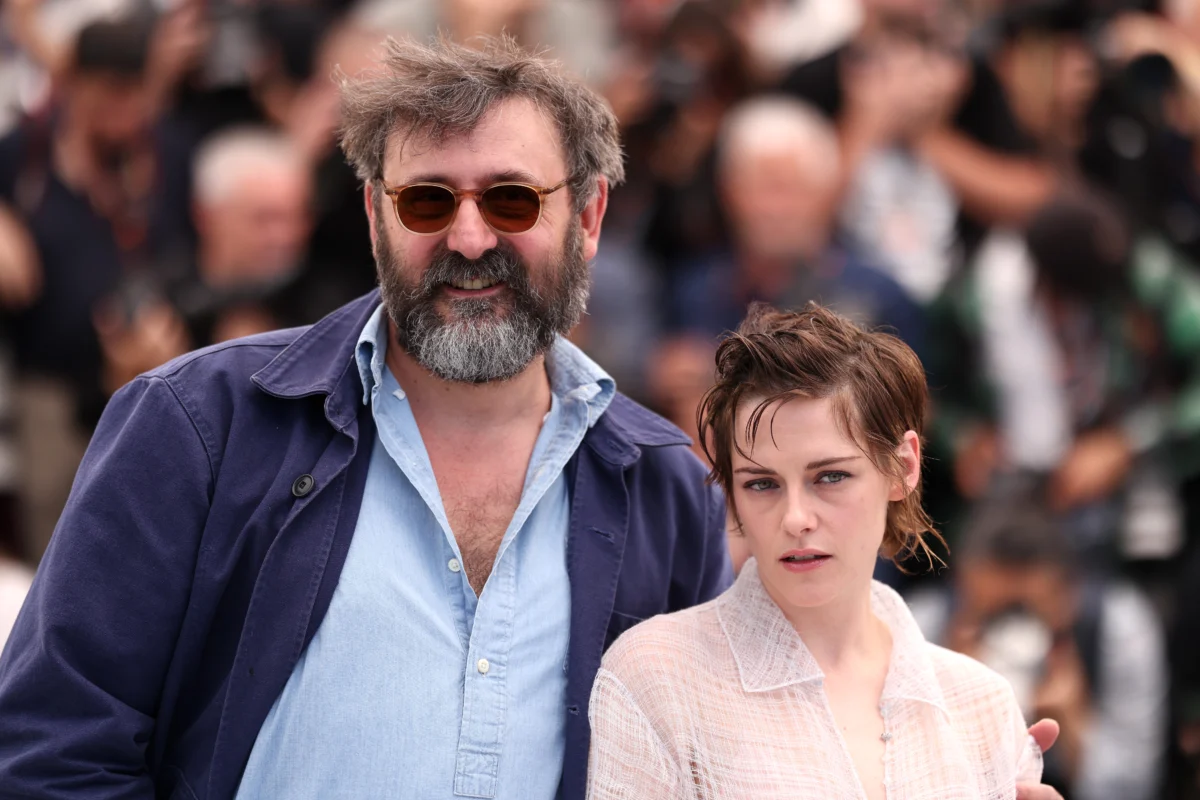
The Palais des Festivals in Cannes is no stranger to high-wattage celebrity, but the atmosphere on Tuesday night carried a distinctively raucous energy. As the clock struck midnight, the theater filled with a rowdy, anticipatory crowd eager to witness the latest collaboration between French auteur Quentin Dupieux and two of Hollywood’s most compelling performers: Kristen Stewart and Woody Harrelson. The film, an absurdist father-daughter odyssey titled Full Phil, arrived at the festival with significant anticipation, promising a collision between American star power and the unpredictable, dadaist sensibilities of the French filmmaker.
The Premise: A Surreal Parisian Odyssey
At its core, Full Phil is a narrative of strained familial bonds filtered through a lens of total absurdity. Stewart and Harrelson portray an estranged father-daughter duo who travel to the heart of Paris, ostensibly to mend their fractured relationship. However, in true Dupieux fashion, the emotional stakes are derailed by a series of bizarre, non-sequitur interventions.
The plot weaves through a chaotic itinerary that includes the unexpected obstacles of French fine dining, the haunting presence of a 1950s horror film, and the meddlesome antics of a hotel employee who seems to exist outside the bounds of traditional reality. Beyond the central duo, the ensemble cast—a formidable mix of international talent—features Charlotte Le Bon, Emma Mackey (fresh off the success of the French box-office hit Ella McCay), Tim Heidecker, and Eric Wareheim.
A Night of High Energy and Mixed Reactions
The screening was characterized by a palpable sense of occasion. Before the first frame flickered onto the screen, the cast and crew received a thunderous ovation from a sold-out house. The midnight audience, traditionally one of the festival’s most unfiltered and enthusiastic demographics, was primed for the peculiar humor that has become the hallmark of Dupieux’s filmography.
Yet, as the film unfolded, the reception became notably nuanced. While the theater was punctuated by bursts of genuine, startled laughter, the film’s surrealist logic seemed to struggle to sustain the momentum required for a feature-length runtime. Upon the appearance of the end credits, the applause was polite—a stark contrast to the fervor that greeted the film’s arrival.
However, once the house lights illuminated the theater, the mood shifted. As the cast stood to acknowledge the crowd, the audience rose in a standing ovation that felt less like an endorsement of the film’s narrative arc and more like a celebration of the performers themselves. Kristen Stewart, recognizing the room’s energy, leaned into the moment with characteristic playfulness. She waved to the balcony, pulled faces for the cameras, and performed a small, infectious dance, repeatedly attempting to redirect the spotlight toward her co-stars and director. It was a masterclass in celebrity navigation, ensuring the night remained a triumph of charisma even when the cinematic material wavered.
A Chronology of Artistic Ambition
Quentin Dupieux’s return to Cannes is a significant event in itself. His 2024 feature, The Second Act, served as the opening film for the festival, cementing his status as a permanent fixture of the Croisette. Dupieux has cultivated a unique career trajectory, balancing his identity as a prolific French musician with a singular vision for film that defies traditional genre constraints.
For Kristen Stewart, the premiere marked another chapter in her ongoing relationship with the festival. Last year, she made a profound impression on the Croisette with her directorial debut, The Chronology of Water. Starring Imogen Poots as a swimmer grappling with the complexities of addiction, the film earned widespread critical acclaim and solidified Stewart’s reputation as a filmmaker with a distinct, uncompromising eye. Her participation in Full Phil highlights her commitment to working with directors who challenge the status quo, even when the results are unconventional.
Behind the Scenes: The "Mastermind" Approach
In an exclusive interview with Variety, Stewart expressed an almost fervent desire to collaborate with Dupieux, citing his unique production style as the primary draw.
"I love his movies," Stewart noted. "They just don’t look or feel like anyone else’s, and those are the types of directors that actors are so lucky to be able to follow."
Stewart’s admiration extends beyond the finished product; it is rooted in the practical, "DIY" methodology that Dupieux employs. Unlike the sprawling, multi-unit productions typical of major studio films, Dupieux’s sets are intimate and intensely focused.
"He holds the camera at all times," Stewart explained. "You are with him, connected completely. He knows how he’s going to edit it by the end of the day. If he’s missing a shot, he gets it. He’s beyond an auteur; he’s like a mastermind."
This hands-on approach creates an environment where the actor is never far from the director’s vision. For performers like Stewart and Harrelson, who are accustomed to the detached nature of high-budget filmmaking, Dupieux’s method offers a rare, visceral connection to the creative process. It is this synergy that likely drove them to sign onto a project as inherently bizarre as Full Phil.
Implications for the Festival Circuit
The lukewarm reception of Full Phil—juxtaposed against the high-energy response to the cast—highlights a recurring theme in contemporary film criticism: the tension between "auteur" projects and audience expectations. When a film relies heavily on surrealist, non-linear humor, it often creates a polarizing experience.
For the Cannes Film Festival, Full Phil represents the inherent risk of its midnight section. These slots are designed for experimentation and genre-bending works, but they also serve as a barometer for whether a director’s idiosyncratic vision can translate to a wider, albeit still cinephile, audience. While the film may not go down as a critical masterpiece in the vein of some of the festival’s more traditional heavy hitters, it nonetheless underscores the value of the "star as auteur-collaborator."
The presence of Stewart and Harrelson elevated a potentially niche project into a global news event. Their ability to command the room, even in the wake of a film that left some audience members puzzled, speaks to the enduring power of the movie star in an era dominated by franchise IP.
Looking Ahead: The Future of the Collaboration
As the dust settles on the Full Phil premiere, the industry will be watching to see how the film performs in a general release setting. Dupieux’s work often finds a more appreciative audience in the home-viewing market, where the surreal pacing can be digested without the pressure of a live festival crowd.
For Stewart, the project serves as further evidence of her post-superstardom pivot toward challenging, character-driven work. By aligning herself with a director like Dupieux, she is signaling that her career interests lie in creative risk-taking rather than box-office safety.
Ultimately, the premiere of Full Phil was a reminder that cinema at Cannes is rarely just about the film itself. It is a performance of industry, a celebration of craft, and a social ritual. Whether the film stands the test of time or remains a footnote in the careers of its stars, the sight of Stewart dancing on the Palais stage remains a definitive image of the festival—a moment where the absurd, the professional, and the personal converged to create an unforgettable night on the French Riviera.
The industry will undoubtedly continue to dissect the "Dupieux phenomenon," as filmmakers like him push the boundaries of what is acceptable—or even understandable—in narrative cinema. Whether he is a genius of the avant-garde or a provocateur of the nonsensical, the presence of actors like Stewart and Harrelson ensures that he will continue to have a platform to explore his visions, however strange they may be.











No comments yet. Be the first to join the conversation!