

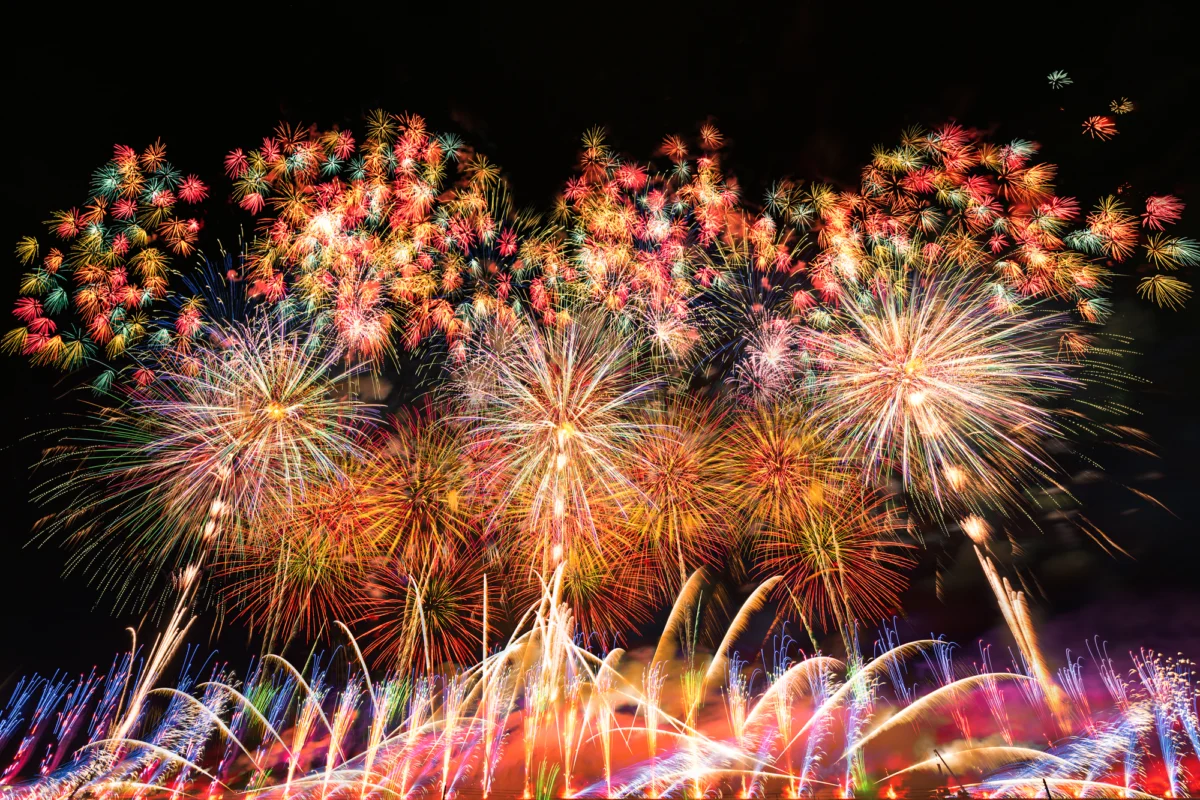
In Japan, the arrival of July is heralded not just by the sweltering heat, but by a distinct, rhythmic anticipation. As the mercury rises, the nation’s riversides, bridge spans, and seawalls begin to teem with life. Thousands of people, many draped in the traditional, lightweight cotton yukata and clutching folding fans, gather in the humid twilight. They are waiting for a sound that defines the Japanese summer: the sharp, thunderous boom of a firework shell detonating high above, followed by the collective gasp of a crowd as the sky blossoms into a kaleidoscope of light.
This is the hanabi taikai—the grand fireworks festival. These events are far more than simple neighborhood displays; they are massive cultural pillars, with premier festivals routinely drawing audiences ranging from 700,000 to over a million spectators. For millions of Japanese citizens, the hanabi taikai is the singular event that encapsulates the spirit of summer.
The Origins: A History Forged in Myth and Fire
The true genesis of the modern hanabi taikai is a subject of historical debate, shrouded in the layers of legend and fragmented record-keeping. The most pervasive origin story points to 1732. During that era, Edo (modern-day Tokyo) was ravaged by a brutal combination of famine and a cholera epidemic, leading to a catastrophic loss of life. According to folklore, the Shogun Tokugawa Yoshimune authorized a massive display of fireworks along the Sumida River as part of a Buddhist memorial service known as kawasegaki, intended to mourn the departed and provide spiritual solace to the living.
However, historians often temper this romanticized narrative with a colder reality. Records indicate that a major cholera outbreak did not actually strike Edo until nearly a century later. Because of this chronological discrepancy, the exact birth of the festival remains elusive.
What is indisputably documented is that the history of pyrotechnics in Japan predates the Edo period significantly. The oldest known record of fireworks in the Japanese archipelago dates back to 1447, when a foreign visitor reportedly staged a small display at a Buddhist temple. By the late 1500s, the practice had trickled down into the upper echelons of society. Renowned Sengoku-era warlords, including the legendary Date Masamune, were known to have taken great delight in these early, rudimentary pyrotechnic performances.
Chronology of the Craft: From Rivalry to Modern Spectacle
By the late Edo period, fireworks had moved from the private entertainment of the elite to a public obsession. The industry was defined by the fierce, high-stakes rivalry between two legendary pyrotechnic families: Kagiya and Tamaya.
The Battle of the Bridges
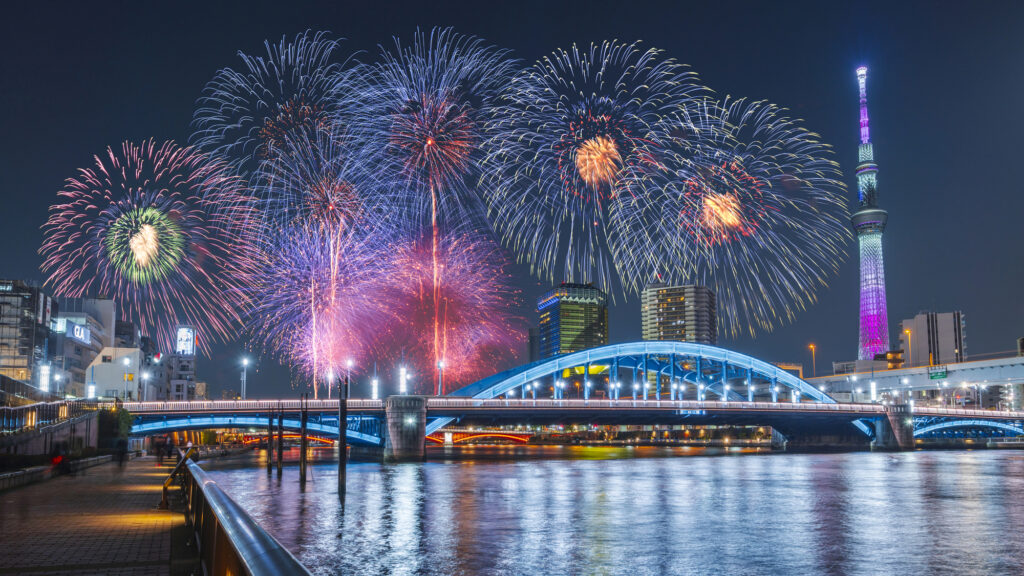
These two houses effectively split the Sumida River between them. Kagiya managed the fireworks downstream from the Ryōgoku Bridge, while Tamaya took the upstream position. As the years progressed, the two families engaged in a competitive arms race, each striving to outdo the other with increasingly elaborate shells, complex colors, and synchronized patterns.
The rivalry became so ingrained in the public consciousness that spectators would loudly chant "Tamaya!" or "Kagiya!" to signal their support for their preferred house. While the term "Tamaya" has largely faded from common usage, the spirit of this competitive showmanship survives in the way modern festivals are curated today. The Kagiya lineage, remarkably, has survived the centuries, evolving into a contemporary professional fireworks company.
The Mid-Century Hiatus
The trajectory of the hanabi taikai was not linear. The festivals faced significant interruptions as the 20th century dawned. Following the onset of global hostilities, the Sumida River displays were suspended in 1938, as Japan shifted its resources toward the war effort. It was not until 1948, in the immediate post-war reconstruction period, that the tradition was resurrected.
Yet, even in the era of rapid economic growth, the festivals were not guaranteed. By 1962, the rise of industrial pollution in the rivers, the choking traffic congestion of a modernizing Tokyo, and the increasing density of urban development forced another suspension of the Sumida events. It was not until 1978 that the Sumidagawa Hanabi Taikai made its official, triumphant return. Today, it stands as one of the most significant events in the Japanese cultural calendar, drawing nearly a million people to the city’s heart on the final Saturday of July.
The "Big Three": A Study in Pyrotechnic Excellence
While Tokyo’s festivals are the most famous, the heart of Japan’s fireworks culture is spread across the nation. There is a consensus among enthusiasts regarding the "Big Three" fireworks festivals, each offering a unique philosophy of display:
- Ōmagari Hanabi (Akita): Held on the final Saturday of August, this is widely considered the most prestigious. It is less a festival and more a national championship. Pyrotechnicians from across Japan gather to compete for the Prime Minister’s Cup, with strict judging criteria regarding symmetry, color, and technical execution.
- Tsuchiura All Japan Fireworks Competition (Ibaraki): Eschewing the summer heat, this competition occurs in autumn. It is defined by its focus on technical precision and quality over volume. It is widely regarded by connoisseurs as the best place to witness the cutting edge of Japanese pyrotechnic innovation.
- Nagaoka Matsuri (Niigata): Held in early August, this festival is deeply emotional. Its primary purpose is to serve as a memorial. Most notably, the "Phoenix" fireworks are a massive, mile-wide sequence created as a prayer for recovery following the 2004 Chuetsu earthquakes and as a tribute to those lost in the 1945 air raids.
Specialized Traditions: Beyond the Aerial Boom
While the "Big Three" focus on the sky, a distinct subset of hanabi culture focuses on the water. Suichū hanabi (underwater fireworks) offer a radically different experience. Because these shells are designed to detonate at or just beneath the surface of the water, they produce a horizontal explosion of light that creates a shimmering, mirror-like effect.
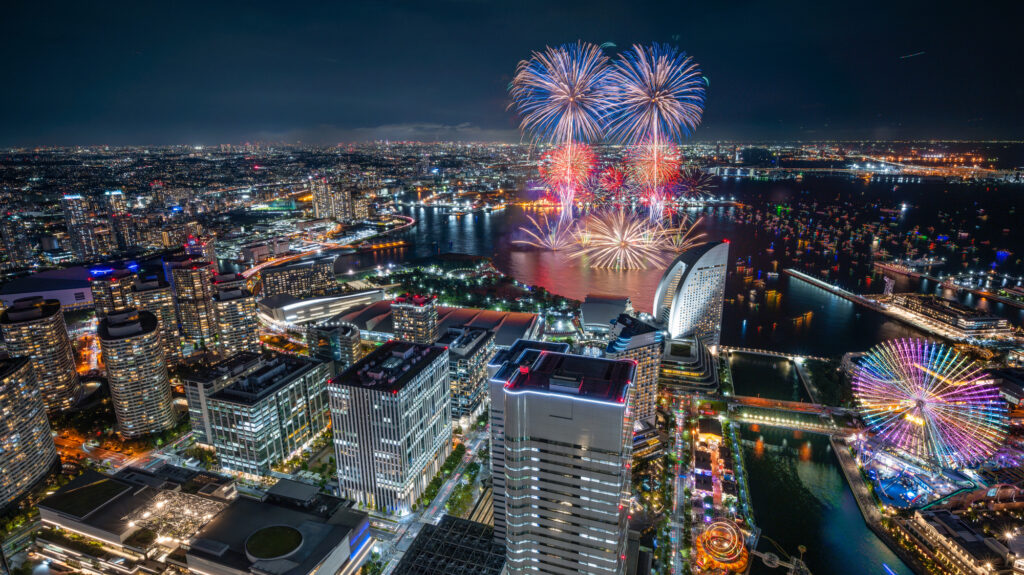
The Itsukushima Underwater Fireworks Festival in Hiroshima is the quintessential example. Here, the fireworks detonate in the sea, framing the iconic, floating torii gate of Itsukushima Shrine in a silhouette of brilliant light. For those seeking alternatives to the crushing crowds of urban festivals, these water-based displays offer a more serene, aesthetic, and intimate experience.
Official Responses and Safety Implications
The sheer scale of these festivals presents significant logistical and safety challenges. Municipal governments and local police forces invest heavily in crowd management. In recent years, there has been an increasing emphasis on "ticketed zones" and designated viewing areas to prevent the dangerous overcrowding that plagued festivals in the mid-20th century.
Public safety officials often remind attendees of the "Sardine Rule"—the necessity of arriving early to secure a space, as movement becomes impossible once the density hits a critical threshold. Furthermore, strict environmental regulations now govern the aftermath of these events. Modern organizers work closely with local environmental agencies to ensure that debris from the shells is retrieved from the rivers and bays, ensuring that the festivals of today do not contribute to the ecological degradation that caused the shutdowns of the 1960s.
The Cultural Implications: Why We Watch
The hanabi taikai is more than a display of chemistry and light; it is a manifestation of the Japanese concept of mono no aware—the pathos of things, or the beauty in the impermanence of life. A firework is the ultimate ephemeral object: it takes hours of meticulous labor to construct and moments of intense beauty to display, only to vanish into smoke seconds later.
By participating in these festivals, visitors are not merely watching a show; they are engaging in a centuries-old ritual of shared joy and collective memory. Whether it is the competitive precision of Akita, the somber reflection of Niigata, or the quiet beauty of a lakeside water display, the hanabi taikai remains the beating heart of the Japanese summer.
For the modern traveler, these festivals provide a rare, unmediated window into the communal life of Japan. To stand on a crowded bridge, surrounded by the murmur of a hundred thousand voices as the first shell tears through the night air, is to understand why this tradition has survived wars, fires, and the march of modernization. It is a reminder that even in a world of high technology, there is still a deep, human need for the simple, shared wonder of fire and light.












No comments yet. Be the first to join the conversation!