

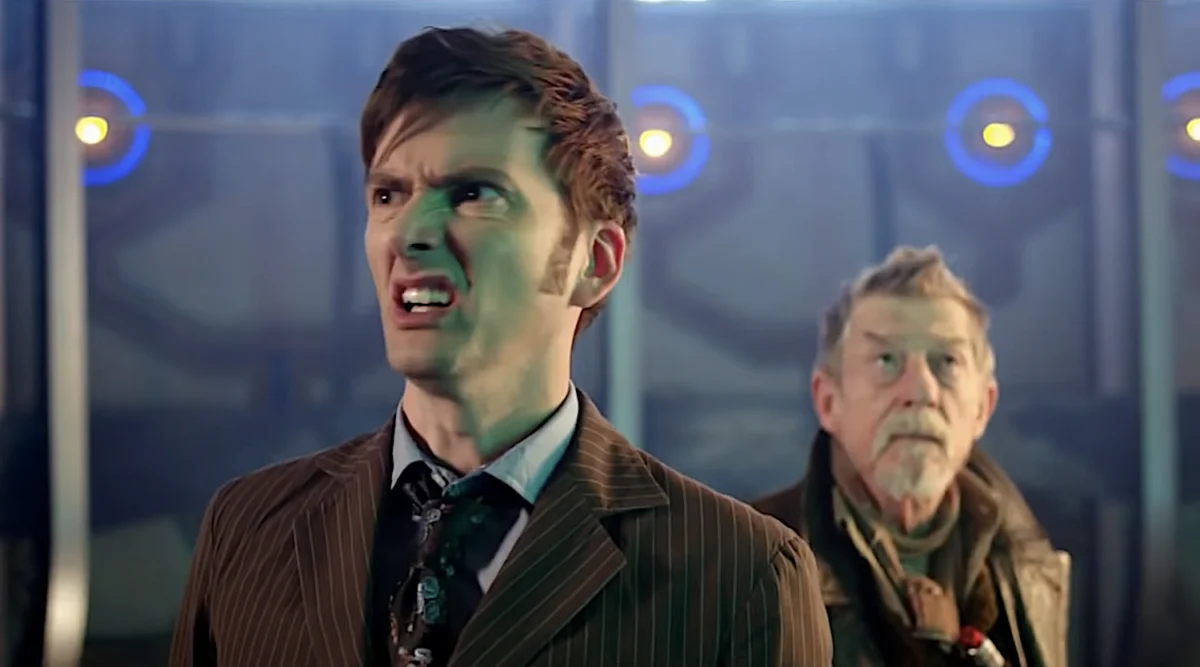
For nearly two decades, the BBC’s Doctor Who has stood as a cornerstone of British science fiction, capturing the imaginations of audiences worldwide with its blend of historical adventure, high-concept physics, and emotional storytelling. Yet, in recent years, the journey of the Doctor has become as fragmented and dizzying as the time-traveling plots the show is famous for. As AMC+ prepares to host a significant portion of the modern Doctor Who library, fans are once again reminded that in the streaming era, the TARDIS rarely lands in the same place for long.
Main Facts: The AMC+ Acquisition and the Missing Pieces
The latest development in the show’s distribution odyssey sees AMC+ securing the exclusive U.S. streaming rights to the Doctor Who revival series, covering the period from 2005 through 2022. Beginning June 11, subscribers will gain access to 13 seasons of the series—a collection that includes the tenure of the Ninth Doctor (Christopher Eccleston) through the final episodes of the Thirteenth Doctor (Jodie Whittaker).
This move is a welcome respite for fans who have faced a year-long "streaming drought," during which these specific seasons were largely unavailable following their departure from Max (formerly HBO Max). However, the acquisition is far from a comprehensive archive. The platform will not host the "Classic" Doctor Who era (1963–1989), the 60th-anniversary specials, or the recent, highly anticipated two seasons starring Ncuti Gatwa, which remain locked behind the paywall of the Disney+ partnership. For the completionist, this necessitates a multi-platform subscription strategy, with classic episodes relegated to BritBox, Tubi, or Pluto TV.
A Chronology of the Streaming Diaspora
To understand how a singular franchise ended up scattered across the digital landscape, one must look at the shifting alliances between the BBC and global media conglomerates.
- 2005–2010: The early years of the revival saw limited digital availability, with the BBC relying heavily on traditional broadcast and physical media.
- 2011–2022: As streaming matured, Doctor Who found a stable home on Max, establishing a centralized hub for modern fans in the United States.
- 2023–2025: The "Disney Era" began. In a landmark deal, the BBC partnered with Disney+ to become the exclusive global home for new seasons of Doctor Who, starting with the 60th-anniversary specials. This effectively decoupled the new production cycle from the back catalog.
- Late 2025: Following the conclusion of Ncuti Gatwa’s second season, reports emerged indicating the end of the BBC/Disney co-production model.
- June 2026: AMC+ steps in to anchor the 2005–2022 revival era, filling the void left by the transition to new international distribution strategies.
Supporting Data: The Fragmentation of Content
The current state of Doctor Who distribution is a case study in the "Streaming Wars." For a viewer attempting to watch the show in chronological order, the experience is hindered by significant barriers to entry.
Current Distribution Breakdown (U.S.):
- Classic Series (1963–1989): Primarily resides on BritBox, with select episodes available on ad-supported services like Tubi and Pluto TV.
- The Modern Revival (2005–2022): Moving to AMC+ as of June 11.
- The Disney+ Era (2023–2025): Remains under the purview of Disney+.
- Spin-offs: The War Between the Land and the Sea is expected to land on Disney+, despite the conclusion of the main series’ partnership, illustrating the convoluted nature of rights deals signed during the production’s peak.
This fragmentation is not merely a nuisance; it represents a significant shift in how content owners monetize intellectual property. By splitting rights between legacy platforms (AMC+) and global streamers (Disney+), the BBC is maximizing licensing revenue, albeit at the expense of user experience.
Official Responses and the Corporate Strategy
The BBC has been notoriously tight-lipped regarding the specific mechanics of these deals, but official communications suggest a pivot toward a more localized distribution model. In October 2025, the BBC confirmed that the Doctor would return for a Christmas special in 2026, a move that served as a tacit admission that the ambitious Disney partnership—once touted as a way to "supercharge" the franchise—was drawing to a close.
Industry analysts suggest that the BBC’s strategy is twofold: to maintain the brand’s presence on premium global platforms while ensuring that the deep, extensive back catalog remains a recurring revenue stream via smaller, specialized networks like AMC. By "re-licensing" the 2005–2022 library, the BBC ensures that the show remains relevant to new audiences who might be introduced to the franchise through current iterations but wish to explore the "Eccleston to Whittaker" era.
However, the "cloud of uncertainty" regarding the show’s future remains a talking point. With the Ncuti Gatwa era concluding in a surprise regeneration into Billie Piper—an unexpected narrative choice that left fans reeling—the lack of a concrete, long-term roadmap for future seasons has fueled speculation about the show’s long-term sustainability as a high-budget international co-production.
Implications for the Future of Fandom
The primary implication for the average viewer is the "subscription fatigue" associated with keeping track of a long-running series. When a franchise as expansive as Doctor Who is treated as a collection of assets rather than a unified canon, the barrier for new fans to engage with the material increases significantly.
1. The Death of the "One-Stop Shop"
The loss of a centralized platform is a blow to the community. Historically, the ability to recommend one platform to a newcomer was a key driver of the show’s growth in the U.S. Now, a recommendation requires a complex flowchart of licensing agreements.
2. The Impact on Cultural Legacy
When a show is moved from platform to platform, it risks losing its place in the cultural zeitgeist. If a series is only available on a niche service, it disappears from the "trending" algorithms that dictate modern viewership. By scattering the library, the BBC risks turning Doctor Who from a flagship global event into a "cult" curiosity.
3. The Economic Realities of British Television
Ultimately, this situation highlights the precarious economic position of the BBC. As a public service broadcaster, the BBC must balance its mandate to reach a wide audience with the fiscal necessity of funding its high-budget productions through international licensing. The fragmentation of Doctor Who is a direct byproduct of the need to subsidize the show’s massive production costs in a competitive global market.
Conclusion: The Doctor Remains in Flux
As June 11 approaches, fans will undoubtedly flock to AMC+ to revisit the adventures of the Ninth, Tenth, Eleventh, Twelfth, and Thirteenth Doctors. The return of these seasons to a major streaming platform is a positive development, even if the surrounding landscape remains fractured.
The story of the Doctor has always been one of constant change, regeneration, and movement through time and space. Perhaps it is fitting that the show itself now mirrors this chaotic, non-linear existence. While the streaming rights to the TARDIS may continue to shift, the core of the series—the enduring, optimistic, and often erratic spirit of the Doctor—remains, even if one has to check three different apps to find it. Whether this strategy will prove to be a masterstroke of licensing or a fragmentation that alienates the core audience remains to be seen. For now, the Doctor is on the move again—and the audience is left to catch up as best they can.










No comments yet. Be the first to join the conversation!