

FOR IMMEDIATE RELEASE
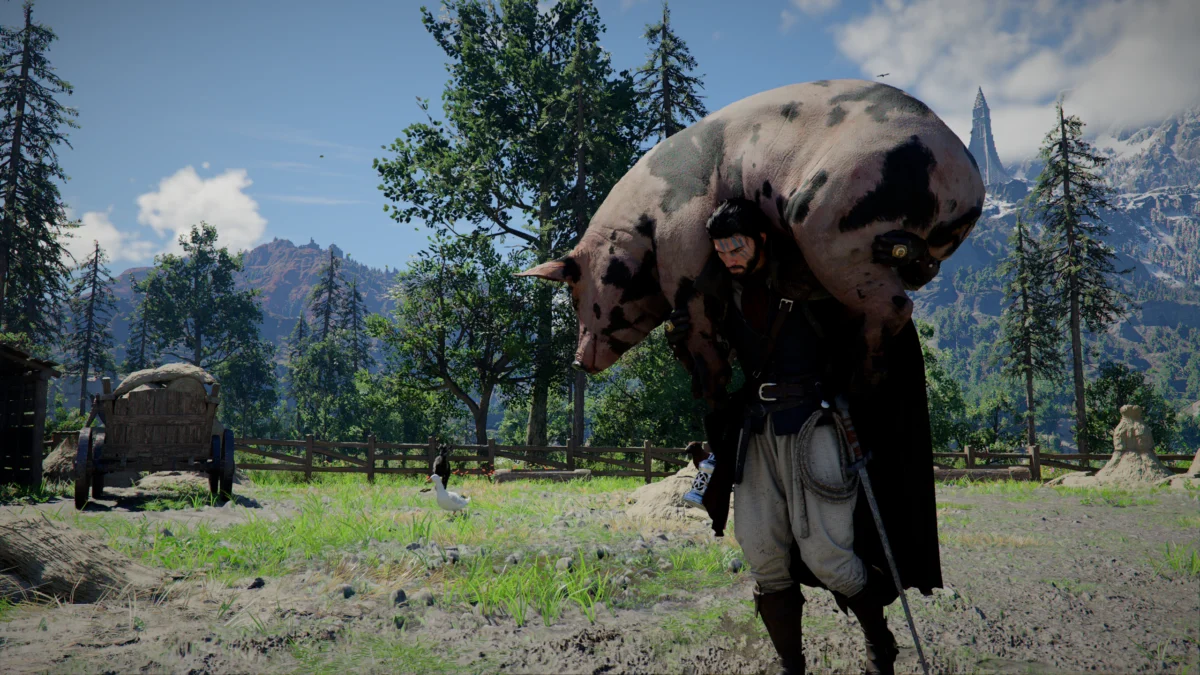
Pywel, [Date] – Pearl Abyss’s highly anticipated action RPG, Crimson Desert, has arrived, presenting a monumental paradox: a game of breathtaking scale and combat prowess marred by an incongruous narrative and a perplexing user interface. Our in-depth review reveals a title that stands as a testament to both stunning ambition and frustrating missteps, embodying a "champion bodybuilder" of a video game – bulging with impressive muscle, yet lacking the connective sinew to be truly functional.
At its core, Crimson Desert delivers an expansive world rendered with exceptional graphical fidelity and a combat system boasting a remarkable breadth of options. Players are thrust into the shoes of Kliff, a warrior embroiled in a sweeping conflict for the fate of his homeland. However, beneath this polished veneer lies a frustrating reality of baffling systems, inconsistent characterization, and a narrative that, despite its epic aspirations, frequently falls flat or veers into questionable territory. This dichotomy leaves players with a potent sense of what could have been, hinting at a masterpiece buried beneath layers of perplexing design choices.
The Grand Unveiling: From MMORPG Ambition to Action RPG Reality
The journey of Crimson Desert to release has been as winding as the paths within its sprawling world. Initially unveiled as a prequel to the massively popular MMORPG Black Desert Online, the project underwent a significant transformation, evolving into a standalone, story-driven action RPG with optional multiplayer elements. This shift, announced by developer Pearl Abyss, signaled a move towards a more focused single-player experience, aiming to leverage the studio’s technical expertise in creating vast, immersive worlds and dynamic combat systems, honed over years with Black Desert Online.
The initial reveals and trailers for Crimson Desert captivated audiences worldwide. Glimpses of its stunning graphics, fluid combat animations, and an seemingly boundless open world ignited immense hype. Pearl Abyss, known for pushing graphical boundaries and innovative gameplay, seemed poised to deliver a next-generation experience that combined the best elements of epic fantasy RPGs with their signature action-oriented combat. This chronological development context is crucial, as it highlights the immense expectations placed upon the title and the ambitious vision Pearl Abyss clearly harbored.
Upon diving into the game, the player’s initial experience is one of immediate visual awe. The opening moments, often involving Kliff traversing twilight-dappled ridges or vast, sweeping landscapes, are genuinely breathtaking. The world of Pywel is gargantuan, rendered with a level of detail and atmospheric splendor that immediately commands attention. This initial immersion, a testament to Pearl Abyss’s graphical prowess, sets a high bar, promising an adventure of epic proportions.
However, as the narrative begins to unfold, the first cracks in the polished facade start to appear. The story of Kliff and the Greymanes, displaced by the warmongering Black Bears and seeking to reclaim their heritage, presents itself with all the trappings of a grand fantasy epic. Yet, the execution quickly becomes inconsistent. Kliff’s resurrection by an unknown magic and his subsequent acquisition of otherworldly abilities feel less like a pivotal plot point and more like a convenient narrative device. As players progress through the early hours, interacting with various political figures and engaging in the continental machinations, the initial promise of a rich, character-driven story begins to give way to moments of narrative dissonance and peculiar character beats that undermine the immersive qualities of the world itself. The game’s strengths and weaknesses, therefore, do not exist in isolation but emerge sequentially, creating a perplexing journey where moments of brilliance are frequently interrupted by head-scratching design choices.
The Unpacking of Contradictions: Strengths and Stumbling Blocks
Crimson Desert‘s identity is a complex tapestry woven with threads of genuine innovation and perplexing oversight. To fully appreciate its duality, one must dissect both its formidable strengths and its significant weaknesses, which together define the player’s experience.
A World of Unparalleled Grandeur: The Game’s Undeniable Strengths
The most striking and consistently praised aspect of Crimson Desert is its meticulously crafted world and the technical artistry behind it.
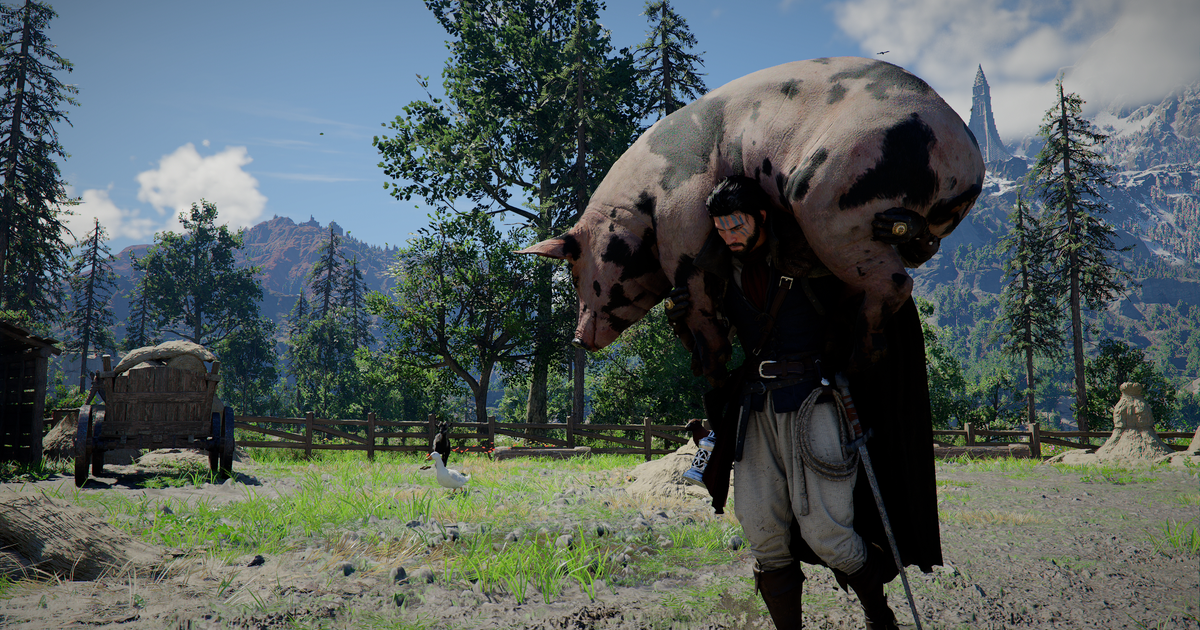
Visual Fidelity and Immense Scale: The game’s environment is not merely large; it feels truly boundless and alive. From the moment Kliff takes his first steps, players are greeted with vistas that are nothing short of stunning. Towering cliffs plunge into mist-shrouded valleys, ancient forests teem with vibrant flora and fauna, and bustling cities pulse with intricate architectural details. The lighting system is particularly noteworthy, casting long, dramatic shadows at sunset and bathing landscapes in a soft, ethereal glow at dawn. This commitment to visual excellence extends to character models, environmental textures, and particle effects, all contributing to an immersive atmosphere that rivals the best in the genre. Traversing this world, whether on horseback or utilizing magical gliding abilities across vast ravines, evokes a powerful sense of grand adventure, making exploration a joy in itself. The sheer ambition of creating such a detailed and expansive world, free of jarring load screens between major zones, is a remarkable technical achievement for Pearl Abyss.
Dynamic and Deep Combat System: Complementing the visual feast is Crimson Desert‘s robust and highly adaptable combat system. Kliff, as the protagonist, possesses an impressive arsenal of fighting styles, offering players a remarkable degree of flexibility and strategic depth. From the visceral impact of sword-and-board defense and offense to a spectacular array of unarmed grappling combos, the combat feels fluid, responsive, and immensely satisfying. The grappling, in particular, stands out for its over-the-top, almost cinematic quality, providing a stark contrast to the otherwise grounded fantasy setting. This unexpected flair injects a unique personality into engagements.
The depth of the combat becomes apparent as players master various parries, dodges, special abilities, and weapon combinations. Larger battles, where Kliff faces almost Musou-like hordes of enemies, are exhilarating, demanding tactical positioning and efficient crowd control. Equally impressive are the genuinely tough boss battles, which require precise timing, pattern recognition, and full utilization of Kliff’s diverse skillset. The game successfully blends the weightiness of combat found in titles like Dragon’s Dogma with the fast-paced action of character-action games, creating a loop that is incredibly rewarding once mastered.
The Unraveling Threads: Where Ambition Fails to Connect
Despite its monumental strengths, Crimson Desert is severely undermined by critical flaws in its narrative, characterization, and user experience, which prevent it from reaching its full potential.
The Narrative Conundrum: Kliff’s Identity Crisis and Inconsistent Storytelling:
The game’s story, ostensibly a Game of Thrones-esque epic of war, vengeance, and political intrigue, is plagued by an "incongruent" tone and "odd characterisation," particularly concerning its protagonist, Kliff. While he is capable of being a stoic, formidable warrior, capable of Terminator-like feats of strength and combat, he just as frequently shifts into an almost comically docile figure, serving soup to strangers or engaging in bizarrely sparse dialogue exchanges. For example, a side quest might feature an NPC asking, "Are you up to the task?", to which Kliff simply replies, "Yes." This brevity, while occasionally humorous, undermines any attempt at developing a coherent personality for the hero.
This inconsistency is particularly frustrating given Pearl Abyss’s reputation for the "intensely detailed character creator" in Black Desert Online. The decision to focus on a pre-determined main character like Kliff, yet fail to give him a consistent or compelling personality, feels like a missed opportunity – "packing away one of the best toys in its box for basically no reason." The narrative itself suffers from moments of extreme convenience, such as the crucial plot thread of reuniting the Greymanes, which simply resolves itself with key members "just sort of turn[ing] up" at Kliff’s camp without any significant effort or explanation from the player. This "flat and uneven storytelling" robs the player of agency and the satisfaction of overcoming narrative obstacles.
Problematic Storytelling Tropes: Beyond inconsistency, the narrative occasionally veers into genuinely troubling territory. An early story beat involving the city of Hernand and a "predatory band of money-lending goblin merchants called the ‘Goldleaf’ guild" is a jarring example of perpetuating harmful stereotypes. Such a portrayal is not only culturally insensitive but also deeply out of place in a modern fantasy game striving for epic gravitas, significantly detracting from the overall experience and leaving a sour taste.

The User Experience Maze: Baffling UI Decisions:
Perhaps the most universally frustrating aspect of Crimson Desert is its "baffling UI decisions" and poorly implemented systems. The inventory system, in particular, is an exercise in artificial friction. Unlike most action RPGs, enemies do not have a viewable inventory before looting. Players must have sufficient space before they can even see what items an enemy drops. This leads to a constant loop of picking up unknown junk, discovering it’s useless, and then immediately throwing it away to make space. The analogy of "carrying your food home when you don’t want to pay for a carrier bag" perfectly encapsulates this tedious design.
An even more egregious example is the "pouches of change" dropped by enemies. These are not automatically added to the player’s cash total but must be manually opened, one by one, to convert them into currency. For the meager amount of copper typically contained within, the effort required is disproportionate, making it feel like a "billionaires would need to drop the downpayment on a New York apartment for it to be worth their time to pick it up" scenario. These design choices are not merely inconvenient; they actively impede the flow of gameplay, transform routine actions into chores, and fundamentally break immersion. They betray a lack of understanding of modern action RPG player expectations regarding quality of life features.
Official Responses and the Developer’s Dilemma
As of the time of this review, Pearl Abyss has not issued an official response specifically addressing the detailed criticisms outlined here. However, by examining the game’s evolution and the studio’s established development philosophy, we can infer some of the potential challenges and intentions behind Crimson Desert‘s current state.
Pearl Abyss has consistently demonstrated a commitment to pushing graphical boundaries and creating vast, interconnected worlds, as evidenced by Black Desert Online. Their ambition for Crimson Desert was clearly to create a sprawling, visually stunning action RPG that would stand alongside the giants of the genre. The shift from an MMORPG concept to a more narrative-driven experience suggests a desire to broaden their appeal beyond the niche of traditional MMO players, aiming for a cinematic and immersive single-player adventure. This strategic pivot, while potentially opening up new markets, inherently introduces significant development hurdles. Crafting a compelling, consistent narrative for a single-player experience requires a different set of design principles and expertise than building an open-ended, player-driven MMO world.
It is plausible that the narrative inconsistencies and characterization issues stem from this transitional period. Elements of the story or Kliff’s personality might have been repurposed or hastily adapted from earlier MMORPG concepts, where a player-created avatar might fill the void of a strong central character. The "baffling UI decisions" could also be a consequence of this shift, or perhaps an attempt to retain certain "hardcore" elements from their MMO roots that simply do not translate well to a single-player action RPG experience. The complex inventory system, for instance, might have been designed with a long-term MMO progression in mind, where inventory management is a resource-intensive aspect of gameplay, rather than a seamless experience for a single-player adventure.
Pearl Abyss’s history suggests a developer that iterates and refines its games post-launch. Black Desert Online has seen years of content updates, quality-of-life improvements, and system overhauls. This track record offers a glimmer of hope that Crimson Desert‘s glaring UI and systemic issues could be addressed through future patches. However, the more fundamental problems of narrative consistency and character development are far more challenging to rectify without a significant overhaul, as the review itself suggests, requiring "a full revamp of 99% of its narrative content." This level of change would be unprecedented for a post-launch title and highlights the depth of the narrative’s shortcomings.
The challenge for Pearl Abyss lies in reconciling its evident technical prowess and ambition with the practicalities of cohesive game design. The studio clearly possesses the talent to create incredible worlds and engaging combat, but Crimson Desert indicates a struggle in weaving these elements into a uniformly excellent player experience, particularly concerning storytelling and intuitive user interaction.
Implications: A Case Study in Unfulfilled Potential
Crimson Desert stands as a poignant case study in unfulfilled potential. It is a game that simultaneously impresses and frustrates, showcasing the heights of modern game development in some areas while bafflingly faltering in others. The implications of its current state are far-reaching, affecting Pearl Abyss, the broader action RPG genre, and the players who have eagerly anticipated its release.

For Pearl Abyss, Crimson Desert‘s reception will be a critical juncture. While the game’s visual splendor and combat system are likely to garner significant praise, the widespread criticism of its narrative and UI could impact the studio’s reputation for delivering polished, cohesive experiences. It underscores the difficulty of transitioning between game genres and the importance of refining every aspect of a title, not just its technical showpieces. Moving forward, Pearl Abyss will need to carefully consider how to address these criticisms, whether through aggressive post-launch support and overhauls or by applying lessons learned to future projects. A failure to meaningfully address the core issues could lead to player fatigue and a reluctance to invest in their next ambitious venture.
For the action RPG genre, Crimson Desert offers a mixed bag of innovation and caution. Its combat system and world-building push boundaries, demonstrating what is possible with next-generation technology and creative combat design. It reinforces the idea that an action RPG can offer deep, varied combat without sacrificing visual grandeur. However, it also serves as a stark reminder that even the most technically impressive games can be undermined by a weak narrative, inconsistent characters, and poor user experience design. It highlights the crucial role of storytelling and player-centric design in creating a truly memorable and beloved RPG. Games like The Witcher 3 and Dragon’s Dogma, which Crimson Desert is inspired by, succeed not just through their mechanics but through their ability to create compelling characters and emergent player stories.
For players, Crimson Desert presents a dilemma. On one hand, those who prioritize cutting-edge graphics, expansive exploration, and deep, challenging combat might find enough to love, especially if they are willing to overlook the narrative and UI shortcomings. The sheer scale and the visceral thrill of combat are undeniable draws. On the other hand, players seeking a cohesive, immersive story with well-developed characters and a seamless user experience will likely find themselves frustrated and disappointed. The game demands a significant tolerance for its flaws, a trade-off that many may not be willing to make, especially given the abundance of high-quality RPGs available.
The path forward for Crimson Desert is uncertain but not entirely without hope. While a "full revamp of 99% of its narrative content" is a monumental and likely unfeasible undertaking, Pearl Abyss could still salvage much of the experience. Significant quality-of-life updates addressing the UI, inventory system, and other baffling mechanics are absolutely crucial and within the realm of possibility for post-launch patches. Even minor improvements to dialogue pacing or narrative clarity could help mitigate some of the storytelling issues. However, the deeper problems of character consistency and problematic tropes would require more fundamental changes that are rarely seen after a game’s release.
In conclusion, Crimson Desert is a game of magnificent parts that fail to coalesce into a harmonious whole. Its world and combat are genuinely exceptional, showcasing the immense talent within Pearl Abyss. Yet, these brilliant elements are buried beneath layers of absurd narrative choices and frustrating design decisions. It is a game that tantalizes with the promise of being "one of the best games of the generation," but ultimately leaves players contemplating the poignant "if only" – a testament to a grand vision that, for now, remains tragically unfulfilled.
Reviewed on PC with code provided by the publisher.











No comments yet. Be the first to join the conversation!