

In the competitive landscape of modern commerce, a brand’s logo serves as its primary handshake with the consumer. While color psychology and iconography are essential, the "voice" of a brand is often determined by its typography. A meticulously chosen font does more than present a name; it communicates authority, innovation, luxury, or accessibility. As designers navigate an increasingly digital-first marketplace, the selection of a logo font has become a critical strategic decision that influences market perception, customer retention, and overall brand equity.
The Evolution of Brand Typography: From Print to Pixels
The history of logo design is a reflection of technological progression. In the early 20th century, brands relied on hand-lettering and ornate serif fonts to convey tradition and stability. As the mid-century modern movement took hold, designers shifted toward the Bauhaus-inspired minimalism of sans-serif typefaces, prioritizing legibility on everything from billboards to stationery.

Today, the digital revolution has forced a new evolution. Modern logo fonts must be "responsive"—meaning they must maintain their visual integrity whether scaled for a massive stadium display or a tiny mobile favicon. A typeface that looks commanding on a desktop screen may lose its legibility when condensed into a 16×16 pixel browser tab. Consequently, contemporary typography is defined by its adaptability, with designers favoring fonts that provide high contrast and clean lines.
The Psychology of Typeface Selection
Professional designers approach typography with a scientific mindset, understanding that different letterforms trigger specific cognitive responses.

- Serif Fonts: Traditionally associated with the printed press, serif fonts—characterized by the small strokes at the ends of letters—are the gold standard for heritage, trust, and academic prestige. High-fashion brands and legacy financial institutions frequently utilize these to project timelessness.
- Sans-Serif Fonts: These are the workhorses of the tech industry. By removing the decorative "feet," designers create a streamlined, modern aesthetic that feels efficient and user-friendly. Companies like Google and Apple rely on these styles to emphasize simplicity and innovation.
- Handwritten and Script Fonts: Often employed by hospitality brands, artisanal startups, and entertainment channels, these fonts evoke personality, warmth, and creativity. They suggest a human touch in an automated world.
Critical Considerations: The Designer’s Checklist
Before finalizing a logo, designers must subject a font to a rigorous battery of tests. A common pitfall is choosing a typeface that appears aesthetically pleasing in a large, isolated format but fails under real-world conditions.
Readability and Scalability
A logo must be legible at a distance. Designers evaluate the "x-height" (the height of lowercase letters relative to uppercase) and the "kerning" (the spacing between letters). Tight kerning can create a cluttered appearance in small sizes, while loose kerning can make a brand feel disconnected.

The Black-and-White Test
A truly great logo font works in grayscale. If a design relies on color gradients or complex stylistic flourishes to be readable, it will inevitably fail when printed on invoices, branded merchandise, or monochrome receipts. The strongest logos rely on the fundamental shape of the letters to communicate, ensuring the message remains consistent regardless of the medium.
Contextual Congruence
Typography should never compete with the brand’s message. A chaotic, highly experimental font for a law firm, or a rigid, overly formal font for a children’s toy company, creates a dissonance that can erode consumer trust. The goal is to match the font’s "personality" to the brand’s mission.

Curating a Professional Library: Why Designers Keep Trusted Assets
For agencies and freelancers, time is the ultimate currency. Maintaining a curated library of "trusted fonts" allows designers to experiment with various styles rapidly during the brainstorming phase. This collection of high-quality assets acts as a toolkit for creative problem-solving, enabling designers to pivot from a minimalist tech concept to a vintage-inspired fashion brand without starting from scratch.
22 High-Quality Logo Fonts for Modern Branding
To assist designers in building their personal libraries, we have compiled a selection of versatile fonts that span various industry requirements. These assets are chosen for their technical quality, scalability, and stylistic range.

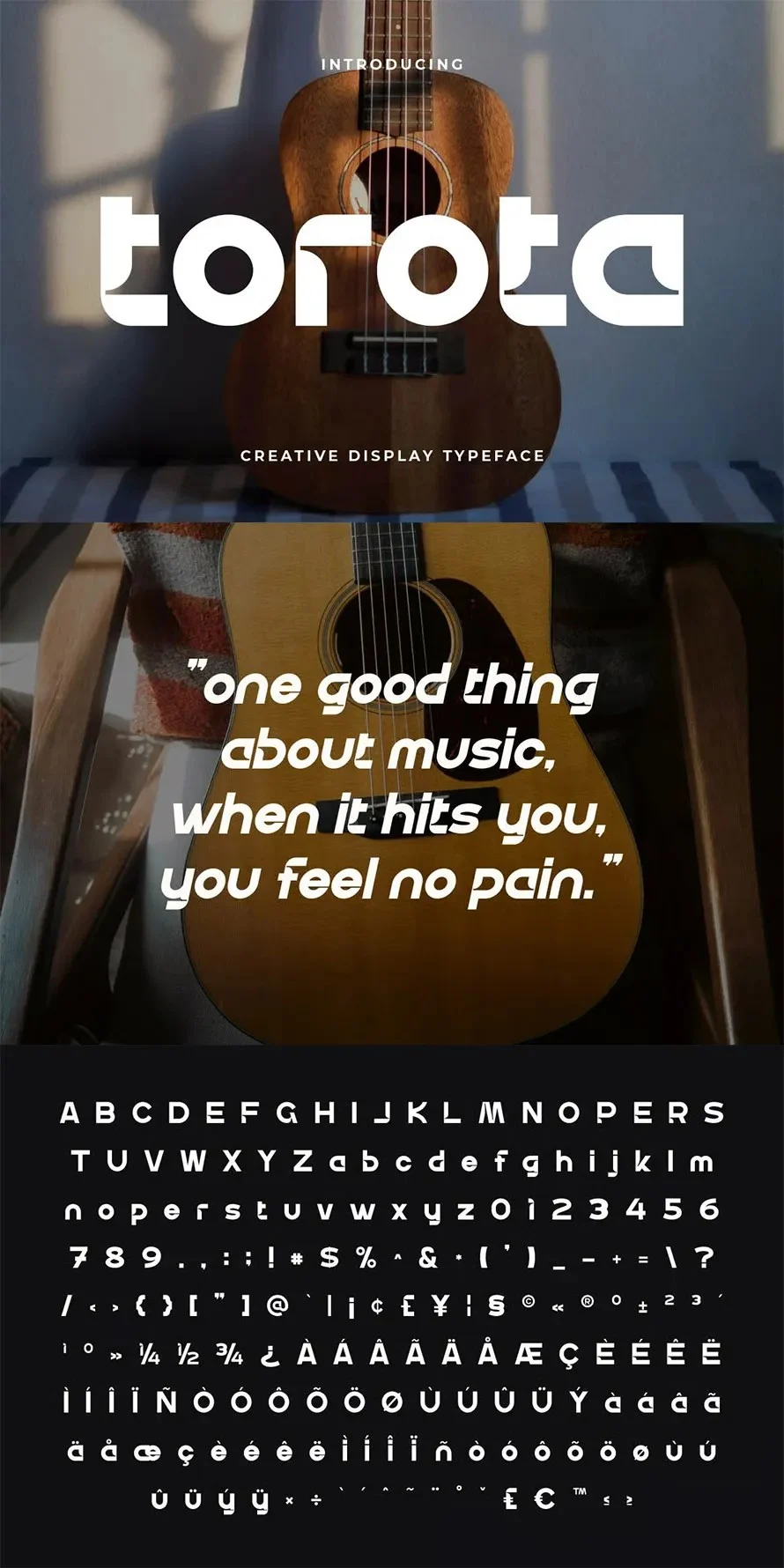
1. Torota Display
A masterclass in minimalism, Torota is designed for social media and display advertising. Its balanced geometry ensures it remains readable even in thin weights.
2. Emira: The Luxury Serif
For brands looking to capture the "old money" or high-end retail aesthetic, Emira provides elegant swashes and sharp serifs that command attention on packaging.

3. Geometrix Branding
True to its name, this font relies on mathematical precision. It is ideal for tech startups that need to appear organized, logical, and future-forward.
4. Spring: Editorial Elegance
Spring is a bridge between the fashion magazine aesthetic and corporate branding. Its modern proportions make it a favorite for lifestyle labels.

5. Horible: The Extended Aesthetic
Extended fonts are currently trending in high-fashion and urban streetwear. Horible offers a wide footprint that feels bold and unapologetic.
6. Enigma Stippled
A unique blend of blackletter gothic and modern stippling, this font is perfect for brands in the music, gaming, or underground fashion spaces.

7. Amoxil: Modern Futuristic
With its thick, bold strokes, Amoxil is designed for the entertainment industry, particularly for film posters and video game titles.
8. Conda: Sharp and Technical
Conda’s strength lies in its modularity. It feels like a piece of architecture, making it an excellent choice for industrial design or software brands.

9. Elora: Modern Curves
Elora offers a softer, more fluid alternative for designers who want to avoid the rigidity of traditional sans-serifs without moving into full script territory.
10. Grandom: The Art Deco Revival
Art Deco never truly goes out of style. Grandom brings a 1920s flair to 21st-century logos, offering a sense of opulence and geometric symmetry.

11. Bulgary: Stylized Serif
Bulgary features ornate ligatures that make every word feel like a custom logo. It is highly recommended for boutique branding and high-end invitations.
12. Network: Sports and Tech
For esports teams or tech hardware companies, Network provides the "fast" aesthetic. It conveys speed, agility, and competitive energy.

13. Slimking: Bold Minimalism
When a brand needs to make a statement without the clutter of decorative elements, Slimking provides a direct, impactful, and easily legible solution.
14. Mearu Food: Culinary Branding
Typography in the food industry must be appetizing. Mearu Food is designed with rounded edges that suggest friendliness and hospitality.

15. Hengky: Modern Vintage
Hengky successfully navigates the balance between retro-nostalgia and contemporary design, making it ideal for coffee shops and craft beverage brands.
16. Wonome: Grid-Based Modular
Wonome is built on a strict grid, giving it a playful, blocky feel that works exceptionally well for educational brands and children’s media.

17. Harse: Corporate Condensed
In corporate environments, horizontal space is often limited. Harse allows for long brand names to fit comfortably on letterheads and digital banners.
18. Speclogo: Playful Tech
Speclogo breaks the mold of "serious" tech fonts. It is chunky, fun, and highly effective for app icons and casual digital services.

19. Riona: Elegant Swash
Riona is designed for fluidity. Its decorative strokes are perfect for brands that want to emphasize human connection and artistic value.
20. Nagel: Clean Corporate
Nagel is the quintessential corporate font. It is designed to be invisible in its utility, allowing the brand name to be the hero.

21. Qepho Modern: Bold Sans
Qepho provides a strong, sturdy look that stands up well to heavy usage, making it an excellent choice for app interfaces and web headers.
22. Bluster: Futuristic Sharpness
Bluster rounds out the list with a high-contrast, futuristic look that suggests progress and cutting-edge performance.

Implications for the Future of Brand Design
As we move toward a future dominated by augmented reality (AR) and hyper-personalized digital experiences, the role of the logo font will continue to change. We are likely to see a rise in "variable fonts"—typefaces that can change weight, width, and slant in real-time based on the viewer’s device or interaction level.
The selection of a logo font is not merely an aesthetic choice; it is a long-term investment in the brand’s identity. A poorly chosen font acts as a barrier between the company and the consumer, creating friction where there should be connection. Conversely, a well-chosen typeface acts as a silent ambassador, reinforcing the brand’s values with every glance. As designers continue to innovate, the focus will remain on the delicate balance between timeless elegance and digital-first functionality. Whether for a multinational corporation or a local startup, the right font remains the most powerful tool in the designer’s arsenal.









No comments yet. Be the first to join the conversation!