Ali Ikhwan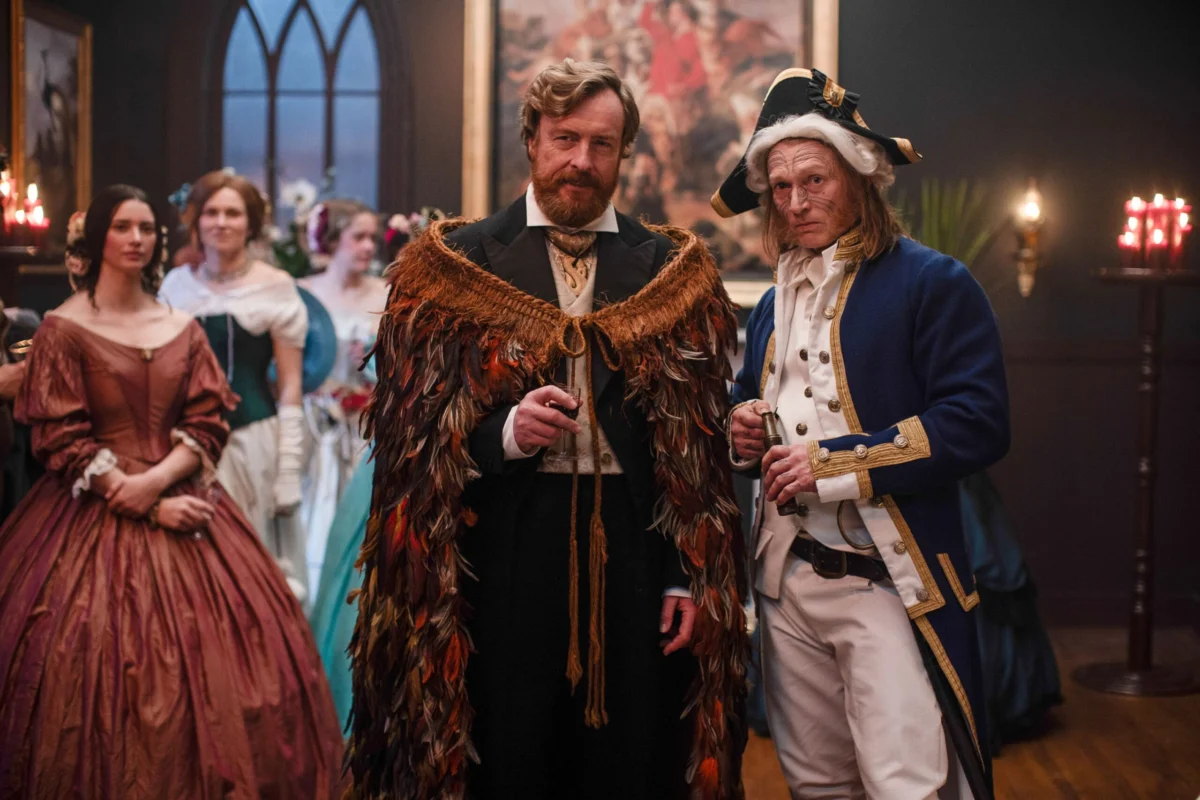
Horror cinema has long served as a visceral mirror for societal anxieties, allowing audiences to process the "fear, uncertainty, and grief" that define our collective human experience. Yet, when it comes to the translation of historical atrocities into the language of genre entertainment, the results are often uneven. Too frequently, the weight of real-world trauma is exploited for shock value, sacrificing nuance for cheap thrills.
However, writer-director Taratoa Stappard’s stunning feature debut, Mārama, stands as a masterful exception. Premiering to critical acclaim and winning the top prize at the 2026 Seattle International Film Festival (SIFF), Mārama is not merely a gothic revenge nightmare; it is a profound, intellectually rigorous interrogation of the cultural theft and colonial violence inflicted upon the Māori people of Aotearoa/New Zealand during the mid-19th century.

The Genesis of a Gothic Nightmare
Mārama draws its chilling narrative power from both documented colonial brutality in the U.K. and New Zealand and the deeply personal experiences of Stappard’s own family. The film situates itself in the bleak, oppressive landscape of 1859 Victorian England—a setting where, historically, the remains of indigenous peoples were frequently treated as "demented keepsakes" by white explorers and collectors.
The film follows the titular character, Mārama (played with a quiet, devastating intensity by Ariāna Osborne), who also navigates the world under the colonial alias "Mary Stevens." Separated from her parents at birth, she receives a cryptic invitation to a remote, imposing Yorkshire manor, believing that the stranger who summoned her might hold the key to reuniting with her long-lost family. Upon her arrival, however, she discovers that her benefactor has died under highly suspicious circumstances, leaving her trapped in a house governed by the chilling, polite cruelty of the landed gentry.

Chronology of a Colonial Reckoning
The narrative unfolds with the precision of a psychological thriller, structured around Mary’s increasing awareness of her own commodification.
- The Arrival (1859): Mary arrives at the Cole estate, expecting answers about her parentage and the whereabouts of her twin sister, Te Haeata (also portrayed by Osborne). She is greeted by the manor’s owner, Nathaniel Cole (Toby Stephens), whose unsettling warmth masks a predatory fascination with her heritage.
- The Infiltration: Pressured to stay on as a governess for Cole’s ward, Ann (Evelyn Towersey), Mary begins to uncover the sinister reality of the estate. She realizes that Cole is not merely a patron of the arts or a historian; he is a collector of indigenous identities.
- The Revelation: Through her interactions with Ann and her own growing visions—which haunt her with glimpses of Māori ancestors—Mary discovers a "wharenui" (a traditional Māori meeting house) on the property. This revelation serves as the catalyst for the film’s shift in momentum.
- The Climax: As the tension between Mary, Cole, and his associate Jack Fenton (Errol Shand) reaches a breaking point, the film sheds its restraint, transitioning from a slow-burn gothic drama into an act of righteous, cathartic retribution.
Examining the Mechanics of Abuse: Performance and Perspective
At the heart of Mārama’s success is the dynamic between Ariāna Osborne and Toby Stephens. Osborne’s breakout performance is nothing short of magnetic. She carries the film’s emotional weight with a palpable, physical grace, ensuring that Mary remains an active agent of her own destiny rather than a passive victim of colonial history.

Toby Stephens, meanwhile, provides a masterclass in the banality of evil. His portrayal of Nathaniel Cole avoids the tropes of the mustache-twirling villain. Instead, Stephens plays Cole with the unbearable, quiet confidence of a man who genuinely believes he is a benefactor. He views himself as an "admirer" and "protector" of the Māori people, even as he systematically dehumanizes them by turning their culture into an ornament for his collection.
This performance is particularly chilling because it mirrors the self-justifying logic often used to mask systemic oppression. Stephens’ Cole weaponizes his perceived civility to hide the fact that he views Māori humanity as a trophy to be possessed and curated.

Thematic Implications: Horror as Truth-Telling
Stappard’s directorial approach is that of a literary journalist reporting from a front line of human suffering. He understands that a horror film does not need to resort to excessive gore to be terrifying; the true horror lies in the erasure of culture and the consumption of the "other."
The "Wharenui" as a Symbol
The presence of the wharenui on the Cole estate is a stroke of narrative genius. It acts as a physical manifestation of the colonial obsession with transplanting and "owning" indigenous spaces. By having Mary confront this space, Stappard forces the audience to acknowledge the absurdity and violence inherent in the colonial project.

Catharsis and the Limits of Monstrosity
For all its depictions of pain, Mārama never mistakes suffering for profundity. Stappard is careful to provide the audience with a sense of catharsis. In an era where modern viewers are often bombarded with bleak, nihilistic cinema, the film’s final act—a sequence of pure, earned retribution—feels not only satisfying but necessary. It suggests that the horror genre is uniquely equipped to turn historical fury into a communal act of healing.
Official Responses and Critical Reception
Since its debut, Mārama has been widely cited as a benchmark for how to blend genre filmmaking with socio-political commentary. The jury at the Seattle International Film Festival praised the film for its "unique intelligence and soul," highlighting Stappard’s ability to balance the rigid social constraints of the 19th century with a modern, unflinching perspective on cultural appropriation.

Industry analysts have noted that the film’s success may signal a shift in the horror market, where audiences are increasingly seeking "elevated" genre pieces that offer both visceral scares and deep, intellectual interrogation of the past. The partnership between Watermelon Pictures and Dark Sky Films has been credited for taking a risk on such a bold, auteur-driven vision.
The Legacy of ‘Mārama’
As Mārama expands its reach into wider distribution, its implications for the genre are clear. It challenges filmmakers to treat historical trauma with "authorial authenticity." By refusing to put his hero into an "unworthy box," Stappard has created a character in Mary who is not defined by her victimization, but by her resilience and her drive for justice.

The film serves as a reminder that the horror genre, at its best, is a tool for spiritual release. It allows us to face the monsters of history—those who, like Nathaniel Cole, hide their cruelty behind a veneer of civility—and confront them with the truth.
Mārama is a film that demands to be seen, not just for its technical brilliance or its haunting atmosphere, but for its profound clarity of purpose. In a world still reeling from the echoes of colonial violence, Stappard’s debut is a necessary, fiery, and deeply moving contribution to the canon of modern horror.
Quick Facts:
- Director: Taratoa Stappard
- Lead Actress: Ariāna Osborne
- Antagonist: Toby Stephens
- Setting: 1859, Yorkshire, England
- Distributors: Watermelon Pictures / Dark Sky Films
- Availability: Now streaming via Fandango At Home; theatrical release ongoing.

 Neng Nana
 Basiran