Layla Zulfa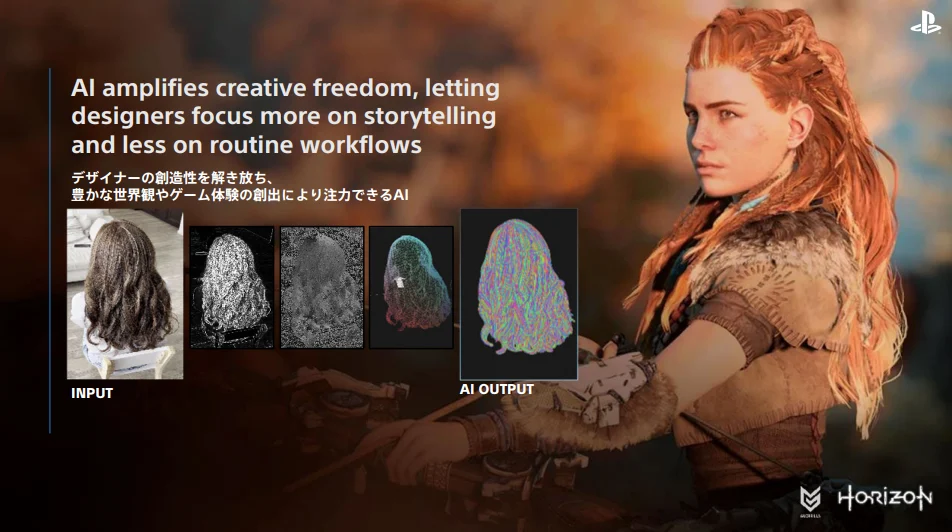
In a definitive move to secure its competitive edge in an increasingly expensive gaming market, Sony Group Corporation has unveiled a comprehensive strategy to weave artificial intelligence (AI) into the very fabric of its game development ecosystem. As industry production costs continue to balloon and development cycles stretch into the better part of a decade, the tech giant is positioning AI not as a replacement for human talent, but as a critical lever to alleviate the technical burdens facing its first-party studios.
During a recent corporate strategy presentation accompanying its latest financial results, Sony executives articulated a vision where AI functions as an "amplifier" of human imagination. By automating high-effort, repetitive tasks, Sony aims to pivot its workforce toward the higher-level creative decisions that define the "PlayStation experience."
The Strategic Mandate: Why Sony is Pivoting to AI
The gaming industry is currently grappling with a "production crisis." As titles reach unprecedented levels of visual fidelity and scope, the labor required to generate assets—such as individual hair strands, complex facial animations, and expansive environmental textures—has become a bottleneck.
Sony President and CEO Hiroki Totoki emphasized that the shift is born of necessity. "AI will make it easier to take on more innovative and ambitious projects that were previously difficult to pursue due to constraints of cost and time," Totoki stated. The underlying premise is clear: if studios can reclaim thousands of man-hours spent on manual labor, they can reallocate that time to narrative depth, complex gameplay mechanics, and world-building.
However, Sony is acutely aware of the sensitivity surrounding AI in the creative arts. To preempt concerns regarding job displacement, leadership has maintained a consistent mantra: human creativity must remain at the center.
Chronology of Innovation: From Racing Agents to Facial Modeling
Sony’s integration of AI is not a sudden pivot but the culmination of years of R&D across its various studios.
1. Gran Turismo Sophy: The Prototype for Dynamic NPCs
Long before the current generative AI boom, Sony began experimenting with machine learning in the Gran Turismo series. The development of "Sophy," an AI-powered racing agent, demonstrated that machines could learn to navigate complex environments with a level of skill and nuance that mimicked—and at times surpassed—human players. This project served as a foundational proof-of-concept for how AI could eventually power non-player characters (NPCs) with distinct, evolving personalities.
2. The Mockingbird Initiative
Hideaki Nishino, CEO of Sony Interactive Entertainment (SIE), highlighted the success of "Mockingbird," an internal tool now deployed across prestigious studios like Naughty Dog and San Diego Studio. Mockingbird transforms raw performance capture data into sophisticated facial models. By automating the translation of actor movements into digital expressions, what once required hours of manual cleanup can now be achieved in a fraction of a second. This technology was instrumental in the recent Horizon Zero Dawn Remastered, allowing the team to modernize character fidelity without ballooning the production budget.
3. Hair Simulation and Technical Art
Beyond facial animation, Sony has tackled one of the most notoriously difficult tasks in 3D graphics: hair rendering. By training AI models on video data of real-world hairstyles, studios are now generating 3D models with hundreds of individual strands automatically. This removes the need for artists to manually place or weight every individual lock, allowing them to focus on art direction rather than technical geometry.
Supporting Data: Efficiency and Fidelity
The implications of these tools are best viewed through the lens of efficiency and visual fidelity. The PlayStation 5 Pro’s PSSR (PlayStation Spectral Super Resolution) is a primary example of how machine learning is being used to bridge the gap between hardware constraints and user expectations. By using AI to upscale and enhance image quality, Sony can deliver stable 4K visuals at high frame rates—a feat that would require significantly more raw hardware power without the help of machine learning.
The financial pressure on Sony is significant. The company recently reported a $765 million impairment loss related to Bungie, and an operating income decline of 41.6% in the last quarter. In this context, AI is being viewed as a vital instrument to improve productivity and ensure that first-party titles remain profitable despite their massive development costs.
Official Responses: Navigating the Ethical Frontier
The discourse surrounding AI in gaming is often fraught with anxiety, particularly regarding the potential for layoffs. SIE leadership has been careful to frame their technological rollout as an augmentation of human skill rather than a replacement.
"The vision, the design, and the emotional impact of our games will always come from the talent of our studios and performers," Nishino said. He emphasized that the tools are designed to handle the "heavy lifting" so that creators can spend more time on the "soul" of the game.
By framing AI as a tool that "optimizes" rather than "replaces," Sony is attempting to strike a delicate balance between investor demands for efficiency and the creative community’s need for job security. The message is that the artist remains the conductor, while AI serves as the orchestra, capable of playing complex passages with speed and precision that a human could not achieve alone.
Implications for the Future of PlayStation
As Sony moves into this new era, the implications for the future of the PlayStation ecosystem are manifold:
1. The Curation of Content
AI is not just being used to build games; it is being used to sell them. By utilizing machine learning to better understand player preferences, Sony hopes to create a more "curated platform." This means personalized recommendations and discovery tools that help players find games that align with their specific tastes, effectively reducing the "discovery noise" on the PlayStation Store.
2. Living, Dynamic Worlds
The evolution of the "racing agent" concept—NPCs with distinct personalities—points toward a future where games are no longer static scripts. If Sony succeeds in scaling the technology used for Gran Turismo to open-world RPGs, we may soon see environments where NPCs behave with genuine unpredictability, making the world feel reactive and truly "alive."
3. Redefining the "First-Party" Standard
Sony has long built its brand on high-fidelity, cinematic single-player experiences. By leveraging AI to reduce the cost of creating these "prestige" titles, Sony may be able to increase the frequency of their releases without compromising quality. This could result in a more robust release calendar, maintaining the "PlayStation exclusive" value proposition in a crowded market.
Conclusion: The Human-AI Symbiosis
Sony’s corporate strategy is a testament to the fact that the gaming industry has reached a point of technical saturation. The challenge is no longer just about pushing more pixels; it is about managing the immense complexity of modern production.
By integrating AI into its pipeline, Sony is betting that it can solve the productivity paradox—delivering larger, more ambitious, and more visually stunning games without the unsustainable growth of development teams and budgets. As the industry watches, the success of this strategy will depend on whether Sony can truly keep the "human touch" at the center of the experience.
If successful, the move could set a new industry standard for how the world’s largest entertainment companies leverage machine learning. If it fails to strike that balance, it risks alienating the very creative talent that has built the PlayStation brand over the last three decades. For now, Sony remains committed to the path of augmentation, betting that the next generation of gaming will be defined by the seamless marriage of silicon-based logic and human imagination.


 Basiran
 Ali Ikhwan