

Main Facts: A Tense Homecoming at Cannes
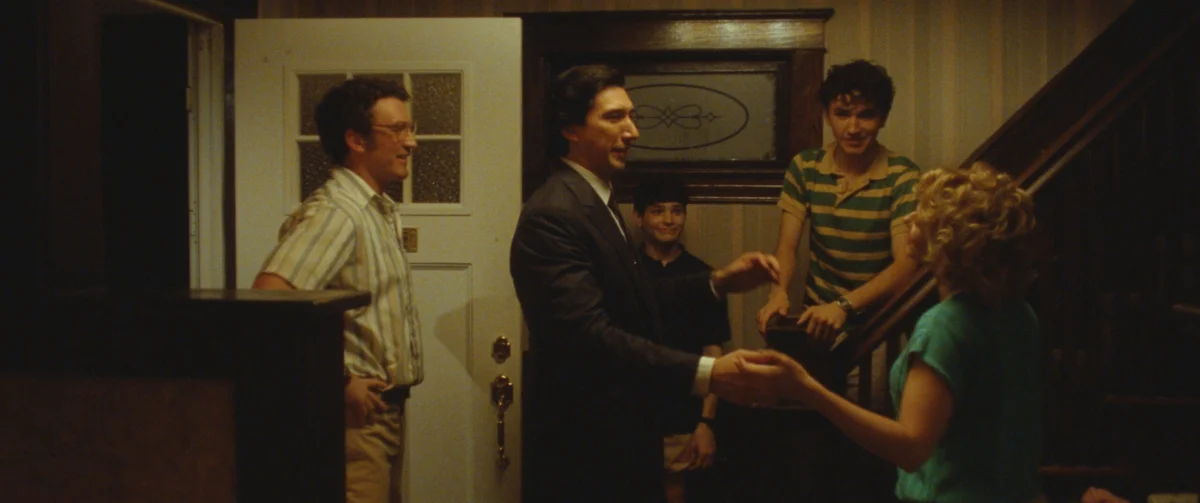
The 2024 Cannes Film Festival reached a fever pitch this past Saturday as the Lumière Theatre hosted the highly anticipated world premiere of Paper Tiger. The film, directed by auteur James Gray and starring Adam Driver alongside Miles Teller and Scarlett Johansson, has already emerged as a critical darling. Critics are calling it a "career-best" performance for Driver, who portrays a slick, former cop turned businessman navigating the treacherous waters of the New York underworld.
However, for its leading man, the premiere was less of a victory lap and more of a tactical exercise in avoidance. Despite walking the red carpet with poise and posing for photographers, Adam Driver notably vanished the moment the theater lights dimmed. It is a long-standing personal ritual for the actor, who finds the experience of watching himself on screen to be an exercise in extreme discomfort.
The Chronology of a Masterpiece
The genesis of Paper Tiger began long before the bright lights of the Croisette. For James Gray, the project represents a deeply personal excavation of his own upbringing in Queens. The narrative follows brothers Gary (Driver) and Irwin Pearl (Teller), whose ambition to capitalize on the redevelopment of the Gowanus Canal spirals into a nightmare involving the Russian mob.
Development and Production
- Pre-Production: Driver and Gray held intensive, frequent sessions at Driver’s New York home to refine the script and character motivations.
- Production: Eschewing rigid storyboarding, Gray opted for a fluid, collaborative environment, filming rehearsals to allow the actors to find the emotional truth of each scene.
- The Premiere: The film debuted to ecstatic reviews, highlighting the rare chemistry between Driver and Teller and Gray’s signature blend of gritty urban crime drama and intimate family tragedy.
The film’s plot, while fictional, mirrors the fractured reality of Gray’s own youth. While studying at USC, Gray faced the devastating intersection of his mother’s battle with brain cancer and his father’s legal entanglement involving the MTA. While Paper Tiger is not a direct facsimile of these events, the emotional core—the sense of a family unit shattering under pressure—is profoundly autobiographical.
Supporting Data: The Anatomy of the Performance
The synergy between James Gray and Adam Driver is the engine driving Paper Tiger. Gray, known for his urban masterworks such as We Own the Night and Two Lovers, explicitly wrote the role of Gary Pearl for Driver.
Why Driver?
Gray emphasizes that he looks for two specific "commodities" in his leads: vulnerability and danger. He posits that few actors possess the range to embody both simultaneously. According to Gray, the only exception in cinematic history is Jeff Bridges’ portrayal of "The Dude" in The Big Lebowski, which he notes is a rare example of greatness achieved without an undercurrent of menace.
For Driver, the film provided a necessary shift in scale. Having spent years in the "dark side" of the Star Wars galaxy, the actor expressed a preference for the agility and rhythm of independent filmmaking.
"I like the scale of those bigger movies," Driver noted during an interview at the Carlton Hotel. "But I more naturally gravitate towards smaller films. The rhythm is completely different. It’s a little faster. I don’t mind having to do something technical, but I understand the artificiality of it all."
Official Responses and Creative Philosophy
During a joint interview, the mutual admiration between the director and actor was palpable. Gray, ever the cinephile, punctuated his praise for Driver with anecdotes about the history of acting, including a hilarious, performative critique of Spencer Tracy’s "mark-hitting" technique, which he claims ruined the screen legend for him forever.
On the Creative Process
Gray’s approach to directing is defined by a reverence for his cast. He resists the "corporate" pressures of Hollywood, which often demand that filmmakers tailor their work to current trends.
"I have to shut it out because I think it is very damaging to creativity," Gray remarked. "I hate it when people call me up and say things like, ‘This is what’s selling right now.’ If I tried to retrofit something so it would sell, it would be very artificial."
Driver echoed this sentiment, noting that the only debates occurring on set were apologies from Gray regarding complex shots. Driver’s philosophy remains grounded in preparation: "If I don’t understand a part, it’s hard to play it. The biggest enemy on a film is time. Whatever you can do in advance to drill down into the characters is so important."
Implications: The Artist vs. The System
The success of Paper Tiger at Cannes serves as a powerful rebuttal to the cynicism currently plaguing the film industry. Gray’s commentary on the "system" is stark, viewing the corporate machinery of modern Hollywood as an apparatus designed to "humiliate" the artist.
"The system is designed to keep you in line," Gray noted. "Don’t step out of line, don’t fight. If you fight, you’re going to lose. These are all weapons that are used to humiliate the artist. It can be fatal, if you let it."
The "Driver" Protocol
The implications for Adam Driver’s career are clear: he is a performer who prioritizes the integrity of the work over the spectacle of the industry. His habit of sneaking into the back of the theater just as the lights come up is more than a quirk; it is a manifestation of his desire to be present for the audience’s reaction without the ego-distorting experience of self-observation.
"I used to have a couple drinks, just to calm down, but I can’t go overboard," Driver admitted. "Sometimes you come back and you don’t match the mood of a movie. Sometimes people are crying, and you’re like, ‘Hey everybody!’"
Looking Forward
As Paper Tiger moves toward its general release, it stands as a testament to what is possible when an auteur is given the space to tell a story that is both deeply personal and structurally sound. The film’s reception at Cannes indicates that despite the pressures of the industry, there remains a hungry audience for stories that prioritize human truth over marketability.
For Gray, the task ahead is simple: "Just focus on the work, focus on the work." It is a mantra that seems to have paid off, resulting in a film that is not only a triumph for its creators but a poignant reminder of the enduring power of the cinematic form to process the trauma of the past. As the accolades continue to roll in for the cast and crew, the lasting impact of Paper Tiger will likely be measured not just in box office returns, but in its profound, unflinching look at the fragility of the American dream.











No comments yet. Be the first to join the conversation!