Suro Senen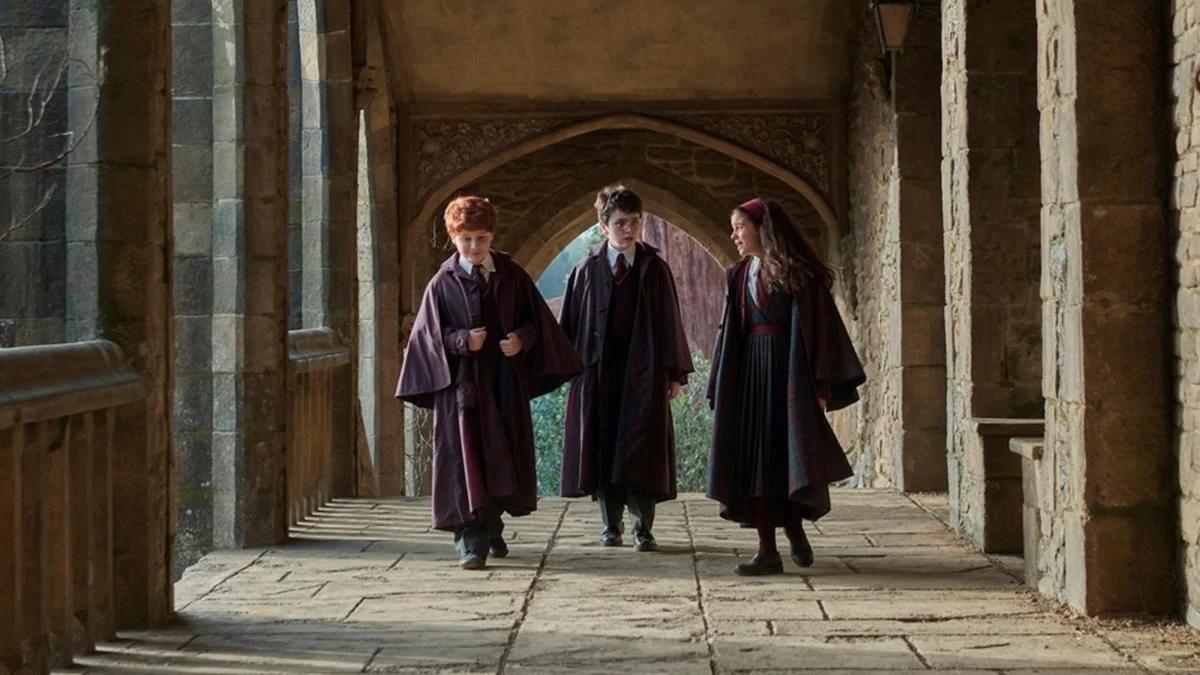
The highly anticipated television adaptation of J.K. Rowling’s Harry Potter saga—arguably the most ambitious project in HBO’s recent history—has hit its first significant production hurdle. Before the inaugural season has even reached the small screen, the production has confirmed a major shift in its core ensemble: Gracie Cochrane, the young actor cast as Ginny Weasley, will not be returning for the series’ second season.
This news, first reported by Deadline, marks a rare and challenging development for a project of this magnitude. As HBO prepares to translate the expansive narrative of the seven-book series into a multi-season format, the stability of the central cast is paramount. The departure of an actor portraying such a pivotal character—who eventually evolves from a peripheral Weasley sibling into a central figure in the Wizarding World—has sparked intense conversation regarding the show’s long-term continuity and production strategy.
The Strategic Shift: Adapting the Epic
To understand the gravity of this recasting, one must first appreciate the scale of HBO’s Harry Potter undertaking. Unlike the Warner Bros. film franchise, which spanned eight films and faced the inherent time constraints of cinematic pacing, this television iteration is designed for depth.
The mandate from HBO and parent company Warner Bros. Discovery is to dedicate entire seasons to individual books. This allows for the inclusion of subplots, character nuances, and world-building elements that were inevitably trimmed or omitted during the 2001–2011 film run. In this format, the actors are not just "filling roles"; they are tasked with growing alongside their characters over what could be a decade-long commitment. The departure of a cast member at such an early stage forces the production to re-evaluate its continuity management, particularly when dealing with characters who undergo significant maturation, such as the youngest Weasley.
A Timeline of the Production
The development of the Harry Potter series has been a slow, deliberate march toward perfection. Since the project was first announced, industry observers have noted the meticulous nature of the casting process, which sought to find a new generation of talent capable of carrying the legacy of the original trio while carving out their own identities.
- Initial Announcement: HBO confirms the "faithful adaptation" of the Harry Potter books, promising a "decade-long" commitment to the source material.
- Casting Phase: Throughout late 2024 and early 2025, casting director Lucy Bevan spearheaded a massive global search for the young ensemble. Gracie Cochrane was unveiled as part of the initial wave of talent, garnering praise for her potential to capture Ginny’s transition from a shy, intimidated first-year student to a formidable, independent witch.
- Production of Season 1: Filming commenced with a focus on Harry Potter and the Sorcerer’s Stone. Production wrapped with the intent of a seamless transition into the second season.
- The May 2026 Announcement: Following months of speculation, an official statement confirmed that Cochrane would be stepping away from the role, necessitating a search for a replacement ahead of the production of Season 2.
Official Responses and the Nature of the Exit
In an industry where departures are often shrouded in "creative differences" or vague corporate PR, the responses regarding Gracie Cochrane’s departure have been notably collaborative and supportive. Both the actor’s representatives and the network have prioritized the well-being of the young performer.
A Statement from the Cochrane Family
The family of the young actor provided a transparent, albeit brief, insight into the decision:
"Due to unforeseen circumstances, Gracie has made the challenging decision to step away from her role as Ginny Weasley in the HBO Harry Potter series after season one. Her time as part of the Harry Potter world has been truly wonderful, and she is deeply grateful to Lucy Bevan and the entire production team for creating such an unforgettable experience."
The Network’s Stance
HBO, demonstrating a desire to maintain positive relations with their talent pool, released a concise, supportive statement:
"We support Gracie Cochrane and her family’s decision not to return for the next season of HBO’s Harry Potter series, and we are grateful for her work on season one of the show."
This alignment suggests that the exit is not born of a conflict, but rather of personal or logistical constraints—a reminder that despite the gargantuan size of the Harry Potter machine, the human element of child acting remains a delicate ecosystem.

Why Ginny Weasley Matters
Ginny Weasley is, without question, one of the most difficult characters to cast in the entire Wizarding World. In the first book, she is a minor presence—a nervous younger sister. By the time the series reaches The Half-Blood Prince and The Deathly Hallows, she is a fierce, courageous, and central figure, both in the fight against Voldemort and in her relationship with Harry Potter.
For a television show that plans to span years, the actor playing Ginny must possess a rare range. They must be able to sell the vulnerability of a young girl in the shadow of her brothers, yet possess the internal fire required to command the screen during the later, darker seasons. Recasting this role after only one season provides the showrunners with a "soft reset" opportunity. They can now look for an actor who specifically fits the trajectory of the character as she begins to play a larger role in the narrative arc starting in the second season.
Implications for the Future of the Franchise
The departure of a core cast member before the show has even debuted presents several challenges and opportunities for the production team.
1. The Continuity Challenge
Maintaining immersion for the audience is the primary hurdle. When a viewer invests in a character, visual consistency is vital. However, because the character of Ginny is relatively young in the first season, the impact of a recast is likely to be less jarring than it would be for the primary trio. The production team will likely frame the second season with enough character evolution that the transition feels natural rather than disruptive.
2. The Casting Search
HBO and Lucy Bevan are currently facing the arduous task of finding a successor who can integrate into a pre-existing ensemble. The chemistry between the actors—particularly between the new Ginny and the rest of the Weasley family, as well as the actor playing Harry—will be the defining factor in whether the recast is viewed as a success.
3. Long-Term Stability
This event serves as a "stress test" for the production. Managing a child cast over a ten-year arc is notoriously difficult, as seen in the original film franchise and other long-running fantasy shows like Stranger Things. HBO has proven that it is willing to prioritize the health and wishes of its cast, a move that will likely earn them goodwill in the industry but may also necessitate more flexible production schedules in the future.
The Road Ahead
As the Harry Potter series moves toward its premiere, the focus will undoubtedly shift back to the quality of the adaptation. The show remains a high-stakes bet for Warner Bros. Discovery, representing a significant portion of their streaming and content strategy for the remainder of the decade.
While the recasting of Ginny Weasley is a significant development, it is also a minor tremor in the context of the series’ total runtime. Fans of the franchise are historically protective of the material, but they are also pragmatic. If the writing remains sharp and the spirit of J.K. Rowling’s original vision is honored, the audience will likely adapt to the change.
As of now, the search for the new Ginny Weasley is underway. Whoever steps into the role will be joining a high-pressure, high-reward environment. For the production team, the goal remains unchanged: to bring the magic of Hogwarts to a new generation, ensuring that the legacy of the Boy Who Lived remains as vibrant, enduring, and captivating as it was when the first book hit shelves nearly three decades ago.
The industry will be watching closely to see who emerges from the casting process next, and whether this early transition ends up being a footnote in the history of a successful series, or a harbinger of the complexities involved in sustaining a decade-long television epic.

 Iffa Jayyana
 Lina Irawan