

By Editorial Staff
The fragility of academic freedom and the integrity of public debate in Japan were thrust into the spotlight this week after a security threat targeted the University of Tokyo’s annual cultural festival. Sohei Kamiya, the firebrand leader of the right-wing populist party Sanseito, expressed "furious" indignation on Monday following a bomb threat that forced the cancellation of his high-profile appearance and disrupted one of the nation’s most prestigious university events.
The incident, which saw both a bomb threat and a specific death threat against Kamiya, has ignited a national conversation regarding the intersection of extremist rhetoric, the safety of political figures, and the chilling effect of violence on democratic processes within Japanese institutions.
The Chronology of a Disrupted Dialogue
The disruption occurred on Saturday, the opening day of the University of Tokyo’s annual school festival—an event usually characterized by vibrant student-led discourse and cultural exchange. The program was slated to feature a centerpiece appearance by Kamiya, followed by a scheduled debate with members of a student politics club.
However, the atmosphere shifted rapidly when organizers received credible intelligence regarding a security breach. According to reports confirmed by local authorities, a bomb threat was submitted via the festival’s official website, specifically targeting the venue. The threat was compounded by a direct, personal death threat directed at Kamiya.
Faced with an inability to guarantee the safety of the student body, faculty, and the public, organizers made the difficult decision to cancel the entire first day of the festival. While the second day of the event proceeded, it did so under a cloud of heightened anxiety, with organizers implementing rigorous, unprecedented security screenings for all attendees.
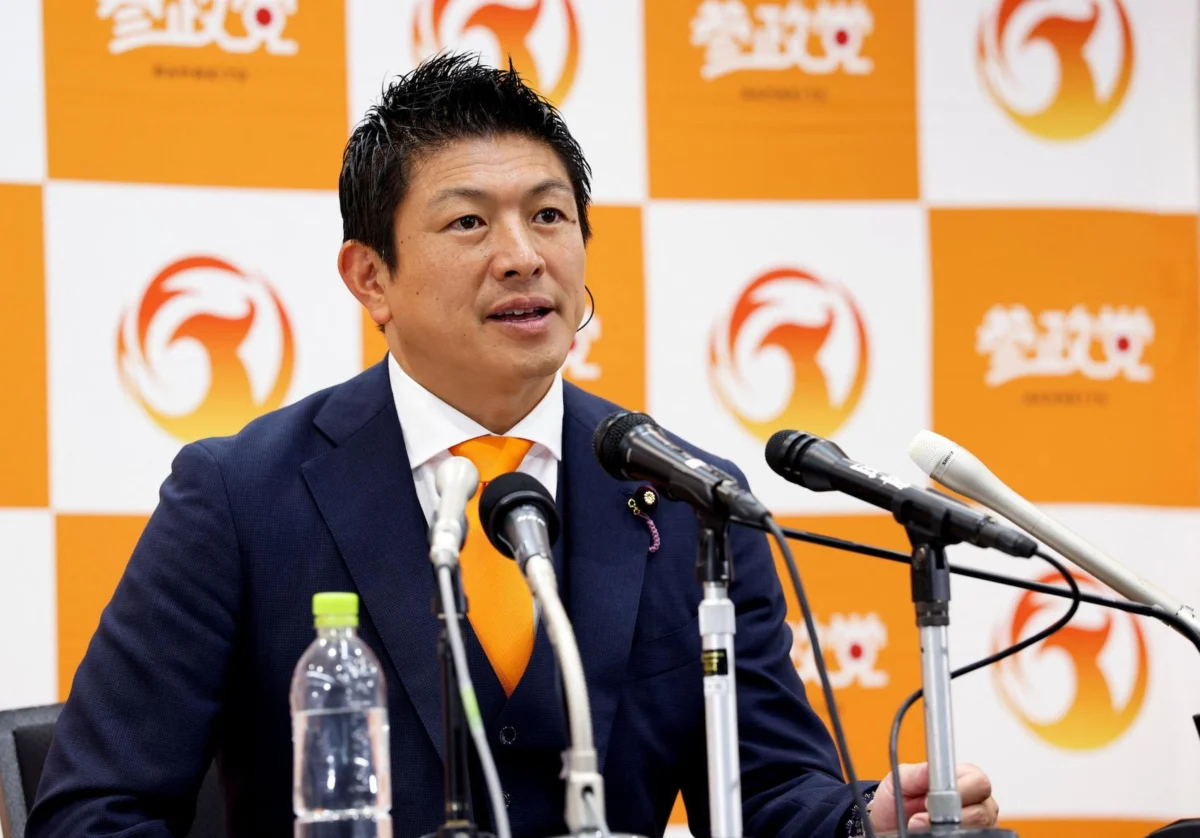
During a press conference held on Monday, Kamiya addressed the media with visible frustration. "I am shocked and furious," Kamiya stated, labeling the incident a "grave" affront to the principles of open debate. He argued that the actions of the anonymous threats did more than target him personally; they "robbed students of a chance to ask questions" and fundamentally damaged the health of Japanese public discourse. In a bid to reclaim the narrative, Kamiya announced that he intends to host the students at the Diet members’ office building in June, ensuring that the intended debate is not silenced by fear.
Sanseito: The Rise of a Populist Force
To understand the weight of this incident, one must examine the rapid ascent of Sanseito. Launched in 2020 by Kamiya, the party emerged from the sociopolitical friction of the COVID-19 pandemic. Initially, the party galvanized support by challenging mainstream consensus on pandemic-era measures, most notably vocalizing skepticism toward government-mandated vaccination programs.
Since its inception, Sanseito has successfully pivoted, evolving from a single-issue protest movement into a broader political entity. The party has masterfully utilized social media platforms to capture the attention of voters who feel increasingly disillusioned by the established political duopoly in Japan. By bypassing traditional media gatekeepers, Sanseito has cultivated a highly engaged, digital-native base that seeks alternatives to the Liberal Democratic Party (LDP) and the fragmented opposition.
Ideological Foundations
The party’s platform is a complex amalgam of economic populism and staunch nationalism. Central to their messaging is the imperative to preserve "Japanese identity." Sanseito’s rhetoric often touches on sensitive societal nerves, warning against what they describe as a "silent invasion" by foreign entities. Their hard-line stance on immigration, coupled with a focus on traditional cultural preservation, has resonated with a demographic that feels sidelined by globalization and demographic decline.
The efficacy of this messaging was validated during the House of Councillors election last summer. Sanseito saw a significant surge in support, leveraging their "Japanese first" slogan to secure a foothold in the national legislature. Today, the party holds 15 seats in the 248-seat upper house. While their presence in the 465-seat House of Representatives remains at 15, the party’s ability to mobilize voters has made them a force that can no longer be ignored by the political establishment.
Supporting Data and Political Landscape
The incident at the University of Tokyo occurs within a volatile political context. Japan has historically been characterized by relative political stability and a low tolerance for physical violence in political discourse. However, the assassination of former Prime Minister Shinzo Abe in July 2022 fundamentally altered the perception of security for public figures.
Security and Institutional Challenges
Following the Abe assassination, Japanese law enforcement agencies tightened security protocols surrounding public appearances. Despite these efforts, the threat against Kamiya demonstrates that public events—even those held on the guarded grounds of elite universities—remain vulnerable to anonymous intimidation.
The economic populism championed by Sanseito also finds fertile ground in Japan’s current fiscal environment. With inflation rising and real wages stagnating, the party’s critique of the current administration’s economic handling has gained traction. However, this populist appeal is often met with fierce criticism from mainstream intellectuals and political opponents who argue that the party’s xenophobic undertones threaten the social fabric of an increasingly diverse Japan.
Official Responses and Security Implications
The University of Tokyo administration has remained largely tight-lipped regarding the specifics of the investigation, citing ongoing cooperation with police. However, the incident has prompted a broader review of campus security policies. University officials expressed regret over the cancellation, emphasizing that the safety of students remains the primary mandate, even when such mandates conflict with the ideals of an open campus.
Political analysts suggest that the threats against Kamiya, regardless of the perpetrator’s identity, create a "rally-around-the-flag" effect for Sanseito. By positioning himself as a victim of anti-democratic tactics, Kamiya reinforces his narrative that the "establishment" is afraid of the alternative voices his party represents.
"When you use violence or threats of violence to silence a political actor, you inadvertently validate their claim that the current system is broken," noted one political science researcher at a Tokyo-based think tank. "Kamiya’s insistence on moving the debate to the Diet is a strategic maneuver that highlights the failure of the university to host a civil exchange, thereby framing Sanseito as the true defender of democratic debate."
Implications for the Future of Public Discourse
The fallout from the canceled event poses several critical questions for Japan’s democracy:
- The Chilling Effect on Academic Freedom: When student organizations fear that hosting controversial speakers will result in threats or cancellations, they may self-censor. This homogenization of campus discourse could deprive the next generation of leaders from engaging with diverse—and sometimes uncomfortable—political viewpoints.
- The Weaponization of Anonymity: The use of digital platforms to issue bomb threats against political speakers is a growing trend. Law enforcement must grapple with the difficulty of tracing digital threats while ensuring that the threshold for canceling public events is not so low that it allows bad actors to dictate the political calendar.
- Polarization and Populism: As Sanseito continues to challenge the political status quo, the rhetoric on both sides of the aisle is likely to intensify. The incident underscores the urgent need for a framework that allows for robust political disagreement without descending into intimidation.
As the June deadline for the rescheduled debate at the Diet approaches, the eyes of the nation will be on the students and the politician. Whether this event serves as a turning point toward more meaningful engagement or a sign of deepening divisions remains to be seen.
Ultimately, the bomb threat at the University of Tokyo serves as a stark reminder that the strength of a democracy is measured not by the absence of controversy, but by the ability of its citizens—and its universities—to host that controversy in safety and peace. As Kamiya prepares for his next engagement, the challenge for the Japanese public is to ensure that the "silent invasion" of fear does not displace the vocal exchange of ideas.
(Note: This article is based on the reports provided by Kyodo News regarding the incident at the University of Tokyo and the subsequent political response.)












No comments yet. Be the first to join the conversation!