

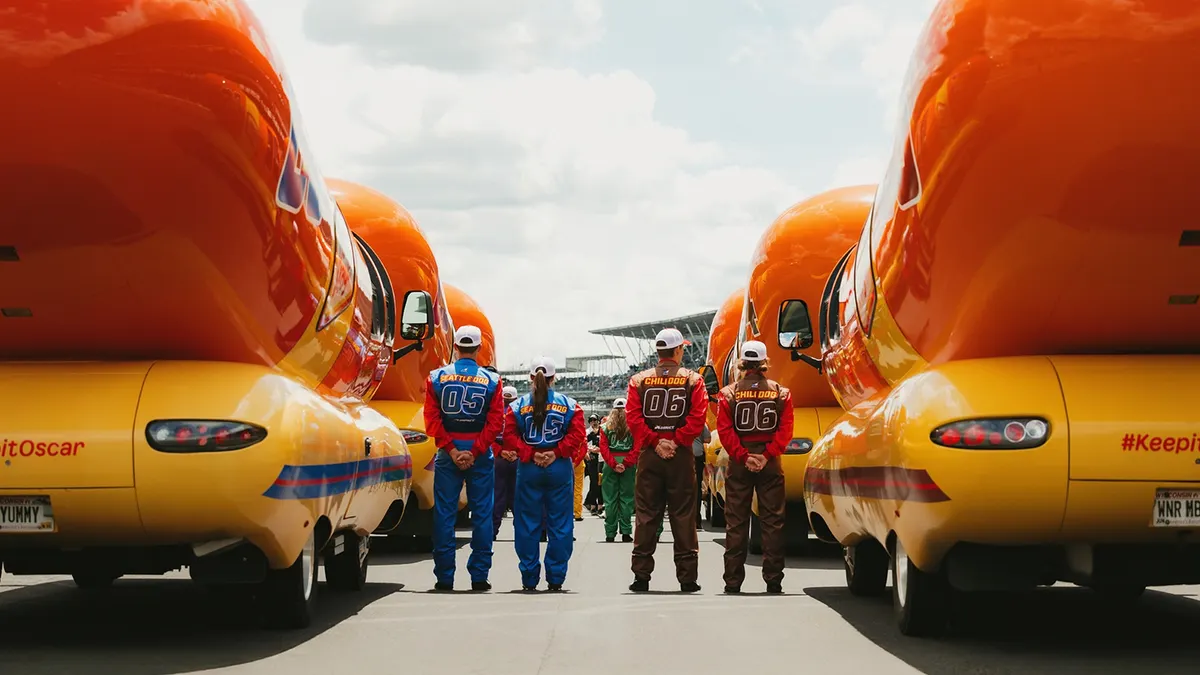
In the competitive landscape of consumer packaged goods (CPG), the battle for Memorial Day weekend—the unofficial kickoff to the American grilling season—is fierce. While most brands rely on standard discounts and traditional circular advertising, Kraft Heinz-owned Oscar Mayer is choosing to burn rubber. As the 2026 Memorial Day holiday approaches, the brand is scaling up its "Wienie 500," a high-octane racing event featuring its iconic Wienermobiles, moving the spectacle from a niche streaming experiment to a full-scale national broadcast on Fox.
This bold pivot represents more than just a quirky marketing stunt; it is a calculated effort to capture market share through entertainment-first advertising. By leveraging the prestige of the Indianapolis Motor Speedway and injecting professional racing aesthetics into a lighthearted brand asset, Oscar Mayer is betting that cultural relevance is the most effective way to drive sales in a price-sensitive grocery market.
The Genesis of the Wienie 500
The inaugural Wienie 500 in 2025 served as a proof-of-concept for the Kraft Heinz marketing team. The event, which pit the fleet of Wienermobiles against one another in a race of agility and flair, managed to attract 85,000 in-person spectators and garnered over 8 million views on the Fox Sports streaming platform.
The impact on the bottom line was immediate. According to company data, the event contributed to the most successful Memorial Day sales window for the brand in four years. Encouraged by this, the brand decided to "turbo-charge" the 2026 iteration, transforming a fun novelty into a polished, professionalized sports property.
“Last year’s inaugural race proved the Wienie 500 is more than just a one-time spectacle; it’s a real race cemented in culture,” said Kelsey Rice, brand communications director at Oscar Mayer. “This year, we are turbo-charging all race elements to give fans a fresh take on the disarmingly delightful experience they fell in love with year one.”
Chronology: Building the 2026 Spectacle
The lead-up to the 2026 event has been marked by a sophisticated multi-channel campaign designed to build anticipation throughout the spring:
- Bracketology & Fan Engagement: Early in the year, Oscar Mayer launched a "Pick Your Dog" bracket, allowing fans to vote on the racing fleet. This interactive element resulted in the elimination of the Sonoran Dog car, while the Corn Dog vehicle earned a coveted spot in the starting lineup.
- Professional Coaching: Recognizing the need for increased authenticity, the brand enlisted professional IndyCar drivers Nolan Siegel, Stingray Rob, and Scott McLaughlin to coach the "Hotdoggers" (the brand ambassadors who pilot the Wienermobiles). These sessions were filmed and are being rolled out as social content.
- The Teaser Campaign: In the week leading up to the race, Oscar Mayer released a humorous teaser featuring mock interviews with racers describing the event as "historic." The footage successfully socialized the brand on platforms like Instagram and TikTok while utilizing a "timeline takeover" strategy on X to dominate trending conversations.
- Broadcast Kickoff: The race is scheduled to air on Fox at 2:00 p.m. ET on Friday, May 22, 2026—just two days before the Indianapolis 500.
Supporting Data and Creative Execution
The 2026 campaign is a masterclass in agency collaboration. Johannes Leonardo provided the core creative direction, while Kraft Heinz’s in-house agency, The Kitchen, steered the social media strategy. Media planning was handled by Carat, with the Zeno Group managing the public relations rollout.
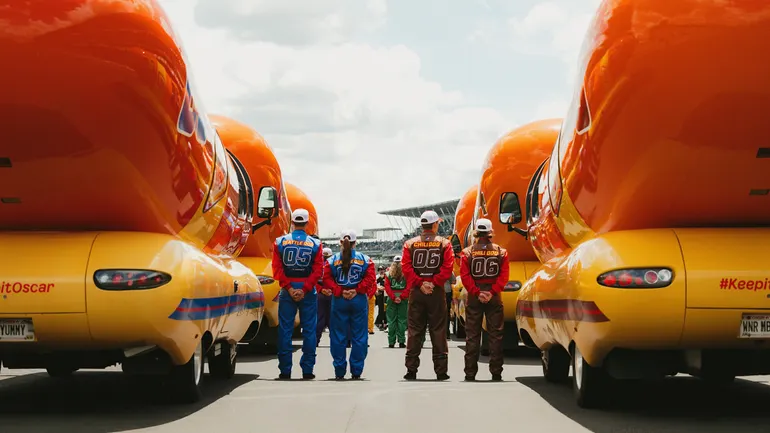
The attention to detail in the 2026 race is designed to bridge the gap between "brand mascot" and "serious motorsport." The Wienermobiles have received a fresh livery, and drivers have been outfitted with professional racing gear. Perhaps most significantly, the brand introduced the "Borg-Wiener Trophy," a playful yet prestigious nod to the Indy 500’s iconic Borg-Warner Trophy. In a move to add genuine industry legitimacy, Joe Fadool, CEO of the automotive supplier BorgWarner, will personally present the trophy to the winner.
The brand is also integrating retail technology into the experience. Through a partnership with Instacart, consumers are invited to bet on which vehicle will cross the finish line first for a chance to win free hot dogs, directly linking the entertainment event to the grocery shopping experience.
Official Responses and Strategic Vision
The shift toward massive experiential marketing events is part of a wider, aggressive strategy at Kraft Heinz. Under pressure to deliver growth in a challenging economic climate, the company has ramped up its marketing spend by 37% year-over-year in the first quarter of 2026.

This spend is not just about awareness; it is about "turnaround marketing." The company is moving away from purely functional advertising—highlighting price and flavor—toward campaigns that position the brand as a cornerstone of American life. This is reflected in the brand’s participation in the "America250" program, a massive portfolio-wide initiative celebrating the nation’s upcoming semiquincentennial.
By hosting watch parties at Tom’s Watch Bar locations across the U.S. and securing a national broadcast deal, Oscar Mayer is forcing its way into the conversation during a weekend dominated by professional sports. They are effectively positioning a processed meat product alongside the high-octane drama of the Indianapolis 500, a juxtaposition that is intentionally absurd yet highly memorable.
Implications for the CPG Industry
The success of the Wienie 500 offers several key takeaways for marketers in the food and beverage space:
1. The Death of the "One-Off"
Brands are increasingly realizing that a single viral moment is fleeting. The transition of the Wienie 500 from a streaming "test" to a national broadcast "staple" demonstrates the power of serializing branded content. By creating an annual event, Oscar Mayer has established a "hook" that consumers can anticipate and plan their holiday around.
2. The Power of "Cultural Legitimacy"
By partnering with the Indianapolis Motor Speedway and professional drivers, Oscar Mayer has successfully borrowed prestige from the sports world. Instead of simply being a brand that sponsors a race, they have become an entity that produces a race, elevating the brand from a passive advertiser to an active participant in the culture of motorsports.

3. Bridging the Digital-Physical Divide
The integration of Instacart voting, social media bracket challenges, and physical watch parties creates a seamless "phygital" (physical and digital) experience. Consumers are not just watching the race; they are interacting with the brand through their phones while purchasing the product via delivery apps.
4. Navigating Economic Pressures
In an era where inflation has made consumers more cautious, brand loyalty is often tested. Kraft Heinz’s decision to increase marketing spend during this period is a bet that emotional connection and memorable entertainment can insulate a brand from private-label competition. By making Oscar Mayer synonymous with "the Wienie 500," the brand is banking on the idea that when it comes time to choose a brand for the Memorial Day cookout, the consumer will reach for the name they saw "winning the race" on national television.
Conclusion: A New Standard for Branded Entertainment
As the 2026 Memorial Day weekend approaches, all eyes will be on the Indianapolis Motor Speedway to see if the Wienie 500 can replicate its past success on a larger stage. Whether or not the race itself produces a photo finish is secondary to the fact that Oscar Mayer has already won the battle for attention.
By refusing to settle for standard advertising and instead opting to become a content creator in the professional sports space, Oscar Mayer is setting a new, high-bar standard for the CPG industry. The Wienie 500 is a testament to the fact that even the most mundane household staples can become icons of entertainment, provided the brand is willing to take the wheel and drive at full throttle.









No comments yet. Be the first to join the conversation!