Asro
Asro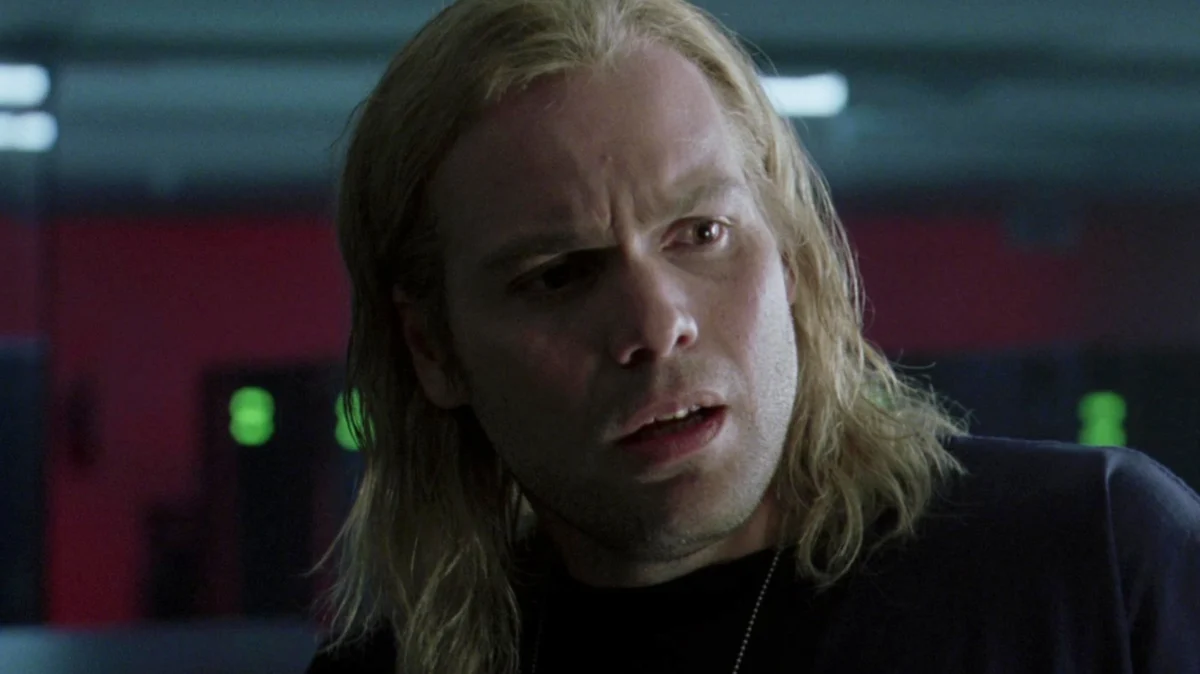
The year 1999 remains the undisputed zenith of science fiction cinema, a twelve-month period where the boundaries between reality and artifice were permanently blurred. While the pop-cultural zeitgeist was dominated by the revolutionary bullet-time aesthetics of the Wachowskis’ The Matrix, a quieter, more existential inquiry into the nature of existence was unfolding in the shadows of the box office. The Thirteenth Floor, an adaptation of Daniel F. Galouye’s 1964 novel Simulacron-3, promised a cerebral exploration of the "simulation hypothesis." Instead, it found itself trapped in the cinematic equivalent of a void—overlooked by audiences, panned by critics, and financially buried under the weight of its own ambition.
The Premise: A Reality Built on Layers
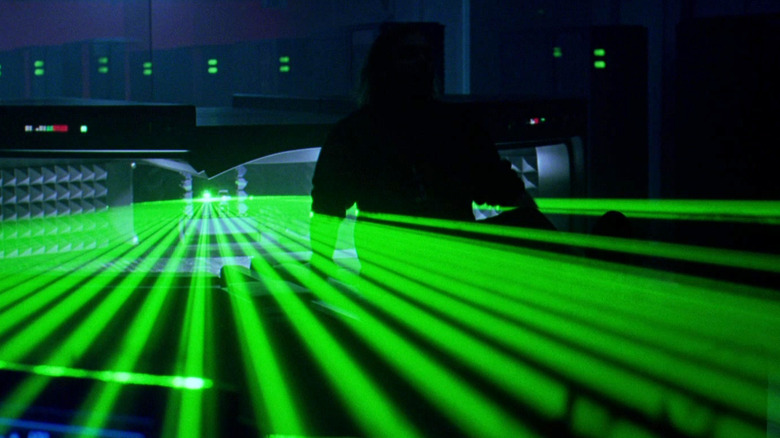
At its core, The Thirteenth Floor is a nesting doll of existence. The plot follows Hannon Fuller (Armin Mueller-Stahl), a tech visionary who develops a hyper-realistic virtual reality simulation of 1937 Los Angeles. Within this digital construct, the inhabitants are fully sentient, unaware that their lives, loves, and tragedies are merely lines of code running on a server in the "real" world of 1999.
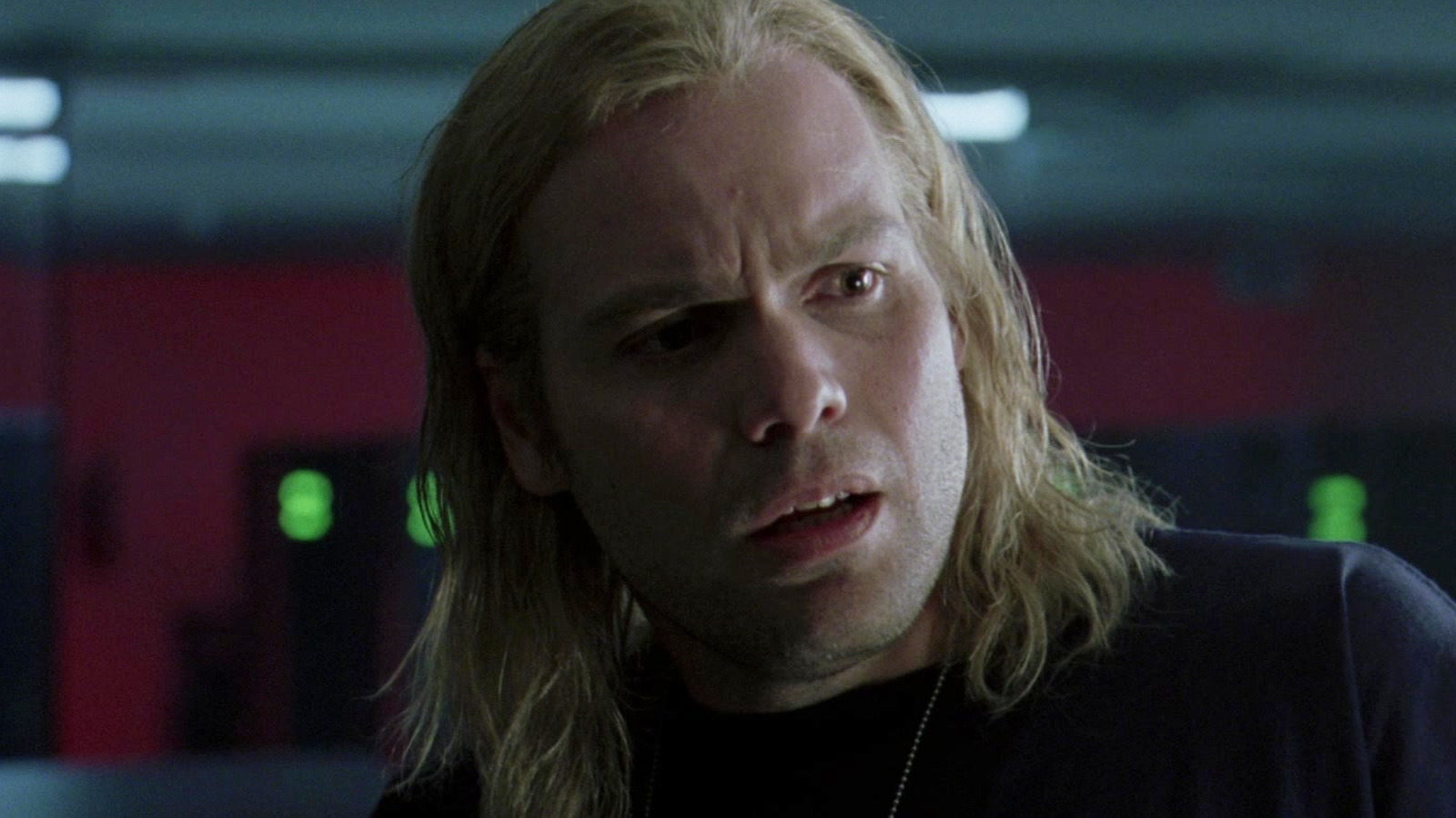
The narrative engine kicks in when Fuller is murdered. His protégé, Douglas Hall (Craig Bierko), becomes the prime suspect. As Hall descends into the virtual 1937 to clear his name, he discovers a terrifying truth: the "real" world of 1999 might be just another layer in a vast, infinite hierarchy of simulations. With the assistance of his colleague Jason Whitney—played by the enigmatic Vincent D’Onofrio—Hall begins to question the very fabric of his own reality.
A Chronology of Obsolescence
The journey of The Thirteenth Floor began long before its 1999 release. The source material, Daniel F. Galouye’s Simulacron-3, was a pioneering work of speculative fiction that pre-dated the digital age. Its first major adaptation was the 1973 West German television masterpiece World on a Wire (directed by Rainer Werner Fassbinder), a two-part epic that remains a cult classic among cinephiles.
In the late 1990s, the concept of virtual reality—fueled by the burgeoning internet and the public’s nascent anxiety about the Y2K bug—became a fertile ground for Hollywood. Producers Marco Weber and Roland Emmerich, both admirers of the German adaptation, sought to bring the story to a modern, mainstream audience. They recruited director Josef Rusnak, known for his work on Godzilla, to helm the production.
However, the timing was catastrophic. Production for The Thirteenth Floor overlapped with the massive marketing machine of The Matrix. When The Thirteenth Floor hit theaters in May 1999, it was greeted with immediate skepticism. Audiences, having just witnessed the high-octane spectacle of Keanu Reeves dodging bullets, were not prepared for a somber, noir-inspired philosophical thriller. It earned a meager $18.6 million against a $16 million budget, effectively nullifying any chance of a sequel or franchise potential.
Supporting Data: The Economics of Failure
To understand the failure of The Thirteenth Floor, one must look at the landscape of the late 90s. The industry was undergoing a transition toward "high-concept" blockbuster cinema. The Thirteenth Floor was neither a low-budget indie darling nor a massive tentpole; it sat in a precarious middle ground.
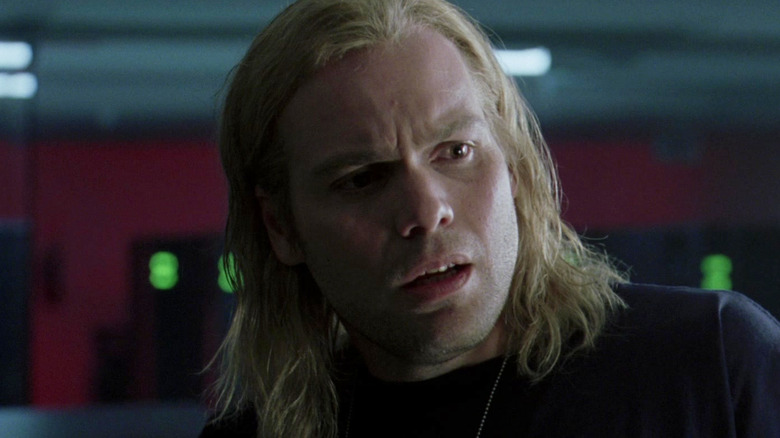
Critics were particularly unkind, citing a lack of technical polish compared to the groundbreaking visual effects of its contemporaries. On Rotten Tomatoes, the film maintains a 29% critic approval rating. The New York Post’s Jonathan Foreman famously skewered the film for its "pedestrian dialogue" and "slow pacing." Even when critics like Lawrence Van Gelder of The New York Times acknowledged the film’s "stylish" nature and "strong" performances from D’Onofrio and Bierko, the consensus remained that the film was an intellectual exercise that failed to land its emotional punches.
The Philosophical Weight of the Simulation Hypothesis
Why does The Thirteenth Floor matter today, twenty-five years later? The answer lies in the evolution of the "Simulation Hypothesis." Since the film’s release, thinkers like Nick Bostrom have formalized the theory, arguing that if a civilization can create a computer simulation of their own history, the statistical likelihood that we are the "base reality" is infinitesimally small.
The Thirteenth Floor was, in many ways, ahead of its time. It dared to ask questions that the general public was not yet ready to engage with in a narrative format. Unlike The Matrix, which framed the simulation as a prison to be escaped, The Thirteenth Floor framed it as a existential nightmare of identity. If your reality is a simulation, does your suffering matter? Does your soul exist? These are heavy, abstract questions, and the film’s struggle to resolve them in a satisfying, blockbuster-friendly way is precisely what led to its downfall.
Official Responses and Creative Perspectives
In the years since its release, the creative team has largely moved on, though the film has gained a dedicated following. Vincent D’Onofrio, who delivered a nuanced performance as the cynical, world-weary Jason Whitney, has often spoken about the difficulty of balancing character-driven drama within high-concept sci-fi settings. For the director, Josef Rusnak, the film was an attempt to capture the "noir" aesthetic of the 1930s while clashing it with the sterility of the late 90s, a stylistic choice that was lauded by set designers but criticized by mainstream reviewers as "confusing."
The film’s failure serves as a case study for studio executives on the risks of "thematic crowding." When multiple films explore the same niche topic—such as eXistenZ, Dark City, Vanilla Sky, and The Matrix—the market becomes saturated. The "first-mover advantage" goes to the film that best captures the cultural imagination, leaving the others to be viewed as derivatives, regardless of their actual quality or intent.
The Implications: Why It Deserves a Second Look
In the modern era of streaming, The Thirteenth Floor has found a new life. On platforms like Tubi, a new generation of viewers is discovering that the film’s "flaws"—the slow pace, the emphasis on mystery over action, and the labyrinthine plotting—are actually its greatest strengths.
The film stands as a relic of a time when Hollywood was willing to bet on high-concept, intellectual science fiction before the era of the superhero cinematic universe fully took hold. It asks the audience to treat the screen not just as an entertainment portal, but as a mirror.
While it will never be categorized alongside the masterpieces of the genre, The Thirteenth Floor occupies a unique space in cinematic history. It is a "what-if" story about the dangers of creating life, the fragility of identity, and the haunting possibility that we are merely ghosts in a machine. For those who find the glossy perfection of modern CGI-heavy sci-fi to be cold and empty, this 1999 disaster offers a surprisingly warm, human, and thought-provoking experience. It serves as a reminder that sometimes, the most interesting stories are the ones that fall through the cracks of reality.

 Ali Ikhwan
 Nila Kartika Wati