

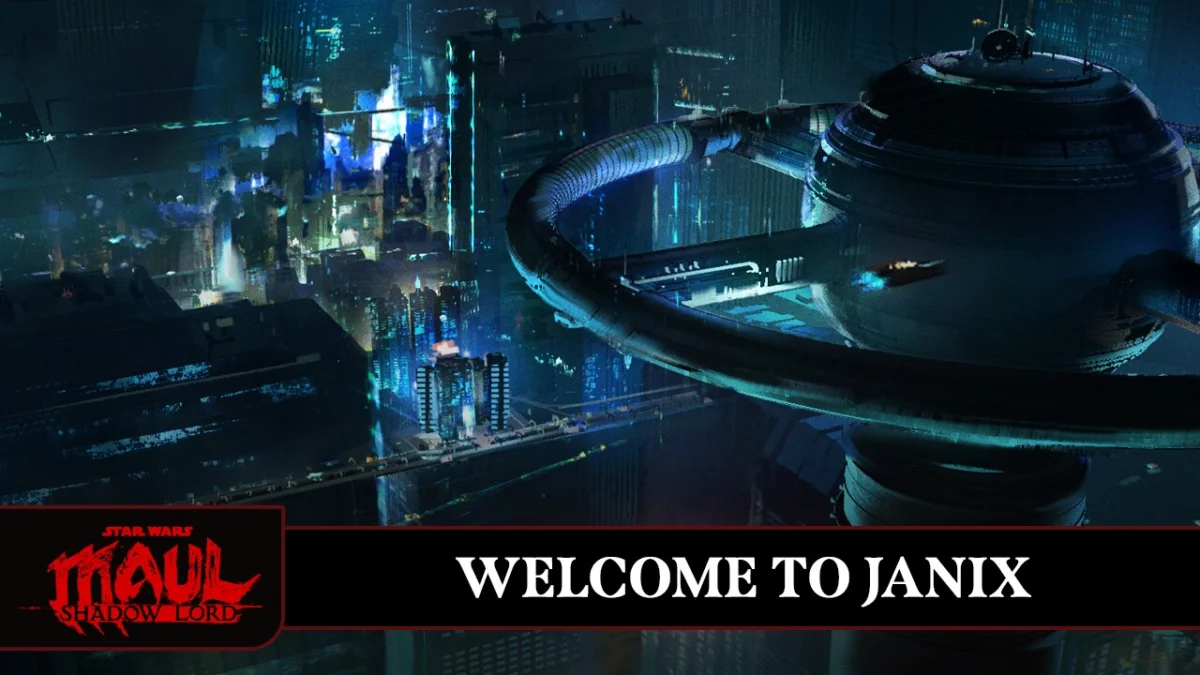
On April 7, 2026, Lucasfilm Animation pulled back the curtain on one of the most visually ambitious projects in the Star Wars canon: Star Wars: Maul – Shadow Lord. The series, now streaming on Disney+, departs from the typical galaxy-spanning scope of the franchise to focus on an intimate, intense character study set within the labyrinthine capital city of the planet Janix.
By blending cutting-edge computer-generated (CG) technology with the tactile, imperfect beauty of traditional fine art, the production team has created a cityscape that feels less like a digital construct and more like a living, breathing painting.
Main Facts: A New Frontier in Animation
Star Wars: Maul – Shadow Lord represents a significant pivot for Lucasfilm Animation. The series centers on the disgraced Sith Lord Maul, who seeks refuge on Janix, a backwater world nestled inside a massive meteor impact crater and shrouded by thick, impenetrable jungles.
Unlike the sprawling, hyper-urbanized Coruscant, Janix is a provincial metropolis. It is a place largely ignored by the Empire, making it a natural magnet for those living on the fringes of galactic society—exiled Jedi, underworld contacts like Captain Brander Lawson, and broken warriors like Maul. The city is defined by its "pulpy noir" atmosphere, a stylistic choice that Supervising Director Brad Rau describes as the foundational aesthetic that "permeates everything from script to screen."
Chronology of Development
The creation of Janix was not a singular event but a multi-year evolutionary process that began with a mandate from Lucasfilm President Dave Filoni.
The Conceptual Phase
Early in development, the design team—led by Art Director Andre Kirk—was tasked with avoiding the "Coruscant trap." The team sought to distance themselves from the familiar visual language of the capital world. Inspired by the retro-futuristic visions of the 1950s and 60s, the team prioritized "shape language" and color palettes that evoked a sense of mid-century sci-fi optimism twisted by industrial decay.
The Integration Phase
By mid-production, the focus shifted from concept art to spatial logic. Kirk and Brad Rau utilized whiteboards and "chicken-scratch" diagrams to map out the city’s geography. This was critical for narrative consistency; the team needed to ensure that as Maul traversed the city, his movements adhered to a logical flow. This logistical rigor allowed the designers to build a city that feels physically real, even when the visual style becomes abstract.
The Execution Phase
The final phase involved the revolutionary implementation of "painterly" CG assets. Using a combination of software developed by Senior Lighting and Visual Effects Artist Valerie Perez and high-resolution photography of physical paint on glass, the team replaced the standard "clean" look of modern animation with deliberate, expressive brushstrokes that mimic traditional matte painting.
Supporting Data: Engineering the Impressionistic City
The technical requirements for Janix were immense. To achieve the desired "hand-painted" look, the production team had to bridge the gap between binary code and physical media.
The "Lonely Planet" Methodology
Director of Lighting, Cinematography, and Visual Effects Joel Aron compared the world-building process to preparing for a trip to a foreign country. By treating Janix as a real, documented location, the team created a "traveler’s guide" approach to the city. Every district, from the criminal underworld’s hidden dens to the Janix Civil Defense station, was designed to fit into a cohesive urban grid.
The Brushstroke Protocol
Perhaps the most innovative aspect of the production was the integration of physical brushwork. Senior Digimatte Artist Kyra Kabler and her team looked to classical masters like J.M.W. Turner and John Singer Sargent for inspiration.
The process involved:
- Physical Swatches: Artists painted brushstrokes onto clear glass, which were then photographed at high resolution.
- Digital Translation: These assets were incorporated into the CG rendering pipeline.
- Cinematic Distortion: Technical Director Alex Shaulis developed a method to use these brushstrokes to distort visual effects, preventing the "clinical" look often associated with digital animation. By applying these strokes to elements like smoke, fire, and lighting, the team ensured that even the most chaotic scenes retained a human touch.
Official Responses and Creative Intent
The leadership team at Lucasfilm has been vocal about how the setting serves the story, rather than the other way around.
Brad Rau on the "Pulpy Noir" Vibe
"It’s a pulpy noir vibe that permeates everything," says Supervising Director Brad Rau. "We needed the city to feel grounded in a way that viewers can relate to, yet still distinctly Star Wars. We moved the traffic down from the skies to the streets, bridges, and trains to create a terrestrial, lived-in feel."
Dave Filoni’s Artistic Mandate
Joel Aron recalls the specific directive from Dave Filoni, who requested a synthesis of the band Def Leppard’s Hysteria album art and his own comic book covers. "Filoni wanted to see the hand of the artist in every frame," Aron explains. "He wanted us to push the bounds of what CG can do by forcing it to behave like oil on canvas."
Kyra Kabler on the Psychological Landscape
Senior Digimatte Artist Kyra Kabler emphasizes that the art style is a direct mirror of the protagonist’s mental state. "Maul is devolving. He’s traumatized and obsessed with revenge. As he loses his grip, the city loses its definition," Kabler explains. "The abstract qualities of the city—the blur, the grime, the neon reflections—make the environment feel like an extension of his internal turmoil. You, as the viewer, feel as lost as he is."
Implications: The Future of Star Wars Animation
The success of Star Wars: Maul – Shadow Lord signals a shift in the animation industry. For years, the goal of CG animation was to achieve "photorealism." By intentionally moving toward an impressionistic, stylized aesthetic, Lucasfilm is challenging the notion that more detail equals better storytelling.
Breaking the "Megablock" Cycle
The rejection of the Coruscant-style "megablock" architecture in favor of a more modular, grounded urban design suggests a desire for more intimate, character-focused storytelling. This approach allows for tighter framing and a greater emphasis on lighting and color theory, providing directors with a broader palette to express the emotional temperature of a scene.
The Soul of the Craft
The decision to utilize physical brushstrokes and real-world reference material like Hong Kong cityscapes provides a roadmap for future projects. It proves that the "soul" of a project is found in the practicality of its design. When audiences watch the premiere episodes on Disney+, they aren’t just seeing a computer simulation; they are seeing the digital equivalent of a canvas, touched by the hands of artists who have successfully translated classical painting techniques into the realm of a galaxy far, far away.
As the series continues, the evolution of Janix will undoubtedly serve as a masterclass in environmental storytelling. Whether it is a utopia or a dystopia remains to be seen, but one thing is certain: the city of Janix is as much a character in this story as Maul himself.
New episodes of Star Wars: Maul – Shadow Lord premiere every Monday at 12 a.m. PT, exclusively on Disney+.











No comments yet. Be the first to join the conversation!