

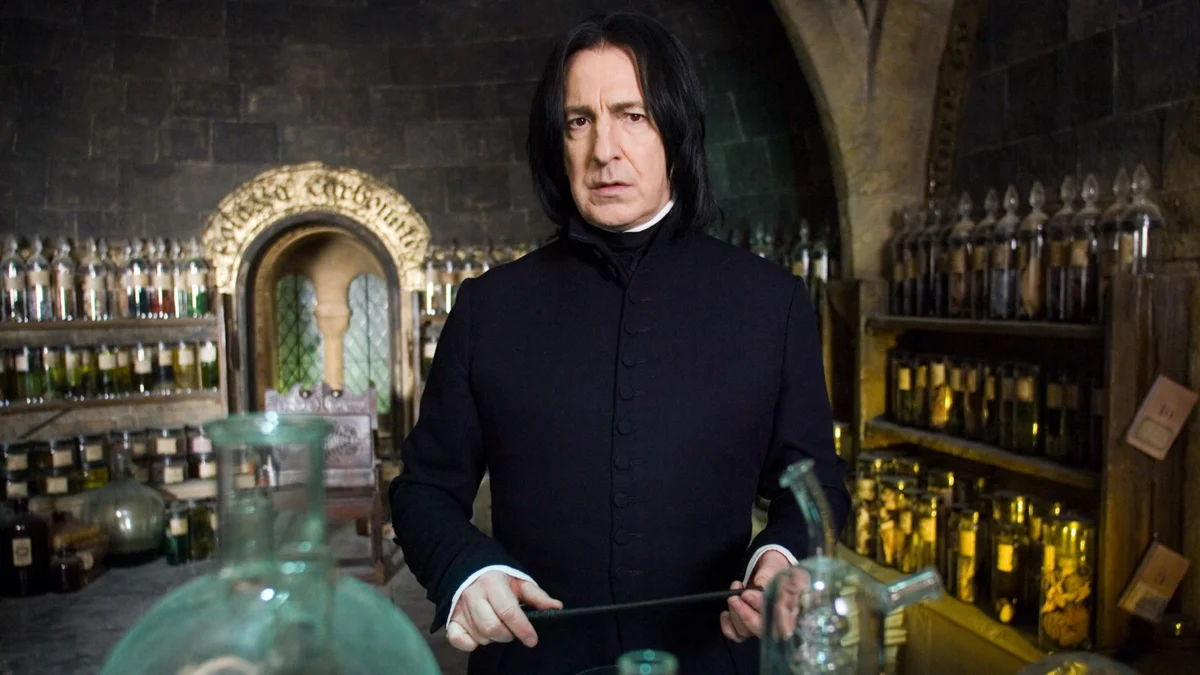
In the expansive tapestry of J.K. Rowling’s Harry Potter universe, few characters have generated as much academic and fan debate as Severus Snape. Portrayed with haunting, layered brilliance by the late Alan Rickman in the film franchise, the Potions Master of Hogwarts School of Witchcraft and Wizardry remains an enigma. Often perceived as a cruel, vindictive antagonist, the revelation of his role as a double agent working for Albus Dumbledore transforms him into perhaps the series’ most profound tragic hero. Yet, to understand the man who would ultimately sacrifice everything to defeat Lord Voldemort, one must look toward the root of his bitterness: a fractured, isolated, and deeply unhappy childhood.
Main Facts: The Architecture of a Broken Home
Severus Snape’s early life was defined by a stark contrast between two worlds. Born to Eileen Prince, a witch, and Tobias Snape, a Muggle, Severus grew up in the dismal surroundings of Spinner’s End—a desolate, industrial neighborhood that reflected the emotional sterility of his home life.
The primary trauma of his childhood was the volatility of his parents’ marriage. The Prince-Snape household was characterized by neglect and domestic discord. In the memories accessed by Harry Potter during his Occlumency lessons in Harry Potter and the Order of the Phoenix, the reader is presented with a harrowing tableau: a "hook-nosed man shouting at a cowering woman," while a small, neglected boy retreats into the shadows. This early exposure to hostility likely stunted Snape’s emotional development, leaving him with a deep-seated distrust of others and a survival instinct that prioritized emotional armor over vulnerability.
The name "Half-Blood Prince"—a moniker he gave himself—served as both a badge of honor and a secret refuge. By reclaiming his mother’s maiden name (Prince) and acknowledging his mixed magical heritage, Snape sought to elevate himself above the squalor of his upbringing. His intelligence was his only currency; in his youth, he turned to dark magic and intellectual superiority to fill the void left by a lack of parental affection.
Chronology: From Spinner’s End to the Halls of Hogwarts
To map the trajectory of Snape’s life is to chart a descent into isolation, interrupted only by his singular, obsessive devotion to Lily Evans.
- Early Childhood: Snape grows up in Spinner’s End. His father, Tobias, is distant and aggressive, while his mother, Eileen, is unable to provide a stable emotional foundation. Severus develops a keen interest in magic early, using it to cope with his loneliness.
- The Meeting of Souls: At age nine or ten, Snape encounters Lily Evans, a young Muggle-born girl living nearby who displays accidental magical ability. This becomes the most significant relationship of his life. Lily provides the warmth he lacks at home; he provides her with knowledge of the wizarding world.
- The Sorting: Upon arriving at Hogwarts, the divergence is cemented. Lily is sorted into Gryffindor, while Snape is sorted into Slytherin. The ideological divide begins here, as Snape falls in with the circle of students who would eventually become Death Eaters—a group that values "purity" and power over the friendship he once cherished.
- The Bullying Era: Throughout his teenage years, Snape is the target of relentless bullying by James Potter and Sirius Black. This era is critical; the humiliation he suffers at the hands of the "Marauders" solidifies his resentment toward Gryffindors and his belief that he is an outsider destined for scorn.
- The Severance: The turning point occurs when, in a moment of extreme duress, Snape calls Lily a "Mudblood." This act of bigotry and betrayal causes Lily to sever their friendship permanently, leaving Snape with nothing but his bitterness and his slide toward the dark arts.
- The Double Life: Following the death of Lily Potter, Snape undergoes his ultimate transformation—pledging his life to Dumbledore. He spends the remainder of his years at Hogwarts, acting as a protector to the son of his rival, all while playing the role of a villain to maintain his cover within Voldemort’s ranks.
Supporting Data: The Psychology of the "Insecure Intellectual"
Psychologically, Snape’s behavior as an adult—specifically his tenure as a professor—is a textbook example of the cycle of abuse. Pedagogical experts who have analyzed the series often point out that Snape’s classroom management style is designed to humiliate. By mimicking the dynamics of his own childhood, he exerts control over students who represent the "privileged" figures he envied or despised.
His treatment of Harry Potter is particularly telling. Harry represents the intersection of everything Snape loved and hated: the eyes of Lily and the arrogance of James. When Snape berates Ron Weasley—who comes from a large, loving, and supportive family—or Neville Longbottom, his aggression is rooted in a fundamental resentment of their social and emotional stability. He projects his own feelings of inadequacy onto those he perceives as having an "easy" life.
The Order of the Phoenix memories reveal that this cruelty was not a recent development. The young Snape, sitting alone in a dark bedroom, was already practicing jinxes and isolating himself. His transition from a victim of bullying to a bully himself serves as a narrative warning about the corrosive nature of unaddressed trauma.
Official Responses and Canon Perspectives
J.K. Rowling has frequently described Snape as a character who is "neither a saint nor a devil." In interviews and companion materials, she has highlighted that Snape’s heroic actions in the final books do not necessarily erase his past bigotry or his abusive teaching methods.
"Snape is a complicated man," Rowling noted in various discussions regarding his legacy. "He is, in many ways, a man who gave up his humanity to save a memory."
Critics and scholars often point to Dumbledore’s role in Snape’s life as a point of contention. While Dumbledore is the moral compass of the series, his reliance on Snape was inherently exploitative. Dumbledore utilized Snape’s unrequited love for Lily as a leverage point, effectively ensuring that the trauma of the past was never allowed to heal. This "official" perspective within the lore reinforces that Snape was a man who lived his entire adult life as a prisoner of his own childhood ghosts.
Implications: Why Snape Remains Relevant
The enduring fascination with Severus Snape stems from the fact that he is the series’ most human character. While Harry is the "Chosen One" and Voldemort is the embodiment of absolute evil, Snape exists in the gray—a man who made horrific choices but was capable of profound self-sacrifice.
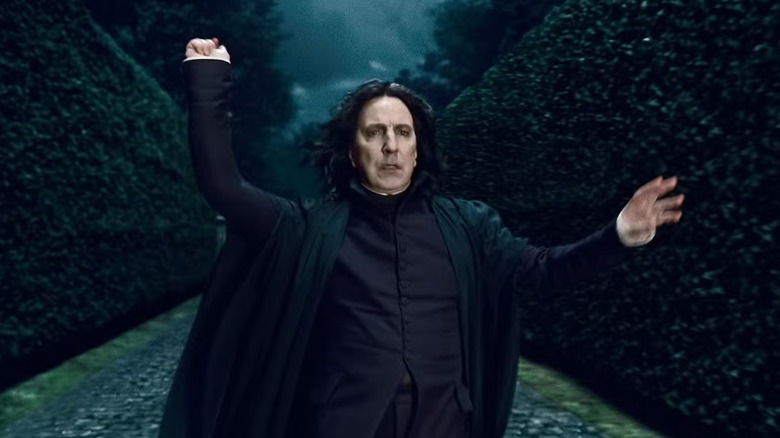
- The Danger of Isolation: Snape’s story illustrates that talent, when coupled with isolation and a lack of empathy, can lead to radicalization. Had he been offered support during his formative years, his path might have looked vastly different.
- The Complexity of Forgiveness: Does the fact that Snape saved the wizarding world make him a "good" person? The narrative leaves this open, forcing the audience to grapple with the idea that one can be both a hero and a bully.
- The Mirror of Youth: For many readers, the depiction of the Marauders’ bullying of Snape is the first time they encounter the moral ambiguity of "heroes." Seeing the "cool" kids behave cruelly towards the "outcast" forces the reader to rethink their loyalties.
In conclusion, Severus Snape’s childhood is the essential key to unlocking the Harry Potter saga. It is a stark reminder that the villains—and the heroes—of our world are often shaped by the quiet, painful moments of their youth. Snape spent his life trying to escape the shadow of the boy he once was, only to find that he was tethered to that history until his very last breath. Understanding his upbringing does not excuse his cruelty, but it provides the necessary context to appreciate why, when he finally told Harry that he had his mother’s eyes, it was the most important moment of his life.











No comments yet. Be the first to join the conversation!