

For nearly a decade, the Star Wars franchise has existed in a state of creative flux. Following the conclusion of the Skywalker Saga with 2019’s The Rise of Skywalker, Lucasfilm found itself navigating a turbulent landscape defined by high-budget ambition, fan polarization, and a revolving door of high-profile creative talent. Among the most intriguing "what-ifs" in recent cinematic history is the project spearheaded by Damon Lindelof—a film that promised to address the franchise’s identity crisis head-on, only to be shelved by the studio.
Recently, the Watchmen and Lost creator broke his silence on the House of R podcast, offering an unfiltered look at why his ambitious attempt to bridge the gap between nostalgia and reinvention ultimately failed to reach the screen.
The Landscape of Abandoned Ambitions
To understand the weight of Lindelof’s project, one must look at the graveyard of Star Wars development. Lucasfilm’s strategy following the sequel trilogy was to expand the universe through a variety of high-profile, distinct voices. However, many of these ventures remained trapped in "development hell."
The list of discarded or stalled projects reads like a who’s who of modern Hollywood. Rian Johnson, despite the divisive nature of The Last Jedi, was initially slated for an entirely new trilogy that explored corners of the galaxy far removed from the Skywalker lineage. Similarly, Game of Thrones architects David Benioff and D.B. Weiss were signed on for a series of films that never materialized. Even Kevin Feige, the mastermind of the Marvel Cinematic Universe, was reportedly tapped to bring his Midas touch to a Star Wars project, yet that, too, faded into obscurity.
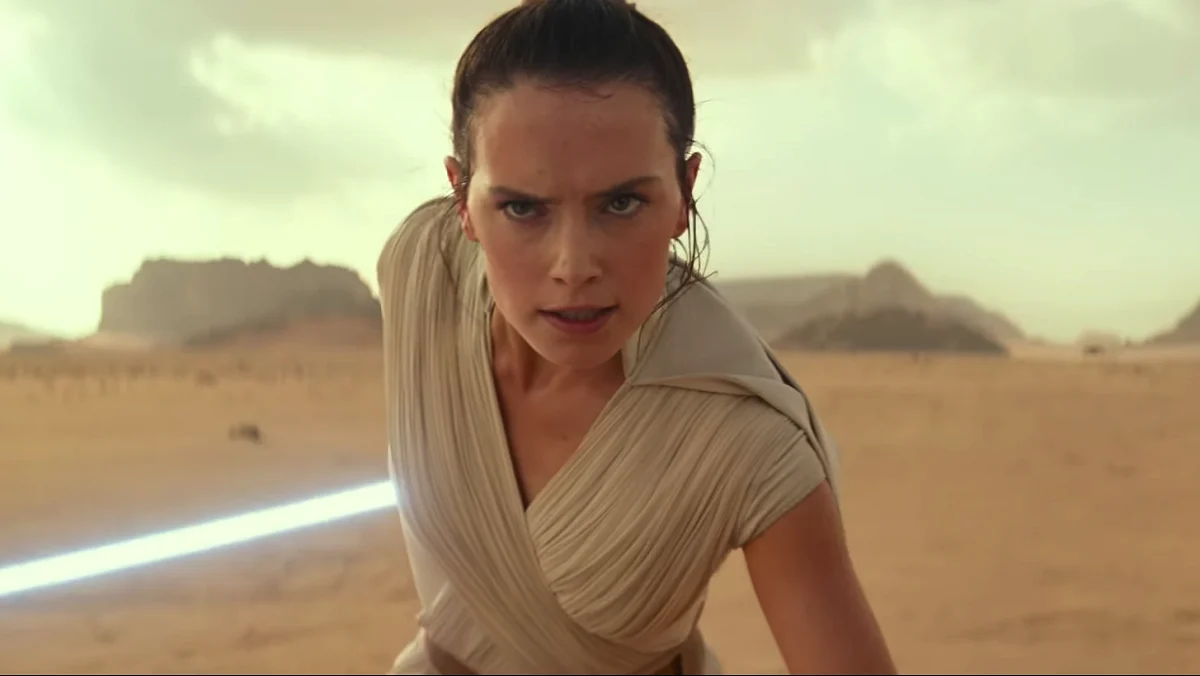
Against this backdrop, Lindelof’s task was perhaps the most daunting: he was tasked with revisiting the most controversial era of the franchise. His film was intended to feature Daisy Ridley as Rey, picking up the pieces after the events of The Rise of Skywalker. It was meant to be the bridge that reconciled the past with an uncertain future.
Chronology of a Creative Departure
The timeline of Lindelof’s involvement with Lucasfilm reflects the broader difficulties the studio has faced in establishing a post-Skywalker identity.
- Initial Engagement: Following the wrap-up of the sequel trilogy, Lucasfilm sought a narrative path forward. Lindelof, known for his ability to handle complex, myth-heavy storytelling, was brought into the fold. The premise was simple yet bold: define what a Star Wars movie should be in the modern era.
- The Development Phase: For nearly two years, Lindelof and his team labored over a screenplay. The process was, by his own admission, grueling. The challenge was not just writing a script, but navigating the massive, interconnected web of lore that constitutes the Star Wars canon.
- The Parting of Ways: After two years of intensive development, the partnership ended abruptly. Lindelof revealed that he was effectively "fired" from the project. This departure marked the end of his specific vision, though the desire to bring Daisy Ridley back into the fold eventually transitioned into the development of Sharmeen Obaid-Chinoy’s upcoming New Jedi Order project, which features a different creative team.
"The Bantha in the Room": A Philosophical Struggle
In his appearance on House of R, Lindelof was characteristically candid about the creative philosophy he brought to the project. He framed his approach as a literal "Protestant Reformation" of the Star Wars mythos.

"I was fired off of a Star Wars movie," Lindelof admitted. "So, they asked me, ‘What do you think a Star Wars movie should be?’ And I said, ‘Here’s what it should be.’ And they said, ‘Great, you’re hired,’ and then two years later, I was fired. So I was wrong, at least through that time."
Lindelof’s vision was predicated on an existential conflict within the fan base: the tension between the desire for comfort through nostalgia and the desire for innovation through revision. He believed that a Star Wars film could—and should—serve as a meta-commentary on this very struggle.
"What we were attempting to do was to have this conversation in the movie," Lindelof explained. "Which is to say there is a force of nostalgia and there is a force of revision and they are at odds with one another. And let’s do the Protestant Reformation inside Star Wars."
The Failure of the "Lofty" Approach
While the premise was intellectually stimulating, Lindelof was the first to acknowledge that the execution fell flat. The difficulty lay in the mechanics of the story. As he put it, the goal was to have one’s cake and eat it too, but the resulting screenplay lacked the necessary "risk."
"And it didn’t work," he admitted. "And so you get—you have your cake and eat it too, but the conversation that the fandom is having without winking and looking at the audience… that didn’t necessarily feel that risky."
The tonal balancing act proved to be the project’s undoing. The team struggled to determine the film’s relationship to The Rise of Skywalker. Was it a sequel? A standalone? The start of a new trilogy? The sheer size and gravity of the Star Wars machine often makes it difficult for writers to find a tone that feels both authentic to the source material and daringly new.
Implications: The Future of the Galaxy
The shelving of Lindelof’s project highlights a fundamental, ongoing dilemma for Lucasfilm: Who is Star Wars for?

There is a constant push-pull between the "in-it" fans—those who have memorized every line of the Thrawn novels and the Clone Wars episodes—and the casual viewer looking for a modern blockbuster experience. Lindelof’s attempt to synthesize these audiences through a "Protestant Reformation" of the lore was an attempt to evolve the franchise. Its rejection suggests that, at least for now, the studio may be more interested in traditional storytelling that avoids the "meta" trap.
The Burden of Canon
The "massive" nature of the franchise, which Lindelof cited as a primary hurdle, remains the greatest obstacle for any creator entering the Star Wars universe. When a story is so heavily scrutinized for its adherence to canon, the room for creative experimentation shrinks.
The fact that Lindelof—a writer celebrated for taking massive risks with established IP like Watchmen—found the writing process to be "really hard" and "slow" is a testament to the immense pressure of working within the Star Wars ecosystem.
Conclusion
The cancellation of Damon Lindelof’s Star Wars film is not merely a story of a rejected script; it is a case study in the challenges of managing a global pop-culture phenomenon. As Lucasfilm continues to search for its next cinematic chapter, the lessons from the Lindelof era remain clear: the fans are divided, the lore is vast, and the desire for something truly fresh is constantly colliding with the gravitational pull of the past.
Whether the franchise will eventually embrace the kind of "risky" storytelling Lindelof proposed, or continue to lean into the familiar comfort of its legacy, remains to be seen. For now, Rey’s future—and the future of the Star Wars theatrical experience—remains a blank page, waiting for the right writer to successfully navigate the tension between the old galaxy and the new.










No comments yet. Be the first to join the conversation!