Laily UPN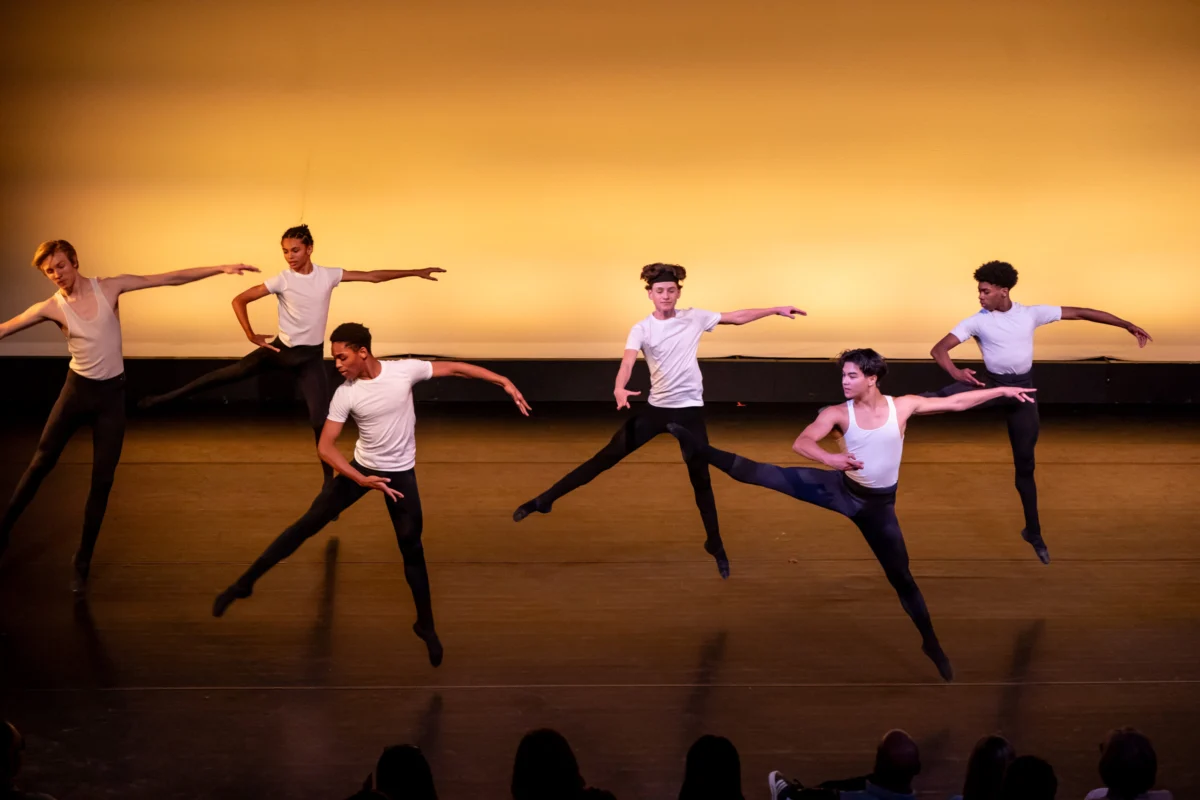
For four decades, the Los Angeles County High School for the Arts (LACHSA) has stood as a bastion of creative excellence, a tuition-free public institution that has quietly—and sometimes loudly—shaped the landscape of modern entertainment. From the evocative melodies of Josh Groban and Phoebe Bridgers to the comedic precision of Taran Killam and the cinematic presence of Zoey Deutch, the school has functioned as an incubator for some of the most influential voices in the arts.
This May, the school marks a monumental milestone: its 40th anniversary. To celebrate, the institution is hosting "LACHSAPalooza," a landmark concert at the historic Greek Theatre. Emceed by alumnus Anthony Anderson and featuring performances by industry stalwarts like Ozomatli and Fitz and the Tantrums, the event is far more than a birthday party. It is a strategic, high-stakes fundraiser aimed at securing a $2.5 million endowment to safeguard the future of public arts education in an era where such programs are increasingly under fire.
The Pillars of LACHSA: A Chronological Journey
Established in 1985, LACHSA was born from a desire to provide gifted young artists with an environment that treated their craft with the same academic rigor as mathematics or history. Located on the campus of California State University, Los Angeles, the school has always maintained a unique symbiotic relationship with its surroundings.
The Inaugural Era (1985–1995)
The school opened its doors during a pivotal moment in Los Angeles’ cultural history. In its first decade, LACHSA established its identity, attracting students who were not merely looking for an extracurricular activity, but a vocational foundation. Anthony Anderson, a member of the school’s inaugural 1985 class, describes this period as a transformative awakening. "LACHSA helped me in my transformation to becoming an artist in a way I’d always envisioned since I was young," Anderson notes. It was here that the school’s core philosophy was cemented: that artists thrive best when they are surrounded by a "tribe" of like-minded peers.
The Expansion of Influence (1996–2010)
As the 21st century dawned, LACHSA’s reputation began to transcend regional borders. The school moved beyond local notoriety to become a nationally recognized powerhouse, often compared to the elite status of New York’s Fiorello H. LaGuardia High School and the prestigious Interlochen Arts Camp in Michigan. It was during this period that alumni like Taran Killam began to make their marks on the national stage. For Killam, the school provided a safe space to experiment with the nuances of performance. "It was such a wild escalation of information at such a young, impressionable age," he recalls. "That type of training and exposure demystifies the idea of doing this as a career."
The Contemporary Standard (2011–Present)
In the last decade, the school has grappled with the digital age and the shifting economics of public education. While the school continues to produce stars, it has increasingly focused on the holistic development of its students, ensuring that the dance, music, theater, cinematic arts, and visual arts programs remain cutting-edge. The recent inclusion of high-profile alumni in advocacy efforts signals a new phase: one where the school is no longer just a training ground, but a vital cultural institution that requires a more robust financial infrastructure to survive.
The Infrastructure of Creativity: How LACHSA Operates
LACHSA operates as a public school, yet its curriculum is anything but traditional. Students balance a rigorous standard of liberal arts academics with an intensive conservatory-style focus on their chosen artistic discipline.
The school’s secret sauce, according to alumni, is the faculty. The dedication of teachers like Jerry Freedman—who taught Anthony Anderson in the mid-80s and continues to mentor students today—is emblematic of the school’s stability. This continuity creates a mentorship culture that is rare in the high school system.
The Economic Reality
The financial structure of LACHSA is a complex balancing act. While the State of California provides 50 percent of the school’s operational funding, the remaining 50 percent must be raised by the LACHSA Foundation. This split places a heavy burden on the institution to continuously solicit private donations, grants, and gala proceeds.
In a post-pandemic, inflation-heavy economy, this model faces unprecedented stress. Trena Pitchford, executive director of the LACHSA Foundation, notes that public education funding in California has struggled for half a century. "It is incumbent on us now to take responsibility for LACHSA and to bring it to a place of abundance for the next 40 years," she states.
Challenges to the Model: Philanthropy and Fatigue
Despite the school’s high profile and illustrious alumni list, the fundraising landscape has become increasingly treacherous. The "star power" of its graduates can be a double-edged sword; donors often assume that an institution associated with the Hollywood elite is already wealthy.
"Public education today, the struggles are real," says Pitchford. She points to "donor fatigue" as a major obstacle. In recent years, Los Angeles County has been hit by a series of crises, ranging from the COVID-19 pandemic to devastating wildfires. Philanthropic dollars that might have historically flowed to the arts have been diverted toward emergency relief and basic survival services.
Furthermore, there is a systemic issue regarding how the public views arts education. There is a persistent, damaging narrative that the arts are "expendable." Pitchford argues that the school’s success should not be measured solely by the celebrities it produces, but by the "better people" it creates. "This is the small education that’s impacting the culture of Los Angeles," she says. "It’s about creating citizens who are critical thinkers, empathetic, and culturally literate."
Implications for the Future of Arts Education
The plight of LACHSA is a microcosm of a national crisis. As school districts across the United States face budget cuts, arts programs are often the first to be placed on the chopping block.
The Cost of Absence
If programs like LACHSA were to disappear, the impact would be profound. As Anthony Anderson observes, the absence of these schools would be a "huge setback for the arts." The arts are not just a luxury; they are a primary vehicle for human expression and a necessary escape for the general population.
If we remove the infrastructure that allows young people to explore their creative potential in a professional setting, we lose more than just future actors and musicians. We lose the architects of our cultural dialogue. As Zoey Deutch, who attended the school in the 2010s, points out, the validation provided at LACHSA is life-altering. "It wasn’t just a school; it was a space where being an artist is taken seriously," she says. "That kind of validation at that age can change someone’s life."
A Call to Action
The $2.5 million goal for the 40th anniversary is not just a target for administrative costs; it is a defensive wall against the erosion of arts education. The upcoming LACHSAPalooza event serves as a reminder that institutions like LACHSA must be treated as essential infrastructure.
As the school looks toward its next 40 years, the message from its leadership and alumni is clear: the responsibility for the future of the arts rests with the public. It is a collective effort to ensure that the "tribe" continues to grow, and that the next generation of storytellers, performers, and creators has a place to call home. Whether through the success of its alumni or the survival of its classrooms, LACHSA remains a vital beacon for the transformative power of a dedicated, arts-focused education.
The question remains: will the public rise to meet the challenge, or will the "setback" that Anderson fears become the new, diminished reality of American education? The answer will be determined in the coming months, as LACHSA fights to ensure that its next chapter is as vibrant and productive as its first.


 Evan Lee Salim
 Siti Muinah