

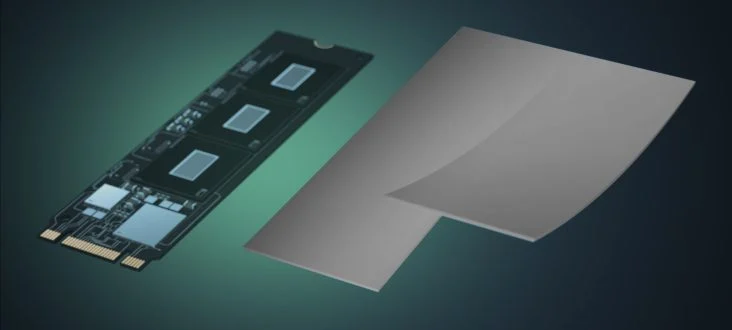
Thermal management remains the "silent partner" of high-performance computing. While the industry often fixates on liquid cooling loops and massive air heatsinks for CPUs and GPUs, the often-overlooked components—VRMs (Voltage Regulator Modules), VRAM modules, and chipsets—are frequently the true bottleneck for system stability and longevity. Arctic, a long-standing titan in the cooling industry, has addressed this reality by unveiling its new TP-4 high-performance thermal pad series, promising a significant leap in efficiency over its predecessor.
The Core Innovation: What Makes the TP-4 Special?
The TP-4 thermal pad line is not merely an incremental update; it represents a fundamental recalibration of Arctic’s material science approach. Designed specifically for the high-thermal-density environments found in modern gaming consoles, laptops, and enthusiast-grade graphics cards, the TP-4 focuses on one primary metric: thermal resistance.
By optimizing the material composition, Arctic has managed to lower the thermal impedance between heat-generating components and their respective heatsinks. In practical terms, this means that heat is moved away from sensitive silicon faster and more efficiently than with the TP-3 generation.
Electrically Insulating and Non-Adhesive
One of the most common anxieties for PC builders and repair technicians is the risk of accidental short-circuits. Thermal pads that are conductive can be disastrous if they slip or migrate during assembly. Arctic has engineered the TP-4 series to be completely electrically insulating. Furthermore, the pads are non-adhesive. While this might seem counterintuitive at first, it is a deliberate design choice that assists in installation and, more importantly, future maintenance. Non-adhesive pads allow for cleaner removal when upgrading components or repasting a GPU, preventing the "tearing" effect often seen with tacky, low-quality pads that leave residue on expensive silicon.
Chronology and Evolution of Arctic’s Thermal Solutions
Arctic’s journey in the thermal interface material (TIM) market has been defined by a commitment to accessibility and performance.
- The Early Days: Arctic originally gained fame for its thermal pastes, most notably the MX-series, which set the standard for price-to-performance ratios.
- The Introduction of TP-2 and TP-3: As GPUs began to pack more VRAM and power delivery phases grew in complexity, Arctic transitioned into thermal pads. The TP-3 line became a staple for miners and power users looking to cool memory modules on GDDR6X-equipped cards, which were notorious for running hot.
- The TP-4 Launch: Following the success of the TP-3, Arctic spent the last year refining the compressibility and thermal transfer properties of their padding. The result is the TP-4, which balances "softness"—the ability to conform to uneven surfaces—with structural integrity, ensuring the pad doesn’t "weep" or lose its shape under the high-pressure mounting systems of modern graphics cards.
Supporting Data and Technical Specifications
The effectiveness of a thermal pad is dictated by its ability to bridge gaps between components of varying heights. If a pad is too hard, it creates "air gaps" because it cannot compress enough to touch all surfaces. If it is too soft, it may tear or lose its structural rebound.
Versatility in Application
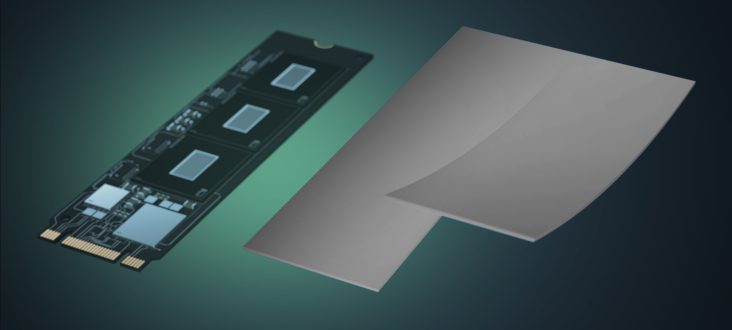
The TP-4 series is designed to handle the "stacking" requirements often found in modern laptops or compact ITX builds. The pads are available in three distinct thicknesses:
- 0.5mm: Ideal for tight-clearance scenarios where components are nearly flush with the heatsink.
- 1.0mm: The standard "go-to" for most VRM cooling applications.
- 1.5mm: Designed for larger gaps found between memory chips and secondary cooling plates.
Arctic has confirmed that these sheets can be stacked up to a total of 2.0mm, allowing for custom tailoring in scenarios where off-the-shelf pads do not fit the exact clearance requirements of the hardware manufacturer.
Pricing and Availability Strategy
Arctic is currently employing a launch-day pricing strategy that makes the TP-4 series highly competitive against premium third-party cooling brands.
| Size | Thickness | Launch Price | MSRP |
|---|---|---|---|
| 100x100mm | 0.5mm | €8.09 | €13.49 |
| 100x100mm | 1.0mm | €10.19 | €16.99 |
| 100x100mm | 1.5mm | €12.29 | €20.49 |
| 120x20mm (4-pack) | 0.5mm | €9.29 | €15.49 |
| 120x20mm (4-pack) | 1.0mm | €11.09 | €18.49 |
| 120x20mm (4-pack) | 1.5mm | €13.49 | €22.49 |
These prices represent a significant discount over the intended retail price, encouraging early adopters and repair shops to stock up on the new material before the standard market pricing takes effect.
Official Manufacturer Perspective
In their official communications, Arctic emphasizes that the TP-4 is intended to be a "universal solution." A spokesperson for the company noted: "Our goal was to eliminate the guesswork. Builders shouldn’t need a degree in materials science to understand if their pad is effective. By improving the thermal resistance profile of the TP-4, we provide a product that is forgiving enough for a novice, yet efficient enough for a professional overclocking rig."
The inclusion of an installation guide via video content (as seen on their official channels) highlights the brand’s commitment to education. Arctic recognizes that thermal pads are often misused—cut incorrectly or applied with the wrong thickness—leading to sub-optimal cooling. By providing clear visual guidance, they aim to reduce user error, which is the primary cause of thermal throttling in modern systems.
Implications for the Cooling Industry
The launch of the TP-4 has several ripple effects for the hardware community:
1. The Right to Repair and Maintenance
As modern GPUs become increasingly expensive, their lifespans are under scrutiny. Many users are now opting to "refresh" their hardware rather than replace it. Replacing the stock, often "greasy" or dried-out thermal pads on a three-year-old graphics card can result in significant temperature drops (sometimes as much as 10-15°C on VRAM). The TP-4 arrives at a perfect time, as the "second-hand" hardware market is booming, and maintenance products are in high demand.
2. Standardization of Thermal Interface Materials
For years, the cooling industry suffered from a lack of transparency regarding thermal conductivity ratings. Brands would often inflate their numbers, making it impossible for consumers to compare products. Arctic’s shift toward "optimized thermal resistance" rather than just arbitrary W/mK (Watts per meter-Kelvin) ratings is a more honest approach. Resistance is the true enemy of heat transfer; by focusing on this, Arctic is steering the industry toward more empirical, measurable performance metrics.
3. Impact on Enthusiast Gaming and Modding
For those who push their systems to the limit, the TP-4 offers a new degree of freedom. Enthusiasts who engage in "thermal pad modding"—replacing low-quality stock pads with aftermarket alternatives—now have a reliable, widely available, and cost-effective option. Whether it is a PlayStation 5 that needs better cooling for its memory modules or an RTX 40-series card that runs slightly too hot under load, the TP-4 is positioned to become the default choice for the DIY enthusiast.
Conclusion: Is it Time for an Upgrade?
The release of the Arctic TP-4 thermal pads is a welcome development for anyone who values the longevity of their hardware. While the average user may never look at their thermal pads, the enthusiast knows that stability is built on these small, unassuming squares of material.
By combining improved thermal performance, ease of installation, and a user-friendly pricing structure, Arctic has solidified its position as a leader in the cooling space. As the heat density of our components continues to rise, the importance of reliable thermal interface materials will only grow. For those who are currently planning a system clean, a GPU repaste, or a custom build, the TP-4 offers a compelling case for why your cooling strategy should go deeper than just the CPU cooler.
Ultimately, the question posed by KitGuru remains: Do you go through the effort of replacing thermal pads on your hardware? If the answer is no, perhaps the performance gains promised by the TP-4 are the incentive needed to start. A few degrees saved here and there can be the difference between a system that lasts for years and one that fails when you need it most.










No comments yet. Be the first to join the conversation!