

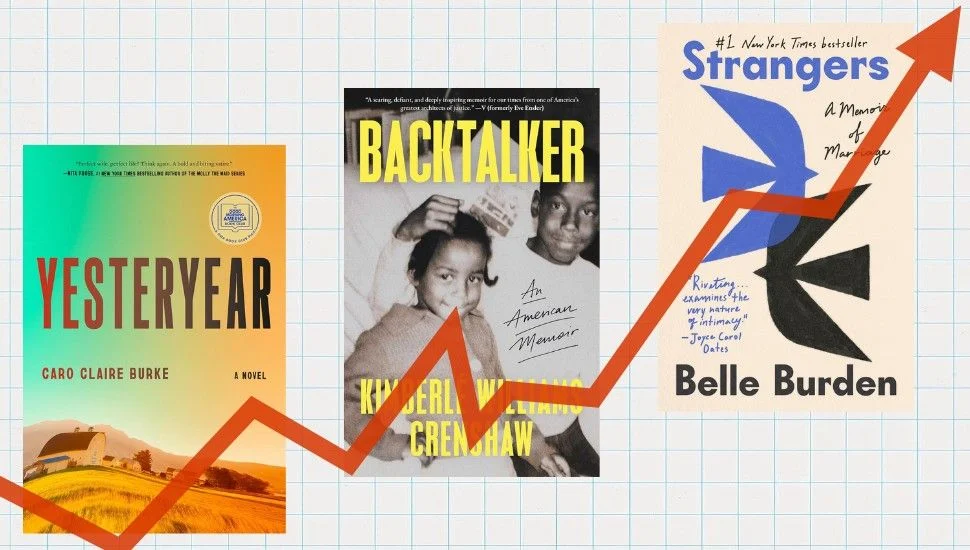
As we move through the second quarter of 2026, the publishing industry finds itself in a fascinating state of flux. Readers are oscillating between the comfort of viral indie-to-mainstream success stories and the intellectual rigor of long-awaited memoirs from public intellectuals. This month’s "Hot List"—a curated selection of the titles currently dominating social media discourse, bestseller charts, and book club discussions—reveals a reading public that is hungrier than ever for narratives that challenge both the status quo and personal identity.
From the staggering trajectory of Allen Levi’s Theo of Golden to the cultural impact of Kimberlé Williams Crenshaw’s Backtalker, May 2026 is shaping up to be a defining moment for modern literature.
Main Facts: The Books Capturing the Cultural Zeitgeist
The current literary market is characterized by a "viral velocity" that few books manage to achieve. This month, two titles, in particular, have transcended the traditional boundaries of publishing, moving from niche interest to ubiquitous conversation pieces.
The Phenomenon of Theo of Golden
The most remarkable story in publishing right now is undoubtedly Theo of Golden. Originally self-published by Allen Levi in 2023, the novel languished in the obscurity often faced by independent authors. However, through a combination of algorithmic luck and word-of-mouth acclaim, the book began to gain traction in late 2025. Recognizing the momentum, Atria Books secured the rights and re-released the novel in October of last year.
The results have been nothing short of historic. Since the Atria re-release, Theo of Golden has surpassed one million copies sold. Its ascent is a case study in the power of modern discovery channels, illustrating that a compelling narrative can overcome traditional gatekeeping hurdles if it resonates deeply with the digital zeitgeist.
Backtalker: A Cultural Milestone
On the non-fiction front, the release of Kimberlé Williams Crenshaw’s memoir, Backtalker: An American Memoir (Simon & Schuster), has become the definitive literary event of May 2026. While many readers may not recognize the name immediately, they are likely familiar with the transformative frameworks she has introduced to the American lexicon. As the pioneer of "critical race theory" and "intersectionality," Crenshaw has spent decades shaping the discourse around power and identity.
Backtalker offers a rare, intimate look at the person behind these concepts. The memoir has already dominated the headlines, sparking the most in-depth author profiles seen in the industry this year. Its climbing position on the charts suggests that readers are eager to engage with the historical context of the social movements that have defined the 2020s.
Chronology: The Road to the Hot List
To understand how these books arrived at their current level of dominance, one must look at the timeline of their emergence.
- 2023: Allen Levi self-publishes Theo of Golden. The book begins its slow, organic climb, primarily fueled by early adopter communities on digital reading platforms.
- Late 2025: Theo of Golden reaches a critical mass of visibility. Atria Books enters negotiations to acquire the title, seeing the potential for a massive commercial breakout.
- October 2025: The official re-release of Theo of Golden occurs. The marketing machine kicks in, and the book quickly becomes a household name.
- May 5, 2026: Backtalker: An American Memoir is released. Pre-orders were record-breaking, and within 48 hours of publication, the book secures its spot on the May Hot List.
- May 2026 (Present): Both titles are currently being featured across major podcasts, including the latest episode of "The Hot List," where literary analysts break down the themes and societal impact of these works.
Supporting Data: Why These Titles Resonate
The success of these two books is not accidental. Data analysts point to several factors that explain their reach:
- The "Indie-to-Mainstream" Pipeline: The success of Theo of Golden highlights a growing consumer preference for stories that feel "vetted" by the community rather than pushed by corporate marketing. When readers feel they have "discovered" an author, their loyalty—and their likelihood of recommending the book—increases exponentially.
- Intellectual Curation: Backtalker serves as a bridge for readers who have engaged with concepts like intersectionality through social media but lack the academic background to fully understand their origins. The memoir format is effectively "democratizing" complex theory, making it accessible to a wider audience.
- Cross-Platform Visibility: The success of these titles is intrinsically linked to the "Hot List" ecosystem. By consolidating the conversation into podcasts and digital newsletters, publishers are creating a unified front that drives discovery. Whether a reader has finished the book or not, they are now expected to be able to speak to the themes of Theo of Golden and Backtalker to remain relevant in social circles.
Official Responses and Industry Reception
Critics and publishers have been largely effusive in their praise of the May selection. Literary critics have lauded Backtalker as a "necessary corrective to the fragmented history of American social justice," noting that Crenshaw’s voice remains as sharp and incisive as ever.
Regarding Theo of Golden, industry experts at Atria have noted that the "Levi Effect" is changing how they scout for talent. "We are no longer just looking at manuscripts submitted by agents," one executive noted on the condition of anonymity. "We are looking at search trends, sub-Reddit activity, and the velocity of self-published titles. Allen Levi proved that the audience dictates the market, not the other way around."
There has been little pushback, though some traditionalists worry that the speed of the "Hot List" cycle encourages superficial engagement. The concern is that readers might prioritize finishing a book quickly to "join the conversation" rather than sitting with the complexities of the text.
Implications: The Future of Publishing
The dominance of these titles suggests several long-term implications for the book industry:
1. The Death of the "Slow Build"
In the current climate, books seem to either explode into the cultural consciousness or remain effectively invisible. The infrastructure for "slow, steady" growth is being cannibalized by platforms that prioritize rapid, high-engagement content. This puts pressure on authors to produce content that is inherently "shareable."
2. The Rise of the Public Intellectual as Celebrity
The success of Backtalker signals a shift in the memoir market. Readers are moving away from celebrity-gossip-style memoirs and toward "legacy" memoirs written by individuals who have fundamentally altered the intellectual landscape. This shift represents a more engaged, politically active reading demographic.
3. The Democratization of Discovery
The success of Theo of Golden is a harbinger of a future where traditional publishing houses function more as "scaling engines" for existing success rather than as sole "talent scouts." This empowers authors to take the initial risk of self-publishing, knowing that a strong enough showing will eventually be met with a traditional contract.
4. The Podcast-Literary Connection
The fact that this analysis is being disseminated via podcast indicates that the audio medium has become the primary driver for book sales. The ability to hear an author’s voice—or a critic’s nuanced take—is often the final catalyst for a purchase. Expect to see publishers continue to pivot their marketing budgets toward audio-first strategies.
Conclusion
As we look toward the remainder of 2026, the trends established in May serve as a roadmap for what lies ahead. The industry is currently defined by the intersection of high-concept intellectualism and the explosive potential of indie-born fiction. Readers are more informed, more vocal, and more connected than ever before. Whether you are diving into the complex societal questions raised by Kimberlé Williams Crenshaw or getting lost in the narrative sweep of Allen Levi’s work, one thing is certain: the conversation surrounding these books is far from over.
To stay ahead of the curve, we encourage you to listen to the full discussion on these titles on Apple Podcasts or Spotify. Stay tuned, stay read, and join the conversation.
Disclaimer: This article contains affiliate links. When you purchase items through these links, we may earn an affiliate commission, which supports our ongoing coverage of the literary world.










No comments yet. Be the first to join the conversation!