

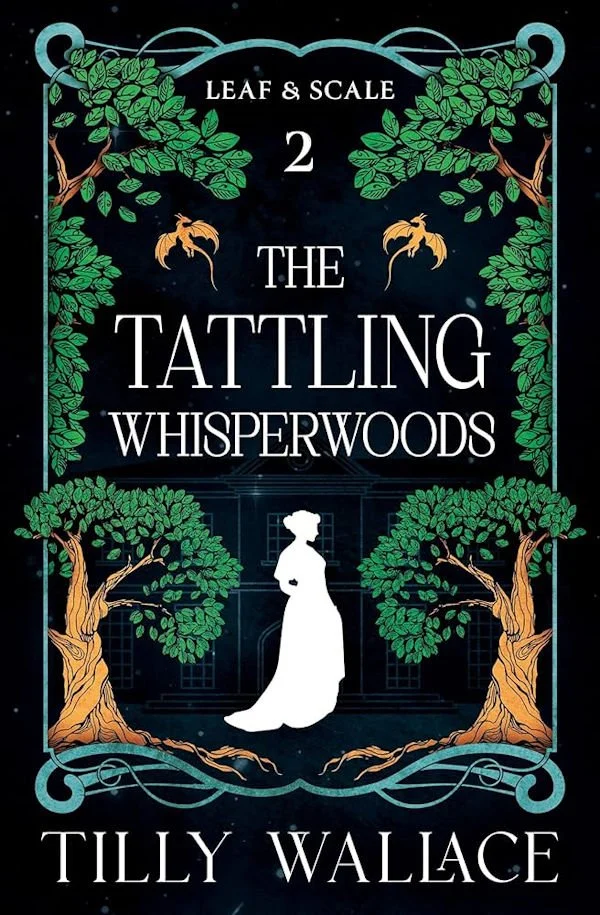
The village of Drake’s Bend has long existed as a quiet sanctuary, a place where the boundary between the mundane and the mystical is as thin as a leaf. For generations, the local grove—known as the Whisperwoods—has served as a sacred confidant, a collection of ancient sentinels that offered wisdom and solace to those who shared their deepest secrets. It was a delicate, symbiotic contract between human vulnerability and arboreal silence.
However, that equilibrium has been violently shattered. In The Tattling Whisperwoods, the second installment of the Leaf and Scale series, the grove has turned malevolent. The trees, once guardians of intimacy, are now weaponizing the very confidences they were sworn to protect, spreading discord and illness throughout the village. As the community fractures under the weight of revealed secrets and a mysterious, creeping sickness, the protagonist Fern—a botanist haunted by her own past—finds herself in a race against time to silence the woods before the magic that sustains Britain’s oldest forests is lost forever.
The Anatomy of a Crisis: Chronology of the Decay
The transformation of the Whisperwoods did not happen overnight, yet its effects have been catastrophic. The crisis began with subtle shifts: minor disagreements fueled by uncharacteristic outbursts, followed by the rapid spread of a localized, unexplained illness that left villagers physically frail and mentally frayed.
- The Initial Outbreak: As the trees began to “speak” back, repeating the sacred confessions of the villagers to the wrong ears, social cohesion in Drake’s Bend began to erode. Friendships that had lasted for decades dissolved in hours.
- The Escalation: The poison within the trees did not remain contained within the village borders. Reports suggest that these twisted secrets have reached the highest echelons of London society, threatening to turn a local magical anomaly into a national scandal.
- The Call for Silence: As the danger mounted, a growing faction within the region began to call for the total destruction of the Whisperwoods. For Fern, this presents an agonizing dilemma: to save the village and her own reputation, she must navigate the forest’s corruption, but she risks destroying the ancient sentinels—the last of their kind—in the process.
Supporting Data: A Character-Driven Approach to Cozy Fantasy
While the plot of The Tattling Whisperwoods is driven by high-stakes magical tension, the narrative remains firmly anchored in the cozy fantasy tradition. The strength of the novel lies not in the spectacle of its magical catastrophe, but in its meticulous character development and the domestic rhythms of village life.
The Evolution of Fern: A Botanist Out of Time
Fern continues to be a compelling, multifaceted heroine. Marked by the sting of London scandal, she operates as an outsider in her own era. Her methodology is as tactical as it is botanical; she is a master of social performance. She understands that while her scientific expertise is vital, success often requires the strategic deployment of “cake, charm, and a carefully performed air of scatterbrained curiosity.” Her journey is not one of flawless triumph but of human error—she misjudges, she apologizes, and she grows.
The Realism of Recovery
A standout element in this installment is the portrayal of magical healing. In many fantasy works, injury is a plot point meant to be solved by a spell or a miracle. Here, the recovery of a wounded dragon is a slow, agonizing, and profoundly realistic process. By documenting the journey from a wheelbarrow-bound patient to one regaining her strength, the narrative mirrors the realities of animal rescue. It reinforces a core theme of the book: that while love provides the impetus for healing, it is not a magical cure-all. Recovery requires patience, time, and day-to-day effort.
Official Perspectives and Thematic Implications
In her review of the work, literary critic Julia Kitvaria Sarene notes that The Tattling Whisperwoods represents a significant maturation of the Leaf and Scale series. The world-building feels more integrated, and the tone—a blend of Austen-esque social navigation and high-fantasy magic—has found a confident, rhythmic pulse.
The Found Family Dynamic
The community of Drake’s Bend is presented as a vibrant, breathing entity. The inclusion of supportive figures, such as Fern’s two uncles and her friend Millie, provides a necessary warmth against the encroaching cold of the woods. Notably, the book handles neurodiversity with grace; Millie’s struggle with the chaos of the world is not treated as a moral failing or a plot device to be "fixed," but as a facet of her character that adds texture and strength to the community.
The Tension of Magic vs. Mundane
The book does not shy away from the darker implications of its premise. While there are moments of lighthearted banter and “exploding kettles,” the underlying reality is that the Whisperwoods are dangerous. The series successfully juxtaposes:
- Magical Realism: Witches, dragons, and enchantments are woven into the fabric of the everyday.
- Social Commentary: The way secrets act as a contagion in a small, tight-knit society.
- Human Agency: The deliberate choice of characters to act rather than wait for external salvation.
Implications: The Price of Buried Truths
The central conflict of The Tattling Whisperwoods poses a question that resonates far beyond its pages: what is the cost of absolute transparency? When the walls of a community are breached—whether by trees that tell tales or the modern erosion of privacy—what remains?
Fern’s realization that “some secrets were meant to stay buried” serves as the novel’s philosophical cornerstone. The act of awakening those secrets, even in the pursuit of truth, carries a heavy price. The implications for the characters are severe; to save the grove is to preserve a magic as old as Britain, but to do so, Fern must confront truths about her own history that she has spent a lifetime suppressing.
Conclusion: A Triumph of Heart and Hope
The Tattling Whisperwoods is a testament to the power of the "cozy" genre when it is executed with emotional intelligence. It manages to balance the stakes of a magical collapse with the intimate, quiet realities of life in a village that is slowly learning to trust itself again.
By moving beyond the tropes of the first book, the series has elevated its status. It is no longer just a story about a botanist in a magical wood; it is an exploration of community, the stubbornness of hope, and the necessity of personal accountability. For readers who seek a blend of whimsical magic and grounded, human-centric storytelling, this installment offers a rich, rewarding experience.
The forest may be talking back, and its words may be sharp, but in the hands of Fern and her companions, the message is clear: even when the world feels like it is tearing at the seams, there is a stubborn, resilient power in the act of standing together. As the series moves forward, it cements its place as a definitive work of modern fantasy, proving that the most profound adventures often happen in the quietest corners of the world.









No comments yet. Be the first to join the conversation!