

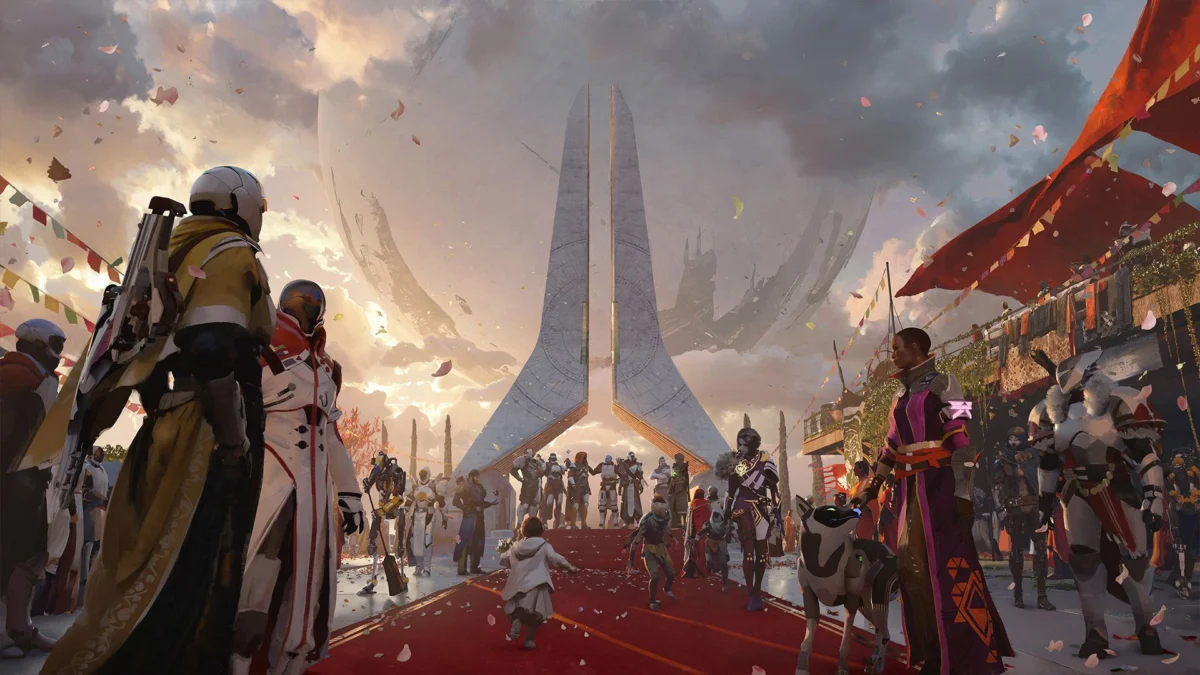
Eyes up, Guardian. The long, epic battle between Light and Darkness that has defined the universe of Destiny 2 is officially reaching its final, definitive chapter. After nearly a decade of continuous evolution, expansion, and community engagement, developer Bungie has announced that it will cease active live-service development for its acclaimed looter-shooter, Destiny 2. The game’s ultimate live-service update, titled "Monument of Triumph," is slated for release on June 9, 2026, marking the bittersweet conclusion of an era for millions of players worldwide.
This pivotal announcement, delivered via a lengthy blog post titled "Every End is a New Beginning" on May 21, 2026, confirms that while Destiny 2 will remain playable – much like its predecessor, the original Destiny, is today – Bungie is strategically shifting its focus toward new game development. The decision underscores a significant turning point for the studio, which has been synonymous with the Destiny franchise since its inception. It acknowledges a widespread sentiment among the player base that the game’s narrative climax, The Final Shape, released in 2024, had already served as a de facto ending.
A Decade of Destiny: A Live-Service Saga
The journey of Destiny has been a monumental one, fundamentally shaping the landscape of online multiplayer gaming and the live-service model.
The Genesis of Destiny
The original Destiny launched in 2014, emerging from the heralded creators of the Halo franchise, Bungie, under a publishing deal with Activision. It was an ambitious undertaking, promising a shared-world shooter experience unlike any other, blending intricate lore with satisfying gunplay and persistent character progression. While its initial release was met with mixed reviews regarding its story structure and content density, Bungie’s commitment to iterative improvement and robust post-launch support quickly transformed it. Expansions like The Taken King proved transformative, solidifying Destiny‘s identity and establishing its loyal community.
Destiny 2’s Evolving Journey
Destiny 2 debuted in September 2017, building upon the foundations of its predecessor with a more cinematic campaign, refined gameplay mechanics, and an even broader universe to explore. Yet, it too faced its share of early criticisms, particularly concerning its simplified progression systems and a perceived lack of long-term engagement compared to the original. True to form, Bungie responded with continuous updates and a series of groundbreaking expansions that redefined the game’s trajectory.
Key among these was Forsaken (2018), which revitalized the game with a darker narrative, new subclasses, and the introduction of the Gambit mode. This was followed by Shadowkeep (2019), which notably marked Bungie’s self-publishing era after parting ways with Activision, and Beyond Light (2020), which introduced the frigid moon Europa and the Stasis subclass. The game reached critical and commercial peaks with The Witch Queen (2022), lauded for its innovative campaign and intricate storytelling, and Lightfall (2023), which set the stage for the climactic conclusion.
The overarching "Light and Darkness Saga," an epic narrative spanning nearly a decade across both games, finally culminated with The Final Shape in 2024. This expansion was designed to resolve the long-standing conflict and bring closure to the primary storyline, leaving many players to wonder what could possibly come next. Throughout these years, Destiny 2 cultivated a passionate community, driven by weekly resets, seasonal narratives, challenging raids, and a constant pursuit of powerful gear, epitomizing the potential and pitfalls of the live-service model.
The Road to Retirement: A Chronology of Decisions
The announcement of Destiny 2‘s active development cessation is not an abrupt decision but rather the culmination of a series of strategic adjustments and shifts that have unfolded over the past two years.
The Promise of "The Final Shape"
For years, The Final Shape was billed as the definitive narrative conclusion to the "Light and Darkness Saga." Its launch in 2024 was a monumental event, bringing together years of lore and character development into a grand, universe-altering conflict. While it successfully delivered a satisfying narrative resolution for many, it also inherently created a vacuum for future storytelling within the existing framework. How does a live-service game continue to thrive after its main story arc has been concluded?
Post-Final Shape Ambitions
Initially, Bungie had outlined a roadmap for Destiny 2 that extended well beyond The Final Shape. This included a series of planned expansions designed to explore new facets of the universe and introduce fresh gameplay loops. Following 2025’s Star Wars-themed Renegades expansion, the studio had announced major updates such as Shadow and Order, Shattered Cycle, and The Alchemist. These were intended to provide ongoing content and maintain player engagement in the post-saga era.
The First Delays
However, the first cracks in this ambitious roadmap began to show earlier this year. Bungie had originally planned to launch Shadow and Order in March 2026. But in February, the studio made an announcement via its official social media channels, including a post on Bluesky, confirming that Shadow and Order would be delayed. The new release date was set for June 9, 2026. At the time, this was presented as a necessary adjustment to ensure the quality and scope of the update.
The Pivotal Announcement
This delay, in hindsight, was a precursor to the much larger strategic shift. On May 21, 2026, Bungie unveiled its "Every End is a New Beginning" blog post. This extensive communication revealed that the previously delayed Shadow and Order would not be released as a standalone expansion. Instead, its content, along with elements from the subsequently planned Shattered Cycle and The Alchemist, would be integrated into a single, comprehensive final update: "Monument of Triumph," launching on the rescheduled date of June 9, 2026. This announcement explicitly stated that "Monument of Triumph" would be Destiny 2‘s final live-service update, marking the end of active development and a clear pivot for the studio.
"Monument of Triumph": A Grand Finale
"Monument of Triumph" is poised to be more than just another content drop; it is designed as a heartfelt and comprehensive farewell to Destiny 2, reflecting on nine years of content and providing a robust, stable state for the game moving forward. It’s a reimagining of the annual in-game Moments of Triumph celebration, but on a grander scale, encompassing the entire lifespan of the game.
More Than Just a Celebration
Bungie has promised that "Monument of Triumph" will deliver a substantial overhaul and refresh, ensuring that Destiny 2 concludes its active development cycle not with a whimper, but with a bang. The update will feature extensive weapon and gear tuning, introducing new abilities and rebalancing existing ones to create a refined and engaging combat experience.
One of the most anticipated inclusions is the permanent return of the Sparrow Racing League (SRL). This fan-favorite competitive racing mode, which saw limited-time appearances in previous years, will now be a permanent fixture, offering a nostalgic and thrilling activity for veteran players and new guardians alike. The rewards pass originally planned for Shadow and Order has also been meticulously reworked and integrated into this final update, promising a host of typical goodies alongside a brand-new exotic hand cannon, a coveted weapon type within the Destiny arsenal. While a major story campaign is not expected, Bungie has assured players that there will be "small character beats to leave the story and characters in interesting places, touching on themes across Destiny," providing a sense of narrative closure without embarking on new, expansive arcs.

The Return of the Director
One of the biggest quality-of-life changes, directly influenced by fervent player feedback, is the reintroduction of the Director. This was Destiny 2‘s original, iconic interface for navigating activities, planets, and missions. It had been replaced by the more streamlined, but often criticized, Portal system with July 2025’s Edge of Fate update. Bungie explicitly addressed this, stating: "We have embraced the player feedback about the Director and Portal, and a newly refreshed Director returns to its rightful place as the center of activities in D2." While the Portal will reportedly remain present, it will no longer be the primary interface, a move widely celebrated by the community.
Revitalized Gear and Destinations
"Monument of Triumph" also brings a massive overhaul to the game’s extensive loot ecosystem. Gear from every raid, planetary destination, and various other activities has been meticulously revised and brought up to modern standards. This includes achieving tier parity across different gear sets, introducing new set bonuses to encourage diverse builds, and integrating new perks to enhance gameplay variety. Furthermore, all exotic armor pieces earned since The Edge of Fate update will automatically be upgraded to Tier 5 stats, providing a significant boost to their power and utility. Bungie has also committed to tuning a "handful" of exotic armors and making adjustments to exotic weapons, ensuring that these powerful items remain relevant and exciting.
Beyond gear, the game’s expansive destinations will receive a new lease on life with the introduction of "Distortions." These dynamic events are designed to bring more variety and challenge to patrol activities, offering a fresh layer of engagement for players exploring familiar worlds. Taken as a whole, these changes in "Monument of Triumph" represent a comprehensive effort to leave Destiny 2 in a meaningful, playable, and rewarding state.
Bungie articulated its overarching goal for this final update: "Our goal is to ensure Destiny 2 can be a place you come back to and feel rewarded no matter what you play, while also having enough variety in activities to fit your mood for a given play session." This sentiment reflects a desire to preserve the game as a cherished experience, even as active development ceases.
Beyond the Light: Bungie’s Future and Industry Context
The conclusion of Destiny 2‘s live-service development is not just an endpoint for a game; it signifies a major strategic pivot for Bungie itself, influenced by internal priorities and broader industry pressures.
Shifting Strategic Focus
Bungie’s blog post explicitly states, "As our focus turns towards a new beginning for Bungie, we will begin work incubating our next games." This phrasing strongly suggests that a direct Destiny 3 announcement is not on the immediate horizon. Instead, the studio appears to be exploring entirely new intellectual properties or significantly different iterations of existing ones. The statement that "our shared worlds, and Destiny, to live beyond Destiny 2" hints at a future for the Destiny IP that might transcend the traditional sequel model, perhaps taking the form of spin-offs, different genres, or a soft reboot that re-imagines the universe in a fresh context. This incubation phase is critical for a studio known for its innovation and high production values.
The Shadow of Marathon
This strategic shift runs parallel to the ongoing development and recent performance of Marathon, Bungie’s extraction shooter reboot. Marathon had a strong initial launch, drawing significant attention as Bungie’s first new IP in a decade. However, reports and player sentiment suggest that the game has struggled to retain a consistent long-term player base. The competitive landscape of extraction shooters is fierce, and sustained engagement requires continuous innovation and content delivery, which can strain development resources. The challenges faced by Marathon likely played a role in Bungie’s decision to consolidate its development efforts, preventing a dilution of resources across multiple live-service titles. Prioritizing new projects, potentially with more focused teams, could be seen as a necessary move to ensure future successes.
Sony’s Influence and Financial Realities
The context of this announcement is also deeply intertwined with Bungie’s acquisition by Sony Interactive Entertainment in 2022. While Bungie retained creative independence, it operates within Sony’s broader financial ecosystem. Less than two weeks prior to the Destiny 2 news, Sony released its full-year financial results, which included a staggering $765 million cumulative impairment loss across the last fiscal year. An impairment loss occurs when the value of an asset (in this case, potentially including the value of acquired studios or their ongoing projects) is deemed to be lower than what is carried on the company’s balance sheet. This significant financial hit, often interpreted as a reflection of underperforming assets or revised future revenue expectations, undoubtedly put pressure on Sony’s gaming division and its acquired studios, including Bungie.
Such financial realities can accelerate decisions to re-evaluate existing projects and prioritize those with the clearest path to profitability and long-term success. It’s plausible that both Sony and Bungie recognized the diminishing returns of perpetual Destiny 2 live-service development post-The Final Shape and opted for a fresh start, allowing Bungie to focus its considerable talent and resources on projects with greater potential to move the needle for Sony’s overall gaming strategy.
The Live-Service Landscape
Bungie’s decision also reflects a broader trend within the video game industry regarding live-service titles. While incredibly lucrative when successful, maintaining these games over many years is an immensely challenging and expensive endeavor. The market is saturated, player expectations are incredibly high, and the cost of continuous content creation can quickly outstrip revenue if engagement wanes. The "graveyard" of live-service games that failed to sustain themselves is ever-growing, from ambitious projects that never found an audience to once-popular titles that eventually faded. Bungie, having arguably perfected the art of the live-service model with Destiny 2, is now demonstrating that even the most successful examples eventually reach a natural conclusion, necessitating a strategic pivot to remain competitive and innovative.
Community Reaction and Legacy
For the millions of Guardians who have dedicated countless hours to protecting the solar system, the news is undeniably bittersweet. As a longtime fan with more than 1,000 hours in the game myself, the sentiment is palpable. There’s a prevailing consensus, even among the most dedicated players, that the game’s narrative and developmental arc felt largely complete with The Final Shape in 2024. While the additional two years of content provided new experiences, many felt the core story had run its course. The acknowledgment from Bungie, even if delayed, validates this feeling.
Destiny 2‘s legacy, however, is undeniable. It stands as a monumental achievement in the looter-shooter genre and a pioneering force in live-service gaming. It has provided a vibrant, evolving world that fostered deep communities, intricate lore discussions, and unforgettable multiplayer experiences. Its impact on game design, storytelling in shared worlds, and the very concept of continuous development will be felt for years to come. The game demonstrated how a developer could listen to feedback, iterate, and transform a product over time, maintaining relevance and passionate engagement for nearly a decade.
A New Beginning, or an Uncertain Future?
The conclusion of active Destiny 2 development marks a critical juncture for Bungie. While it signifies the end of one beloved chapter, it simultaneously opens the door to new possibilities. The question now looms large: what truly comes next for the studio that built Halo and nurtured Destiny for so long?
Bungie’s commitment to "incubating our next games" suggests a period of intense creative exploration. Whether this leads to entirely new IPs that capture the industry’s imagination, or a dramatically re-envisioned Destiny experience that learns from the successes and challenges of its predecessor, remains to be seen. The studio faces the dual challenge of reinvigorating its portfolio while operating under the watchful eye of Sony and the high expectations of a global player base.
For the Guardians of Destiny 2, "Monument of Triumph" will be a final, grand celebration, a chance to revisit cherished memories and experience a finely tuned version of the game they love. But as the sun sets on Destiny 2‘s active development, a new dawn awaits Bungie – a dawn filled with both immense potential and the inherent uncertainties of forging new paths in the ever-evolving landscape of video games. The Light may have found its shape, but the future of the Traveler, and indeed Bungie itself, is still being written.












No comments yet. Be the first to join the conversation!