

After more than two decades spent shaping the visual language of modern Southeast Asian cinema from the wings, Sompot Chidgasornpongse is stepping into the glare of the global spotlight. A long-time collaborator and assistant director to the Palme d’Or-winning auteur Apichatpong Weerasethakul, Chidgasornpongse has been an essential, if behind-the-scenes, architect of masterpieces such as Tropical Malady, Syndromes and a Century, Cemetery of Splendour, and the Tilda Swinton-led Memoria.
Now, with his feature directorial debut, 9 Temples to Heaven, Chidgasornpongse is carving out his own narrative identity. The film, a poignant ensemble drama centering on a Thai family’s frantic, one-day spiritual pilgrimage, has made a resounding splash at the Cannes Film Festival. Selected for the prestigious Directors’ Fortnight and competing for the coveted Caméra d’Or, the project marks the transition of a seasoned industry veteran into a singular, independent voice.
The Narrative Core: Faith, Fear, and Family
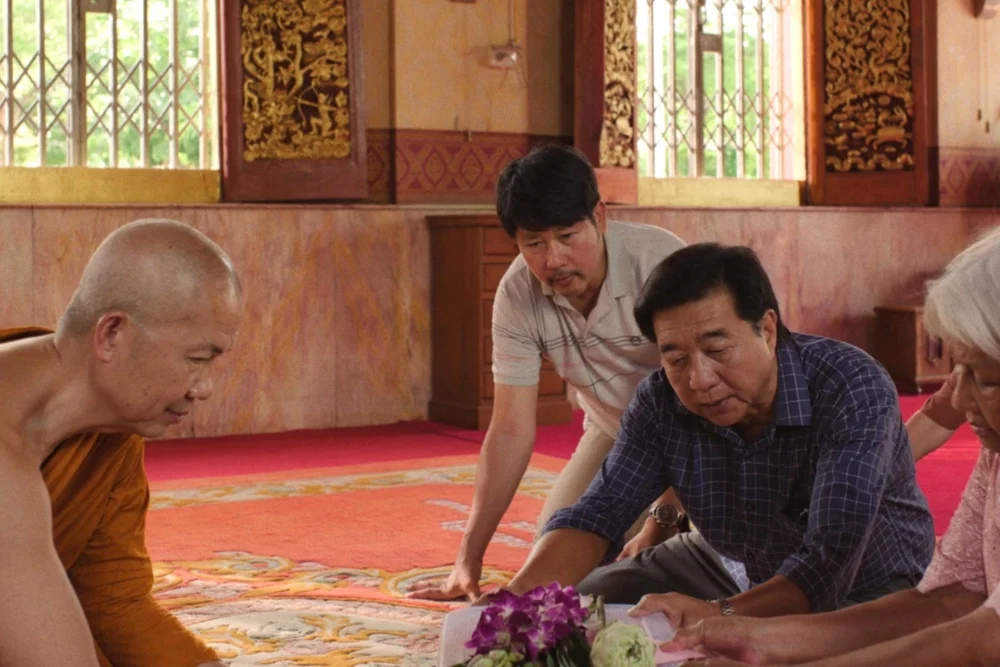
At the heart of 9 Temples to Heaven is a premise rooted in the anxious intersection of traditional belief and contemporary life. The protagonist, Sakol, receives a chilling prophecy from a fortune teller: his elderly mother’s health is failing, and her days may be numbered. Driven by a mix of genuine devotion, existential terror, and a desperate desire to alter fate, Sakol gathers his family for a ritualistic, high-stakes road trip across Thailand’s temple landscape.
The goal is to visit nine temples in a single day—a practice known in Thai culture as a means of seeking merit and divine intervention. As the family traverses the country, the film functions as a road movie that captures the geography of both the land and the human spirit.
A Chronology of Artistic Evolution
Chidgasornpongse’s journey to the Directors’ Fortnight is not an overnight success story, but the culmination of a rigorous 23-year apprenticeship. His background, however, began not in the editing room or behind the camera, but in the structured, technical world of architecture.
- Architectural Foundations: Before his turn to cinema, Chidgasornpongse was trained to prioritize structural integrity. He notes that his architectural education significantly informs his filmmaking process. "We were trained to first think about the overall plan and layout before dealing with the details," he reflects. This methodology remains visible in his current work, where the structural arc of the film is often established long before the specific emotional beats are fully realized.
- The CalArts Period: Following his undergraduate studies, he refined his craft at CalArts, completing an MFA in Film/Video. This period allowed him to merge his structural sensibilities with the fluid, often dreamlike storytelling that would define his collaboration with Weerasethakul.
- The Weerasethakul Partnership: For over two decades, Chidgasornpongse was the bedrock of Weerasethakul’s productions. His role was integral to the realization of the latter’s surrealist, meditative epics. While the two remain close—with Weerasethakul serving as a producer on 9 Temples to Heaven—Chidgasornpongse is now stepping into the director’s chair to explore themes that, while adjacent to his mentor’s, are distinctly his own.
- The Development Phase: The script for 9 Temples to Heaven matured during one of Thailand’s most volatile political periods: the years following the death of King Bhumibol Adulyadej. The atmosphere of national mourning and the resulting generational friction served as a backdrop for the film’s domestic drama, providing a textured layer of social commentary.
Supporting Data: A Pan-Asian Production Powerhouse
The scale of 9 Temples to Heaven is reflected in its ambitious production structure, which highlights the growing trend of international co-productions in independent Asian cinema.
Produced by the Bangkok-based Kick The Machine Films and At A Time in Thailand, the project is a testament to cross-border collaboration. The international funding and support network includes:
- Singapore: E&W Films
- France: petit chaos
- Norway: Needle in the Haystack
- China: La Fonte
- Hong Kong: Square One Film
- Indonesia: Qun Films
With international sales handled by the industry-leading Playtime, the film has secured a global platform, ensuring that a deeply personal, localized story about Thai ritualism reaches audiences across continents.
Official Perspectives: The Director on Contradiction
In interviews surrounding the Cannes premiere, Chidgasornpongse has been candid about his relationship with the traditions he depicts. The central practice in the film, Sangkatan—where devotees offer containers of essential goods to monks—is a ritual he knows intimately.
"Making offerings at nine temples within one day, which my family and many Thais also practice, feels like one of the ultimate manifestations of those beliefs," Chidgasornpongse explains. However, he is quick to acknowledge his own internal friction regarding the practice. "Though my critical side has always questioned the effectiveness of the promised outcomes, I continued to practice those rituals, sometimes simply to please my family, or to give myself peace of mind. I’m interested in those contradictions."
His goal was never to judge or romanticize the rituals, but to observe them with the clinical eye of an architect. "My aim was simply to capture the way things really are in contemporary Thai temples," he states.
Thematic Implications: Fractures in the Family
Perhaps the most significant thematic layer of 9 Temples to Heaven is its portrayal of generational divide. Chidgasornpongse notes that the death of the King acted as a catalyst for societal fractures, particularly in how different generations perceive institutions of power and sanctity.
"It created many fractures within society and even within families, especially between the older and younger generations, in terms of how differently they view established sacred institutions and where the country should be heading in the future," he notes. By placing his characters inside a cramped vehicle, moving from one temple to the next, Chidgasornpongse forces these disparate worldviews to collide. The ritual journey becomes a crucible, where the friction between the elderly mother’s blind faith and the younger family members’ skepticism mirrors the broader tensions of a changing Thailand.
Reflections on a Mentor and the Road Ahead
As he navigates the high-pressure environment of Cannes, Chidgasornpongse remains deeply respectful of the path he walked alongside Apichatpong Weerasethakul. Despite the gravity of his debut, he maintains a sense of levity. When asked about his mentor’s influence, he jokes that after 23 years, there is one major difference in their filmographies: "Apichatpong still hasn’t made a feature film about a big family ensemble like this one."
For Chidgasornpongse, the premiere at Directors’ Fortnight is the realization of a lifelong ambition. "Directors’ Fortnight is an amazing section and the home of many films that I love, films that have deeply inspired me as both a filmmaker and a film lover," he says.
By grounding a sweeping social and generational narrative in the intimate, repetitive act of a one-day pilgrimage, Chidgasornpongse has crafted a film that feels both hyper-specific to the Thai experience and universally resonant. 9 Temples to Heaven is more than a debut; it is the debut of a filmmaker who has spent 20 years learning how to build a world, and is finally ready to invite the world inside.










No comments yet. Be the first to join the conversation!