

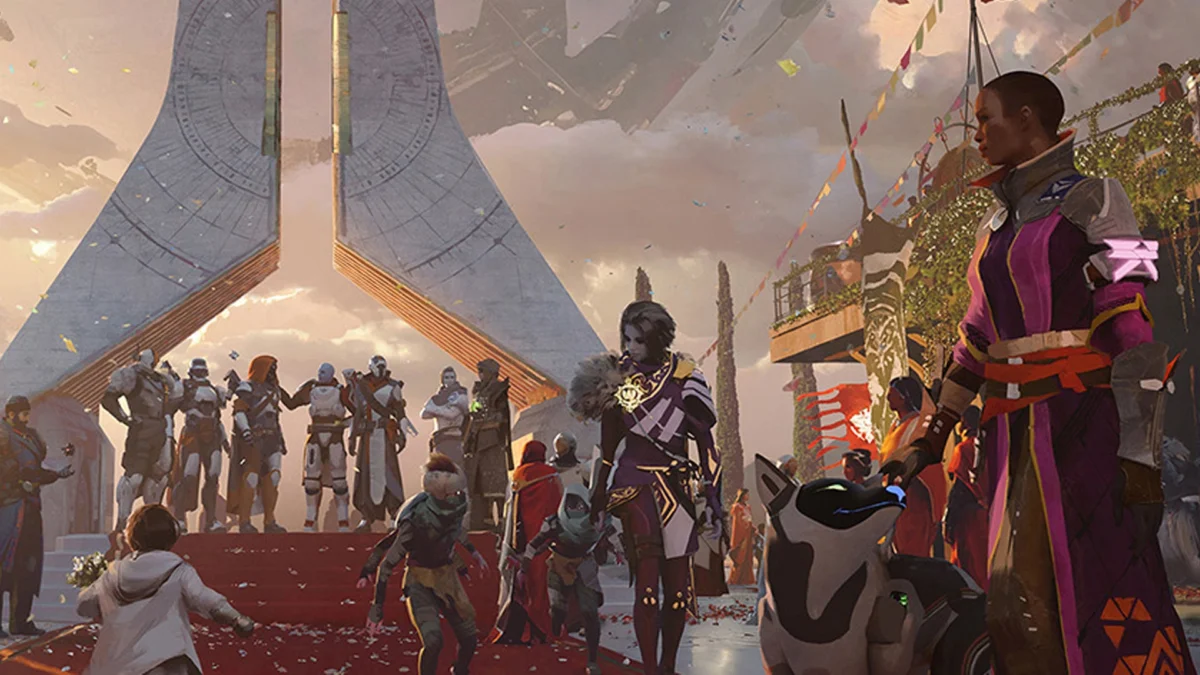
In a watershed moment for the gaming industry, Bungie has officially confirmed that it is ceasing active development on Destiny 2, the seminal live-service shooter that has defined the studio’s output for over a decade. The announcement marks the conclusion of a sprawling 12-year saga that bridged the gap between Destiny (2014) and its successor. While the game’s servers will remain operational, allowing players to revisit the expansive universe, the "Monument of Triumph" update—scheduled for June 9, 2026—will be the final infusion of new content.
This pivot, however, carries a heavy human cost. Reports surfacing alongside the announcement indicate that the studio is bracing for a new wave of "significant" layoffs, casting a long shadow over what was intended to be a celebratory final chapter for the Guardian community.
A Legacy Concluded: The Monument of Triumph
The final update, titled Monument of Triumph, is not merely a content patch; it is designed as a retrospective celebration of the franchise’s entire lifespan. Unlike the traditional "Moments of Triumph" events that historically focused on the accomplishments of a single year, Monument of Triumph will reach back to the very foundations of the Destiny experience.
Bungie has confirmed that the update will incorporate salvaged assets and narrative beats originally intended for the canceled Shadow and Order expansion. Players can expect:
- New Narrative Conclusions: Final story beats that provide closure for lingering character arcs.
- Mechanical Refinements: Fresh abilities and balancing tweaks across all character classes.
- Arsenal Overhauls: A comprehensive refresh of raid weapons and armor sets, ensuring they remain viable for the long-term endgame.
- Crucible Updates: New maps and game modes for the competitive multiplayer suite.
- Rewards Pass: A final, comprehensive reward track designed to honor the player base’s dedication.
By repurposing content from the scrapped Shadow and Order project, Bungie aims to ensure that Destiny 2 remains a "welcoming place" for veterans and newcomers alike, effectively turning the game into a permanent museum of its own history.
Chronology of a Shifting Strategy
The path to this finality has been marked by a series of strategic pivots and mounting pressures from parent company Sony.
- 2022: Sony completes its $3.6 billion acquisition of Bungie, promising to preserve the studio’s independence while leveraging its live-service expertise.
- 2023–2024: Bungie faces internal friction regarding the "annual expansion" model. Internal metrics reveal that while player engagement spikes during releases like The Final Shape, retention suffers as players drift away during content droughts.
- February 2026: Bungie officially acknowledges that the next major expansion, Shadow and Order, has been delayed to accommodate extensive revisions, signaling deep-seated development issues.
- May 2026: Bungie formally announces the end of active development, citing a need to "incubate" new projects.
- June 9, 2026: The release of Monument of Triumph and the transition into a maintenance-only state.
The transition from a focus on Destiny 2 to "new beginnings" reflects a fundamental change in the studio’s relationship with its flagship product. Bungie’s leadership has admitted that the "audience problem"—the cycle of players consuming content and leaving—proved unsustainable under the current live-service model.
Supporting Data: The Cost of the Live-Service Pivot
The industry has long viewed Destiny 2 as the gold standard for the "Games as a Service" (GaaS) model, yet the internal data suggests the model was buckling under its own weight. Bungie’s struggle to maintain a consistent cadence of updates without exhausting its workforce or its player base has been a point of contention for years.
Sony, following the 2022 acquisition, reportedly pushed for a higher frequency of smaller updates, moving away from the massive annual expansions that had been the studio’s hallmark since the Forsaken era. This friction reached a boiling point when The Final Shape concluded the decade-long "Light and Darkness" saga. With the primary narrative hook resolved, Bungie found itself at a crossroads: either fundamentally reinvent the game or begin the slow process of sunsetting it. The decision to opt for the latter appears to be driven by a lack of viable long-term roadmaps and the mounting financial pressure of maintaining a game of Destiny 2‘s scale.
Official Responses: The Bungie Statement
In a poignant statement published to the official Bungie blog, the studio attempted to frame the transition as a necessary evolution rather than an abandonment:
"For almost twelve years, we have had the joy and honor to explore the Destiny universe with you all… While our love for Destiny 2 has not changed, it has become clear that after The Final Shape, we have reached the time for our shared worlds, and Destiny, to live beyond Destiny 2."
The statement emphasizes the emotional bond between the developers and the players, acknowledging that the universe is built on "years of shared stories, adventures, and victories." However, the subtext is clear: the studio is pivot-focused. By shifting resources toward "incubating" new titles, Bungie is attempting to find its next act, though the lack of greenlit projects suggests that this transition is as much a matter of survival as it is of creative ambition.
Implications: A Studio at a Crossroads
The implications of this announcement are profound, both for the players and the industry at large.
The Human Toll
The most immediate and concerning impact is the reported "significant" round of layoffs. According to reporting from Bloomberg, despite the company’s stated goal of moving toward new projects, there are currently no greenlit games ready to enter production. This leaves a massive workforce in a state of professional limbo. This follows a brutal 2025 period in which the studio saw 220 staff members released in a single day—a trend that has severely damaged morale and trust within the development community.
The Death of the "Forever Game"
Destiny 2 served as a blueprint for the modern industry. Its sunsetting serves as a cautionary tale: even the most successful live-service games are subject to the realities of diminishing returns and the exorbitant costs of content production. When a studio the size of Bungie—backed by a giant like Sony—struggles to keep a "forever game" profitable and engaging, it signals a potential cooling of the entire GaaS market.
The Future of Bungie
With Marathon still in development and no other projects officially in the pipeline, Bungie’s future is clouded. The acquisition by Sony was intended to provide stability, yet it has coincided with the most turbulent period in the studio’s history. The loss of Destiny 2 as a revenue engine, combined with the lack of a clear successor, places immense pressure on the studio to deliver a hit with its next, currently undefined project.
As the Monument of Triumph update approaches, the mood among the player base is one of mourning. For twelve years, the Destiny universe has been a digital home for millions. While the servers will remain, the pulse of the game—the excitement of new discoveries, the anticipation of weekly resets, and the evolving narrative—is coming to a definitive end. The "stars" that Bungie references in their farewell may be the only constant left for the community to look toward as they prepare to log in for the final time.










No comments yet. Be the first to join the conversation!