Evan Lee Salim
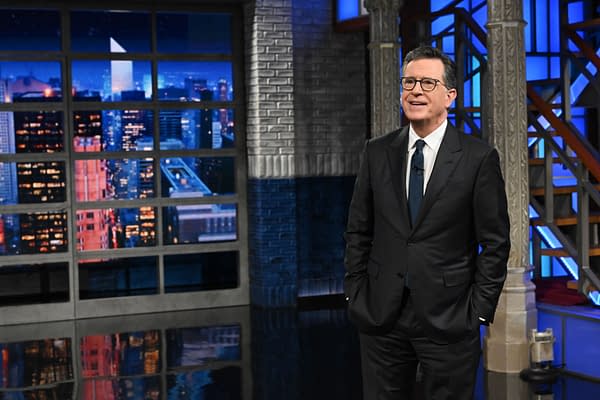
As the final lights dim on the historic stage of the Ed Sullivan Theater this May, an 11-year chapter in the history of late-night television comes to a definitive close. Stephen Colbert, who stepped into the gargantuan shoes of David Letterman in 2015, is bidding farewell to The Late Show. While CBS has categorized the move as a financial restructuring, the departure marks a significant cultural shift in an era where the traditional late-night format faces unprecedented challenges from streaming, digital fragmentation, and shifting viewer habits.
A Legacy Defined: From Satire to the Ed Sullivan Theater
To understand the weight of Colbert’s departure, one must look back at the trajectory that brought him to the pinnacle of American broadcasting. Before becoming a household name in the CBS boardroom, Colbert was a fixture of political satire. His tenure as a correspondent on The Daily Show with Jon Stewart, followed by his brilliant, long-running performance as a bloviating, ultra-conservative pundit on The Colbert Report, established him as a singular voice in American comedy.
When it was announced that he would succeed David Letterman—a titan of the industry—the industry was skeptical. Colbert was known for playing a character; he was a satirist, not a traditional host. Yet, from his premiere in September 2015, he proved that his intellectual curiosity and comedic timing could translate to the "straight" talk show format. Over the next decade, he navigated the country through turbulent political waters, consistently offering a blend of sharp-witted commentary, empathetic interviews, and, at times, profound vulnerability.
Chronology of a Transition: The Financial Realities
The decision to end The Late Show—or, more accurately, to end Colbert’s tenure and pivot the programming—did not happen in a vacuum. Industry analysts have pointed to the rising costs of producing a high-end, five-night-a-week broadcast show against the backdrop of declining linear television ad revenue.
- 2015: Stephen Colbert debuts as host of The Late Show, inheriting a legacy built by Letterman.
- 2017–2020: The show experiences a surge in relevance during the heightened political climate of the Trump administration, often leading the ratings in the late-night category.
- 2023–2024: As streaming services continue to cannibalize broadcast audiences, network executives begin re-evaluating the long-term sustainability of the high-overhead late-night model.
- May 2026: CBS announces that it will be moving in a new direction, effectively replacing The Late Show with Comics Unleashed, hosted by Byron Allen.
Despite the competitive nature of the business, where ABC and NBC have maintained their support for Jimmy Kimmel and Jimmy Fallon respectively, CBS chose a path of fiscal consolidation. While Colbert has been transparent about the "financial" nature of the network’s decision, he has remained characteristically diplomatic, emphasizing that he views the conclusion of his run as an opportunity rather than a tragedy.
Supporting Data: The Changing Landscape of Late Night
The landscape of late-night television has been shrinking for years. In the early 2000s, The Tonight Show and The Late Show were the definitive arbiters of culture, capable of launching careers and shaping public opinion with a single monologue. Today, the "watercooler moment" has been replaced by the viral social media clip.

Data from the past five years indicates that while Colbert’s digital presence—through YouTube clips and social media engagement—remained robust, the traditional "live-to-air" metrics that networks use to sell advertising have struggled. The move to replace The Late Show with a syndicated or lower-cost format like Comics Unleashed suggests that networks are prioritizing profitability over prestige.
Colbert himself acknowledged the grueling nature of the industry during his recent interview with PEOPLE. "It takes a lot of bone marrow to do the show every day," he admitted. For nearly 11 years, the host has been the public face of a nightly cycle that demands constant engagement with the news, the zeitgeist, and the personal lives of guests.
Official Responses and Personal Reflection
In his final reflections, Colbert has eschewed bitterness, choosing instead to focus on the creative liberation that comes with stepping away from the daily grind.
"I’m an actor and a writer," Colbert remarked. "I became a writer because nobody would cast me in anything, and I had to write for myself." This sentiment highlights a common thread in his career: the desire to create original content rather than simply react to the news of the day.
Perhaps the most intriguing aspect of his future is his potential pivot toward epic storytelling. Colbert has long been a vocal proponent of J.R.R. Tolkien’s work. There are reports that he intends to dedicate his newfound time to writing for the upcoming Peter Jackson-produced film Shadow of the Past, a project designed to bridge the narrative gaps left by previous adaptations of Tolkien’s legendarium. For a man who spent years dissecting the minutiae of American politics, shifting to the dense, mythic world of Middle-earth represents a return to his roots as a performer and creative visionary.
Regarding the transition of his time slot to Byron Allen, Colbert was complimentary. "It is a fantastic job," he said. "I wish somebody else was getting it. And it’s a job that I’m looking forward to doing with this usual gang of idiots for another 10 months. It’s going to be fun."
Implications: The Death of the Monologue?
The departure of a host of Colbert’s stature raises uncomfortable questions about the future of the format. If a host as talented and successful as Colbert can be moved aside for budgetary reasons, what does that mean for the next generation of comics?
- Shift to Syndication: The replacement of The Late Show with Comics Unleashed indicates a broader trend of networks relying on proven, lower-cost syndication models rather than investing in the development of individual "star" personalities.
- The Digital Exodus: Talent is increasingly moving toward platforms where they have creative control, such as podcasts and streaming platforms, rather than tethering themselves to the rigid constraints of a 11:35 PM network slot.
- Audience Fragmentation: As viewers move further away from linear appointments, the cultural influence of the "Late Night Host" as a singular, unifying figure is likely to continue its decline.
Looking Ahead: Life After the Desk
As the final credits roll tonight, the television landscape loses one of its most articulate and erudite voices. Stephen Colbert’s tenure at CBS will be remembered for its intellectual depth, his ability to pivot between absurdity and sincerity, and his unwavering commitment to his staff.
While the "bone marrow" required to run a nightly show may have been depleted, the man himself remains as energetic as ever. Whether he is penning screenplays for epic fantasies or returning to the stage as an actor, Colbert has proven that he is not defined by the medium, but by the craft.
For the audience, tonight is an opportunity to say goodbye to a companion who helped navigate a decade of unprecedented uncertainty. For Colbert, it is the start of a long-awaited second act—one where he is finally free to write the stories he wants to tell, rather than the ones the news cycle demands. As the curtain falls, one thing remains certain: the landscape of late-night television will never be the same.

 Sagoh
Sagoh
 Ammar Sabilarrohman