

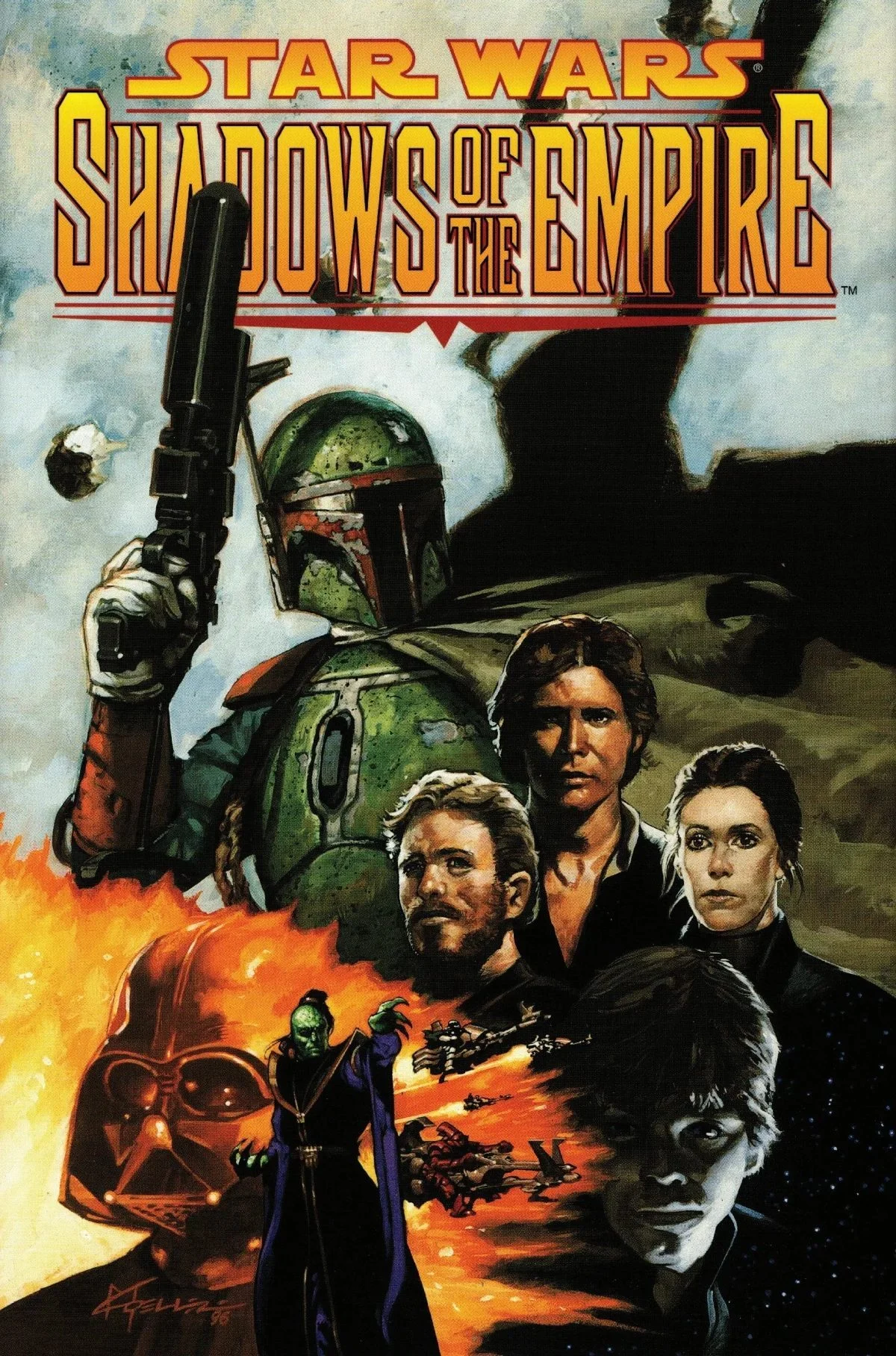
Thirty years ago, the Star Wars galaxy was in a state of precarious, high-stakes transition. Following the initial cultural earthquake of the original trilogy, the franchise had spent the early 1990s carefully rebuilding its momentum. Through the success of Timothy Zahn’s Heir to the Empire novels, the expansion of the Star Wars Customizable Card Game, and a renewed Hasbro toy line, the “Expanded Universe” had become a legitimate cultural powerhouse. Yet, as the industry looked toward the upcoming Special Editions and the highly anticipated Prequel Trilogy, Lucasfilm faced a unique challenge: how to bridge the gap between two eras of cinematic history.
The answer arrived in 1996 in the form of Shadows of the Empire, a daring, unprecedented “movie without a movie” that would forever alter the DNA of the Star Wars franchise.
The Architect: Lucy Autrey Wilson
At the heart of this multimedia behemoth was Lucy Autrey Wilson, the Director of Publishing at Lucasfilm. Wilson’s influence on the galaxy far, far away is foundational; as George Lucas’s personal assistant in 1974, she holds the distinction of being the company’s first permanent employee. Her tenure spanned the rise, fall, and resurrection of the brand, making her the ideal person to shepherd the franchise into the mid-90s.
Without Wilson, the modern Expanded Universe might never have gained its footing. She was the one who hand-picked Timothy Zahn to revitalize the literary side of the franchise and brokered the pivotal deal with Dark Horse Comics that birthed the Dark Empire series. For Shadows of the Empire, Wilson served as the creative anchor, drafting the initial narrative outline and even christening the project’s central antagonist, the cunning Prince Xizor.

Chronology of a Master Plan
The genesis of Shadows of the Empire can be traced back to a 1994 meeting between Wilson and Bantam publisher Lou Aronica. Seeking to maintain the excitement of the publishing program, Wilson pitched a cross-platform narrative. When she brought the concept to Howard Roffman, the head of Lucasfilm Licensing, the timing proved fortuitous.
Originally, George Lucas had intended to release Episode I in 1997 to coincide with the 20th anniversary of the original film. When the Prequel schedule shifted, a significant vacuum opened up in the marketing calendar. Shadows filled that void perfectly.
The Development Timeline
- November 1994: A landmark summit is held at Lucasfilm. Key stakeholders, including editors Sue Rostoni and Alan Kausch, game developer Jon Knoles, author Steve Perry, and representatives from Dark Horse Comics, gather to finalize the master plan.
- 1995: Creative teams depart the summit to begin work on their respective mediums. The narrative scope is solidified: a standalone story set between The Empire Strikes Back and Return of the Jedi.
- 1996: The multimedia event officially launches. The hardcover novel hits shelves, accompanied by a comic book series, a groundbreaking video game for the Nintendo 64, a soundtrack composed by Joel McNeely, and an extensive toy line.
The decision to set the story between Empire and Jedi was a strategic pivot. While initial concepts explored the era between the first two films, Jon Knoles pushed for the later period. This forced the writers to contend with a significant narrative hurdle: Han Solo was encased in carbonite. This absence of the franchise’s most popular rogue, however, became the story’s greatest strength, allowing the team to explore the criminal underbelly of the galaxy and introduce new characters like Dash Rendar.
Supporting Data: The Anatomy of a Multimedia Event
The logistics of Shadows of the Empire were, for 1996, staggeringly complex. Managing a narrative that spanned a novel, comics, a video game, and a music score required a level of inter-departmental cooperation that was virtually unheard of at the time.

The Collaborative Matrix
Wilson’s management style was one of “delegated excellence.” By hiring top-tier talent and providing them with a clear, unified vision, she empowered her team to operate with autonomy. However, this decentralized approach created its own set of challenges. One of the most common fan questions—why Dash Rendar’s appearance fluctuated between the novel, the comics, and the video game—can be traced back to this lack of total visual oversight. While the story was cohesive, the visual departments operated independently, a trade-off Wilson noted as a point of frustration but ultimately a necessary cost of the project’s scale.
The soundtrack, in particular, showcased the ambition of the program. Wilson secured a deal with Varese Sarabande and brought in composer Joel McNeely. The resulting score was recorded in Scotland, providing a symphonic weight to the project that elevated it from mere “tie-in” merchandise to a legitimate Star Wars experience.
Official Perspectives: Reflections on the Legacy
In a recent interview, Lucy Autrey Wilson reflected on the experience with a mixture of nostalgia and professional pride. When asked about her favorite aspect of the project, she pointed to the caliber of the collaborators.
“I loved meeting many talented artists, including Drew Struzan,” Wilson remarked, noting that Struzan’s iconic illustrations for the Bantam books defined the visual identity of that era. She also highlighted the contributions of the Hildebrandt brothers and the immense talent housed within Lucasfilm itself, such as concept artist Doug Chiang.

Wilson emphasized that the project’s success was rooted in a shared enthusiasm. "Lucasfilm was an exceptional company to work for, mainly because of George Lucas and the quality of the people who worked there." Regarding her own creative contributions, she remained humble, noting that the "pheromones" plot point involving Leia and Xizor was her way of allowing for a romantic tension that respected Leia’s established character.
Implications for the Future of Star Wars
While Shadows of the Empire was intended as a one-time experiment, its success created a permanent template for how Lucasfilm would handle transmedia storytelling. The project proved that the Star Wars audience was hungry for stories that existed outside the immediate vicinity of the Skywalker family.
A Blueprint for Modern Storytelling
The lessons learned during the development of Shadows were directly applied to future endeavors, most notably The New Jedi Order book series. Wilson herself negotiated the deal for that massive project, incorporating the collaborative spirit she had cultivated years earlier.
Today, the echoes of Shadows of the Empire are clearly visible in the modern High Republic initiative. Both projects rely on a synchronized release of books, comics, and multimedia content to build a cohesive, expansive world. The concept of a “master plan” that coordinates various creative silos—a standard operating procedure for modern franchises—owes a debt of gratitude to the pioneers of 1996.

Looking back, Shadows of the Empire was more than just a marketing stunt to fill a gap in the release schedule. It was a bridge that connected the fans of the original trilogy to the future of the franchise, proving that the galaxy far, far away was vast enough to accommodate endless, interconnected stories. By empowering creators and maintaining a rigorous standard of quality, Lucy Autrey Wilson and her team didn’t just manage a project; they built the infrastructure for the modern Star Wars universe. Thirty years later, the shadow they cast remains long, influential, and undeniably legendary.










No comments yet. Be the first to join the conversation!