

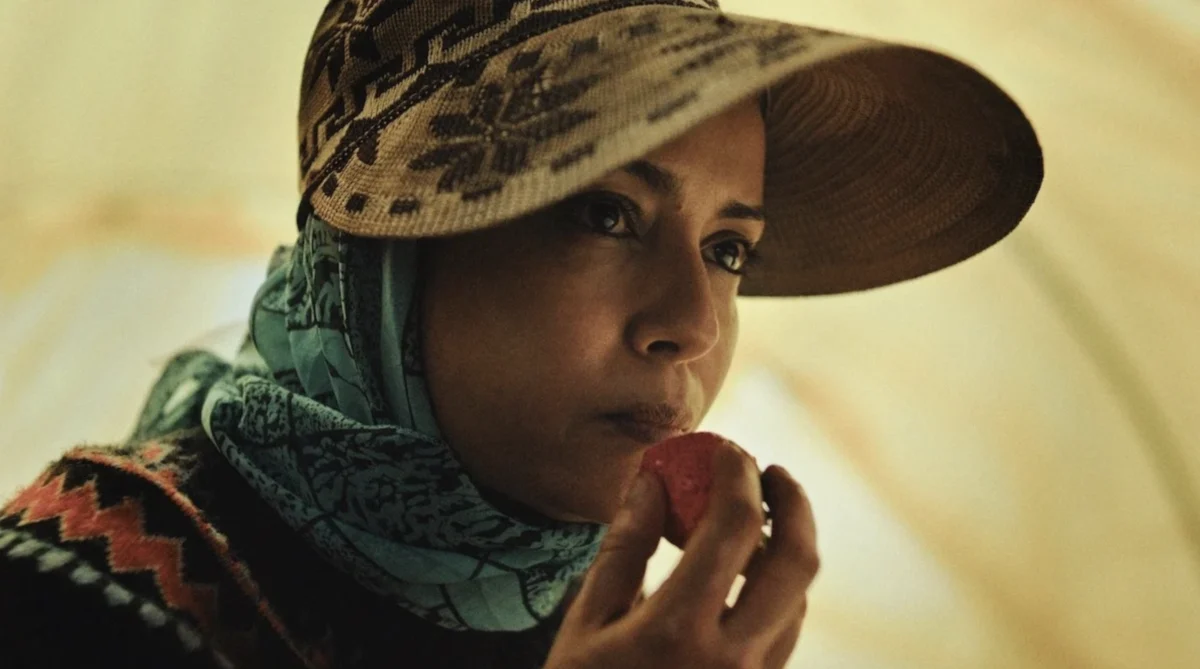
In the sprawling, sun-drenched greenhouses of Southern Spain, the color palette is deceptively vibrant. Rows of lush, crimson strawberries stretch toward the horizon, a symbol of agricultural bounty and European prosperity. But for Hasna, the protagonist of Laila Marrakchi’s harrowing new drama Strawberries, these rows are not a source of sustenance—they are a site of psychological and physical attrition. Premiering at the 2026 Cannes Film Festival, Strawberries is a searing indictment of the modern migrant experience, transforming the simple act of fruit-picking into a high-stakes, Kafkaesque nightmare.
The Dilemma of the Unripe Fruit: A Metaphor for Survival
The film opens with a sequence that serves as a chilling microcosm for the entire narrative. Hasna (played with a quiet, simmering intensity by Nisrin Erradi) is thrust into a greenhouse, instructed by a supervisor in a language she barely understands to harvest the crop. She faces an immediate, impossible choice: pick the unripe berries and face reprimand for wasting inventory, or leave them and be labeled inefficient, risking her employment—and by extension, her survival.
This scene functions as a "skeleton key" for the film. It highlights the precariousness of life for migrant workers, for whom every decision is filtered through the lens of extreme vulnerability. The brilliance of Marrakchi’s direction lies in how she anchors this macro-level socioeconomic failure within the microscopic, daily stresses of her protagonist. As Hasna navigates the farm, she realizes that the rules of her existence are not just arbitrary; they are designed to keep her in a state of perpetual, fearful compliance.
Chronology of a Descent: From Hope to Horror
Hasna’s journey begins as a classic migration narrative: a move from Morocco to Spain fueled by the promise of a better life. The initial optimism is quickly dismantled. The film meticulously tracks her descent, moving from the initial confusion of arrival to the sharp, biting realization of exploitation.
Initially, the film captures the mundane brutality of the workers’ lives—the shabby, overcrowded housing, the lack of material security, and the repetitive, back-breaking labor. However, as the timeline progresses, the focus shifts from the systemic theft of wages to something far more sinister. Through Hasna’s eyes, the audience uncovers a dark underbelly of the agricultural industry: a network of kidnapping and systematic sexual violence that operates behind the curtain of "legal" employment.
Hasna’s arc—from a hopeful immigrant trying to navigate a new system to a woman fueled by righteous, albeit dangerous, anger—is the heart of the film. While she initially seeks to organize her peers, she is met with the crushing reality of their collective trauma. The older women she works alongside, once perhaps as defiant as she, have been hollowed out, their individuality surrendered to a system that demands they be grateful for the mere privilege of existing.

The Economics of Exploitation: Supporting Data and Realities
The systemic failures depicted in Strawberries are not merely cinematic flourishes; they mirror the harsh realities faced by migrant workers in Europe’s agricultural hubs.
- Wage Theft as Policy: The film illustrates a payment system that defies logic. Wages are not calculated based on an agreed-upon contract, but on the shifting whims of foremen who arbitrarily deduct "breaks" and "inefficiency costs." This mimics the "soccer timekeeping" style of management, where the worker has no recourse to verify hours worked.
- The Economy of Despair: Marrakchi depicts a secondary market of exploitation where street peddlers sell basic necessities—blankets, prepaid phone cards—at predatory markups to workers who have no access to mainstream banking or fair-market retailers.
- Invisible Labor: The film highlights the total invisibility of these workers within the Spanish legal and political framework. They are treated as phantom laborers, ghost-like entities that appear for the harvest and vanish into the shadows, existing without the protection of the state or the recognition of society.
Official Responses and Systemic Neglect
One of the most damning aspects of Strawberries is its portrayal of the external environment. When Hasna attempts to push back, she finds that the surrounding society is not just indifferent—it is actively complicit through its silence.
Legal and political authorities depicted in the film treat the plight of migrant laborers as a non-issue. There is a palpable sense of institutional gaslighting; when the workers are noticed at all, it is only to be deported or further marginalized. The film argues that the "kindest" interpretation of the status quo is that these people are forgotten. The more malicious, and arguably more realistic, interpretation is that the system benefits from this exploitation, and therefore has no incentive to provide relief.
The Rotting Vine: Visual Symbolism
Marrakchi utilizes the strawberry itself as a recurring, multifaceted symbol. In the early acts, the berries represent the potential of the earth—a natural, beautiful bounty. As the film progresses, the camera lingers on berries rotting on the vine, attracting flies and decay.
This imagery serves as a direct parallel to the human cost of the industry. Just as the fruit is left to spoil when it no longer serves the profit margin, the workers are discarded when their labor capacity diminishes or when they become "troublesome." The metaphor of the unripe berry returns as the film’s moral compass: a society that forces a one-size-fits-all, rigid system onto its most vulnerable members is a society that inherently guarantees their failure.
Implications: A Call to Reckoning
Strawberries is a difficult watch, not because of its pace, but because of its unyielding moral clarity. By focusing on a single, strong-willed character, Marrakchi forces the audience to confront the human faces behind the produce in their supermarkets.

The film’s implications for the global migrant labor crisis are profound. It poses an uncomfortable question to the viewer: Are we, as consumers, complicit in the rot? By demanding cheap, year-round produce, do we perpetuate the very systems that facilitate the modern slavery Hasna uncovers?
The film’s conclusion offers no easy answers. It does not provide a heroic, clean resolution, as that would be a disservice to the reality of the situation. Instead, it leaves us with the image of a worker who has seen too much, a person whose struggle has made her an existential threat to an industry built on silence.
Conclusion: A Masterclass in Empathy
Laila Marrakchi has crafted a film that is as much a thriller as it is a social documentary. Strawberries stands as a monumental piece of cinema, anchored by Nisrin Erradi’s career-defining performance. It is a work that demands to be seen, not just for its artistic merit, but for its role in stripping away the veneer of "simple labor" to reveal the profound human rights crisis simmering in the greenhouses of the world.
As Strawberries seeks U.S. distribution following its successful debut at Cannes, it carries the weight of a necessary conversation. It is a bleak, beautiful, and ultimately essential piece of filmmaking that serves as a reminder that behind every product we consume lies a human story—and far too often, a story of profound, unaddressed injustice.
Grade: B
Stay up to date on the latest film criticism and festival dispatches by subscribing to the IndieWire newsletter. Join our community of readers who demand more from their cinema and their world.











No comments yet. Be the first to join the conversation!