Reynand Wu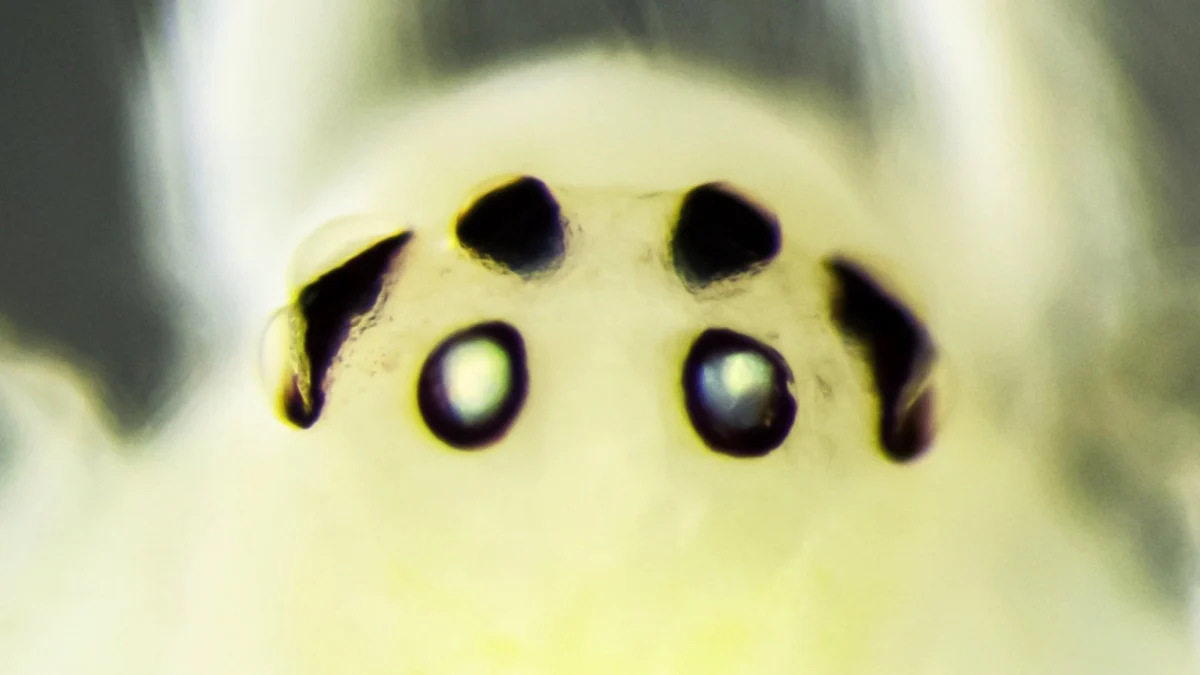
In the high-altitude, mist-shrouded forests of Uttarakhand, India, a biological mystery has emerged from the undergrowth, capturing the fascination of both the scientific community and the general public. Researchers have identified a new species of arachnid, Theridion himalayana, which bears a striking, uncanny resemblance to a smiling face on its abdomen. This discovery, detailed in the journal Evolutionary Systematics, marks a significant milestone in entomology, as it is the first time a "happy-face" spider has been documented outside of the Pacific region, effectively rewriting our understanding of global biodiversity.
The Serendipitous Discovery: A "Jackpot" in the Himalayas
The discovery of Theridion himalayana was not the result of a targeted arachnid survey, but rather a serendipitous stroke of luck. A team of researchers conducting a field study on ant populations in the remote, mountainous terrains of northern India stumbled upon the spider while surveying the dense vegetation of the Himalayan foothills.
For Devi Priyadarshini, a primary researcher on the study, the moment of recognition was instantaneous. Upon receiving the specimens collected from the high-elevation forests of Makku, Tala, and Mandal, she was struck by the unmistakable markings on the spider’s back. "I froze in shock," Priyadarshini recounted. "I had seen the Hawaiian happy-face spider during my master’s program, and I knew instantly we had a jackpot because of its striking resemblance."
What followed was a meticulous process of identification and genetic verification. The researchers needed to determine if they had discovered a relative of the famous Hawaiian species or an entirely new lineage that had evolved to mimic the iconic "smile." The resulting analysis confirmed that the Himalayan spider is a distinct species, separated by an estimated 8.5% genetic divergence from its Pacific cousin, suggesting that the two species evolved these whimsical, face-like patterns independently—a phenomenon known as convergent evolution.
Chronology of the Research
The path to identifying Theridion himalayana involved several critical phases of field work and laboratory analysis:
- Initial Field Surveys: The team focused on the high-altitude ecosystems of Uttarakhand, specifically targeting the regions of Makku, Tala, and Mandal. While the primary goal was the cataloging of ant species, the team maintained a rigorous protocol for documenting all arachnid life encountered in the foliage.
- Specimen Collection and Identification: After capturing the unique-looking spiders, the specimens were sent to laboratory facilities for close-up identification. It was during this phase that Priyadarshini identified the morphological similarities to the Theridion grallator (the Hawaiian happy-face spider).
- Genetic Sequencing: To confirm that the Himalayan spider was not simply an introduced or migratory population from Hawaii, the team conducted DNA barcoding. The 8.5% genetic variance provided the empirical proof that these were two distinct evolutionary paths.
- Publication: The findings were formally published in Evolutionary Systematics, providing the international scientific community with the taxonomic classification and biological context for the new species.
Supporting Data: Diversity in the Shadows
The researchers documented a staggering degree of phenotypic plasticity within Theridion himalayana. Across the three surveyed locations in Uttarakhand, the team identified 32 separate "morphs"—distinct color and pattern variations of the smile marking.
This level of diversity is significant. In the case of the Hawaiian happy-face spider, these variations are often thought to serve as a defensive mechanism, confusing predators by making it difficult for them to focus on a single, consistent target. The Himalayan team is now investigating whether the 32 morphs of T. himalayana function in a similar capacity, providing the spiders with a competitive edge in the harsh, high-altitude environment of the Himalayas.
Furthermore, the habitat preferences of the spider have provided a secondary layer of intrigue. The spiders were consistently found residing on ginger plants. This mirrors the behavior of the Hawaiian happy-face spider, which also inhabits ginger, despite ginger being an invasive species in Hawaii. "How did the spiders choose an invasive species and ginger exactly?" Priyadarshini questioned. This ecological overlap—where two geographically isolated species independently adopt the same plant host—raises questions about the chemical or structural properties of ginger that might be uniquely beneficial to these arachnids.
Official Responses and Scientific Context
The naming of the species was a deliberate act of reverence. As co-author Ashirwad Tripathy noted, the nomenclature was chosen to honor the landscape that birthed the species. "We both wanted to pay our respects to the mighty Himalaya mountain ranges," Tripathy explained. "They have been standing tall not just guarding our country but also holding a plethora of biodiversity within them."

The scientific community has lauded the discovery as a testament to how much of the Earth’s biodiversity remains undocumented. By proving that the "happy-face" trait is not confined to the volcanic islands of the Pacific, the study encourages a re-evaluation of how we categorize patterns in nature.
However, the "smile" itself remains a major subject of debate. While humans see a cheerful face, the spider is likely not "expressing" anything in a human sense. Scientists are currently engaged in a debate over the functional role of the markings. Are they a form of aposematism—a warning signal to predators? Or are they a form of disruptive coloration designed to break up the spider’s outline, making it invisible to birds and larger insects? The lack of a clear functional explanation is what drives current research efforts.
Implications for Future Research
The discovery of Theridion himalayana serves as a focal point for several avenues of future inquiry:
1. Evolutionary Convergence
The study highlights the power of convergent evolution. If two different species, separated by thousands of miles and drastically different climates, arrive at the same visual solution for survival, it suggests that there is a specific, as-yet-undiscovered ecological pressure that favors this "face" pattern. Future studies will likely involve high-speed videography and predator-prey interaction tests to see how birds or other spiders react to the markings.
2. Habitat Connectivity and Invasive Species
The interaction between the spider and ginger plants—a non-native species in its current habitat—offers a unique look at how animals adapt to changing landscapes. As climate change alters the distribution of plant life in the Himalayas, understanding how T. himalayana interacts with both native and invasive flora will be crucial for conservationists.
3. Biodiversity Conservation in the Himalayas
The Himalayas are one of the most sensitive ecosystems on the planet, increasingly threatened by habitat loss and rising temperatures. The fact that a new, distinct species was hiding in plain sight in these forests underscores the urgent need for more comprehensive biological surveys in the region. Protecting the habitat of the Himalayan happy-face spider is now a priority for local environmental agencies, as it may serve as an "indicator species" for the health of the local forest ecosystem.
A Broader Context: The Age of Discovery
This discovery comes amidst a flurry of recent biological breakthroughs. Earlier this month, paleontologists in Thailand announced the discovery of a gigantic new dinosaur species, estimated to be over 200 million years old. These events, taken together, suggest that we are living in a renewed age of discovery. Whether it is the ancient past or the living present, the natural world continues to yield surprises that challenge our preconceived notions of biology.
As researchers prepare for follow-up expeditions to the Uttarakhand forests, the scientific world waits to see what other secrets are held within the folds of the Himalayas. For now, Theridion himalayana remains a silent, smiling resident of the mountains—a small, eight-legged reminder that nature’s greatest wonders are often found in the most unexpected places.
Through this discovery, we are reminded that biodiversity is not just a statistic; it is a complex, evolving tapestry. The "happy-face" spider, with its bright, enigmatic markings, serves as a bridge between the curiosity of human observers and the complex, adaptive strategies of the wild. Whether the smile is a warning, a camouflage, or a bizarre evolutionary accident, it has successfully forced the world to pause, smile back, and take a closer look at the intricate web of life.


 Basiran
 Asep Darmawan