


Introduction: The Anti-Tamper Trade-Off
In the modern landscape of PC gaming, the relationship between developers and Digital Rights Management (DRM) software remains one of the industry’s most contentious topics. Among the various solutions designed to curb software piracy, Denuvo Anti-Tamper has long stood as the gold standard for major publishers. However, as games age and their peak sales window closes, the economic justification for paying ongoing licensing fees for this technology inevitably wanes.
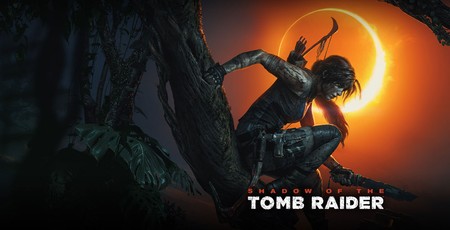
Recently, the spotlight has turned to Shadow of the Tomb Raider (SOTTR), the 2018 conclusion to Lara Croft’s reboot trilogy. Reports have emerged that Square Enix and Crystal Dynamics have quietly removed Denuvo from the title. This development provides a rare, empirical opportunity to evaluate a long-standing question in the gaming community: Does Denuvo truly impact gaming performance, or are the cries of "CPU-hogging" merely technical placebo?
The Chronology: From Launch to Exorcism
To understand the significance of this removal, one must look at the lifecycle of Shadow of the Tomb Raider. Upon its release, the title featured robust anti-tamper measures, a common practice for AAA releases aimed at protecting initial sales figures. For years, Denuvo was considered a necessary firewall against the "day-zero" piracy scene.
The recent transition began when observant users noted a change in the game’s executable files on Steam. While the update was initially pushed to the main branch, it was subsequently rolled back, leaving the non-Denuvo version accessible only via the Steam "beta" build branch. This tactical retreat suggests that the publisher may be testing the waters or preparing for a permanent, global update.
This is not the first time a title has shed its DRM skin after its primary commercial life. Developers often find that the cost-benefit analysis shifts once a game has been on the market for several years. With the cost of Denuvo subscriptions recurring annually, there comes a point where the software’s protective value is dwarfed by its financial and performance-related overhead.
Methodology: Testing the "Denuvo Effect"
The recent investigation by Dark Side of Gaming (DSOG) sought to strip away the conjecture surrounding Denuvo. By comparing the protected version of the game against the "exorcized" version, the test aimed to isolate the performance cost of the anti-tamper software.
The Testing Environment
To ensure fairness, the testers utilized a consistent PC configuration. The benchmark focused on two specific presets: 1080p at the "Highest" settings and 1080p at "Lowest" settings. Crucially, Ray Tracing and DLSS were disabled to prevent secondary variables from skewing the data. As noted in the official patch history, DLSS implementations were improved in the post-DRM build, so excluding them was vital to ensuring that the performance gains were attributable to the removal of Denuvo rather than improved AI upscaling algorithms.
Supporting Data and Observations
The findings were telling. While high-end, modern systems with massive overheads may not notice a dramatic shift, the data indicated that Denuvo’s impact is inversely proportional to a system’s processing power.
- High Settings: At higher graphical presets, the GPU often becomes the bottleneck, masking the CPU-side overhead of Denuvo. However, even here, minor frame time stutters were reduced in the non-Denuvo version.
- Low Settings: This is where the discrepancy became stark. At lower graphical settings, where the CPU is pushed to feed the GPU as many frames as possible, the performance gap widened. DSOG recorded an average frame rate increase of 17 FPS.
- The HT Factor: The most dramatic result occurred when Hyper-Threading (HT) was disabled. In this configuration, the difference jumped to 30 FPS. This suggests that Denuvo’s background processes are highly sensitive to CPU thread management. By removing the overhead, the game was able to utilize the processor’s available cycles more efficiently, leading to significantly smoother frame delivery.
Implications: The CPU Cycle Tax
The core of the "Denuvo debate" has always been the claim that the software acts as a "man-in-the-middle" between the game code and the processor. Denuvo functions by constantly verifying that the game has not been tampered with, a process that requires constant CPU calls.
For users with high-end, multi-core processors, this overhead is often negligible. However, for those running older hardware or mid-range CPUs, the "Denuvo tax" can be the difference between a fluid experience and persistent micro-stuttering. The results in Shadow of the Tomb Raider confirm that the software does indeed consume a measurable portion of CPU cycles.
Furthermore, this performance hit is exacerbated by other factors. As mentioned in the report, Nvidia’s driver overhead can interact with Denuvo in ways that degrade performance on lower-power systems. When a CPU is already struggling to process draw calls, adding a security layer that requires constant cryptographic verification is akin to asking a runner to carry a backpack while sprinting.
Industry Response and Publisher Transparency
Historically, publishers and developers have been tight-lipped regarding the performance impact of their DRM choices. When pressed, the standard response is often a blanket denial: "Denuvo does not negatively impact game performance."
This stance is largely rooted in the fact that, from a corporate perspective, the piracy protection provided by Denuvo is worth the performance cost. However, as the evidence from Shadow of the Tomb Raider demonstrates, this is a technical half-truth. While the average frame rate might only see a small percentage drop, the consistency of frame times—the smoothness of the game—is undeniably affected.
By removing the software, Square Enix has implicitly acknowledged that the protection is no longer needed. This "post-life" removal of DRM is becoming a best-practice standard in the industry, allowing games to run at their peak efficiency once they reach the bargain bin or the "legacy" stage of their lifecycle.

The Future of DRM and PC Gaming
The Shadow of the Tomb Raider case study serves as a bellwether for the future of PC gaming security. As hardware continues to evolve, the demand for transparency regarding background software grows. Gamers are no longer content with being told that background processes have "no impact" when benchmarks clearly prove otherwise.
The Balancing Act
The industry faces a three-way tug-of-war between:
- Publishers: Who seek to maximize revenue by protecting intellectual property.
- Denuvo: Which seeks to provide a service that remains invisible yet effective.
- The Community: Which demands optimal performance and longevity for the software they purchase.
The removal of Denuvo from Shadow of the Tomb Raider highlights that these three interests are not permanently aligned. There is a temporal aspect to DRM: it is a tool for the launch window, not a permanent requirement for the software’s existence.
Conclusion: A Win for Preservation
Ultimately, the removal of Denuvo from Shadow of the Tomb Raider is a victory for game preservation and performance. When a game is stripped of its DRM, it becomes a better product. It runs better, it is less susceptible to future compatibility issues (such as the game failing to launch because a DRM server is offline), and it provides a more authentic experience for the player.
As publishers continue to navigate the complexities of digital security, the SOTTR example provides a blueprint for how to handle the transition from "protected product" to "legacy software." By phasing out intrusive anti-tamper measures, developers can ensure that their titles remain playable and performant for years to come, long after the initial marketing blitz has faded. For the end-user, the message is clear: if you are running older hardware, keep an eye on the "beta" branches of your favorite titles—you might find that a performance boost is just one patch away.










No comments yet. Be the first to join the conversation!