

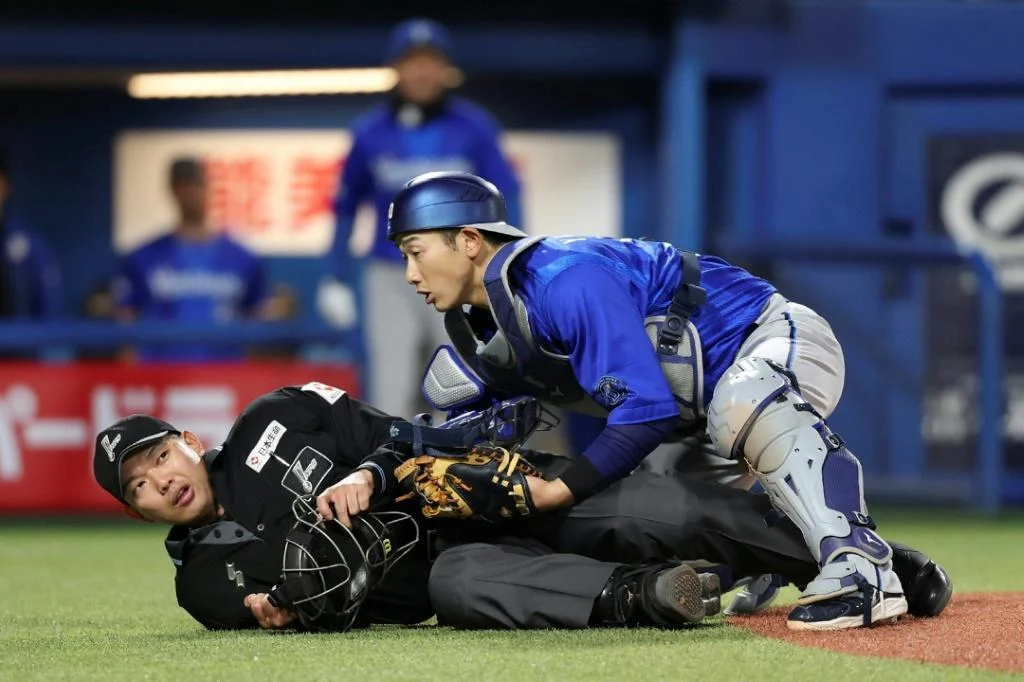
TOKYO – The landscape of Nippon Professional Baseball (NPB) is undergoing a profound period of introspection and urgent policy reform. Three weeks after a freak, high-velocity accident left a veteran umpire in a critical, comatose state, the league’s governing body is weighing a controversial shift in the rulebook: the introduction of disciplinary measures for "dangerous swings."
The potential policy change marks a rare intersection of sport, player accountability, and workplace safety. As the NPB prepares for an emergency executive meeting this coming Monday, the league is balancing the preservation of the game’s competitive spirit against the moral and legal imperative to protect the officials who stand in the line of fire.
The Incident: A Routine Play Turned Tragedy
The incident occurred on April 16 at a stadium in Tokyo, a date that has since become a somber milestone in the league’s history. During a regular-season matchup, Jose Osuna, the Venezuelan slugger currently playing for the Tokyo Yakult Swallows, stepped into the batter’s box.
As Osuna executed a powerful swing, his grip on the bat failed. The heavy wooden implement slipped from his hands, turning into a projectile that arched toward the backstop. It struck home plate umpire Takuto Kawakami with harrowing force on the left side of his head.
Kawakami, 30, collapsed instantly. The silence that fell over the stadium was immediate as medical personnel rushed to the field. He was transported to a local hospital, where surgeons performed an emergency operation to address the severe cranial trauma. Despite the swift intervention, reports surfacing this Friday confirm that Kawakami remains in the intensive care unit, having yet to regain consciousness.
Chronology of a Crisis
To understand the gravity of the current situation, one must look at the timeline of events that have unfolded since that fateful mid-April afternoon:
- April 16: The accident occurs during a Tokyo Yakult Swallows game. Umpire Takuto Kawakami is struck and hospitalized.
- April 16 (Evening): Jose Osuna issues a public apology via X (formerly Twitter), expressing deep remorse and wishing for the umpire’s recovery.
- April 18: Responding to the immediate outcry regarding safety, the NPB mandates that all umpires must wear protective helmets, replacing the traditional baseball caps previously worn under masks.
- May 3–7: Media reports from outlets including The Asahi Shimbun suggest that the league is moving beyond equipment mandates and is considering disciplinary rules for players.
- May 10 (Upcoming): The NPB executive committee, representing all 12 professional clubs, is scheduled to convene to discuss the proposal.
The Proposed Rule Change: Discipline for "Dangerous Swings"
The core of the upcoming debate centers on whether the NPB should formalize a penalty for "dangerous swings." While bat-flipping is often viewed through the lens of sportsmanship or "unwritten rules," the proposed regulation would treat the loss of bat control as a genuine safety violation.
The Scope of the Proposal
According to sources within the league, the proposal being brought to the executive meeting involves a tiered warning system. Umpires—now equipped with enhanced head protection—would be empowered to issue formal warnings to batters if they exhibit erratic, reckless, or negligent swinging habits. In extreme cases, or following repeated offenses, officials would be granted the authority to eject the player from the game.
The Challenges of Enforcement
Critics of the proposal argue that baseball is a game of high-velocity mechanics. "A swing is a complex movement," says one veteran coach who spoke on condition of anonymity. "How do you distinguish between a ‘dangerous’ swing and a ‘hard’ swing that simply results in a slip? If you punish a player for a wet handle or a momentary lapse, you risk changing the fundamental nature of the game."
However, the counter-argument is centered on the concept of a "duty of care." Much like in professional golf or tennis, where equipment control is strictly enforced, the NPB is exploring if batters have a professional obligation to ensure their equipment is properly maintained—such as using sufficient pine tar or high-grip batting gloves—to prevent such incidents.
Supporting Data and Workplace Safety Trends
The injury to Kawakami has cast a spotlight on the inherent risks faced by those behind the plate. While catchers have long utilized advanced protective gear, the "umpire’s uniform" has traditionally remained lightweight to facilitate mobility and heat management.
The Evolution of Protective Gear
For decades, the standard umpire attire consisted of a chest protector, shin guards, and a face mask worn over a standard baseball cap. The April 18 mandate—which requires the use of specialized helmets—is a significant departure from this tradition. The new headgear is designed to dissipate kinetic energy across a larger surface area, theoretically reducing the risk of skull fractures in the event of a stray bat or foul ball.
Comparative Risks in Sports
The NPB is not the first organization to grapple with this. In recent years, Major League Baseball (MLB) in the United States has seen increased scrutiny regarding "bat integrity." Research conducted by the Sports Safety Institute suggests that modern bat construction, combined with the high torque generated by modern training methods, has led to increased exit velocities. When a bat slips at these speeds, the potential for catastrophic injury is significantly higher than it was in the era of lighter, less-dense bats.
Official Responses and Public Sentiment
The reaction to the incident has been a mix of intense empathy and regulatory urgency.
The Player’s Perspective
Jose Osuna’s response was swift and heartfelt. "I’m very sorry about what happened today when my bat hit the main umpire," he wrote. "I hope he’s well, I’m really sorry." His reaction has been echoed by players across the league, many of whom have privately expressed that the incident was a "nightmare scenario" that any batter could have fallen into.
The League’s Silence
The NPB has remained largely tight-lipped regarding the specifics of the upcoming meeting. When approached by AFP for comment, a league spokesperson declined to confirm the exact phrasing of the proposed rule, citing the privacy of the ongoing executive deliberations.
This silence has led to speculation that the league is treading carefully. There is a palpable fear that an overzealous rule change could lead to friction between the players’ union and the league management. If the NPB imposes penalties that players deem unfair or arbitrary, it could trigger a wider labor dispute.
Broader Implications for the Future of NPB
The potential implementation of this rule before the end of the 2026 season carries significant weight for the future of Japanese baseball.
A New Standard of Professionalism
Should the rule pass, it would set a precedent that player safety is a shared responsibility. It would likely lead to a league-wide initiative on equipment standards. We may see mandatory inspections of bat grips, the introduction of standardized friction-enhancing substances, or even a push for "safety-grip" handle coatings that prevent the bat from flying out of the hands during high-torque rotations.
Impact on the Game’s Aesthetic
Baseball purists are watching the development with concern. The sport relies on the raw power and intensity of the swing. If players begin to hold back—or "swing cautiously"—to avoid potential ejections, the competitive nature of the game could be dampened. The challenge for the NPB is to craft a rule that captures "recklessness" without penalizing the aggressive athleticism that fans pay to see.
The Human Element
Beyond the metrics and the rulebooks, the human element remains at the center of the story. Takuto Kawakami’s condition is the primary driver of this legislative shift. The league is acting under the shadow of a tragedy that has left a young man’s career, and his life, in the balance.
As the 12 clubs gather on Monday, they do so with the knowledge that their decision will serve as a definitive statement on the value they place on the lives of their officials. Whether the proposal passes in its current form or is amended into something more moderate, the NPB has already changed. The era of the "unprotected umpire" is over, and the era of "player liability" for equipment control is likely just beginning.
For now, the baseball community waits—not just for a new rule, but for news from the hospital. The game will continue, but the memory of April 16 will remain a haunting reminder that in professional sports, the line between victory and catastrophe is often just a grip away.












No comments yet. Be the first to join the conversation!