Asep Darmawan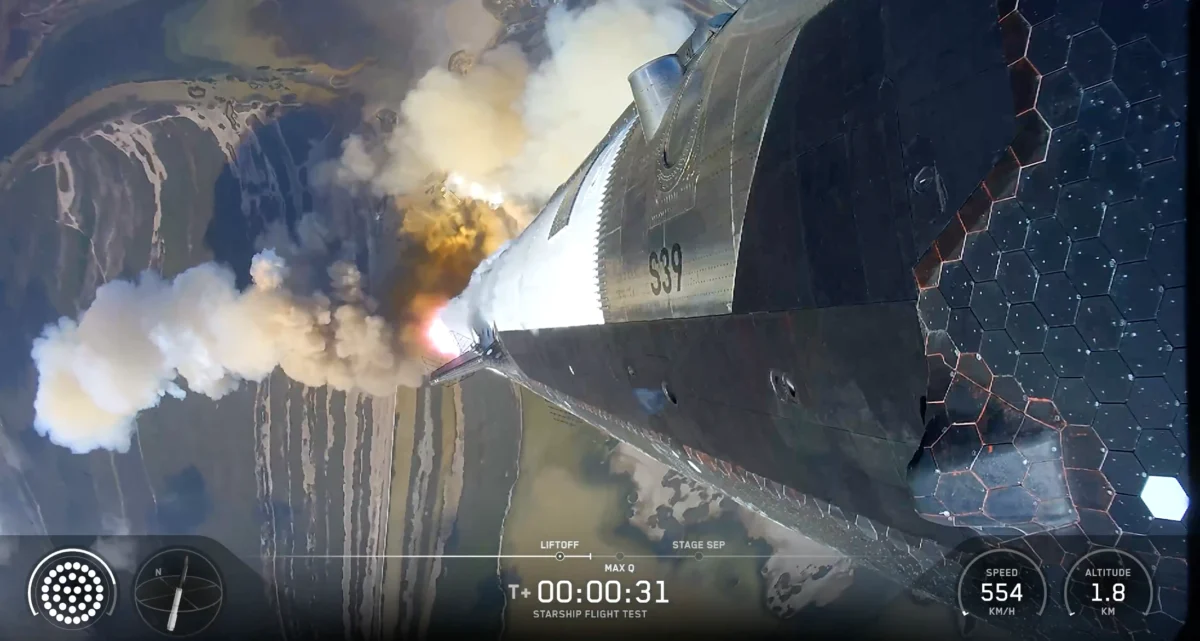
SpaceX has officially entered a new era of space exploration with the inaugural launch of its upgraded Starship V3 rocket. Lifting off from the company’s private "Starbase" facility in Boca Chica, Texas, the 407-foot behemoth—the most powerful launch vehicle ever constructed—ascended into the clouds at 5:30 p.m. local time. While the mission demonstrated the immense potential of the next-generation platform, it also served as a stark reminder of the volatile nature of aerospace development, as the flight encountered a series of technical hurdles that prevented a flawless execution.
This mission represents more than just a hardware test; it is a critical pivot point for Elon Musk’s space enterprise. As SpaceX prepares for its highly anticipated Nasdaq IPO—expected in mid-June—the performance of Starship V3 is no longer merely a technical milestone, but a fundamental metric for prospective shareholders. With an estimated $75 billion capital raise on the line, the eyes of Wall Street are now firmly fixed on the dusty plains of South Texas.
Chronology of the Flight: From Ignition to Re-entry
The launch sequence began following a tense delay. An initial attempt on Thursday was scrubbed after a hydraulic pin on the launch tower arm—part of the newly inaugurated launchpad infrastructure—failed to retract, forcing teams to stand down. By the time of the successful liftoff, anticipation was at a fever pitch.
The Ascent
The Super Heavy booster ignited its third-generation Raptor engines, generating unprecedented thrust to propel the massive vehicle off the pad. Shortly after clearing the tower, the vehicle achieved "Max Q," the point of maximum mechanical stress. Moments later, the upper stage ship successfully separated from the Super Heavy booster, continuing its journey into the vacuum of space.
The Booster’s Failure
The mission’s first complication occurred during the booster’s descent. The Super Heavy, intended to perform a controlled "boost-back" burn to return to the Gulf of Mexico for a simulated landing, failed to reignite its engines as programmed. Without the necessary deceleration, the booster tumbled uncontrollably toward the ocean, resulting in what appears to have been a total loss upon impact.
Starship’s Orbit and Re-entry
The Starship upper stage faced its own challenges, losing one of its six Raptor engines during the ascent phase. Despite this, the vehicle maintained its trajectory and successfully deployed its payload: 20 Starlink satellite simulators and two specialized satellites tasked with capturing high-definition footage of the rocket’s exterior. Approximately one hour into the flight, the vehicle initiated its landing sequence in the Indian Ocean. As anticipated, the craft hit the water and tipped over, leading to a planned structural disintegration.
Supporting Data: The Evolution of Starship V3
The V3 iteration of Starship is the product of years of iterative engineering and billions of dollars in R&D. The transition from previous models to V3 is marked by several key advancements:
- Third-Generation Raptor Engines: These engines boast increased thrust-to-weight ratios and a simplified design architecture. By reducing the number of components and optimizing fluid dynamics, SpaceX aims to improve reliability—a goal that remains a work in progress following the engine loss during this latest flight.
- Infrastructure Overhaul: The launchpad at Starbase has been completely redesigned over the last two years. The new facility is built to handle higher launch cadences and features more robust ground support equipment to protect against the acoustic and thermal energy generated by the Super Heavy booster.
- Mass and Payload Capacity: Designed to lift over 100 metric tons into low Earth orbit, Starship V3 is engineered specifically for deep-space missions, including NASA’s Artemis lunar landings and Musk’s long-term objective of establishing a human presence on Mars.
Implications: A Company at a Crossroads
The timing of this test is not incidental. SpaceX is currently navigating its most significant transition since its founding: the move from a private, founder-led venture to a publicly traded entity.
The IPO and the Market
The looming Nasdaq listing in June carries immense weight. Investors are not just betting on the success of a rocket; they are betting on the ecosystem SpaceX has built around it. The $75 billion valuation is predicated on the idea that Starship will drastically lower the cost per kilogram of orbital delivery, thereby cementing Starlink’s dominance in global internet services.
However, the inclusion of debt servicing for Musk’s other ventures—specifically the financial obligations tied to xAI and the social media platform X—has added a layer of complexity to the IPO. Market analysts suggest that this flight may be the last time SpaceX conducts a test flight without the immediate, knee-jerk pressure of a fluctuating stock ticker.
The Starlink Dependency
While Mars is the vision, Starlink is the engine. The satellite constellation is currently the only segment of SpaceX’s business that generates a consistent, profitable revenue stream. The ability of Starship to deploy massive, next-generation Starlink satellites is the primary "near-term" use case for the rocket. Every successful deployment, like the one achieved during this latest flight, validates the business model and provides the necessary capital to fund more ambitious, experimental endeavors.
Official Responses and Future Outlook
In the aftermath of the test, SpaceX engineers have already begun the forensic process of analyzing telemetry data. While the loss of the booster was a setback, the company has historically utilized a "fail-forward" philosophy. For SpaceX, the data gleaned from an engine failure or a missed burn is often more valuable than a successful, uneventful flight.
"We learn more from a failure than we do from a success," a sentiment often echoed by Musk, seems to define the company’s internal culture. This philosophy was tested late last year when an upgraded booster exploded during ground testing in November 2025, forcing a multi-month delay in the flight schedule.
NASA and Lunar Ambitions
NASA remains a key partner, closely monitoring Starship’s progress for the Artemis program. As the designated Human Landing System (HLS), Starship must eventually prove it can perform complex orbital refueling—a maneuver that will be the focus of subsequent tests. The agency has expressed cautious optimism, noting that while the technical hurdles are significant, the cadence of SpaceX’s development remains unmatched in the aerospace industry.
Looking Ahead
The path to commercial viability is now clear, yet arduous. SpaceX must address the engine reliability issues identified in this flight and refine the booster landing procedure to ensure the reusability that is central to the program’s economic viability. With the IPO approaching, the margin for error is shrinking.
The successful deployment of the Starlink simulators proves that the primary mission of the vehicle—transporting cargo—is within reach. However, the true test for Starship V3 will be its ability to prove that it can be landed, refurbished, and flown again in quick succession. As the world watches, SpaceX is not just attempting to build a rocket; it is attempting to rewire the economics of the space industry. Whether the company can deliver on its ambitious timeline under the scrutiny of public markets remains the defining question of the next quarter.
As we look toward the mid-June listing, the events at Starbase underscore a simple reality: the frontier of space remains a harsh, unforgiving environment, but for SpaceX, it is the only place worth doing business.


 Azzam Bilal Chamdy