Muslim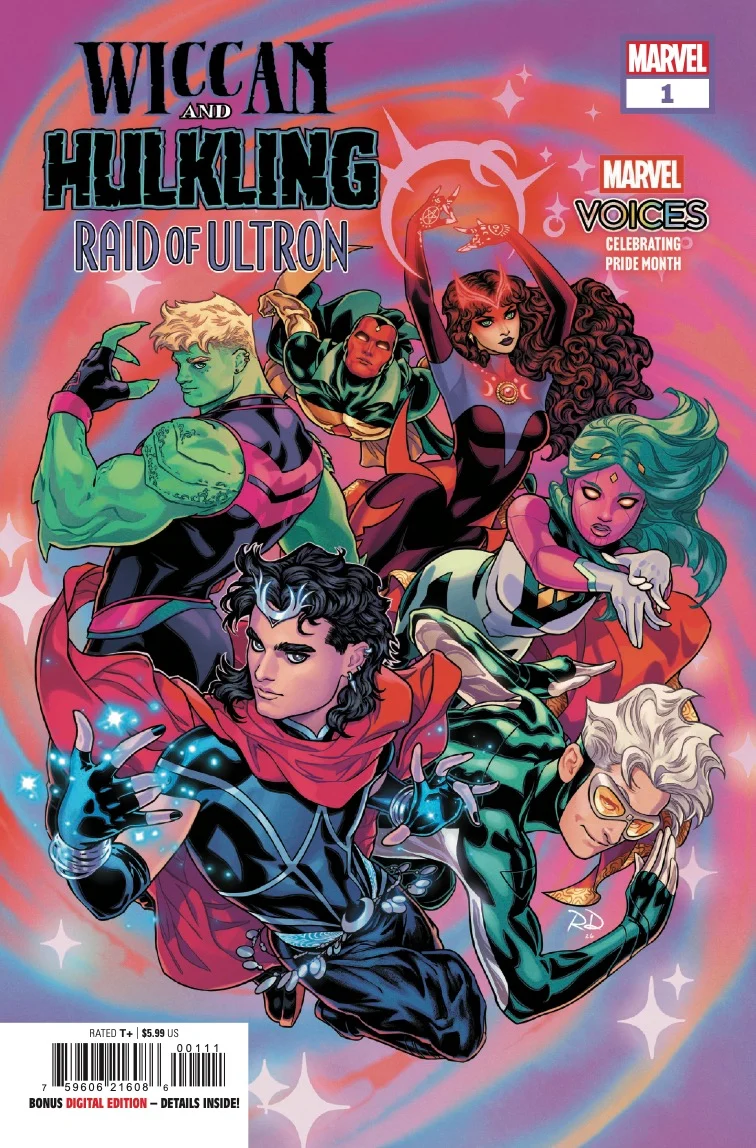
The Marvel Universe is no stranger to intergalactic threats, cosmic-level entities, and multiversal shifts. However, some of the most poignant narratives often stem from the collision between monumental superhero duties and intimate personal milestones. This May, Marvel Comics is set to release Wiccan & Hulkling: Raid of Ultron #1, a 48-page special that promises to blend the high-stakes action of an Avengers-level threat with the heartfelt, grounded character development that fans of Billy Kaplan and Teddy Altman have come to adore.
Main Facts: A Wedding Anniversary Under Siege
The premise of Wiccan & Hulkling: Raid of Ultron #1 is deceptively simple: a celebration of love interrupted by a legacy of destruction. Wiccan (Billy Kaplan) and Hulkling (Teddy Altman), arguably Marvel’s most prominent queer power couple, are hosting an anniversary party for their friends and family. As the couple settles into their new home, seeking a moment of respite from their duties as Emperor and Court Wizard of the Kree-Skrull Alliance, the festivities are violently cut short.

The antagonist, as the title suggests, is none other than Ultron. The megalomaniacal artificial intelligence has set his sights on the party, specifically aiming to reclaim Vision and his synthezoid daughter, Viv Vision. This conflict transforms a domestic celebration into an all-out tactical defensive operation. The issue is positioned as a special oversized release, clocking in at 48 pages, which allows the creative team to weave together multiple narratives that explore the protagonists’ personal legacies and the enduring nature of their familial bonds.
Chronology and Narrative Structure
The structural brilliance of this issue lies in its anthology-style approach, curated through a framing story that serves as the narrative spine.

The Framing Story: Continuity and Chaos
Writer Wyatt Kennedy (Wiccan: Witches’ Road) and artist Stephen Byrne (What If…? Galactus) are tasked with the heavy lifting of the framing story. Picking up directly from the conclusion of Wiccan: Witches’ Road, the story establishes the setting of the anniversary party. Kennedy’s script aims to capture the domestic bliss of Billy and Teddy before transitioning into the frenetic energy of an Ultron-led assault. Byrne’s artistic contribution is expected to provide the visual polish necessary to contrast the warm, inviting atmosphere of the celebration with the cold, metallic precision of the incoming Ultron army.
Segmented Character Arcs
Following the inciting incident, the narrative branches into three distinct, character-focused segments:

- The Twins’ Duality: Tegan Quin (of the band Tegan and Sara) makes a notable foray into comic book writing, teaming up with fan-favorite artist Luciano Vecchio (Uncanny X-Men). Their segment focuses on the complex relationship between Wiccan and his brother, Speed. As the twins battle against Ultron’s forces, the story delves into their disparate perspectives on life and their individual hero’s journeys.
- Legacy of the Kree and Skrull: Zoe Tunnell (Marvel United: A Pride Special) and artist Rachael Stott (Fantastic Four) tackle the union of Hulkling and Phyla-Vell. By pairing Teddy with his alternate-universe half-sister, the narrative explores themes of shared heritage and the burden of galactic leadership. This segment promises to showcase the physical might of the characters as they dismantle the robotic invaders.
- The Synthezoid Identity: In a poignant exploration of artificial life, Josh Trujillo (Planet of the Apes vs. Fantastic Four) and newcomer artist Bradley Clayton focus on the dynamic between Vision and Viv. This segment serves as a philosophical deep-dive, with Viv questioning her own identity as a synthezoid while fighting alongside her father.
Supporting Data and Creative Talent
The success of a "one-shot" or special issue in the modern comic market often hinges on the synergy between established veterans and fresh perspectives.
Creative Team Breakdown:

- Writers: Josh Trujillo, Tegan Quin, Wyatt Kennedy, and Zoe Tunnell.
- Artists: Bradley Clayton, Luciano Vecchio, Rachael Stott, and Stephen Byrne.
- Cover Art: Russell Dauterman, whose work on the X-Men line has made him one of the industry’s most sought-after cover artists.
Technical Specifications:
- Release Date: May 27, 2026.
- Format: Oversized one-shot (48 pages).
- Publisher: Marvel Comics.
The inclusion of Tegan Quin represents a growing trend of cross-disciplinary collaboration in the comic book industry, where musicians and novelists bring a fresh, distinct "voice" to legacy characters. Furthermore, the debut of Bradley Clayton signals Marvel’s ongoing commitment to scouting emerging talent to pair with industry stalwarts like Rachael Stott and Luciano Vecchio.

Official Perspectives and Thematic Implications
While Marvel has not released an official editorial statement beyond the solicitation, the thematic weight of the issue is clear. By focusing on the concept of "Family and Danger," the creative team is highlighting the evolution of Wiccan and Hulkling from the teenage members of the Young Avengers to central pillars of the Marvel Universe.
The choice of Ultron as the antagonist is significant. Ultron is not merely a "villain of the week"; he is a recurring critique of the Avengers’ own history—a creation that went wrong, a reflection of the hubris of his creator, Hank Pym. By targeting Vision and Viv, Ultron is attacking the very concept of "family" that the heroes are trying to celebrate. The story essentially forces the characters to define what family means in a world where "creators" and "creations" are often at odds.

Implications for the Future of the Marvel Universe
The release of Raid of Ultron #1 carries several implications for the broader Marvel narrative landscape:
1. Expanding the Cosmic-Magic Hybrid
Wiccan and Hulkling occupy a unique space in Marvel lore, bridging the gap between high-fantasy magic (via Billy’s reality-warping abilities) and space-faring cosmic politics (via Teddy’s Kree-Skrull heritage). This issue continues to solidify their role as the nexus of these two worlds, ensuring that the characters remain relevant in both the street-level and cosmic-level storytelling spheres.

2. The Evolution of the "Vision" Lineage
The focus on Viv and Vision suggests that Marvel is looking to refine the status of its synthetic heroes. In an era where AI and machine learning dominate real-world headlines, stories featuring Vision and Viv—who grapple with the definition of consciousness and autonomy—are more relevant than ever. This issue will likely serve as a foundational text for how Viv perceives her place in the Marvel Universe moving forward.
3. The "Event" One-Shot Model
Marvel has increasingly relied on the "anthology special" to advance multiple character arcs simultaneously without requiring a lengthy, multi-issue event series. If Raid of Ultron #1 proves successful, it may indicate a strategic shift toward more "event-adjacent" one-shots that provide high-impact, concentrated storytelling. This model benefits the reader by offering a complete narrative arc in a single purchase, while simultaneously allowing the publisher to highlight multiple writers and artists in a single project.

Conclusion
As the release date of May 27, 2026, approaches, anticipation is building for a story that promises to be as emotional as it is action-packed. Wiccan & Hulkling: Raid of Ultron #1 is more than just a standard superhero slugfest; it is a celebration of characters who have grown up alongside their readers. By forcing these heroes to confront a legacy villain like Ultron during their most personal moment of joy, Marvel is setting the stage for a conflict that will test not just their strength, but the bonds of the family they have built together.
Whether through the introspective dialogue between the Kaplan twins or the heavy-hitting team-up of the Kree-Skrull royals, the issue serves as a testament to the longevity of the Young Avengers generation. For fans of these characters, the raid is not just an attack on their home—it is a catalyst for the next chapter of their evolution as the leaders, protectors, and family members they have become.

 Sagoh
Sagoh
 Ammar Sabilarrohman