

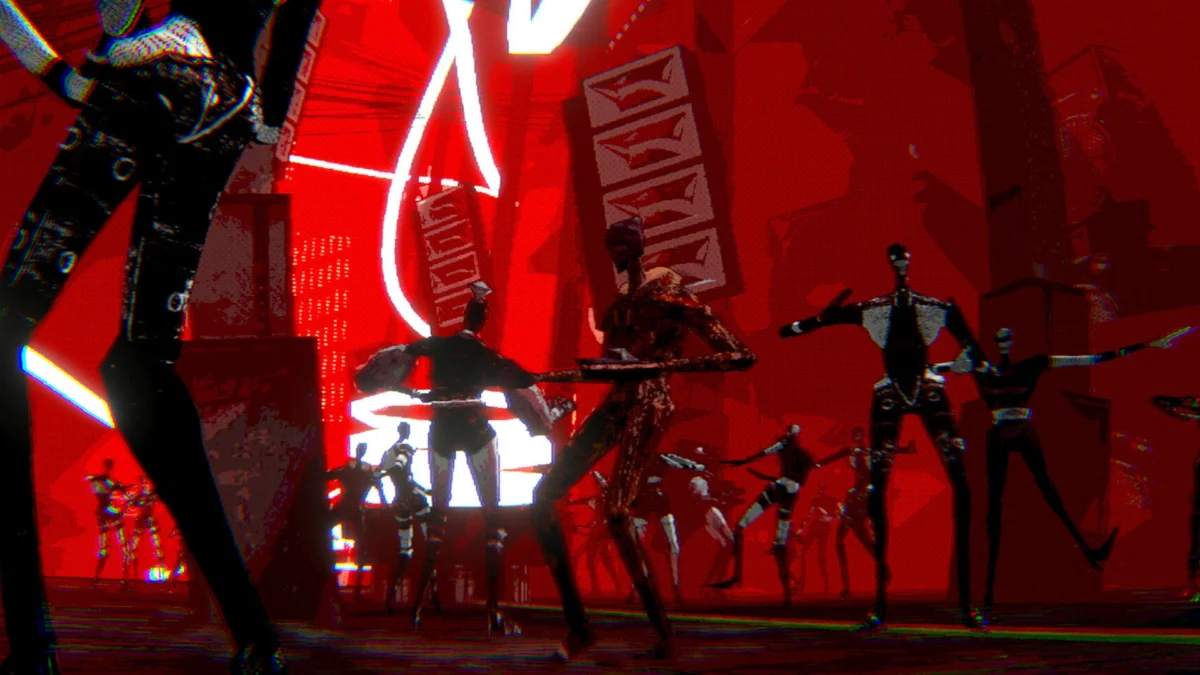
In the sprawling, often homogenized landscape of modern indie game development, there exists a growing counter-culture of "ocular maximalism." This design philosophy—characterized by abrasive color palettes, dissonant geometry, and a deliberate assault on the senses—has found a new standard-bearer in the recently announced Grindset T.V.. Billed as an "open-world speedrunning first-person platformer for the freaks," the title promises to push the boundaries of visual and mechanical overstimulation, marking a significant evolution in a lineage that includes titles like Splatter and Dungeons of Blood and Dream.
Main Facts: A Corporate Dystopia in Motion
At its core, Grindset T.V. is a high-velocity, movement-heavy platformer set within an existential nightmare. The developer, Infinite Animal, describes a world where the divine has been completely subsumed by the market: "God is dead, and heaven’s gone corporate."
Players assume the role of a gig-worker hivemind, tasked with delivering packages across an opaque, hostile, and neon-drenched urban sprawl. The gameplay loop appears to be a fever-dream synthesis of Sonic the Hedgehog and visceral body horror. Players traverse the environment by grinding along beams of pure light, navigating dense, ad-saturated cityscapes while consuming pills to maintain stamina. The combat, if it can be called that, involves flinging "infinitely stretching, bloody bandage-covered arms" at entities that defy standard biological classification. It is a game defined by its refusal to be easily categorized, oscillating between high-speed traversal and surrealist exploration.
Chronology: The Genealogy of Ocular Maximalism
To understand the emergence of Grindset T.V., one must look at the shifting tides of indie game aesthetics over the last five years.
The Cruelty Squad Catalyst
The movement arguably traces its origin to the sleeper hit Cruelty Squad. While not the first game to utilize "ugly" or jarring visuals, it was the first to weaponize them so effectively. By creating an experience that was, by traditional standards, an "affront to the senses," Cruelty Squad proved that visual dissonance could serve as a powerful thematic tool, mirroring the moral and systemic rot of its game world.
The Post-Cruelty Era (2021–2024)
Following the success of Cruelty Squad, a subset of developers began to lean into this "maximalist" aesthetic. Titles such as Splatter and Dungeons of Blood and Dream began to appear in the indie sphere, suggesting a growing audience for games that prioritize "vibe" and sensory overload over polished, AAA-style visual fidelity. These games rejected the industry standard of hyper-realistic lighting and smooth textures in favor of something more jagged, surreal, and ultimately more memorable.
The Announcement of Grindset T.V.
In the latter half of 2024, the announcement of Grindset T.V. formalized this trend into a recognizable sub-genre. The official reveal trailer showcased the title’s commitment to its unique visual identity, leading to its current status as a highly anticipated—and highly debated—title on Steam. While no official release date has been set, the game’s presence on the digital storefront has already garnered significant attention from the speedrunning and avant-garde gaming communities.
Supporting Data: Dual-Track Design Philosophy
One of the most intriguing aspects of Grindset T.V. is its attempt to cater to two seemingly contradictory player demographics: the precision-focused speedrunner and the lore-hungry explorer.
The Speedrunning Vector
For the competitive crowd, the game provides a playground of physics-based traversal. The inclusion of light-beam grinding and stamina-management mechanics suggests a high skill ceiling. By focusing on leaderboard chasing and the "ghosts" of other players, Infinite Animal is positioning Grindset T.V. as a viable candidate for the speedrunning circuit, where the chaotic visuals serve as a backdrop for optimized, frame-perfect movement.
The Exploratory Vector
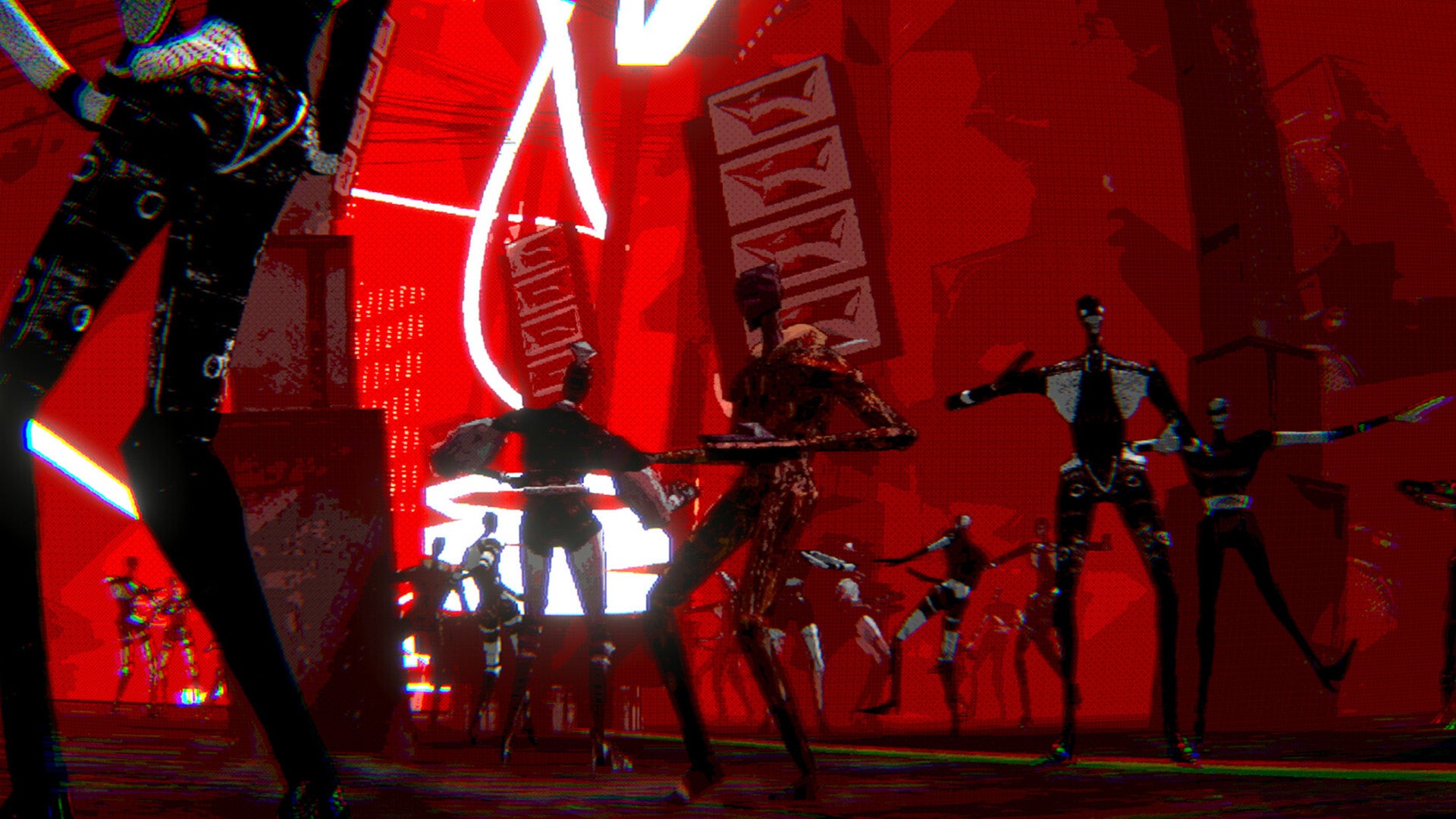
Conversely, for players less interested in velocity, the game offers a "densely interconnected open world." In this mode, the game transforms into a narrative-heavy experience where the player acts as a scavenger of information. The world is built on the premise that "religious zealotry and capitalist exploitation have merged," providing a rich tapestry for NPC interaction, environmental storytelling, and the discovery of deep-seated secrets. This dual-track approach ensures that the game’s "overstimulating" nature serves a purpose rather than acting as a simple barrier to entry.
Official Responses and Developer Intent
Infinite Animal has remained relatively enigmatic regarding the specifics of the game’s mechanics, preferring to let the visceral imagery speak for itself. However, the promotional materials consistently highlight the "freakish" nature of the world. By branding the game as being for "the freaks," the developers are signaling a clear rejection of mainstream sensibilities.
In the industry at large, the response has been one of fascination. Critics note that while many indie games attempt to replicate the "weird" factor of Cruelty Squad, few manage to integrate it with the mechanical fluidity promised by Grindset T.V.. The game is not merely an exercise in bad taste; it is an exercise in intentionality. Every garish color, every distorted texture, and every abstract enemy model serves the central narrative: the total commodification of existence.
Implications: Where Does the Industry Go From Here?
The emergence of Grindset T.V. raises significant questions about the future of indie development and the "overstimulation" trend.
The Commodification of the "Aesthetic of Rot"
As more developers adopt these maximalist visual styles, there is a risk that the aesthetic will become a trope. When every game is designed to be a "sensory nightmare," the impact of that design choice naturally diminishes. However, Grindset T.V. avoids this by anchoring its aesthetics in a coherent, albeit horrifying, corporate-dystopian narrative. The implication is that maximalism works best when it is supported by a strong, singular vision rather than being a stylistic shortcut.
The Role of the "Gig Economy" as a Narrative Trope
The decision to frame the protagonist as a "gig worker hivemind" is a poignant critique of contemporary labor. By literalizing the "grind" of modern employment through high-speed platforming, Grindset T.V. joins a growing list of indie titles that use surrealism to critique real-world socio-economic conditions. This trend is likely to continue as younger developers, who have grown up entirely within the gig economy, move into positions of creative leadership.
Accessibility and the Limits of Design
Finally, the existence of Grindset T.V. challenges the industry’s obsession with "accessibility" as defined by clarity and ease of use. While there will always be a market for polished, user-friendly experiences, Grindset T.V. proves that there is an equally valid, perhaps more passionate, market for games that are intentionally difficult to read, visually exhausting, and deliberately weird.
Conclusion
Grindset T.V. represents a tipping point in the indie gaming scene. It is a project that understands its lineage, acknowledges its influences, and seeks to push those concepts into a more refined, albeit still chaotic, territory. Whether it succeeds in balancing the demands of speedrunners and lore-explorers remains to be seen. What is clear, however, is that for the "freaks" and the bold, the future of gaming is looking increasingly neon, increasingly corporate, and increasingly strange. For those interested in tracking its progress, the game is currently available for wishlisting on Steam, serving as a beacon for those waiting to see just how far the "grind" can go.











No comments yet. Be the first to join the conversation!