The digital marketplace landscape for PC gaming has long been dominated by Valve’s Steam platform. For years, its refund policy—which allows users to return a game for any reason provided they have played for less than two hours—has been lauded as a gold standard for consumer protection. It shields players from broken software, deceptive marketing, and "shovelware." However, a growing rift has emerged between this policy and the reality of modern indie game design.
Zoroarts, the solo developer behind the viral co-op "rage" title Paddle Paddle Paddle, has ignited a firestorm of debate after revealing that his game is being systematically exploited by thousands of users. These players are purchasing the game, completing the entirety of its content, and subsequently requesting a full refund—a practice the community has dubbed the "win-and-dash."
The Anatomy of the Crisis: What is Paddle Paddle Paddle?
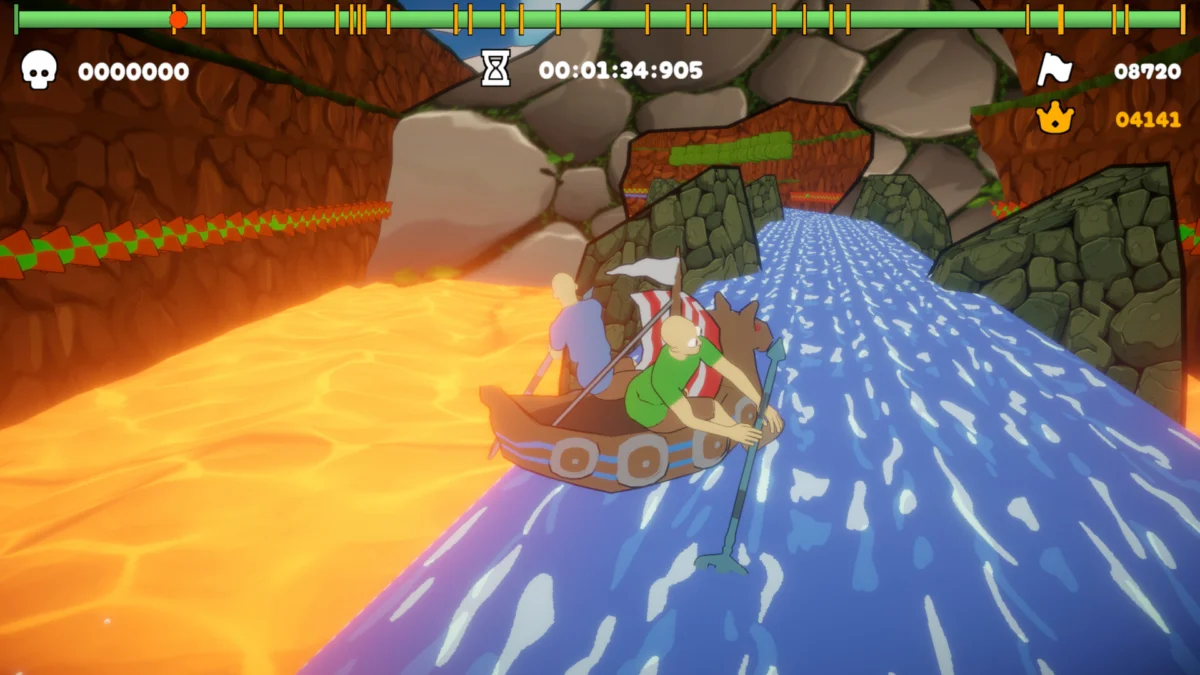
Paddle Paddle Paddle is a high-intensity, cooperative platforming experience that challenges two players to navigate a boat through a series of increasingly difficult, skill-based obstacles. As a "rage" game, it follows in the footsteps of titles like Getting Over It with Bennett Foddy or Jump King. These games are designed with a specific philosophy: they are difficult to master but potentially fast to complete if the player possesses the requisite skill.
The core of the issue lies in the definition of "game length." Unlike a sprawling RPG that requires 80 hours to reach the credits, a rage game’s length is entirely subjective. While the average player might struggle for hours, a highly skilled player—or one who has already practiced the mechanics—can conquer the game in under two hours.
When a player finishes the game within this two-hour window, they technically meet Steam’s criteria for a "no-questions-asked" refund. The problem is that, for the developer, the transaction has shifted from a sale to a free rental. The player has consumed the entire product, enjoyed the full experience, and left the developer with zero revenue to show for their labor.
Chronology of a Controversy: From Viral Hit to Refund Nightmare
The situation reached a breaking point on July 5, 2026, when Zoroarts took to social media to broadcast the staggering statistics behind his game’s performance.
- The Launch: Following a positive reception and organic growth on streaming platforms, Paddle Paddle Paddle saw a massive influx of players.
- The Discrepancy: While the game maintained a "Very Positive" rating—sitting at roughly 90% approval—the backend data told a darker story.
- The Breaking Point: Zoroarts noted a persistent 21% refund rate. By his count, this equated to over 55,000 individual refunds.
- The Public Outcry: Zoroarts tagged the official Steam support account on X (formerly Twitter), stating, "This should not be possible. Would be cool if you could finally do something about your refund policy."
The sheer volume of these refunds suggests that the "win-and-dash" behavior is not an isolated incident but a systemic trend. Players are effectively crowdsourcing the "beating" of the game, sharing tips or speedrun strategies, and then utilizing the refund button as a tool for free entertainment.
Supporting Data: The Math of the "Win-and-Dash"
To understand the severity of Zoroarts’ situation, one must look at the intersection of playtime metrics and purchasing behavior. In the current Steam ecosystem, a refund is almost automatically granted if the "time played" counter is under 120 minutes.
If we look at the developer’s reported 21% refund rate, we are looking at more than one-in-five customers choosing to negate their purchase after completion. This creates a catastrophic feedback loop for indie developers:
- High Engagement, Zero Revenue: Players leave positive reviews, indicating the game is high-quality, but they don’t pay for it.
- Algorithmic Penalties: Steam’s discovery algorithms favor games with high sales and low refund rates. A 21% refund rate is a massive red flag that can cause a game to lose visibility, effectively killing the project’s momentum regardless of its quality.
- The "Shovelware" Trap: Ironically, Steam’s refund policy was designed to hurt low-effort, fraudulent titles. In this instance, it is actively punishing a high-quality game that happens to be concise.
The Philosophical Debate: Length vs. Value
The controversy has sparked a broader debate within the industry: Does a short game deserve the same financial protection as a long one?

Some argue that if a developer releases a game that can be beaten in 90 minutes, they should expect players to refund it if they feel the "value" isn’t there. However, this logic ignores the nature of art and software development. A film is usually 90 to 120 minutes long, yet consumers pay for a ticket without the expectation of a refund if the movie ends.
By allowing the "win-and-dash," Steam is essentially saying that games are only "worth" the price if they exceed a certain temporal duration. This is a dangerous precedent for indie developers, many of whom specialize in tight, curated, and shorter experiences. If developers are forced to artificially pad their games with repetitive content to ensure the playtime exceeds two hours, the overall quality of the indie market will inevitably decline.
Official Responses and Platform Silence
As of this writing, Valve has remained characteristically silent regarding the specific plight of Paddle Paddle Paddle. The company’s refund policy has remained largely static since its implementation in 2015, despite the massive evolution of the gaming market.
Critics of Valve point out that the company has a vested interest in the current system. Steam’s refund policy is a key component of its "consumer-first" branding, which helps maintain its dominance over competitors like the Epic Games Store. Admitting that the policy is being abused by users to steal content from developers would force Valve to confront a difficult choice: either implement a more nuanced policy (such as flagging games as "short" or "completeable") or risk alienating the indie developers who keep the platform vibrant.
Industry analysts suggest that Valve is unlikely to make a radical change to the "two-hour rule" because it is easily automated. Any change—such as reviewing refunds based on whether the "end credits" were reached or the "final boss" was defeated—would require a level of integration between developer builds and the Steam storefront that Valve has historically been reluctant to mandate.
The Long-Term Implications for Indie Developers
The implications of this incident are profound. If the "win-and-dash" culture becomes normalized, we may see a shift in how indie games are developed and distributed:
- The Death of the "Short and Sweet" Indie: Developers may stop creating tight, high-intensity experiences for fear of being exploited. We might see a trend toward "bloatware," where games are intentionally padded with grinding mechanics just to keep players past the two-hour mark.
- The Rise of Alternative Platforms: Developers might migrate to platforms with stricter control over content, or move toward different business models, such as subscription services (Game Pass) or episodic content, to mitigate the risk of mass refunds.
- Increased Use of DRM and Server-Side Verification: To prevent players from beating games quickly, developers might implement more invasive anti-tamper technologies or require constant online connectivity, which would be a step backward for game preservation and player privacy.
Conclusion: A Need for Policy Evolution
The situation facing Zoroarts and Paddle Paddle Paddle serves as a clarion call for Steam to re-examine the mechanics of its marketplace. While protecting consumers from malicious developers remains a priority, the current policy has become an instrument of unintended harm.
A potential solution could involve a "tiered" refund system. For instance, if a developer labels their game as a "short experience" or a "speedrun-focused title," the refund window could be shortened to 30 or 45 minutes, provided the developer offers a demo or clear gameplay footage that allows the user to judge the title before purchase. Alternatively, Valve could introduce a "completion-based" flag; if a game’s internal code detects that the game has been cleared, the refund window could be automatically closed.
Until Valve chooses to address the imbalance between consumer protection and developer sustainability, the "win-and-dash" culture will continue to thrive, casting a long shadow over the future of independent game development. For now, the story of Paddle Paddle Paddle stands as a stark reminder that in the digital age, a game’s greatest enemy might not be the difficulty of its puzzles, but the loophole in the storefront where it is sold.