Nana
Nana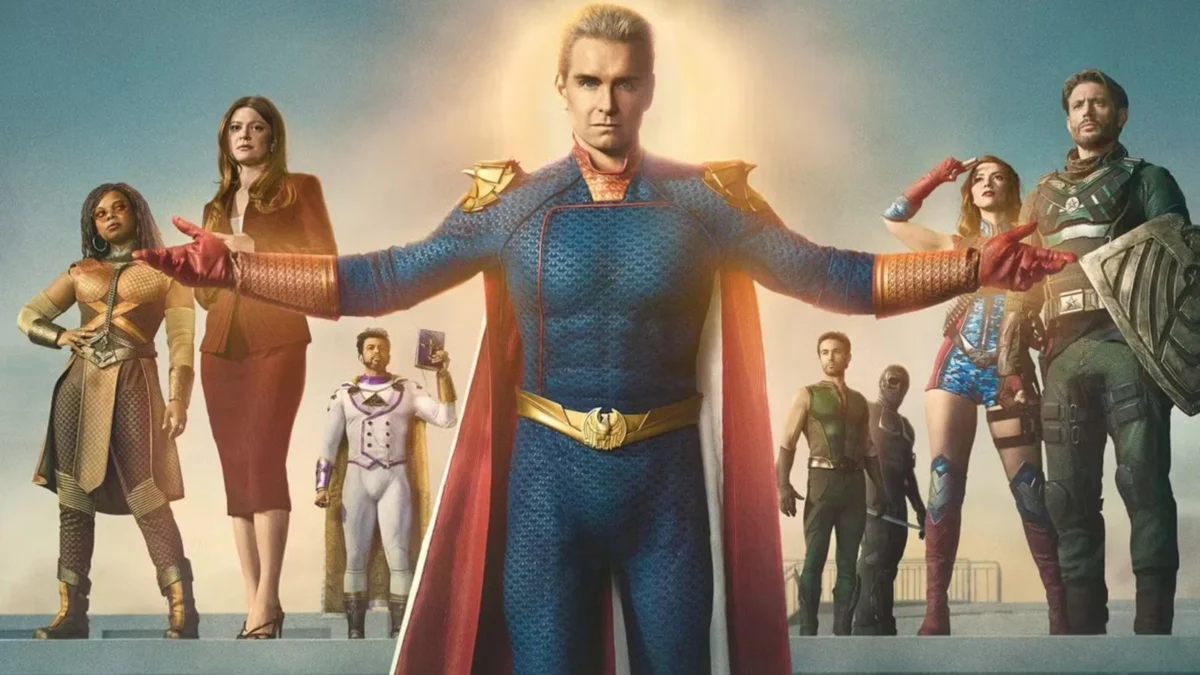
By Francesco Cacciatore
Published May 23, 2026, 3:00 PM EDT
When Amazon announced its ambitious adaptation of Garth Ennis and Darick Robertson’s The Boys, the news was met with a mixture of excitement and trepidation. As a devoted admirer of Ennis’s work, with The Boys holding a revered spot alongside Preacher, Planetary, and The Invisibles on my personal Mount Rushmore of comics, the potential for a faithful and impactful television series was immense. Yet, the memory of AMC’s disappointing Preacher adaptation served as a cautionary tale, illustrating the inherent challenges of translating Ennis’s unique blend of grounded characters and surreal narratives to the screen.
Despite the show’s undeniable success and widespread popularity, a curious trend emerged during its run: a tendency among some content creators and YouTubers to disparage the original comic series. Often, panels were shared out of context, sensationalizing the graphic and extreme elements while overlooking the sophisticated narrative depth and profound character development that define the source material. Now that the Amazon series has concluded, its own narrative inconsistencies and thematic shifts have become more apparent, prompting a re-evaluation. Rather than fostering a divisive "comics versus show" mentality, it’s more constructive to delve into why The Boys comic book series stands as one of the most brilliant and enduring critiques of the superhero genre ever conceived.
The Boys: A Fantastic Comic Book Beyond the Screen
Main Facts: The Core Divergences and Thematic Strengths of the Comics
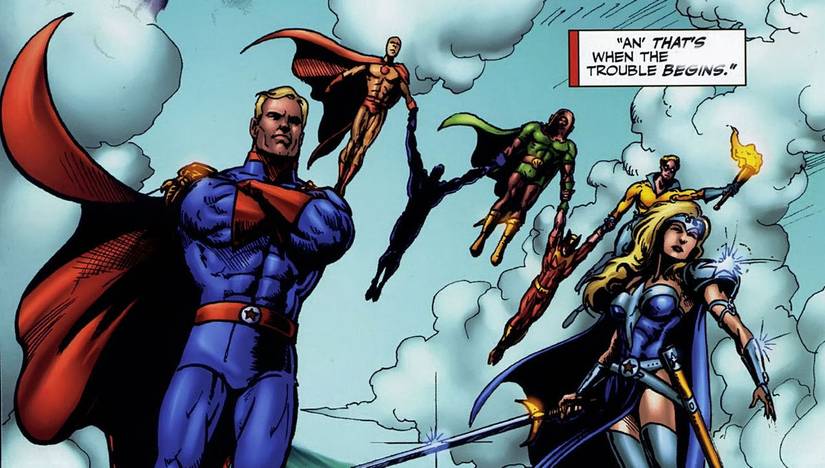
At its heart, Garth Ennis and Darick Robertson’s The Boys, which debuted in 2006 and concluded in 2012, is a scathing indictment of the corporatization and pervasive influence of superheroes in modern culture. The series presciently critiques a landscape where heroism is manufactured, commodified, and ultimately devoid of genuine moral compass. This vision proved remarkably prophetic, arriving years before Marvel Studios’ Iron Man (2008) unleashed a torrent of superhero content that would dominate the entertainment industry for a decade, culminating with blockbusters like The Avengers (2012) released just months before The Boys’ final issue.
In the world crafted by Ennis and Robertson, superheroes are not born of noble aspirations but are instead highly marketable corporate assets. They are literally owned, and in many cases chemically engineered, by Vought American, a shadowy mega-corporation whose ultimate goal is to integrate these "assets" into the U.S. military for lucrative defense contracts. The irony, and indeed the central comedic and critical thrust, lies in the fact that these so-called heroes are overwhelmingly idiotic, egocentric, and profoundly incompetent.
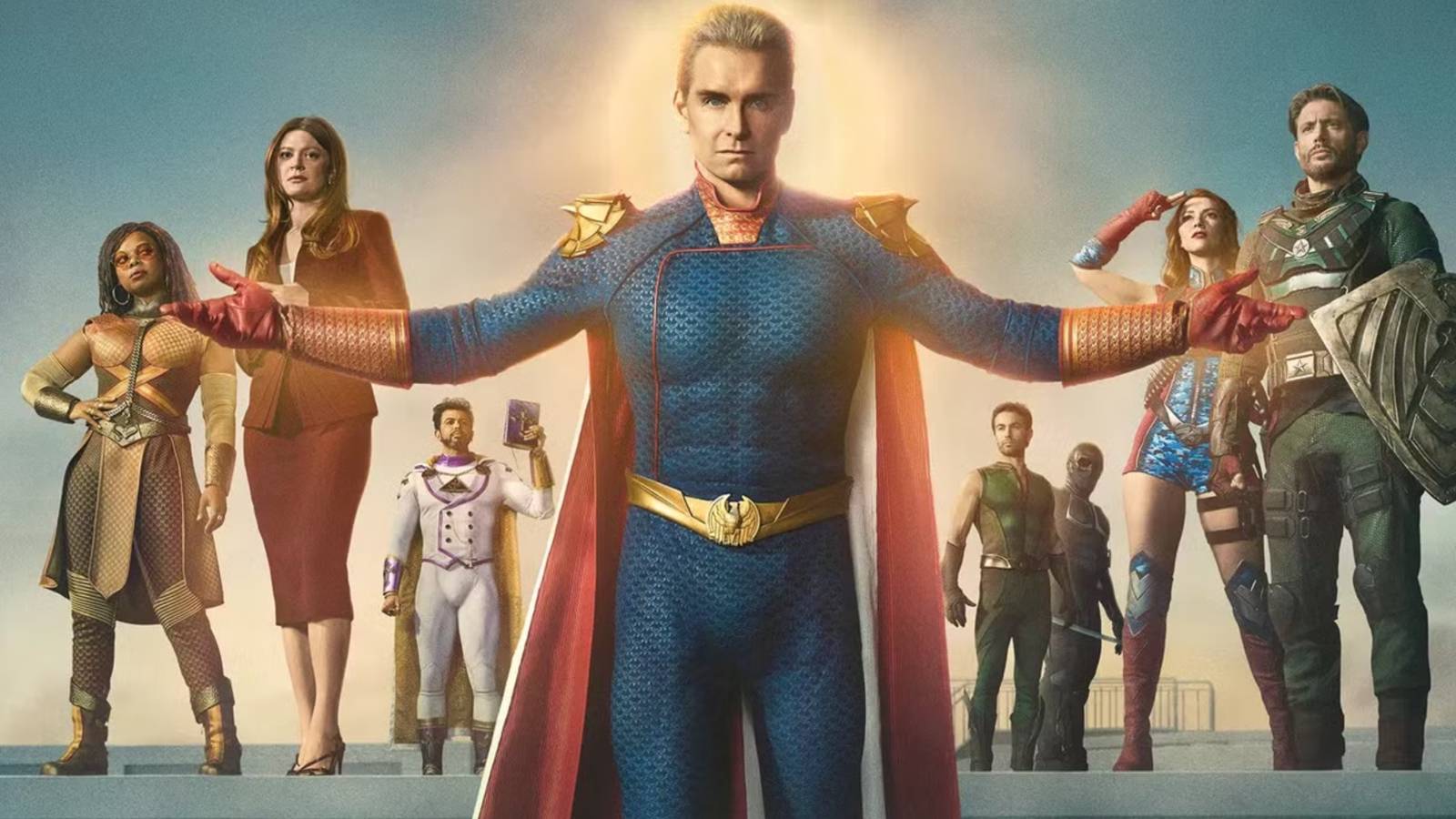
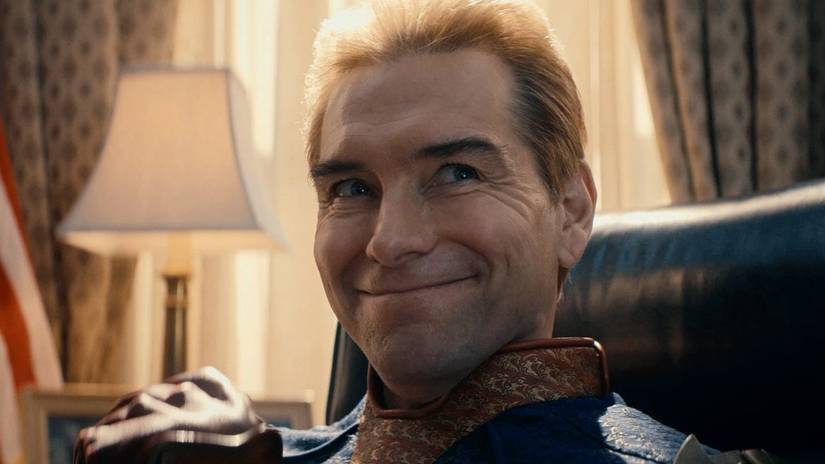
This fundamental premise marks one of the most significant divergences between the comic series and its Amazon adaptation. While Vought American is a prominent force in the show, its role evolves. By season four, Homelander effectively seizes control of the corporation, signifying a clear shift in the series’ narrative focus. The comics primarily target the impersonal, insidious greed of corporations that systematically ruin the lives of ordinary people. The show, conversely, increasingly centers on the existential danger posed by an unstable individual wielding unchecked power – Homelander.

The show’s increasingly overt political commentary, with its direct references to contemporary figures and movements, further distinguishes it from the comics. While the series aims for an anti-fascist stance, some critics have argued its message is less effective due to a lack of specificity regarding the policies it satirizes. The comics, by contrast, focus on the universally condemned evils of corporate avarice. The message that "big, greedy corporations are bad" resonates broadly, making the comics’ critique both timeless and universally accessible, transcending specific political alignments.
Chronology: The Comic’s Enduring Legacy
The Boys comic series ran for 72 issues, initially published by WildStorm (an imprint of DC Comics) before moving to Dynamite Entertainment due to creative differences over its controversial content. The move to Dynamite allowed Ennis and Robertson complete creative freedom, cementing the series’ reputation for uncompromising storytelling. Its publication timeline (2006-2012) means it was dissecting the superhero industrial complex even as that complex was just beginning its cinematic ascent. This chronological placement gives the comic a distinct visionary edge, anticipating the very cultural phenomena it sought to critique. It wasn’t reacting to the MCU; it was foretelling it.
Supporting Data: Narrative Robustness and Character Nuance
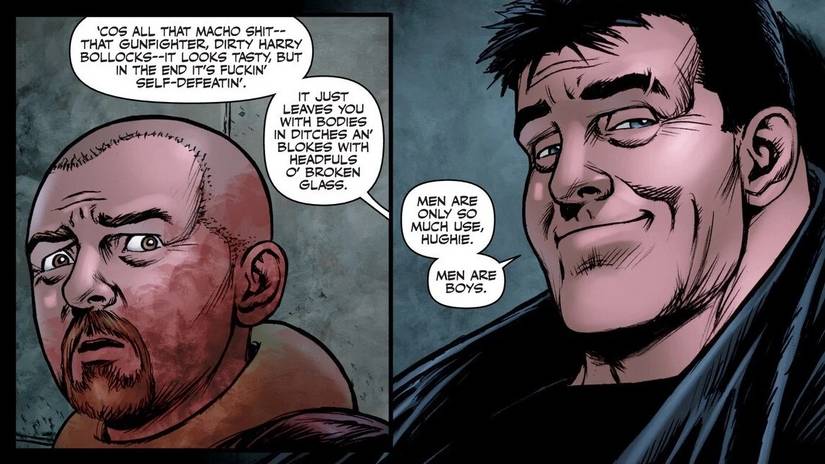
Beyond its critique of corporate power, The Boys excels through its portrayal of painfully realistic characters grappling with trauma and violence. William "Billy" Butcher, the ostensible leader of the titular group, is a central figure, but he is emphatically not the protagonist. That role belongs to Hugh "Wee Hughie" Campbell, who serves as the reader’s anchor and Ennis’s moral perspective.
The deliberate contrast between Butcher and Hughie is pivotal. Butcher is presented as the archetypal "cool anti-hero" – physically imposing, charismatic, and ruthlessly efficient. This persona, popular in comics since the 1980s, naturally draws readers. However, Ennis, a writer renowned for his nuanced handling of violence in titles like The Punisher, peels back this veneer to expose the raw, unaddressed trauma fueling Butcher’s actions. Violence, for Butcher, is an attempt to exorcise demons that can never truly be vanquished. The comic’s final arc brutally subverts reader expectations, revealing Butcher as a genocidal maniac little better than the "supes" he despises, including Homelander. It is the unassuming, meek Hughie who ultimately makes the morally correct choice, distinguishing himself from Butcher’s cycle of hatred.
Official Responses and Creative Departures: Butcher’s Altered Arc
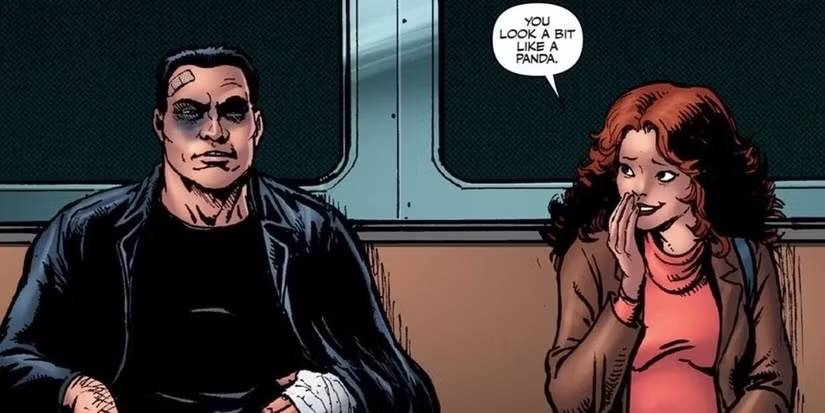
The Amazon show made a crucial, and arguably catastrophic, alteration to Butcher’s character arc by revealing at the end of season one that his wife, Becca (Becky in the comics), was still alive. In the comics, Becky’s death due to Homelander’s alleged rape is Butcher’s primary motivation for his crusade. While the show’s Butcher still harbors intense hatred for Homelander, this initial twist significantly diluted the profound background to his rage, which the comics meticulously explore in the six-issue limited series Butcher, Baker, Candlestick Maker.
This prequel delves into Butcher’s pre-The Boys life, revealing a man scarred by domestic violence, who finds a chance at redemption in his meeting with Becky. She becomes his salvation, yet he constantly battles the fear of his inherent violent nature resurfacing. Becky’s death in the comics is not merely a trigger for a revenge narrative; it’s the catalyst that allows Billy to fully embrace his violent impulses, providing him with a "justification" he perhaps subconsciously sought.
This realization culminates in the 2020 sequel series, Dear Becky, where Hughie discovers Butcher’s diary. In a moment mirroring The Boys’ original finale, Billy confesses that his crusade was never truly about avenging his wife, who always tried to steer him away from violence. "That was a hundred percent me, you would’ve hated what I’ve done with me life," he writes, acknowledging his own agency in his descent. This self-awareness, coupled with his deliberate setup for Hughie to stop him, constitutes Butcher’s only true redemption – his failure to corrupt Hughie into becoming another version of himself.
While the show’s finale eventually brings Butcher back to a genocidal mission, as acknowledged by showrunner Eric Kripke in interviews regarding adapting the comics’ ending, the execution suffers from the character’s earlier narrative detours. The journey of Karl Urban’s Butcher, though compelling in its own right, loses the brutal, singular effectiveness and thematic weight of his comic book counterpart.
Implications: The Black Noir Twist and the Futility of Hatred
Another pivotal plot twist in the comics, which the TV show notably eschewed, is the revelation concerning Black Noir. In the comics, Black Noir is not merely another Supe but a clone of Homelander, created by Vought as a contingency. It is Black Noir, not Homelander, who commits the heinous act against Becky, mirroring Homelander’s appearance. This twist profoundly recontextualizes Butcher’s entire journey, revealing that his hatred and violence had been directed at the wrong target.
This realization powerfully underscores the futility of hatred and violence, a message deeply resonant given Garth Ennis’s upbringing in Northern Ireland during The Troubles. Homelander, in this context, is ultimately depicted as a powerful yet insecure and petty individual, a "bad product" as Vought executive James Stillwell coldly observes. The existence of a clone is highly symbolic, a stark reminder from Vought American that even the "most powerful man on Earth" is merely a replaceable commodity.
The dynamic between Homelander and Stillwell in the comics, where the seemingly frail executive controls the powerful Supe without a hint of fear, might appear cliché – "big corporation is scarier than evil Superman." However, its simplicity lends it potent thematic clarity. It highlights the impersonal, systemic nature of evil. The show’s finale, with Homelander crying and begging for mercy, while dramatically impactful, lacks the stark, chilling closure of the comic’s scene where Stillwell, after Homelander’s coup, simply utters, "Bad product." This moment, devoid of grand theatrics, perfectly encapsulates the comic’s central thesis: the true villain is not a single deranged individual, but the cold, calculating machinery of corporate power.
Conclusion: Reclaiming the Original Vision
Now that the Amazon series has concluded its run, it offers a prime opportunity to revisit the source material without the shadow of immediate comparison. It’s time to move beyond out-of-context panels and superficial criticisms that often overshadowed the comics’ nuanced narrative. Garth Ennis and Darick Robertson’s The Boys is far more than a shock-value superhero deconstruction; it is a meticulously crafted, deeply thematic work that offers a profound commentary on power, trauma, and the insidious nature of corporate control.
For those who appreciated the show’s audacity but perhaps felt its later seasons lost some thematic focus, or for those new to the saga entirely, diving into the original comic series is a rewarding experience. Trust me, the original The Boys is truly diabolical.
Now watch: Hamish Linklater describes The Boys and Gen V showrunner Eric Kripke in a normal way


 Lina Irawan
 Sagoh
Sagoh