

EXCLUSIVE: In a move signaling the increasing maturation of the Latin American film market, a powerhouse trio of industry veterans has announced the formation of WildHouse, a dedicated production label designed to streamline and scale the pipeline of high-quality genre cinema emanating from Colombia for the international market.
The new venture is spearheaded by Alvaro Gutierrez (Agora Films), Jason Gurvitz (Green Dog Films), and Nicolas Troya (Troya Films). By formalizing their collaboration, the founders aim to capitalize on the unique intersection of Colombia’s favorable tax incentives, world-class production infrastructure, and a growing appetite for commercially viable, mid-budget genre storytelling.
The Genesis of the Partnership
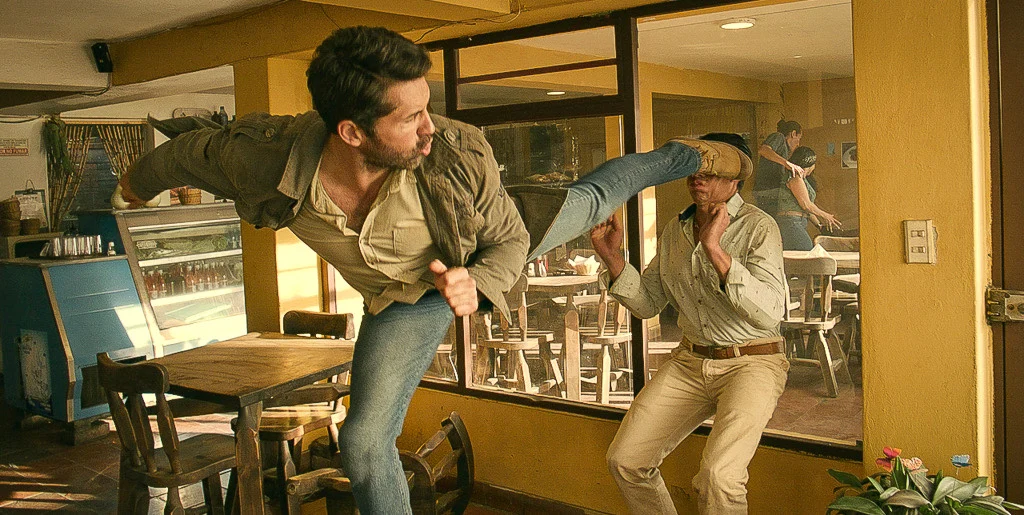
The formation of WildHouse is not a leap into the unknown, but rather the logical evolution of a proven partnership. The founders have spent the last several years stress-testing their cross-border collaboration model on projects distributed by Lionsgate. Specifically, the team points to the success of the 2024 action-thriller Dominique and the gritty 2023 action-thriller Diablo, which starred Scott Adkins.
These projects served as proof-of-concept, demonstrating that international-grade genre films could be produced in Colombia with high production values while remaining fiscally disciplined. With WildHouse, the partners intend to shift from individual project-based collaboration to a sustained, slate-based business model.
A Strategic Slate: Projects for 2026 and 2027
WildHouse has hit the ground running with an ambitious development slate. The label is targeting the $3–$5 million budget range—a "sweet spot" in the current independent market that allows for high production value and global marketability without the prohibitive risks associated with mega-budget blockbusters.
The initial slate, slated for production through 2026 and 2027, includes:
- Sanctuary: Penned by Ryan Self and to be directed by Jason Gurvitz, this project is expected to lean into the tense, atmosphere-driven storytelling that has become a hallmark of the partners’ previous collaborations.
- State of Nature: A high-profile production featuring industry heavyweights. It is being produced by Paul Tamasy, the Oscar-nominated writer of The Fighter, and Stuart Pollok, known for Into the Grizzly Maze. With Aaron Greyson writing and Geoff Browne attached to direct, the project represents the kind of "prestige genre" film that the partners hope will define the label’s reputation.
- Lorenzo: A sophisticated co-production spanning Colombia, Mexico, and the U.S., written by Lucca De Francisco. This project highlights the regional ambitions of WildHouse, suggesting a desire to act as a bridge between the major Latin American film hubs.
- SevenBells: Perhaps the most intriguing entry, this film delves into the rich vein of Colombian folklore. Based on a historical urban legend, the script is a collaborative effort between Justin Calen-Chenn (Bel Air) and Jason Gurvitz. By mining local cultural touchstones, the team hopes to create unique, exportable content that stands out in a crowded global marketplace.
The Economic Engine: Liontrust Investment Group
A critical component of the WildHouse launch is the backing of Liontrust Investment Group. Founded in 2024, this Colombia-based firm has positioned itself as a specialist in the local entertainment sector. Their mission is to leverage the robust tax benefit structures regulated by the Colombian Ministry of Culture, effectively lowering the barrier to entry for international partners while ensuring fiscal security for investors.
Liontrust’s involvement is not merely passive. Their portfolio already includes Diablo, Mentirosos, and Entre Dos Aguas, proving their deep integration within the Colombian ecosystem. By securing this institutional backing, WildHouse has effectively insulated its slate from the volatility often associated with independent film financing.
Official Perspectives: Building a Global Bridge
For the founders, WildHouse represents more than just a company; it is an infrastructure play designed to professionalize the connection between Colombian talent and the global film market.
"Colombia’s film industry is incredibly dynamic right now, and we’ve already demonstrated the power of these cross-border collaborations," said Alvaro Gutierrez. "WildHouse gives us a dedicated vehicle to develop and finance stories in the $3–5M budget range that can compete on the global stage. It is exactly the kind of smart, commercially focused initiative that raises Colombia’s profile on the world stage."
Jason Gurvitz, operating out of Los Angeles, echoed these sentiments, emphasizing the scalability of their proven methods. "Our work together on Dominique and Diablo showed us what’s possible," Gurvitz noted. "WildHouse allows us to scale that model with a focused slate of commercial projects with global reach. We are not just making movies; we are building a sustainable pipeline that bridges the creative energy of Colombia with the distribution power of the US market."
Nicolas Troya, whose local expertise in line production and executive production has been the glue holding their previous projects together, serves as the operational anchor for the team. His ability to navigate the complexities of filming in Colombia—from logistical coordination to local crew management—remains a cornerstone of the WildHouse value proposition.
Implications for the Global Film Market
The launch of WildHouse arrives at a pivot point for the global film industry. As major studios retrench and consolidate, the "mid-budget" space has increasingly been vacated, leaving a void that independent labels are rushing to fill. By focusing on the $3–$5 million range, WildHouse is effectively targeting the streamers and independent distributors who are hungry for reliable, high-quality content that performs well across diverse international territories.
The Rise of Colombian Production
Colombia has spent the last decade positioning itself as the "next big thing" in Latin American production. The country offers a rare combination of competitive labor costs, diverse geography, and a government-backed incentive program that is among the most attractive in the region. However, the biggest hurdle has historically been the lack of a bridge to the international sales and distribution network.
WildHouse appears to be the solution to that "last mile" problem. By having a foot in both Los Angeles (via Gurvitz) and Bogotá (via Gutierrez and Troya), the label is uniquely positioned to translate local Colombian stories into formats that satisfy US audiences without losing their cultural authenticity.
The Role of Genre Cinema
The choice to focus on genre—action, thriller, and folklore-inspired horror—is a strategic masterstroke. Genre films travel well. They rely on visual storytelling and universal tropes that require less cultural translation than complex dramas or localized comedies. As the streaming era continues to favor high-concept, "hook-driven" content, the WildHouse slate is perfectly aligned with the needs of platforms like Netflix, Prime Video, and Apple TV+, as well as traditional independent theatrical distributors.
Looking Ahead
The 2026–2027 slate is an ambitious roadmap. If the team can successfully execute these four projects, they will likely become the primary destination for international producers looking to tap into Colombian resources.
Furthermore, the involvement of established names like Paul Tamasy suggests that the industry is taking notice. As WildHouse matures, it may serve as a blueprint for how emerging markets can successfully integrate with the global entertainment economy—not by waiting for investment to come to them, but by building the infrastructure to package and sell their own cultural assets to the world.
For the Colombian film industry, WildHouse is a signal of maturity. It marks the transition from being a "location service" provider—where foreign crews drop in to film—to a "creative partner" model where the intellectual property is developed, managed, and produced by local entities with global reach.
As the industry watches the first projects from the WildHouse slate begin principal photography, the consensus is clear: the bridge between the Andes and Hollywood has just become a whole lot more substantial.











No comments yet. Be the first to join the conversation!