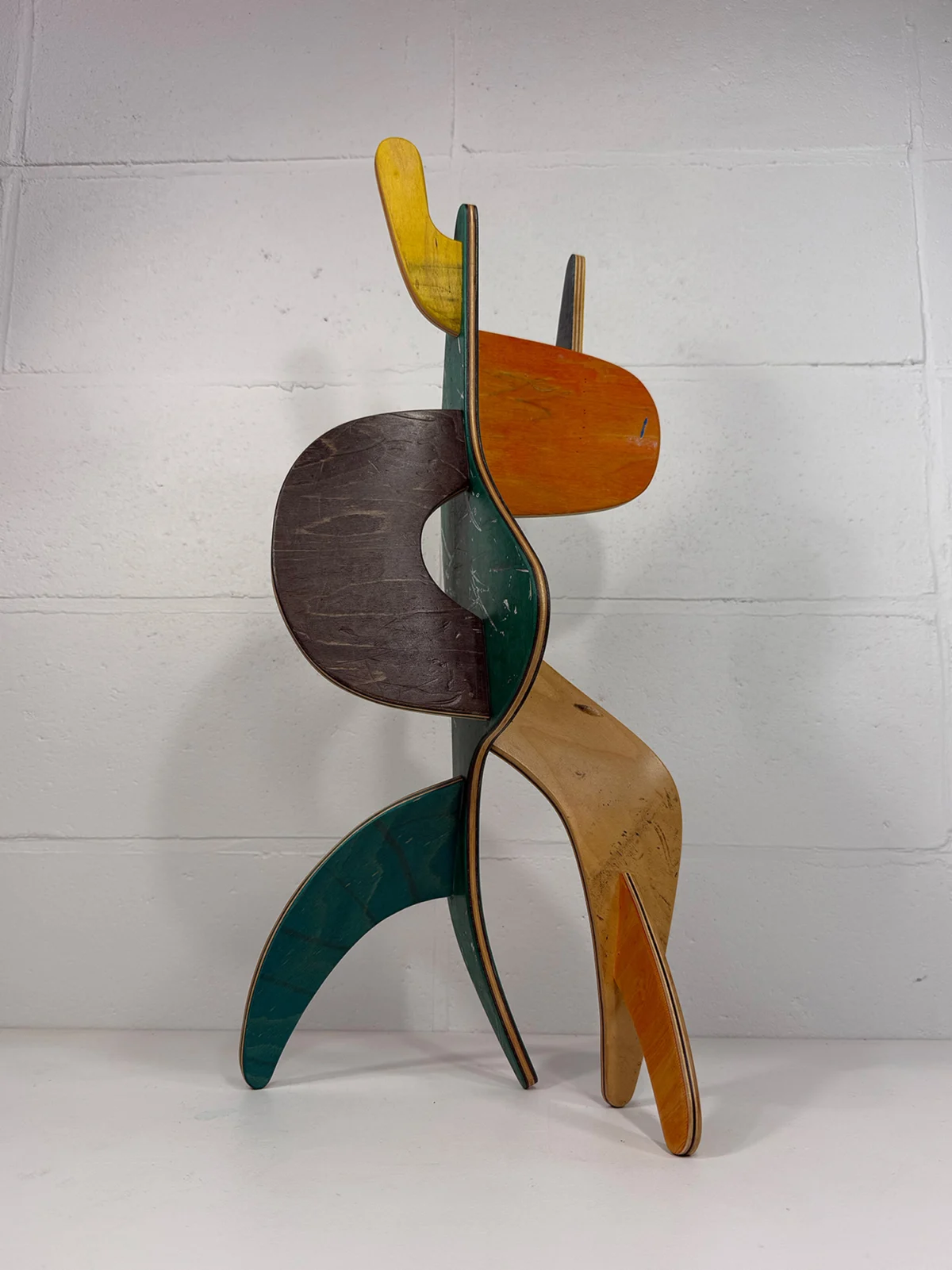
In the quiet, wood-shaving-dusted corner of a workshop in New Hampshire, Connecticut-born artist Damion Silver has found a way to bridge the gap between his past as a skateboarder and his present as a multidisciplinary artist. Silver, whose practice encompasses the tactile worlds of printmaking, assemblage, and sculpture, has spent years cultivating a visual language that has garnered international recognition. His work—often characterized by a balance of industrial grit and refined form—has been exhibited and published across the United States, Europe, and Japan.
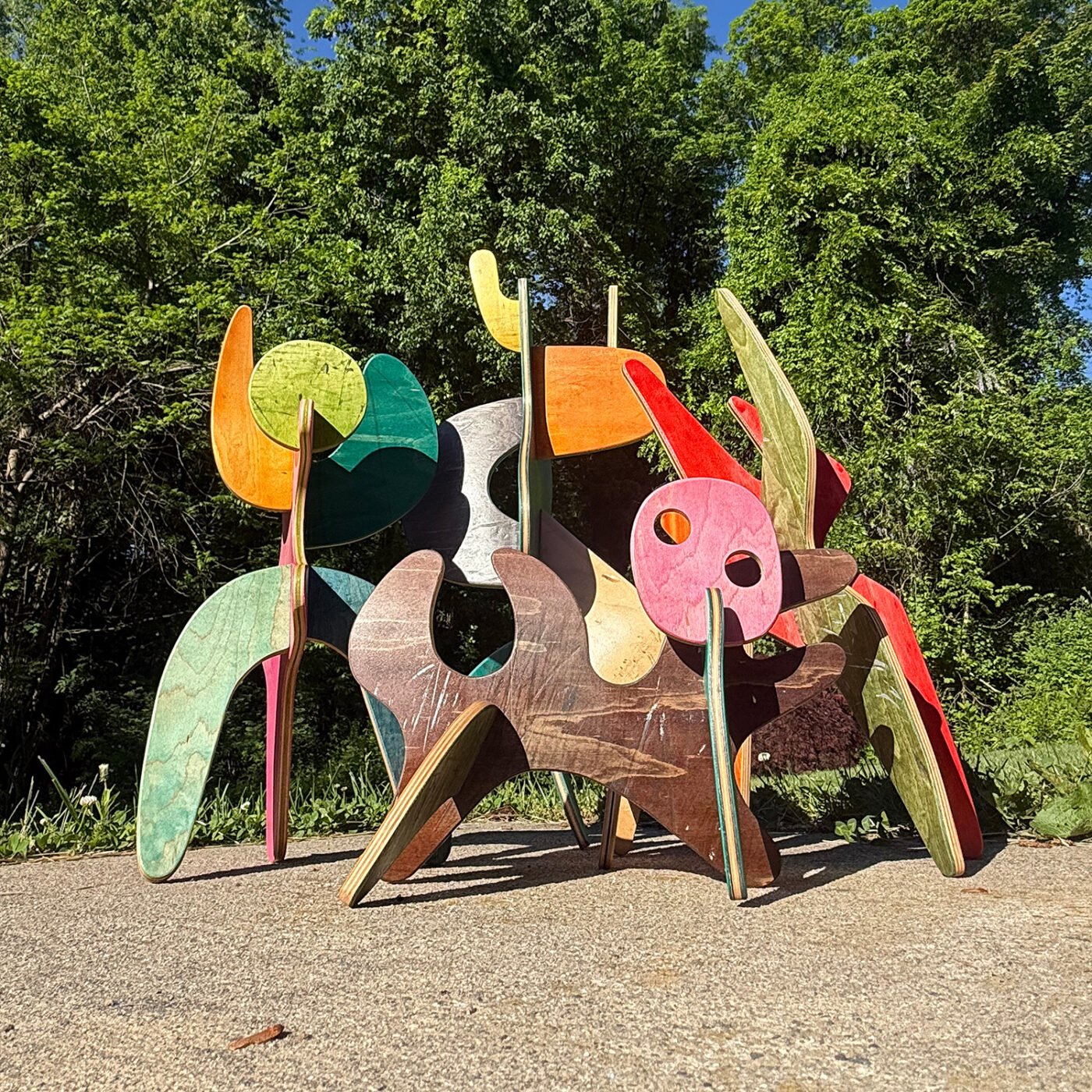
However, his most recent collection of playful, abstract sculptures represents a departure from his usual methodology. Born from a period of creative frustration, this new body of work demonstrates how a seemingly mundane discovery can shift the trajectory of an artist’s entire career.
The Genesis: A Creative Impasse
To understand the significance of Silver’s latest work, one must first examine the environment in which it was conceived. Silver, a practitioner who favors the physical resistance of materials, had been deeply immersed in the technical challenges of steam-bending plywood and rattan.
Steam-bending, a process requiring precise humidity and temperature control, is notoriously unforgiving. For Silver, it was an intellectual pursuit; he was pushing the limits of these materials, attempting to coax them into complex, fluid shapes that defied their inherent rigidity. Yet, despite his technical aptitude, the results were not meeting his internal standards. The forms he envisioned in his mind remained elusive, trapped behind the physical limitations of the wood and the specific, narrow constraints of the bending process.
"It was a period of trial and error," Silver noted in recent discussions regarding his studio practice. "I was chasing a specific geometry, a specific tension, but the material was pushing back in ways that felt sterile."
The Catalyst: A Chance Encounter with History
The breakthrough, as is often the case with transformative art, was entirely serendipitous. While pacing his woodshop, frustrated by a failed steam-bending attempt, Silver’s attention was drawn to a forgotten pile of broken, discarded skateboards tucked away in a corner.
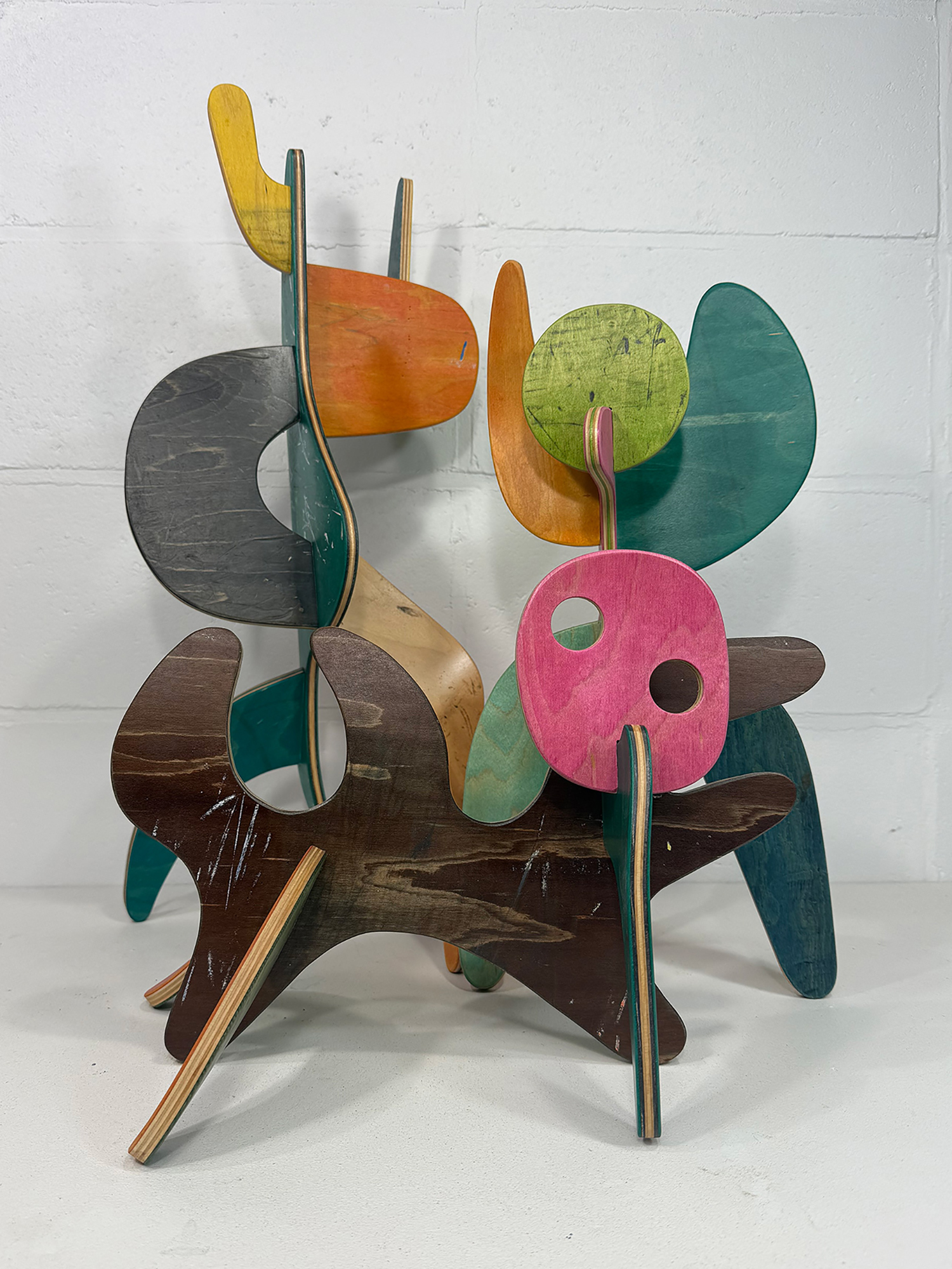
These were not merely scraps of wood; they were artifacts of a life lived on pavement. Each deck represented a specific era, a specific style, and a specific history of impact. The scuffs, the splintered veneers, and the faded logos were not flaws—they were the biography of the object.
Revisiting a neglected sketchbook filled with rough, intuitive sketches, Silver began to see the potential in the wreckage. He took a bandsaw to the first deck, cutting into the layers of maple ply. As he peeled back the layers, he realized that the skateboards themselves were doing the work for him. The color palettes—the neon stains, the dark, worn grips, and the natural grain of the wood—provided a pre-existing, vibrant aesthetic that would have taken days to simulate with paint or dye.
The Process: Intuition Over Calculation
Silver’s approach to this new body of work is notably spontaneous. Unlike the rigid, calculated planning required for steam-bending, these sculptures are born from an intuitive dialogue between the artist and the material.
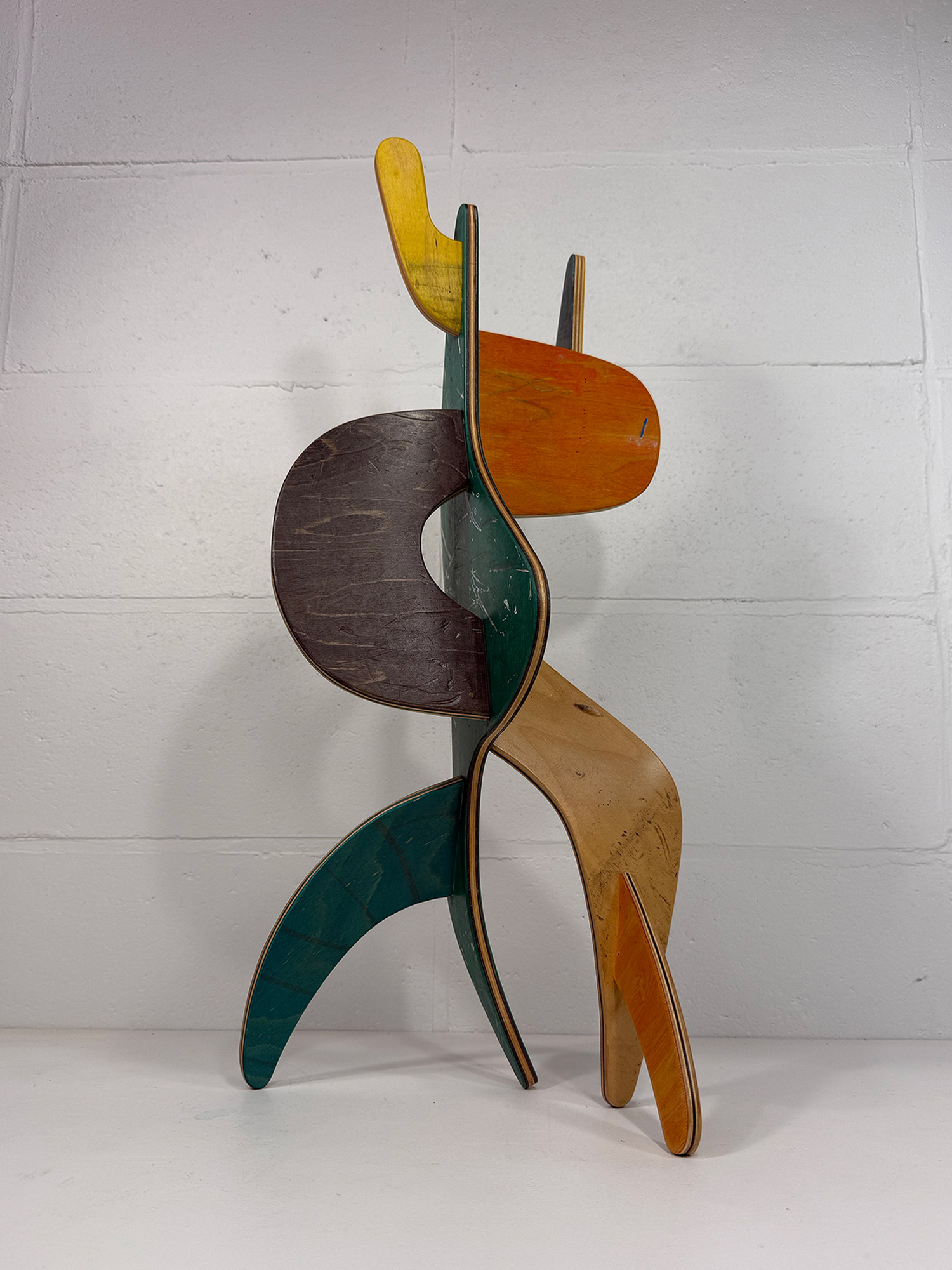
By allowing the existing finishes of the discarded decks to dictate the visual outcome, Silver has effectively removed himself as the "author" of the color theory. Instead, he becomes an editor. He chooses which sections to excise, which curves to follow, and how to reassemble the fragments into something entirely new. This process echoes the ethos of skateboarding itself: a sport defined by the creative re-interpretation of the urban environment. Just as a skater sees a handrail not as a piece of infrastructure but as a potential path for motion, Silver sees a shattered deck not as trash, but as a building block for sculptural form.
Chronology of Development
- Early Phase: Silver focuses on traditional woodworking techniques, primarily steam-bending plywood and rattan.
- The Plateau: Mid-career frustration sets in as the artist hits a ceiling with traditional methods, leading to a period of introspective sketching.
- The Discovery: The "aha!" moment occurs when Silver re-evaluates a stack of broken skateboards in his studio.
- Execution: Silver begins the process of deconstruction, using the bandsaw to dismantle and reconfigure the decks.
- Public Reception: Initial pieces are shared, leading to the current collection, which blends organic curves with the harsh, industrial aesthetic of discarded sport equipment.
Supporting Data: The Materiality of the Skate Deck
The choice of material is not merely a stylistic preference; it is a structural one. Skateboard decks are composed of seven plys of hard rock maple, bonded together under immense pressure. This creates a material that is incredibly resilient, lightweight, and—crucially—distinctly colorful when sliced through.
- Durability: The maple construction is designed to withstand high-impact trauma, making it an ideal candidate for long-term sculptural integrity.
- Aesthetic Complexity: Because the layers are dyed at the factory, cutting through a deck reveals a striped, layered cross-section that adds depth to any sculpture.
- Sustainability: By utilizing discarded decks, Silver is engaging in a form of "material salvage," turning urban waste into high-end art, a practice that resonates with contemporary collectors focused on sustainable design.
Implications for Contemporary Sculpture
Silver’s transition into this style of assemblage art speaks to a broader trend in the contemporary art world: the move away from "the singular genius" toward a collaborative relationship with one’s medium. By letting the material "lead," artists like Silver are able to create works that feel more authentic, less labored, and deeply connected to their own personal histories.
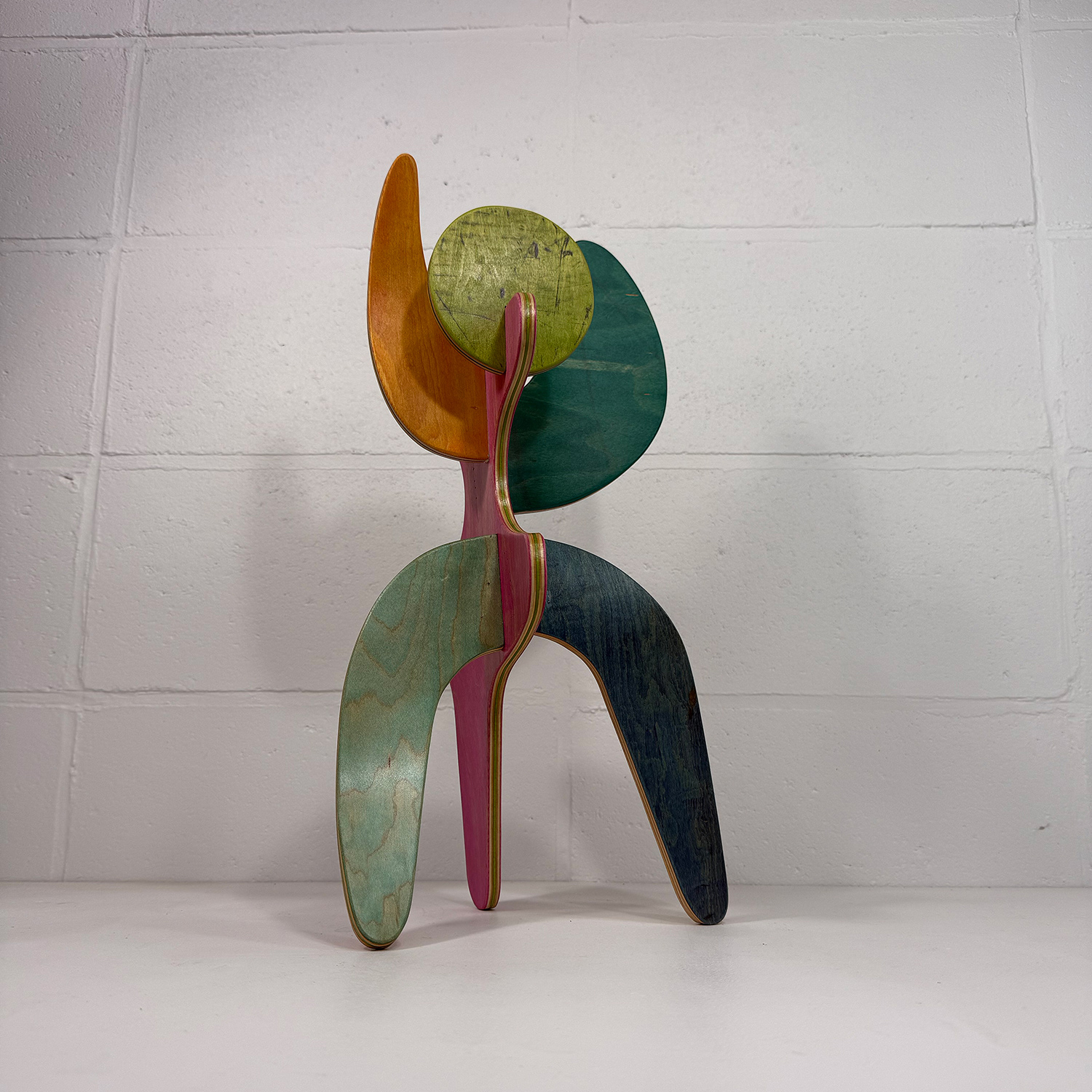
Furthermore, this body of work challenges the definition of "fine art" materials. In a world where sculpture is often synonymous with bronze, marble, or polished steel, the use of a battered, sticker-covered piece of plywood forces the viewer to reconsider their own biases regarding value. Silver posits that the value of an object is not derived from the cost of its raw materials, but from the intent, history, and craftsmanship invested in its transformation.
Looking Forward: What This Means for the Artist
For Damion Silver, this evolution is more than just a new aesthetic—it is a liberation. By moving away from the restrictive techniques of steam-bending and toward the fluid, reactive process of assemblage, he has unlocked a new level of productivity. His studio is no longer a site of struggle against the material, but a playground of discovery.
As he continues to explore this medium, one can expect to see larger-scale installations and perhaps a deeper interrogation of the skateboarding culture that inspired these pieces. Whether these sculptures are destined for galleries in Tokyo, Berlin, or New York, they carry with them the DNA of the woodshop in New Hampshire and the restless spirit of a lifelong skater.

In the final analysis, Silver’s work reminds us that the most profound solutions to our problems are often sitting right in front of us, gathering dust in the corner, waiting for us to pick them up and see them for what they truly are. As the artist continues to refine this series, the art world will be watching—not just to see what he makes next, but to see how he continues to turn the discarded into the divine.
For those interested in following Damion Silver’s progress, his latest works can be viewed through his active social channels and upcoming exhibition announcements. As the artist notes, the "skate-sculpture" series is only the beginning of a broader inquiry into how we define, use, and ultimately, evolve our relationship with the objects we touch every day.