

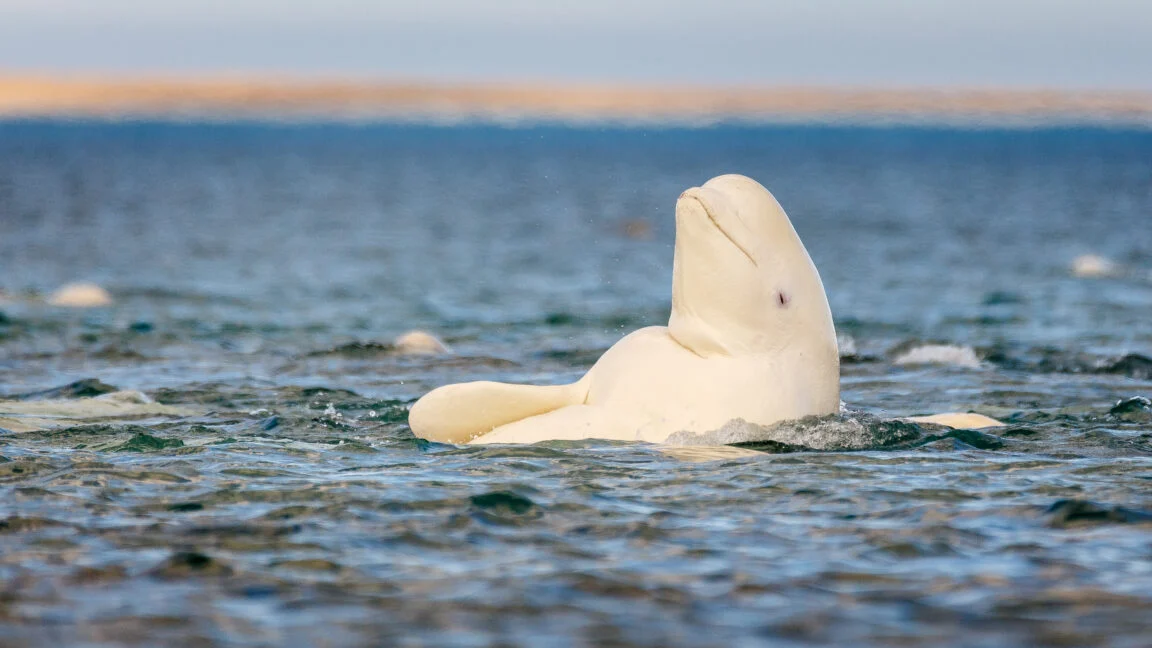
In the quiet, shifting blue of a New York aquarium, a beluga whale named Natasha moves with a deliberate grace. She stretches her neck, performs a rhythmic pirouette, and nods at her own reflection in a two-way mirror. Her daughter, Maris, mirrors these movements, engaging in a display that has ignited a profound debate within the halls of animal cognition science. According to a new study published in PLOS One, these belugas have demonstrated the behavioral hallmarks of mirror self-recognition (MSR)—a cognitive milestone long considered a litmus test for self-awareness.
If these findings withstand the rigors of scientific scrutiny, belugas will join an exclusive, and often contested, club of species capable of recognizing themselves in a reflection. For decades, the MSR test has served as a primary, if controversial, tool for determining which animals possess a "self." Yet, as we peer into the minds of these arctic giants, we are forced to confront an uncomfortable question: Is the mirror truly a window into the animal soul, or have we been measuring the complexity of non-human minds with a yardstick designed only for our own?
The Anatomy of the Mirror Test
The Mirror Self-Recognition (MSR) test, first conceptualized by psychologist Gordon Gallup in 1970, is deceptively simple. The procedure involves exposing an animal to a mirror to ensure it becomes familiar with the reflection. Once the subject recognizes that the entity in the glass is not a conspecific (another member of its own species), researchers surreptitiously apply a physical mark to a part of the animal’s body that is invisible without a reflection—usually the head or back.
The observer then watches to see if the animal uses the mirror to inspect the mark. If the creature touches or attempts to remove the spot while watching its reflection, the logic dictates that it possesses a mental representation of its own body. It is a moment of cognitive synthesis: the understanding that "that image is me."
Passing this test is widely viewed as a marker of higher-order cognition. However, the list of those who have passed is surprisingly short: humans (after age two), great apes, Asian elephants, bottlenose dolphins, magpies, orcas, and even the unlikely cleaner wrasse. The vast majority of the animal kingdom—including creatures we know to be highly intelligent, such as dogs and cats—fails the test.
A Chronology of Discovery: Revisiting the Archives
The data that spurred this recent revelation is not new; in fact, it is a piece of living history. The video footage analyzed by the researchers dates back over two decades, captured during a time when the potential for behavioral studies in captive marine mammals was only beginning to be realized.
"After the initial study, we were hoping to conduct more research with additional belugas over the following years, but that proved impossible," says senior author Diana Reiss, a renowned expert in marine mammal cognition. "Inspired by the numerous studies over the past years reporting on different aspects of beluga whale cognition and behavior, we decided to revisit and digitize the original videotapes to conduct a rigorous, modern analysis."
The process was not without its hurdles. Time had taken its toll on the physical media, and portions of the original data were lost to degradation. However, the surviving footage provided a clear, albeit narrow, window into the past.
In the original 20-year-old experiment, four belugas were initially introduced to the mirror in their social housing. Only Natasha and her daughter, Maris, displayed sustained interest in their reflections. Consequently, they were selected for the formal experimental phase. Researchers applied a non-toxic, waterproof pigment to the whales during feeding sessions. To ensure the results weren’t simply a reaction to the sensation of being touched, the team implemented "sham-mark" controls—performing the same application procedure without the actual pigment.
The results were striking: the belugas only engaged in mark-directed behavior when the pigment was present. "The whales showed the same progression of behavioral stages reported for other species that show evidence of MSR," explains first author Alexander Mildener. "They did not exhibit self-directed behaviors in the absence of the mirror or in the control condition. One of the whales even passed the mark test by orienting the marked area of her body toward the mirror."
Supporting Data: The Case of the Beluga
While the sample size of two is statistically thin, the researchers argue that the qualitative nature of the behavior is what matters. In the world of cognitive science, if even one individual of a species exhibits a high-level trait, it proves that the species is, at the very least, capable of that trait.
The behaviors observed in Natasha and Maris—such as bubble-biting and synchronized swimming—are standard forms of solo play. However, the increased time spent at the mirror suggests more than mere curiosity. The most compelling evidence lies in Natasha’s actions: she repeatedly pressed the area behind her right ear—where the mark was placed—directly against the glass of the mirror.
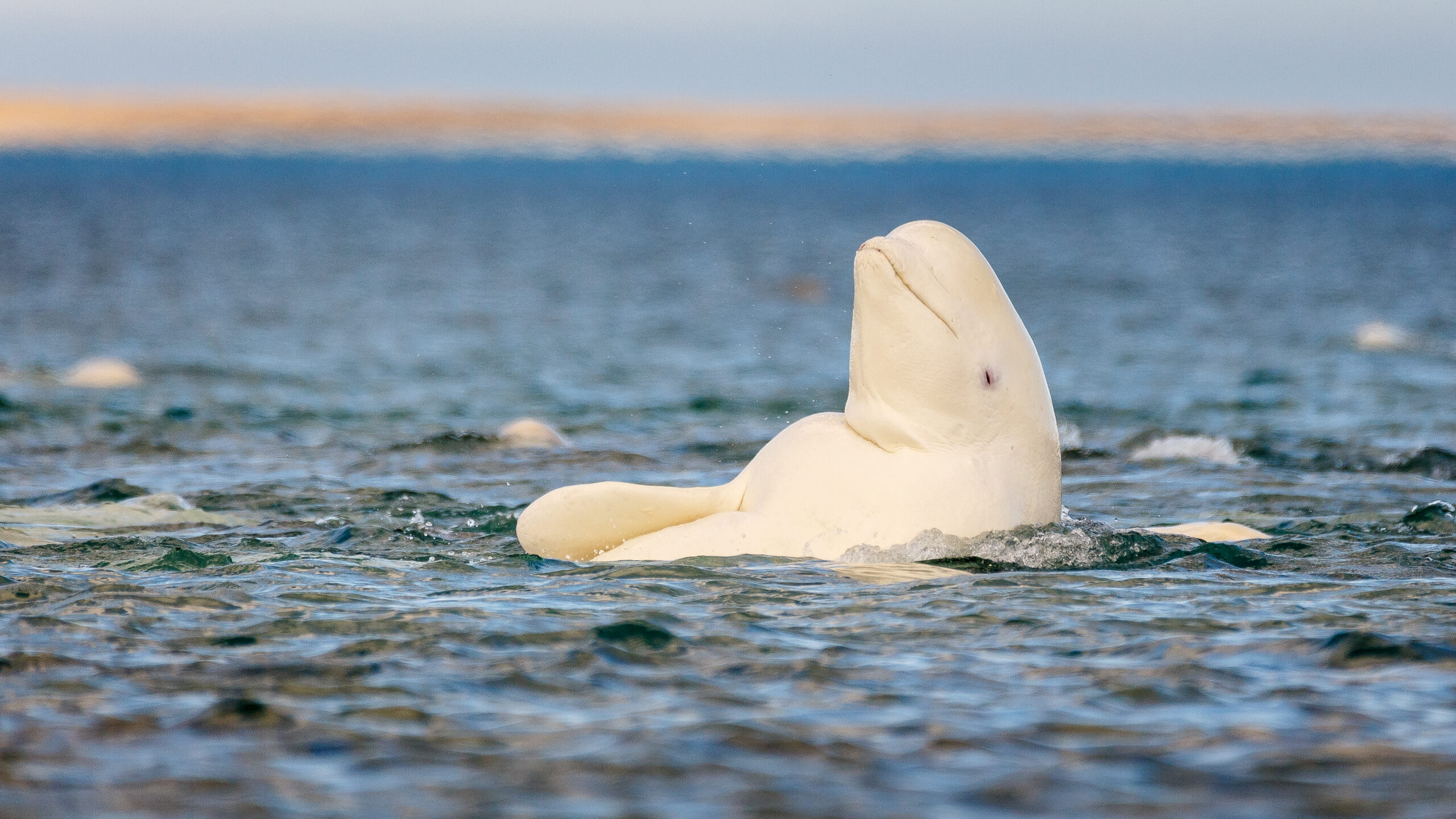
Without the dexterity of hands to point or the ability to turn her head to see her own back, the beluga utilized the only tool at her disposal: her own body. This physical orientation toward the mirror serves as the strongest indicator that she recognized the image as an extension of herself, rather than an external object.
Official Responses and the "Tough Grader" Problem
Despite the excitement surrounding the PLOS One publication, the scientific community remains cautious. Gordon Gallup, the inventor of the MSR, has maintained a position of "tough grader" throughout his career. He has pushed back against many of the positive results reported over the decades, arguing that if an animal does not demonstrate clear, unequivocal self-directed behavior, the test must be considered a failure.
From this perspective, the beluga results sit on a knife’s edge. Critics point out that behaviors like barrel rolls and bubble-biting are common play activities for belugas, even in the absence of a mirror. They argue that the mirror may simply be a "novel source of stimulation," a fun toy rather than a tool for self-discovery.
However, the researchers argue that the mark-directed behavior remains the "gold standard" indicator. The fact that the whales only performed these inspections when marked, and not during sham-mark trials, suggests a cognitive link that transcends simple curiosity.
Implications: Challenging the Human-Centric View
The most significant takeaway from this study may not be the cognitive status of the beluga, but rather the limitations of our own testing methods. Neuroscience and cognitive science are currently undergoing a paradigm shift, moving away from a human-centric view of intelligence.
Anil Seth, a neuroscientist at the University of Sussex, highlights a critical distinction: "The MSR is not a test of consciousness itself, but a test of a particular kind of ability to recognize one’s own body. Failure to reliably pass the MSR does not mean that an animal lacks consciousness or any form of selfhood."
Seth suggests that the test is inherently biased toward visual creatures. For a human, vision is the primary gateway to reality. But for other species, the world is constructed through different sensory inputs. Dogs, for example, live in a world defined by scent. Researchers like Alexandra Horowitz at the Dog Cognition Lab have begun developing "olfactory mirror tests," recognizing that a dog might not care about what it looks like, but would certainly recognize its own unique "smell-print."
Furthermore, evolutionary biologist Alex Jordan of the Max Planck Institute of Animal Behavior argues that even when an animal passes the MSR, we must be careful not to fall into the trap of anthropomorphism. The cleaner wrasse, a small fish that passes the test, is likely not experiencing "self-awareness" in the philosophical sense that a human does. Instead, it may be utilizing a form of sophisticated visual processing that serves its specific ecological niche.
Conclusion: The Mirror as a Starting Point
The story of Natasha and Maris reminds us that our quest to understand the minds of other animals is still in its infancy. The mirror test, while flawed and potentially limited by its anthropocentric roots, remains one of the few tools we have to reach across the species barrier.
The debate is not about whether belugas are "smart"—we already know they possess complex social structures, unique vocal dialects, and high-level problem-solving skills. The debate is about whether they possess a reflective self-image.
As we continue to refine our methods, it is becoming increasingly clear that consciousness exists in a spectrum. Just as the beluga’s world is shaped by its echolocation and its social bonds, its "sense of self" may be an integrated experience that looks nothing like our own. The mirror might be a poor tool for seeing the beluga’s mind, but it has certainly served its purpose in highlighting the vast, complex, and still-mysterious nature of the non-human intellect. We are, at last, beginning to realize that the reflection we see in the glass is not the only one that matters.












No comments yet. Be the first to join the conversation!