Ammar Sabilarrohman
The U.S. National Transportation Safety Board (NTSB), the agency responsible for investigating the most complex and tragic transportation accidents in the country, has taken the unprecedented step of shuttering its public-facing online docket system. This drastic measure follows the discovery that amateur sleuths and internet enthusiasts have been using modern AI tools to reconstruct the final, harrowing words of pilots involved in fatal crashes—a practice that directly violates federal law intended to protect the privacy of aviation crews and the dignity of the deceased.
The suspension of the NTSB docket, announced on May 21, serves as a stark reminder of how rapidly emerging technologies can outpace decades-old legal protections. As AI models become increasingly adept at signal processing and audio synthesis, the visual evidence traditionally released by the NTSB—spectrograms meant to provide technical context—is being weaponized into audio simulations that bring the dead back to life, at least in the digital realm.
The Catalyst: The Crash of UPS Flight 2976
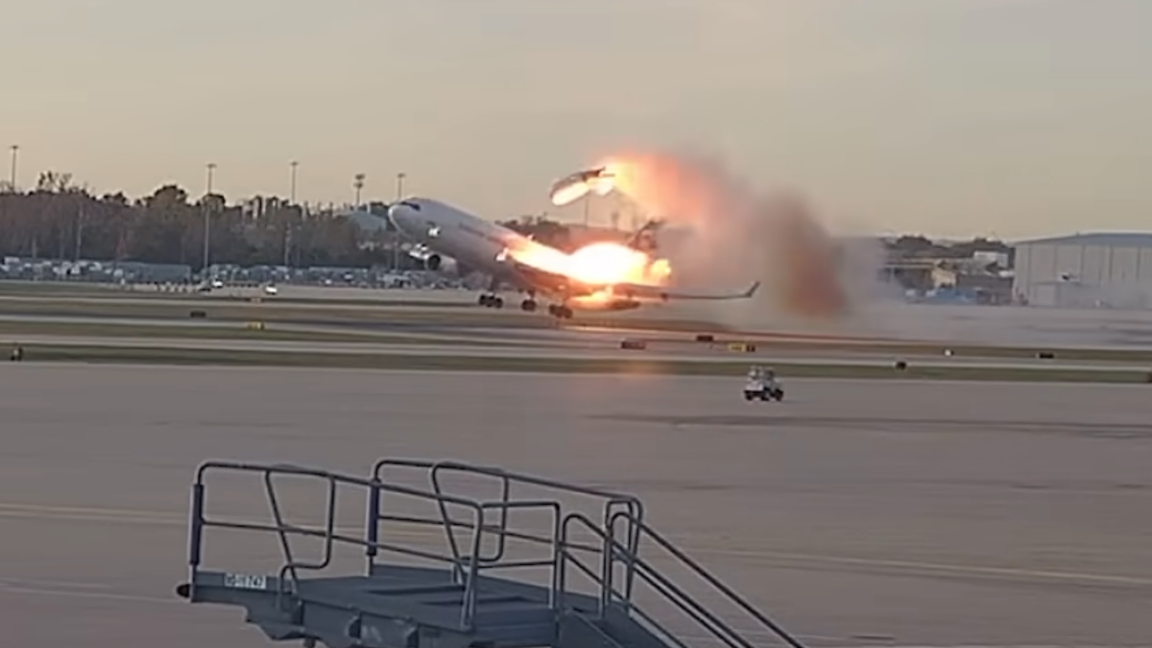
The immediate trigger for this technological crisis is the ongoing investigation into the catastrophic crash of United Parcel Service (UPS) Flight 2976. On November 4, 2025, the MD-11F cargo aircraft suffered a catastrophic structural failure shortly after departing from Louisville, Kentucky. The incident, which resulted in the engine physically detaching from the wing during takeoff, ended in a crash that claimed the lives of all three pilots aboard and caused 12 fatalities and 23 injuries on the ground.
During the NTSB’s investigative hearings held on May 19 and 20, 2026, the board followed its standard protocol by releasing a vast array of evidence, including written transcripts of the Cockpit Voice Recorder (CVR). However, in an effort to provide a complete picture of the final 30 seconds of the flight, the agency also released a PDF containing a spectrogram—a visual representation of sound frequencies.
This inclusion, intended to aid technical analysis for aviation professionals, proved to be a liability. Within days, individuals on social media platforms such as X (formerly Twitter) and Reddit had utilized the spectrogram to "reverse-engineer" the audio. By applying the Griffin-Lim algorithm and leveraging powerful AI-based code-generation models like OpenAI’s Codex, these users were able to synthesize a close approximation of the pilots’ final words, which were subsequently distributed widely across the internet.
A Legal and Ethical Minefield
The NTSB’s restriction on cockpit audio is not merely a bureaucratic preference; it is a mandate grounded in federal law. Under 49 U.S.C. § 1114, the NTSB is strictly prohibited from publicly releasing any portion of a cockpit voice or video recording.
This statute was enacted in 1990, prompted by a public outcry following the 1988 crash of Delta Air Lines Flight 1141 at Dallas-Fort Worth International Airport. In that instance, a television station aired a cockpit recording, leading to a national debate regarding the ethics of exposing the final, vulnerable moments of pilots to the public.
Ben Berman, an accident investigator and former NTSB analyst who also flew Boeing 737s for United Airlines, explains that the law is foundational to aviation safety. "It’s been an important factor for decades in having airline pilots be willing to have their voices recorded at their normal workplace, day in and day out, with the threat of being killed during their workday," Berman noted. "People are horrified with the idea of their last moments being made public and used for anything other than accident investigation."
The Mechanics of "Digital Necromancy"
The process by which these audio files are being recreated is a testament to the democratization of advanced computing. The Griffin-Lim algorithm, a staple of signal processing since its publication in 1984, allows for the estimation of a signal from a modified Short-Time Fourier Transform. While it was once a tool reserved for academic research or high-end sound engineering, it is now readily available in open-source libraries via Python.
When combined with modern Large Language Models (LLMs), the barrier to entry vanishes. One user on X claimed that, with the assistance of OpenAI’s Codex, they were able to reconstruct rough, intelligible audio from the NTSB’s published spectrogram in just ten minutes.
For the NTSB, this capability represents a fundamental failure of their current transparency model. While the agency has always been careful to restrict physical access to the original recordings—requiring attendees at hearings to sign nondisclosure agreements, surrender cellphones, and destroy handwritten notes—they had not accounted for the possibility that a static, visual graph could be used to regenerate the audio itself.
The Implications for NTSB Transparency
The NTSB’s current predicament is a Catch-22. On one hand, the agency is committed to transparency and the dissemination of factual information to help prevent future aviation disasters. On the other hand, the tools used to synthesize this information are now so potent that the agency’s traditional methods of redacting audio are effectively obsolete.

"I was shocked to hear about this, because I hadn’t imagined that it was possible to do something like this," Berman admitted. "But all kinds of things are possible now."
The implications are far-reaching:
- The Erosion of Privacy: If the NTSB can no longer guarantee that private audio remains private, the trust between pilots and federal investigators may fracture, potentially leading to increased resistance toward CVR requirements in the future.
- The "Spectrogram Problem": The NTSB must now determine whether visual representations of audio data are inherently unsafe for public release. If the agency decides to withhold spectrograms, it limits the ability of outside experts, journalists, and independent safety researchers to verify the agency’s findings.
- Legal Precedent: The current situation may force Congress to revisit the 1990 legislation to broaden the definition of "protected audio" to include visual sound data or AI-reconstructed approximations.
The Road Ahead
As of late May 2026, the NTSB has not provided a timeline for when the online docket system will return to service. In a statement, the agency emphasized that it is "examining the scope of the issue and evaluating solutions."
For now, the agency is in a defensive crouch. By taking the entire system offline, they are attempting to stop the further proliferation of the synthesized UPS 2976 recordings while they conduct a comprehensive review of all other accident dockets currently hosted on their servers.
The challenge for the NTSB is not just technological, but existential. They are an agency designed for a pre-AI era, operating in a world where data is increasingly malleable. Whether they can strike a balance between providing the public with the information they need to understand safety failures and protecting the dignity of the individuals caught in those failures remains to be seen.
In the meantime, the case of UPS Flight 2976 stands as a grim marker in the history of aviation investigations—a moment where the intersection of human tragedy and synthetic intelligence forced a government agency to hit the reset button on its relationship with the public. The NTSB’s future, and the privacy of every pilot in the cockpit, may depend on how they navigate this new reality where no data, once released, can ever truly be hidden again.

 Muslim
 Suro Senen