

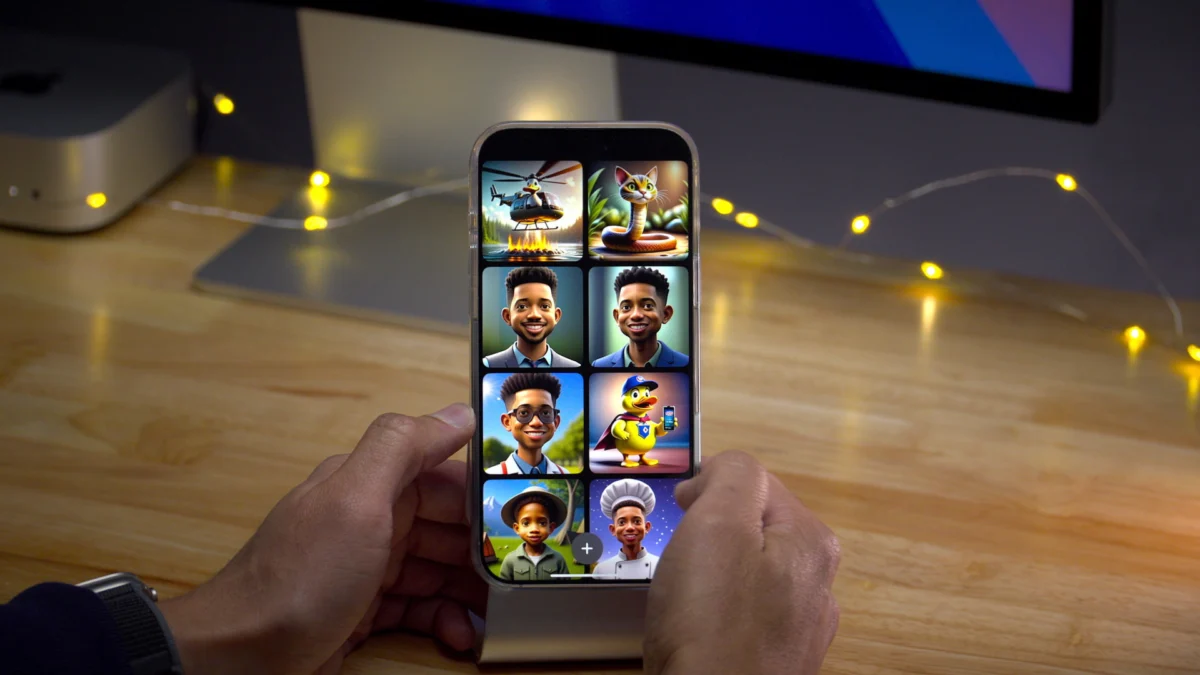
As Apple navigates the rapidly evolving landscape of generative artificial intelligence, the company is preparing to address one of its most persistent criticisms: the underwhelming performance of its proprietary creative tools. According to recent insights from Bloomberg’s Mark Gurman, Apple is set to deliver a significant "visual quality boost" to its Genmoji and Image Playground features in the upcoming iOS 27 release. This development signals a pivotal shift in how Apple balances its commitment to on-device privacy with the industry-leading fidelity users have come to expect from AI-driven imagery.
Main Facts: The Path to Visual Parity
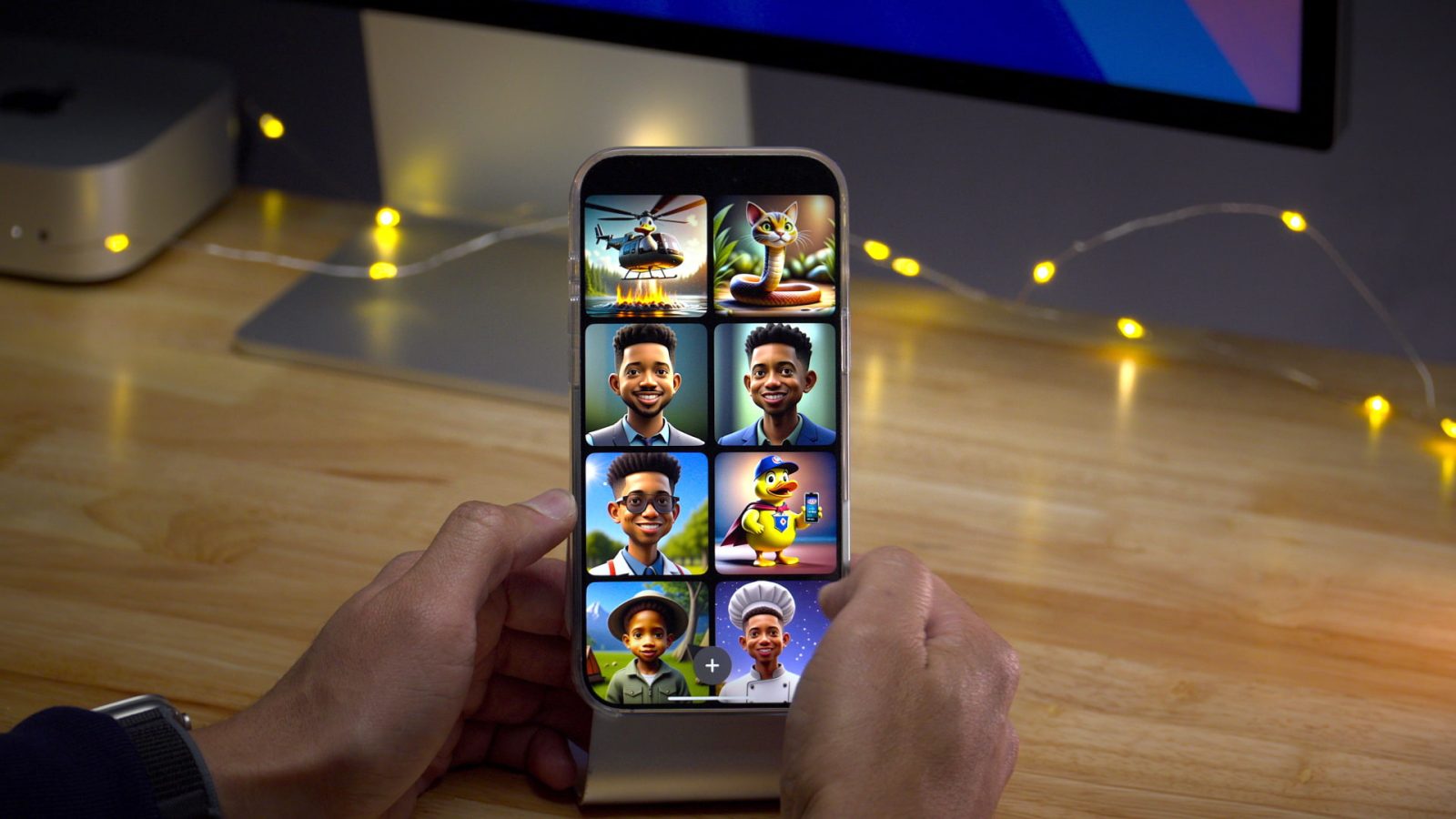
The core of the upcoming update is a fundamental refinement of the underlying diffusion models that power Apple’s creative suite. Since their inception, Genmoji—Apple’s custom emoji generator—and Image Playground—the system-wide image creation app—have been criticized for producing results that often lack the sharp, high-fidelity aesthetic found in rival services like Midjourney or DALL-E 3.
Industry analysts suggest that Apple’s initial rollout in iOS 18.2 favored performance and safety over artistic complexity. However, with iOS 27, Apple is reportedly integrating more sophisticated, higher-parameter models. Beyond just improving its own internal architecture, Apple is moving toward a modular, "model-agnostic" approach within Image Playground. This will allow users to tap into third-party AI models, creating a hybrid environment where Apple’s privacy-first foundation meets the raw creative power of industry-standard competitors.
A Chronology of Apple’s AI Evolution
To understand the magnitude of this shift, one must look at the timeline of Apple’s hesitant, yet deliberate, entry into the generative AI space.

2024: The Foundation
Apple introduced its vision for "Apple Intelligence" in mid-2024. The strategy was distinct from the start: prioritize on-device processing to ensure that user data never leaves the hardware. When Image Playground and Genmoji were officially launched, they were lauded for their integration but panned for their output quality. Users frequently reported "cartoonish" or "stilted" imagery that failed to capture the nuances of professional digital art.
2025: The Integration Phase
Throughout the following year, Apple began testing the waters of cloud-based AI integration. By allowing ChatGPT to serve as an optional, opt-in layer for the Image Playground app, Apple acknowledged that its own internal models were not yet sufficient to satisfy power users. This served as a "bridge" technology, keeping users within the Apple ecosystem while the engineering teams worked on internal improvements.
2026: The "Big Boost" Era
Current reports indicate that the release of iOS 27 represents the maturation of these efforts. By combining proprietary model improvements with an expanded ecosystem of third-party model support—including potential partnerships with developers of highly efficient models like Google’s Gemini Nano—Apple is effectively pivoting to a "best-in-class" strategy for visual generation.
Supporting Data: Why Quality Matters
The criticism leveled at Image Playground wasn’t merely aesthetic; it was functional. In a digital economy where visual communication is paramount, "AI slop"—the colloquial term for low-resolution, nonsensical, or poorly rendered generative images—is a significant barrier to adoption.
Technical Hurdles
The primary challenge Apple faced was the hardware constraint. Running high-fidelity diffusion models requires immense computational power and VRAM, which are traditionally scarce on mobile devices. Apple’s decision to prioritize on-device execution meant that the models had to be significantly "quantized" or downscaled.
Data from early testing suggests that Apple’s new approach in iOS 27 utilizes advanced model-distillation techniques. By training larger, more powerful models on massive datasets and then "distilling" their intelligence into smaller, more efficient runtimes, Apple aims to achieve a level of visual fidelity that was previously impossible without offloading the task to a massive server farm.
The Role of User Context
A key component of the upcoming update is the synergy between the photo library and AI generation. Apple is moving toward "context-aware" Genmoji. By analyzing a user’s photo library—a feature that remains locked within the secure enclave of the device—the AI can generate emojis that look like the user’s friends, family, or pets. This hyper-personalization is where Apple’s model, even if it is technically less "artistic" than a high-end cloud model, wins on utility.
Official Responses and Strategic Positioning
While Apple rarely comments on specific pre-release software features, the company’s broader strategy, as articulated by executives like Craig Federighi, emphasizes "intelligence that is deeply personal and inherently private."
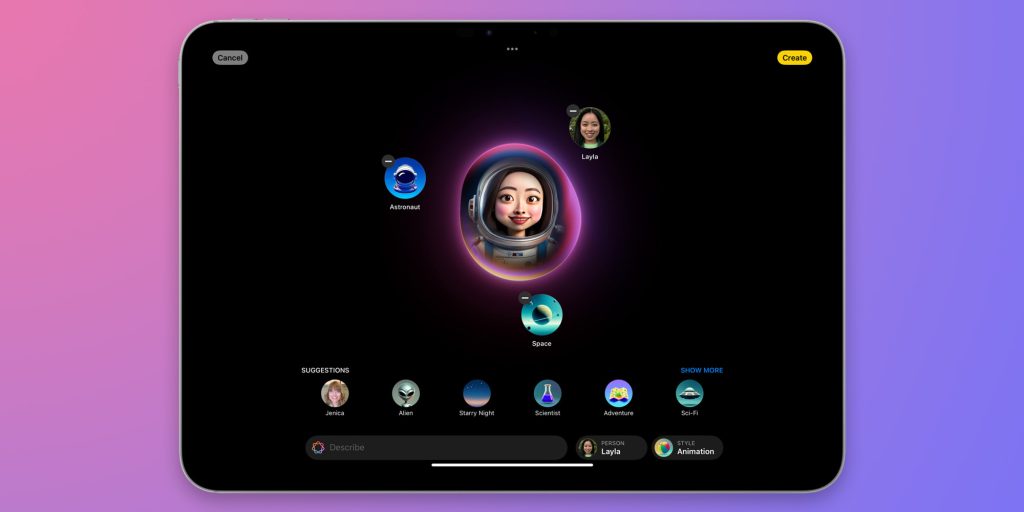
The decision to open Image Playground to third-party models is a rare move for a company known for its "walled garden" approach. This suggests a shift in the corporate philosophy regarding AI. Apple seems to have concluded that it cannot win the "model wars" by building the most powerful LLM or image generator on its own. Instead, it aims to win by building the most effective interface for AI. By providing a secure, sandboxed environment where a user can swap between Apple’s own model, an OpenAI model, or a Google model, Apple becomes the "OS for AI," rather than just a vendor of it.
Implications for the Industry and the User
For the Consumer
For the average user, these changes mean that the tools they already use—Messages, Notes, and Pages—will suddenly become significantly more capable. If a user can generate a high-fidelity illustration for a presentation in Pages using an integrated, professional-grade model, the need for third-party creative apps diminishes. This could spell trouble for smaller, independent AI-art startups that currently rely on Apple’s lack of high-quality internal tools to stay relevant.
For Developers
Developers working on AI-driven apps will need to pivot. If Apple provides an "Image Playground" API that supports multiple high-quality models, developers will likely shift from building standalone generation apps to building "plugins" that work within Apple’s existing, native framework.
The Privacy Trade-off
The most significant question remaining is whether this "big boost" in quality comes at the expense of privacy. If Apple moves to a cloud-heavy approach to achieve this higher fidelity, it will test the limits of its marketing promise. However, if they manage to keep these high-quality models running on-device via the A-series and M-series chips (through hardware acceleration like the Neural Engine), Apple will have achieved a technological feat that no other company has yet matched.

Conclusion: A New Standard
As we look toward the launch of iOS 27, the narrative surrounding Apple’s AI efforts is shifting from skepticism to curiosity. The company is clearly moving past the "novelty" phase of Genmoji and into a "productivity" phase. By acknowledging that its initial models were insufficient and proactively moving to integrate more capable, third-party alternatives while simultaneously upgrading its own internal engine, Apple is demonstrating the kind of iterative agility that has defined its success for decades.
While the "AI slop" of the past two years served as a proof-of-concept, the coming year promises to define whether Apple can successfully marry its privacy-centric design with the high-performance demands of the modern creative workflow. If the reports hold true, the gap between a "cute" Genmoji and a "professional-grade" asset is about to close, potentially making Apple’s ecosystem the most versatile creative suite on the planet.












No comments yet. Be the first to join the conversation!