

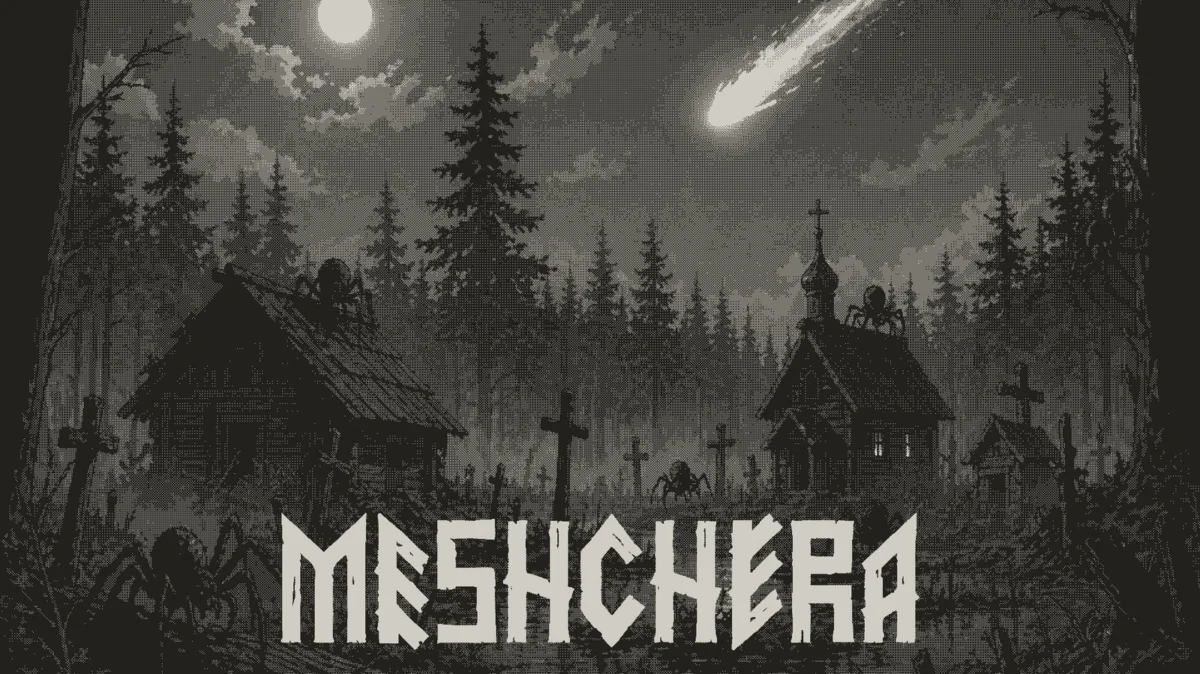
In the world of mobile and handheld gaming, the "match-three" genre is often dismissed as a sterile, numbers-driven exercise—a colorful distraction designed to exploit dopamine loops through rapid-fire clicking and flashing lights. However, the indie developer known as khvoshch has shattered that perception with Meshchera, a haunting, atmospheric puzzle game designed specifically for the Panic Playdate. Set against the backdrop of a decaying, supernatural marsh, Meshchera proves that a 6×6 grid can hold as much narrative weight and mystery as a sprawling open-world epic.
The Core Concept: A Puzzle Game with a Pulse
At its mechanical heart, Meshchera follows the logic of a classic merging puzzle. Players are presented with a 6×6 grid where they must group matching tiles in clusters of three or more. When combined, these tiles merge to form higher-value assets. A patch of grass might evolve into a flower, which blossoms into a tree, eventually scaling up to structures like campfires, houses, and even churches.
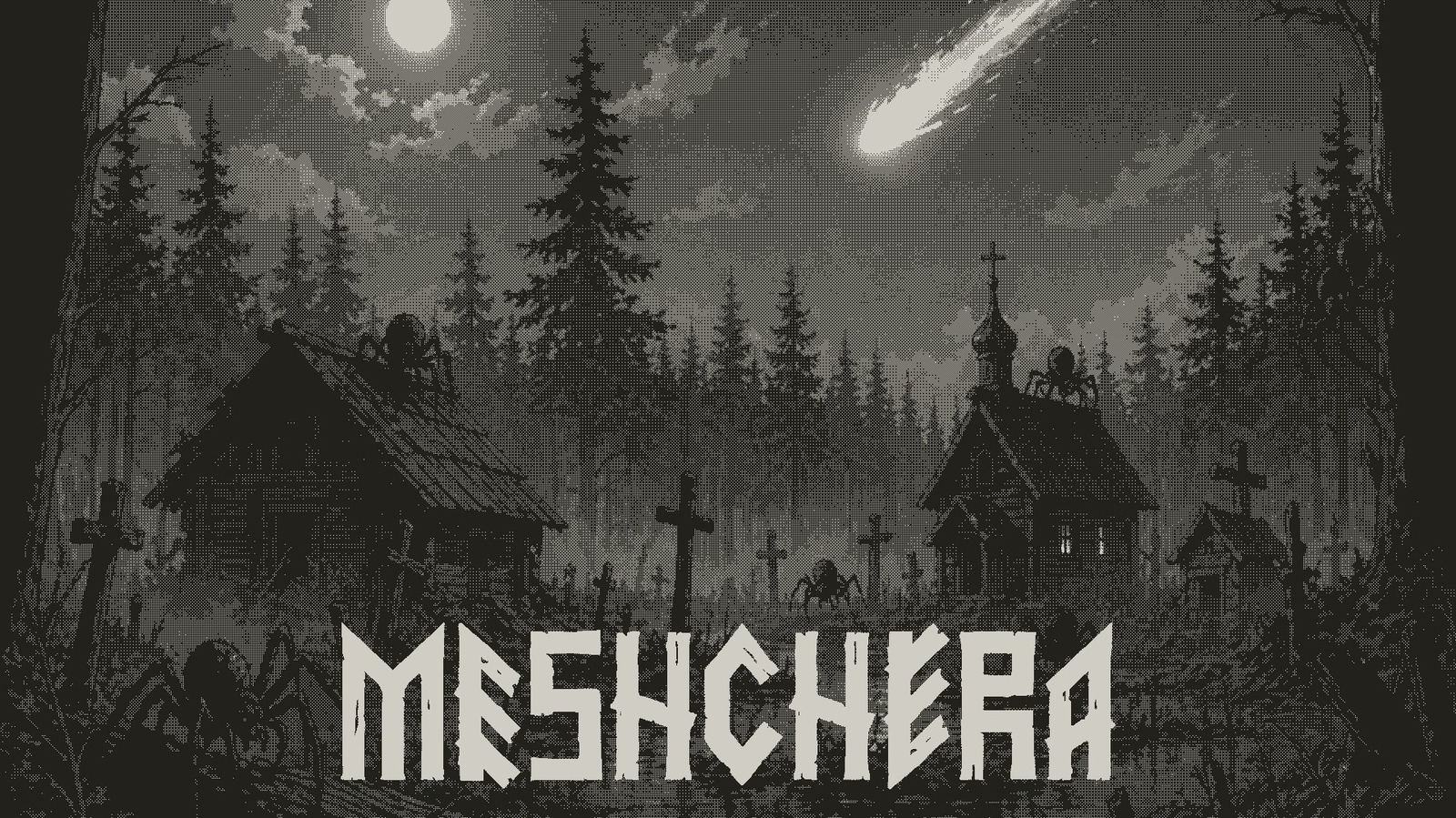
Yet, to label Meshchera merely as a "match-three" game is to miss the point entirely. While the mechanics are familiar, the execution is profoundly different. The game is wrapped in a layer of gothic, monochromatic dread that feels distinctly native to the Playdate’s high-contrast, 1-bit screen. The aesthetic—reminiscent of folk-horror woodcuts—features spiders, skeletons, and crumbling tombstones that crawl across the screen, demanding not just spatial awareness, but a willingness to engage with an ecosystem that feels actively hostile to the player.
Chronology: From Concept to Itch.io Release
The development of Meshchera follows the recent surge of interest in the Playdate as a platform for experimental, high-art indie titles. While mainstream mobile stores remain crowded with free-to-play, microtransaction-heavy clones, the Playdate ecosystem has fostered a resurgence in "boutique" gaming—titles that prioritize mood, tactile satisfaction, and deep, opaque systems.
- Initial Development: The developer, khvoshch, began crafting the visual language of the game, focusing on the "haunted marsh" aesthetic that defines the current build.
- System Integration: Unlike many games built for broader platforms, Meshchera was engineered specifically to utilize the Playdate’s unique limitations, including its lack of a backlight and its crisp, high-resolution monochrome display.
- The Early Access Phase: The game recently made its debut on itch.io, bypassing the official curated Playdate Catalog for the time being. This move allowed the developer to iterate rapidly based on player feedback, a strategy that has kept the community engaged with a growing list of challenges.
- Current Status: As of this writing, the game features ten distinct challenges, with the developer confirming that more content is currently in the pipeline.
Supporting Data: Understanding the "Monster" Ecosystem
What separates Meshchera from its contemporaries is its refusal to hold the player’s hand. In most puzzle games, a "tutorial" explains every interaction. In Meshchera, you are dropped into the marsh with zero instruction manual.
The Mechanics of the Marsh
The board is not a static canvas; it is a living, breathing entity. If the player does not stay ahead of the "creep"—the spread of vegetation and creatures—the board becomes rapidly overwhelmed.
- Growth Cycles: Elements evolve linearly, but the logic behind the "Monster" system remains one of the game’s most guarded secrets. Players are tasked with objectives like "kill five monsters" or "keep 10 monsters for 10 turns," yet the specific catalyst for "creating" a monster remains an enigma.
- The Complexity Curve: By withholding information, the developer creates a trial-and-error environment that encourages deep, analytical play. Players must observe how elements react to one another, effectively becoming researchers of their own digital environment.
- Replayability: The challenge-based approach—where each session dictates a new set of rules—ensures that the game stays fresh. It is not just about clearing the board; it is about navigating a specific set of constraints in a world that shifts beneath your fingers.
Official Perspectives and Community Reception
The reception within the Playdate community has been overwhelmingly positive. On platforms like Reddit and Discord, users have praised the game for its "slow-burn" intensity. Unlike games that favor speed, Meshchera demands patience.
While Panic—the hardware manufacturer behind the Playdate—has not issued a formal "official" review, the game has been widely embraced by the developer community as a benchmark for what can be achieved with the console’s SDK. The developer, khvoshch, has maintained a transparent, albeit mysterious, presence, engaging with players on itch.io to discuss the nuances of the game’s difficulty spikes.
"I have absolutely no idea how to create a monster," one early player noted on a community forum, "and that is exactly why I can’t put the console down." This sentiment underscores the game’s success: it treats the player as an intelligent participant capable of discovery, rather than a consumer to be entertained by flashing lights.
The Implications: A Shift in Handheld Puzzle Design
The success of Meshchera carries significant implications for the future of handheld puzzle gaming. It suggests that there is a growing, sophisticated market for "atmospheric puzzles"—games that use a genre’s base mechanics as a vessel for world-building rather than just a way to kill time.
1. The Death of the "Time-Killer"
We are seeing a move away from the "commuter puzzle" (designed for three-minute bursts) toward the "immersive puzzle" (designed for meditative, long-form play). Meshchera is a game that rewards the player for spending an hour with it, not just a minute.
2. The Playdate as an Indie Sanctuary
The ease of sideloading on the Playdate has become its greatest strength. By bypassing the traditional, often restrictive, curation of major app stores, developers like khvoshch are finding direct lines to their audience. This democratization allows for "weird" games—games that might be rejected by a focus group for being "too difficult" or "too dark"—to find a passionate, loyal audience.
3. Aesthetics as Core Gameplay
In Meshchera, the art is not just a skin; it is the game itself. The way the vegetation creeps across the screen, the specific iconography of the tombstones, and the sound design (which, while minimal, provides a haunting auditory backdrop) are integral to the strategy. You are not just matching tiles; you are fighting back the darkness of the marsh.
How to Experience Meshchera
For those interested in exploring the haunted marshes of Meshchera, the barrier to entry is low. The game is currently available on itch.io.
Sideloading, while sometimes intimidating to the uninitiated, is a cornerstone of the Playdate experience. The process is straightforward:
- Download: Purchase and download the game file from the itch.io store.
- Access: Log into your Playdate account via the official website.
- Transfer: Navigate to the "Sideload" tab in your account dashboard.
- Sync: Drag and drop the game file into the interface. Alternatively, connect your Playdate to your computer via USB and transfer the file manually to the device’s internal storage.
Panic provides a comprehensive guide for this process, ensuring that even non-technical players can enjoy independent titles like Meshchera without friction.
Final Thoughts: A Haunting Addition to Your Library
Meshchera is a masterclass in minimalism. It strips away the unnecessary UI clutter, the microtransactions, and the relentless hand-holding that plagues modern gaming. Instead, it offers a haunting, complex, and deeply satisfying experience that respects the player’s intelligence.
Whether you are a seasoned puzzle veteran looking for a new challenge or a Playdate owner looking for a game that perfectly encapsulates the device’s unique "weirdness," Meshchera is an essential addition to your collection. It is a reminder that even in a 6×6 grid, there is room for mystery, atmosphere, and the kind of satisfying difficulty that keeps you coming back, one match at a time, to see what the marsh hides next.
As the developer continues to roll out new challenges, Meshchera is poised to become a staple of the Playdate library—a game that feels less like a product and more like an evolving, haunted artifact. Don’t let the simplicity of the genre deter you; there is a world of depth in this marsh, if you are brave enough to dive in.












No comments yet. Be the first to join the conversation!