

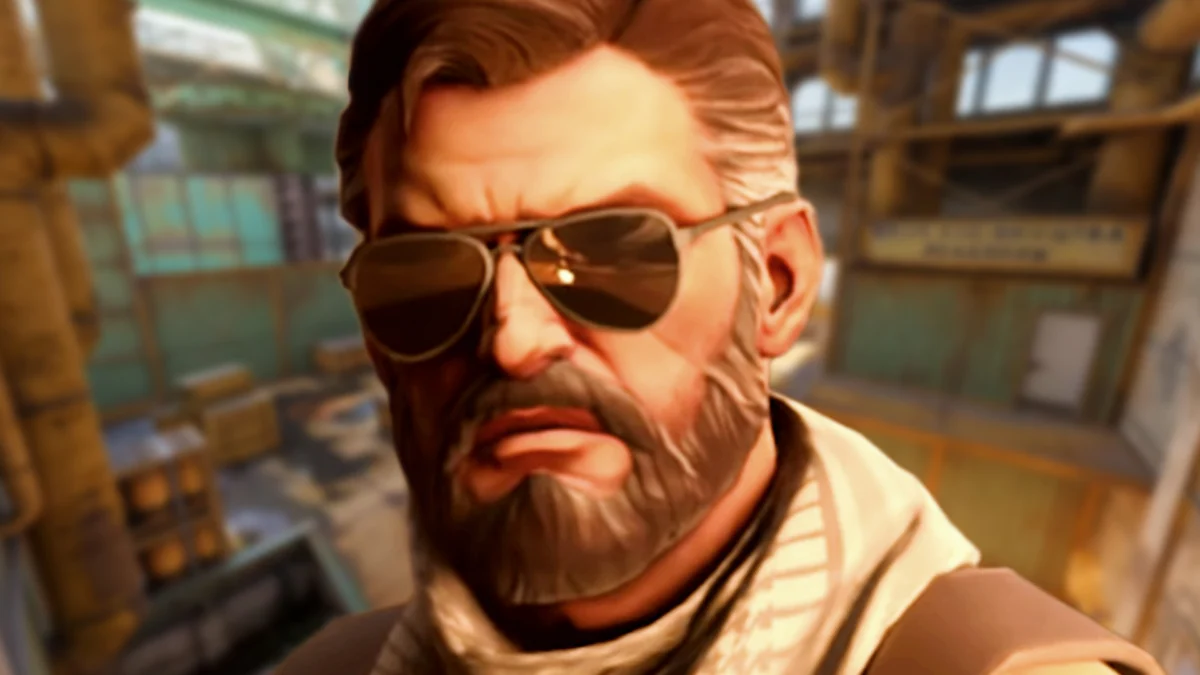
In the vast, ever-shifting landscape of digital entertainment, few titles command the permanence of Counter-Strike. What began as a humble, volunteer-driven modification for Valve’s Half-Life in 1999 has metastasized into the definitive tactical shooter, a cornerstone of the global esports economy, and a perennial titan on the Steam charts. At the center of this origin story stands Minh Le, known to the gaming world by his handle ‘Gooseman.’ As one of the original creators of the mod that would eventually evolve into Counter-Strike 2 (CS2), Le occupies a unique position as both a progenitor and a distant observer.
In a recent, wide-ranging interview with Hellcase, Le opened up about his relationship with his creation, his current shift toward indie development, and his evolving role as a spectator of the professional scene. While Valve’s Counter-Strike 2 continues to dominate the industry, Le’s personal journey highlights a fascinating contrast: the man who built the foundation is now busy designing the next generation of arcade-style shooters, proving that even for the architects of legends, the urge to create never truly fades.
The Origin: From Modding Phenom to Global Standard
To understand the weight of Le’s commentary, one must first revisit the late 1990s. The industry was in the midst of a transition; the Quake and Unreal Tournament era of "twitch" shooters was being challenged by a desire for more grounded, team-based tactical play. Le, working from his home, utilized the Half-Life SDK to build a sandbox where terrorists and counter-terrorists clashed in objective-based rounds.
What separated Counter-Strike from its contemporaries was its brutal economy and the lethality of its weaponry. It was a game of inches, angles, and communication. Valve, recognizing the lightning-in-a-bottle nature of Le’s work, acquired the project and hired him, setting the stage for decades of iteration.
However, the passage of time has seen the industry move far beyond the original mod. Le admits that his personal connection to the gameplay loop has waned. "Honestly, I don’t play that regularly," Le confessed to Hellcase, noting that his daily involvement as a player ceased somewhere between 2007 and 2008. While this might strike fans as surprising, it is a common trajectory for developers; after years of obsessing over the granular balance of movement speed and weapon recoil, the act of "playing" often loses its luster.
Shifting Focus: The Arcade Renaissance in Alpha Response
While Le remains a legend in the tactical shooter space, his creative engine is currently firing in a different direction. He is currently deep in the development of Alpha Response, a title that eschews the methodical, high-stakes pressure of Counter-Strike in favor of the adrenaline-soaked, "gloriously arcadey" feel of 1990s light-gun classics like Virtua Cop and Time Crisis.
Development Status and Philosophy
Alpha Response has been in Steam Early Access since October 2024. According to Le, the game has moved past the volatile stages of prototyping and is now in the "polishing" phase. For an indie developer, this is the most critical period—balancing the aesthetic flair of the 90s with modern quality-of-life expectations.
The project represents a stylistic homecoming for Le. By focusing on the "arcade" experience, he is reclaiming the joy of play that initially drew him to game design. While Counter-Strike demands thousands of hours of study, memorization of smoke lineups, and nerves of steel, Alpha Response aims for immediate gratification. It is a testament to the versatility of Le’s design philosophy that he can pivot from the game that defined competitive esports to a project focused entirely on the visceral thrill of the arcade.
The Return of a Classic: Cache and the Nostalgia Factor
Despite his self-imposed hiatus from active matchmaking, Le’s connection to Counter-Strike remains tethered by history. The recent return of the iconic map ‘Cache’ to Counter-Strike 2 provided the perfect impetus for a rare appearance in the game’s servers.
The Significance of Cache
Cache, a fan-favorite map that had been absent from the active duty pool since 2019, received a significant visual and structural overhaul for its inclusion in CS2. For the player base, the map is a nostalgic touchstone; for Le, it was a test of his own muscle memory.
"I did jump on recently just to play Cache, just to check it out," Le remarked. "I was still pretty good even though I haven’t played for more than a decade."
This revelation underscores the "bicycle effect" inherent in Counter-Strike. The fundamental mechanics—the crosshair placement, the importance of peek-advantage, and the map-specific geometry—are so deeply ingrained in the genre that even a decade of dormancy cannot erase them. The map’s re-emergence in April 2026 marks the fourth major redesign for the sequel, signaling Valve’s ongoing commitment to revitalizing legacy content for a new generation of hardware.
The Spectator’s Lens: Professionalism and Underdogs
If Le is no longer a participant in the server, he is certainly an avid viewer of the professional circuit. The transition from developer to spectator has given him a unique appreciation for the current meta-game. He specifically highlighted the dominance of Team Vitality, noting their consistency as a modern marvel.
The Appeal of the Underdog
Beyond the tactical brilliance of top-tier teams, Le expressed a deep affinity for teams that represent regional growth. "I love Furia; I really like how they represent the Brazil region," he noted. "I kind of root for them because I like to root for the underdogs. It’s a great story and it’s great that CS is so big in Brazil."
This sentiment reflects the broader global impact of Counter-Strike. The game has become a cultural language, transcending borders to find a home in regions where it has sparked grassroots movements and professional organizations alike. Le’s appreciation for the Brazilian scene highlights the human element of esports—it is not just about the high-tech rendering or the frame rates, but the narrative arcs of the players and the regions they represent.
Reflections on Rank and the Passage of Time
One of the most humanizing aspects of the interview was Le’s refusal to speculate on his current competitive rank. In an industry obsessed with Elo, MMR, and leaderboard positions, Le maintains a healthy distance.
"When I was playing back in 2008, I was pretty good," he recalled. "I was probably in the top five percent, I would say. Obviously these days I’m very rusty, so I haven’t even checked my rating because I haven’t really played that regularly."
This humility serves as a reminder that even the person who defined the "meta" for millions is subject to the same erosion of skill that affects any player who steps away from the game. It is a refreshing take in an era where streamers and professionals are often pressured to maintain a constant state of peak performance.
Implications: A Legacy That Outlives Its Creator
The fact that Minh Le can step away from Counter-Strike for over a decade while the game continues to grow into a cultural monolith is a testament to the strength of the original architecture. Valve has taken the kernel of his idea and scaled it into an engine of commerce, community, and competition, but the core DNA remains the same.
The Future of the Tactical Genre
Looking forward, the divergence between Le’s career and the game he created offers a lesson for the industry: games are meant to evolve, but they are also meant to be superseded. Whether through his work on Alpha Response or the continued evolution of CS2, the industry is constantly finding new ways to iterate on the concept of the first-person shooter.
Le’s current path suggests a move toward the preservation of "fun" over the pressures of professionalization. By focusing on his new project, he is proving that developers are not bound to their most successful works. They are artists capable of shifting gears, exploring new genres, and rediscovering the joy of creation.
As for Counter-Strike 2, it remains the definitive arena. It is a game that is constantly updated, refined, and balanced, yet it is held together by the same fundamental principles that Le coded in his bedroom over twenty years ago. Whether he plays it or not, his influence is felt in every flick-shot, every smoke grenade, and every round-ending defuse.
In the end, Minh Le’s journey from the creator of the Counter-Strike mod to an indie developer focusing on arcade shooters is not a story of departure, but one of evolution. He has successfully detached his identity from the game, allowing him to appreciate it as an audience member—a privilege that, perhaps, only the creator truly deserves. As Alpha Response nears its 1.0 release, it will be fascinating to see if Le can capture lightning in a bottle once again, this time with a different, and perhaps more personal, aesthetic.










No comments yet. Be the first to join the conversation!