

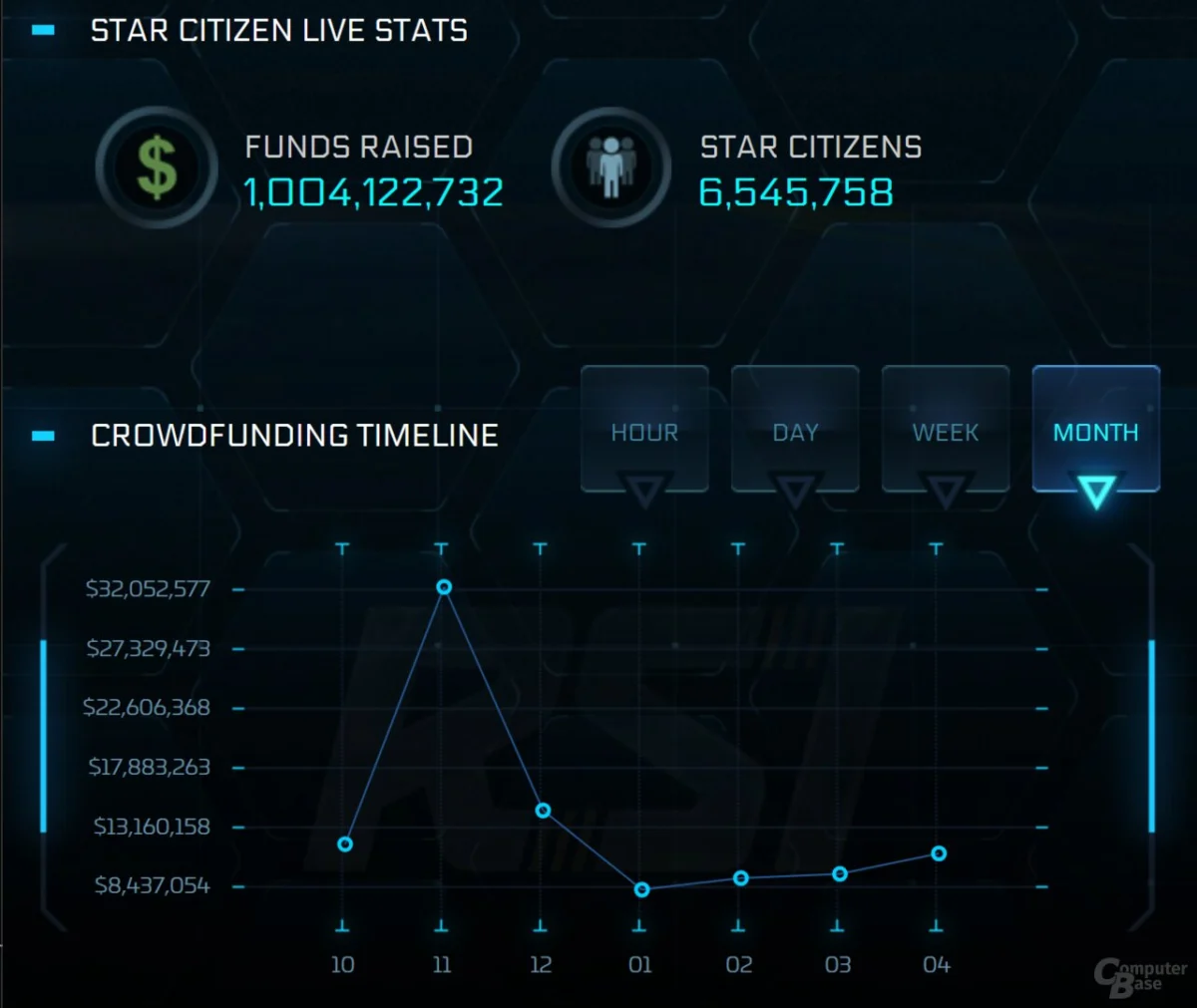
In the annals of interactive entertainment, few projects have captured the public imagination—or sparked as much controversy—as Cloud Imperium Games’ (CIG) Star Citizen. What began in 2012 as a modest Kickstarter campaign for a spiritual successor to Wing Commander has ballooned into an unparalleled economic phenomenon. As of May 2026, the project has officially surpassed the one-billion-dollar mark in crowdfunding revenue. This milestone serves as a testament to the enduring, albeit polarizing, appeal of Chris Roberts’ vision: a persistent, expansive, and hyper-detailed universe that remains, after 14 years of active development, firmly entrenched in its “Alpha” state.
The Billion-Dollar Milestone: A Financial Phenomenon
The achievement of $1 billion in crowdfunding is an anomaly in the gaming industry. Unlike traditional titles funded by venture capital, major publishers, or stock market equity, Star Citizen is almost entirely bankrolled by its player base. These funds are generated through the sale of in-game assets—ranging from cosmetic skins to highly complex concept ships—via the RSI (Roberts Space Industries) storefront.
The trajectory of this funding has been nothing short of exponential. It took approximately 14 years to reach the $1 billion plateau, yet the velocity of capital infusion has accelerated significantly in recent years. The jump from $750 million to the $1 billion mark occurred in less than 18 months. This indicates that despite the project’s technical hurdles and the ever-shifting goalposts of its release schedule, the “dream” of a fully realized, massive-scale space simulator remains a potent product.
A Chronology of Ambition and Delay
To understand the current state of Star Citizen, one must look at its history—a timeline characterized by an ever-expanding scope.
- 2012: The project launches on Kickstarter, aiming for a relatively modest goal. The initial promise was a high-fidelity space combat sim.
- 2014–2016: The scope begins to balloon. Features like seamless planet-to-space transitions and complex ground-based mechanics are introduced, shifting the game from a cockpit-focused sim to a sprawling "everything" simulator.
- 2018–2020: The introduction of persistent universe tech and server-side object container streaming allows for larger groups of players to exist in the same space, though stability issues become a hallmark of the experience.
- 2024: The "Version 1.0" roadmap is significantly pruned. Originally touted as a universe with 100 star systems, the official target for the launch version is reduced to just five systems, signaling a move toward quality and focus over the previously impossible scope.
- 2026: The $1 billion milestone is reached during a free-fly event, proving that despite 14 years of development, the appetite for new players to enter the "Verse" remains high.
Supporting Data: Behind the Numbers
The funding model of CIG is often criticized for its aggressive monetization strategies. Critics point to the fact that the store is, by all metrics, the most polished and reliable part of the Star Citizen experience.
The recent launch of the “Anvil Odin” battleship, priced at a staggering $5,900, encapsulates this friction. To purchase this ship, potential buyers must submit an application with an essay, adding a layer of artificial exclusivity to the transaction. This has drawn sharp rebukes from the community, with some users creating satirical mock-ups, such as a $42,000 "Death Star," to highlight the perceived absurdity of the pricing tiers.
However, CIG argues that these ships are "pledges" rather than traditional purchases. They view the revenue as fuel for the development engine, allowing them to keep hundreds of developers employed to solve problems that no other studio has dared to tackle.
Official Responses and the "Vision"
Chris Roberts, the architect of this odyssey, has maintained a consistent narrative throughout the project’s life. In a recent interview with Variety, Roberts articulated his philosophy: "People just want to see the biggest, best world possible, and they love the idea of the dream. And as we’re going along and they see more of it, it reinforces itself, basically."
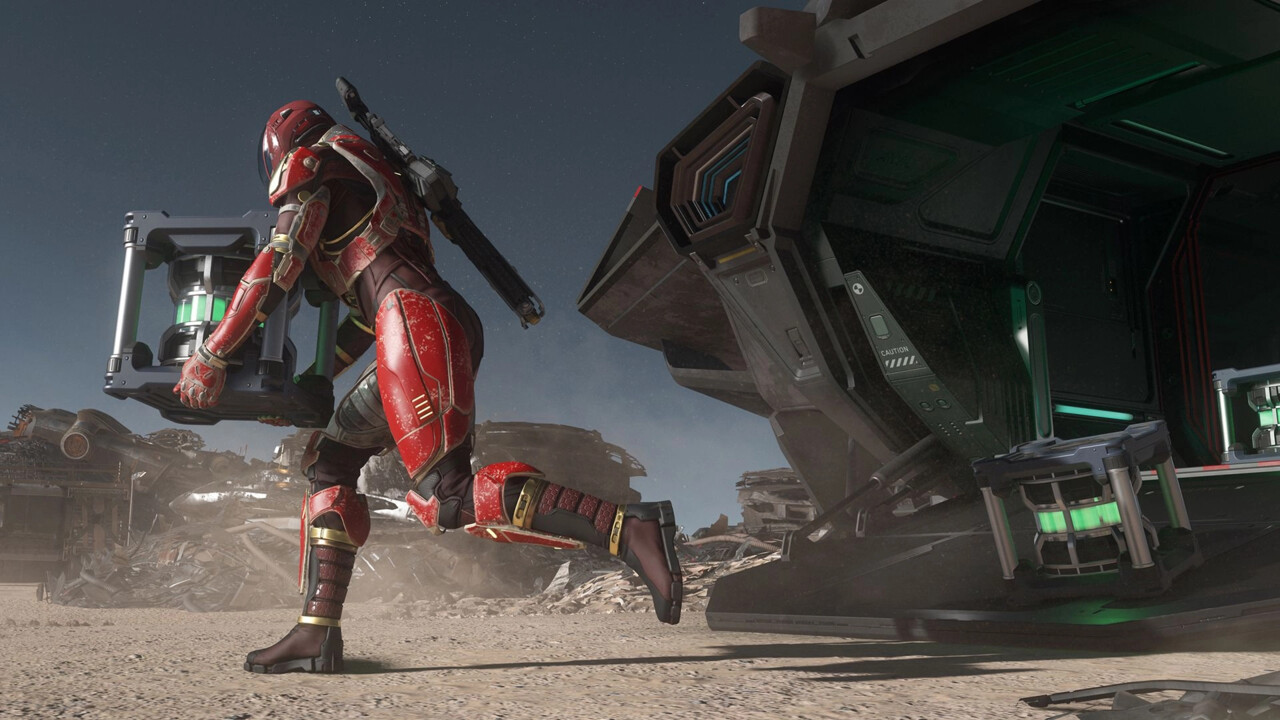
For Roberts, the development process is the product. He argues that the community is not just buying a game; they are participating in the creation of a technological marvel. He frequently points to the "technical wins"—such as the recent improvements in server-side synchronization—as evidence that the project is moving toward a concrete reality, even if the "official" version 1.0 remains a moving target. Regarding Squadron 42, the single-player narrative campaign, Roberts claims the game is in the "end stages" of development, though he stopped short of providing a hard release date, a pattern that has defined his career for over a decade.
Implications: The "Alpha" Paradox
The current state of Star Citizen presents a unique paradox for the gaming industry.
The Technical Critique
The most frequent criticism levied against the project is the disparity between its funding and its technical execution. Players often complain about fundamental stability issues. A notable example is the "elevator problem": because the game simulates objects in 3D space with high fidelity, elevators are not merely teleporters but physical objects that must traverse shafts. When server performance lags, these elevators can desync, leading to players clipping through the floor and dying—a metaphor often used by detractors to describe the project’s broader technical fragility.
The "Pay-to-Win" Debate
The introduction of "Flight Blades"—items that provide mechanical advantages and were initially sold exclusively through the store—has ignited fresh debates regarding "pay-to-win" mechanics. While CIG has attempted to walk back or clarify these moves, the incident underscored a growing resentment among segments of the player base who feel the game’s integrity is being sacrificed for short-term revenue.
The Future of Development
Despite these grievances, the project is undeniably moving forward. The sheer amount of content currently accessible—from complex ship interiors to detailed planetary exploration—is impressive. The fundamental question for the industry is no longer "will Star Citizen ever be finished?" but rather "does the definition of ‘finished’ even matter?"
If a product provides thousands of hours of entertainment to a dedicated, growing, and financially invested community, it serves its purpose regardless of whether it carries the label "Alpha" or "1.0."
Conclusion
As Star Citizen sails past the $1 billion mark, it stands as a monument to the power of community-driven development. It is a project that defies traditional logic: it is a game that is technically unfinished, notoriously slow to iterate, and aggressively monetized, yet it is simultaneously one of the most beloved and anticipated experiences in the space sim genre.
Whether this represents the future of game development or a cautionary tale of scope creep and monetization, only time will tell. For now, the "dream" continues. Chris Roberts and his team at CIG have proven that as long as there is a vision of a "biggest, best world," there will be players willing to fund the journey, regardless of how long the road remains. As the development of Squadron 42 reaches its climax and the persistent universe continues to evolve, the eyes of the industry remain fixed on this gargantuan, billion-dollar experiment in the stars.










No comments yet. Be the first to join the conversation!