

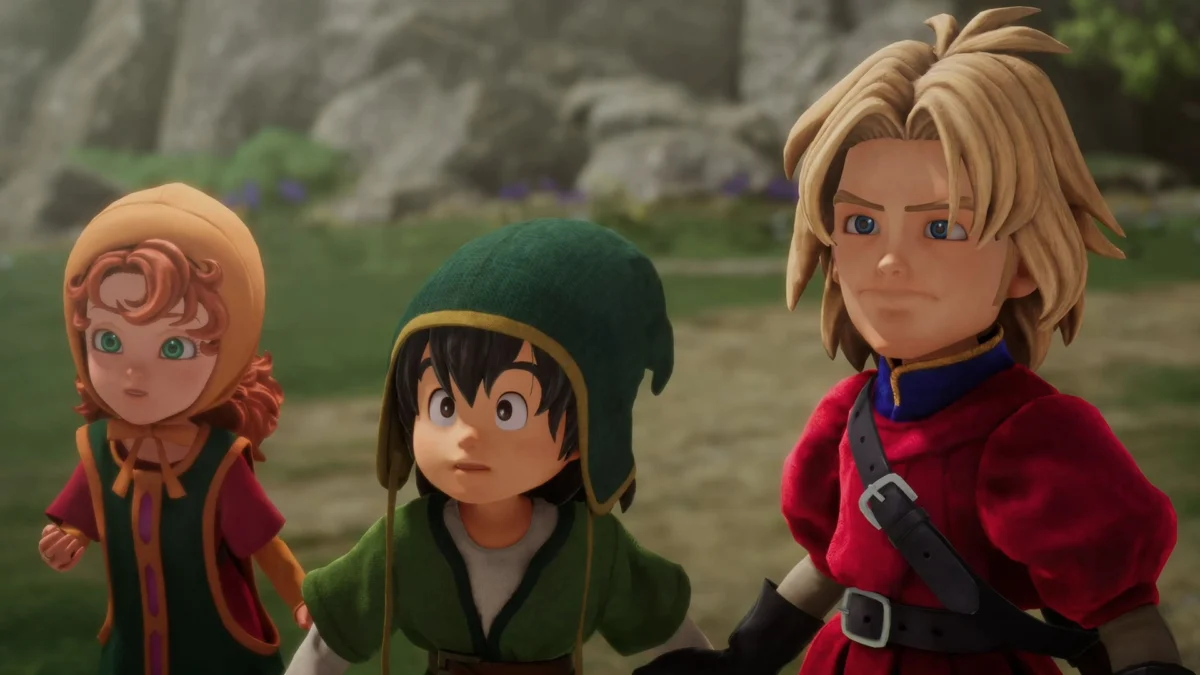
TOKYO, JAPAN – Square Enix has offered fans an unprecedented look behind the curtain of their latest monumental project, Dragon Quest VII Reimagined. A newly released 10-minute "inside look" video delves into the intricate development process, shedding light on the challenges and aspirations driving the recreation of this beloved JRPG classic. The highly anticipated title, a comprehensive reimagining of the PlayStation original, is now available across a wide array of modern platforms, including PlayStation 5, Xbox Series X|S, Nintendo Switch, the upcoming Switch 2, and PC via Steam and the Microsoft Store.
The insightful documentary-style video features key creative minds behind the project: producer Takeshi Ichikawa, director Masato Yagi, and scenario writer Sayaka Takagi. Together, they articulate the vision, the formidable technical and artistic hurdles encountered during development, and their ultimate hopes for what players will experience and cherish in this modern rendition of a sprawling adventure. This release underscores Square Enix’s continued commitment to revitalizing its iconic franchises for both long-time devotees and a new generation of players.
The Genesis of a Reimagining: Main Facts Unveiled
The core announcement revolves around the public availability of a "Making Of" video for Dragon Quest VII Reimagined. This short but impactful featurette serves as a crucial piece of supplementary material, arriving concurrently with the game’s multi-platform launch. For a title that holds significant historical weight within the JRPG genre, such a developer insight is invaluable, providing context to the immense effort required to bring a game of this scale into the contemporary gaming landscape.
At the heart of the video’s narrative are three pivotal figures from the development team. Takeshi Ichikawa, as the producer, likely guided the overall project scope, budget, and timeline, ensuring the ambitious vision remained tethered to practical execution. Masato Yagi, the director, would have been responsible for the creative direction, shaping the game’s aesthetic, gameplay mechanics, and user experience to meet modern standards while respecting the original’s legacy. Finally, Sayaka Takagi, the scenario writer, played a critical role in preserving the intricate narrative, character development, and world-building that defined the original Dragon Quest VII, possibly enhancing or refining elements for a new audience.
Their collective discussion, as highlighted in the announcement, centers on the "creation process," the "difficulties behind reimagining the original game," and "what they hope fans will take away." These three pillars suggest a narrative within the video that is both reflective and forward-looking, addressing the practicalities of development, the specific challenges posed by a "reimagining" versus a simple remaster, and the ultimate player experience they aimed to cultivate. The game’s broad availability on current and next-generation consoles, as well as PC, indicates a strategic push for maximum accessibility, allowing a vast global audience to embark on the journey of Dragon Quest VII.
A Storied Legacy: Chronology of a Classic
The journey of Dragon Quest VII, originally titled Dragon Warrior VII in North America, is a long and winding one, mirroring the epic scope of its narrative. Its original release on the PlayStation in Japan in August 2000, followed by a North American launch in November 2001, marked a significant moment for the franchise. Developed by Heartbeat and published by Enix (before the merger with Square), Dragon Quest VII was renowned for its immense content, innovative fragment-collecting mechanic to unlock new islands and past eras, and a darker, more emotionally resonant storyline compared to its predecessors. It was, at the time, the longest Dragon Quest game, demanding hundreds of hours from players to uncover all its secrets. Despite its critical acclaim, the game’s lengthy development cycle and late PlayStation release meant it arrived as the console generation was transitioning, potentially limiting its initial global reach compared to earlier entries.
More than a decade later, the game received its first major overhaul with the release of Dragon Quest VII: Fragments of the Forgotten Past for the Nintendo 3DS. This remake, developed by ArtePiazza and published by Square Enix, launched in Japan in 2013 and eventually made its way to Western markets in 2016. The 3DS version brought several significant changes, including fully 3D environments and character models, random encounters replaced with visible on-map monsters, and quality-of-life improvements such as streamlined class progression and an expanded StreetPass functionality. While lauded for its visual upgrade and accessibility enhancements, some purists noted the absence of an orchestral soundtrack and the stylistic shift in character models.
The announcement of Dragon Quest VII Reimagined signaled a new, even more ambitious undertaking. Unlike the 3DS version, which was a remake of a PlayStation game on a handheld, Reimagined aims to bring the title to modern, high-definition consoles and PC. The term "Reimagined" itself suggests a more profound transformation than a mere graphical uplift. It implies a ground-up reconstruction that not only updates visuals and controls but potentially re-evaluates gameplay systems, introduces full voice acting, integrates an orchestral score, and perhaps even expands narrative elements or side content. This approach positions Reimagined not just as a definitive version, but as a complete reinterpretation designed to stand alongside contemporary JRPGs while honoring its foundational design. The development timeline from the game’s initial conception as a "reimagining" to its multi-platform launch would have encompassed years of meticulous planning, artistic direction, technical execution, and rigorous testing to ensure a polished experience worthy of the Dragon Quest name.
Delving Deeper: Supporting Data and the Dragon Quest Legacy
To truly appreciate the scope of Dragon Quest VII Reimagined, it’s essential to contextualize it within the broader legacy of the Dragon Quest series. Often credited as the progenitor of the modern JRPG, the franchise, created by Yuji Horii, with iconic character designs by Akira Toriyama (of Dragon Ball fame) and memorable music by the late Koichi Sugiyama, has consistently defined and refined the genre since its debut in 1986. Each entry is known for its charming aesthetic, accessible yet deep gameplay, and heartwarming narratives.
Dragon Quest VII itself is a unique beast within this pantheon. Its core premise revolves around the protagonists restoring a world by traveling to past versions of now-missing islands, solving their problems, and collecting "fragments" that literally piece together the present-day map. This non-linear exploration and episodic storytelling structure provided a sense of grand discovery unlike any other RPG at the time. The game also featured a robust and highly customizable class system, allowing players to mix and match abilities from various vocations, leading to extensive character customization and strategic depth. Modernizing such a complex and expansive game presents manifold challenges.
The "Reimagined" approach, as opposed to a simple "remaster" or even a "remake," implies a level of ambition akin to Square Enix’s recent efforts with Final Fantasy VII Remake. This typically involves:
- Full 3D Environments and Character Models: Moving beyond the more stylized 3DS remake, Reimagined likely features completely rebuilt environments and highly detailed character models that leverage the power of PS5, Xbox Series, and high-end PCs. This would require extensive artistic direction to translate Toriyama’s 2D designs into dynamic 3D representations without losing their charm.
- Voice Acting: A staple of modern AAA JRPGs, full voice acting for the extensive cast of Dragon Quest VII would be a monumental undertaking, requiring thousands of lines of dialogue to be recorded in multiple languages, adding significant emotional depth and accessibility.
- Orchestral Soundtrack: While the 3DS version used synthesized music, a "reimagining" would almost certainly feature a fully orchestrated score, bringing Sugiyama’s timeless compositions to life with rich, symphonic arrangements. This alone can dramatically enhance the game’s atmosphere and emotional impact.
- Quality-of-Life (QoL) Improvements: Modern players expect conveniences like auto-saves, faster movement options, streamlined menus, clearer quest logs, and improved user interfaces. Implementing these while respecting the original’s pacing is a delicate balance.
- Expanded Lore or Side Content: While not always a given, a "reimagining" sometimes offers opportunities to flesh out existing lore, add new side quests, or provide additional context to characters and events, enriching the overall narrative experience.
Technically, porting a game of this magnitude to five distinct platforms simultaneously—PS5, Xbox Series, Switch 2, Switch, and PC—is a Herculean task. Each platform has its unique architecture, performance characteristics, and control schemes. Developers must optimize for graphical fidelity on powerful consoles, ensure smooth performance on the less powerful original Switch, and manage scalability for diverse PC hardware configurations. This involves complex engine work, asset optimization, and rigorous testing across all target environments.
Audience expectations for Dragon Quest VII Reimagined are undoubtedly high. Long-time fans anticipate a definitive version that respects their nostalgia while delivering a modern, immersive experience. They seek the emotional weight of the original narrative, the strategic depth of the class system, and the thrill of discovery, all presented with contemporary polish. New players, on the other hand, might be drawn in by the visual appeal and modern amenities, hoping for an accessible entry point into a revered series without feeling bogged down by archaic mechanics. The success of Reimagined hinges on its ability to bridge these expectations, delivering a game that feels both timeless and entirely new.
Voices from the Core: Official Responses from the Development Team
The "Making Of" video provides a direct conduit to the minds shaping Dragon Quest VII Reimagined, offering insights from producer Takeshi Ichikawa, director Masato Yagi, and scenario writer Sayaka Takagi. Their perspectives illuminate the intricate balance between innovation and reverence required for such a project.
Producer Takeshi Ichikawa’s role likely encompassed steering the entire production ship. His discussion on the "creation process" would touch upon the initial conceptualization, the allocation of resources, the assembly of the development team, and the iterative cycles of design, implementation, and testing. Producers often face the challenge of managing scope creep while ensuring the core vision remains intact and the project stays on schedule and budget. For a game as vast as Dragon Quest VII, this would have involved meticulous planning to break down the monumental task into manageable phases, from initial asset creation to final polish and localization. Ichikawa would emphasize the goal of creating a comprehensive experience that appeals to both veterans and newcomers, balancing the preservation of the original’s essence with the integration of modern design philosophies.
Director Masato Yagi’s insights would delve into the creative execution and the aesthetic transformation of the game. His discussion on the "difficulties behind reimagining the original game" would likely center on the artistic challenges of translating 2D sprite-based environments and character designs into a fully 3D world without losing the distinctive Dragon Quest charm. This involves careful consideration of camera angles, environmental details, character animations, and visual effects. Yagi might also address the complexities of modernizing gameplay mechanics. For instance, the original’s fragment-hunting system, while innovative, could feel slow or obtuse to modern players. Reimagining it might involve clearer indicators, more intuitive navigation, or even streamlined quest progression. The director’s challenge is to enhance the player experience without fundamentally altering the beloved core gameplay loop or the original game’s unique pacing.
Scenario Writer Sayaka Takagi would focus on the narrative integrity and emotional resonance of Dragon Quest VII. Her segment would address the unique challenges of adapting an extensive, emotionally complex narrative for a new generation. Dragon Quest VII is known for its episodic storytelling, often featuring poignant, self-contained narratives on each island before contributing to the larger overarching plot. Takagi would discuss how they ensured the emotional impact of these stories remained potent, perhaps by refining dialogue, enhancing character expressions (through voice acting and animation), or providing additional contextual information without altering the fundamental plot points. The "difficulties" here might involve maintaining consistent tone across hundreds of hours of gameplay, ensuring the translated dialogue captures the original Japanese nuance, and making sure the core themes of loss, hope, and perseverance resonate with a contemporary global audience.
Collectively, their "hopes for what fans will take away" likely revolve around a renewed appreciation for Dragon Quest VII. For existing fans, they hope for a definitive version that fulfills their long-held desires for a modern rendition, allowing them to relive cherished memories with enhanced fidelity and new conveniences. For new players, they aim to create an accessible and engaging entry point into one of the series’ most ambitious titles, sparking a love for the Dragon Quest universe. The overarching message would be one of respect for the source material, combined with a passionate commitment to delivering a high-quality, memorable JRPG experience for all.
Beyond the Horizon: Implications for the Franchise and Genre
The release of Dragon Quest VII Reimagined carries significant implications, not only for the Dragon Quest franchise but for the broader JRPG landscape and Square Enix’s development strategy.
For the Dragon Quest series, this "reimagined" approach could set a new precedent for future remakes. Given the success of the Dragon Quest III HD-2D Remake and the anticipation surrounding Dragon Quest XII: The Flames of Fate, Square Enix appears to be strategically revitalizing its back catalog alongside developing new entries. A successful Dragon Quest VII Reimagined might pave the way for similar treatments of other beloved titles like Dragon Quest VIII: Journey of the Cursed King or even Dragon Quest IX: Sentinels of the Starry Skies, each of which holds unique challenges for modernization. This indicates a long-term commitment to ensuring the entire saga remains accessible and relevant to contemporary players.
Market reception will be crucial. With its multi-platform launch, Dragon Quest VII Reimagined aims for broad commercial success. Critical acclaim will undoubtedly focus on how well the game balances nostalgia with innovation, the quality of its visual and audio upgrades, and the effectiveness of its gameplay modernizations. Positive reception could cement Dragon Quest as a perpetual force in the JRPG genre, capable of bridging generational gaps.
From Square Enix’s perspective, Dragon Quest VII Reimagined represents a significant investment in catering to its legacy fanbase while actively recruiting new players. This strategy aligns with their broader efforts to diversify their portfolio and appeal to different player segments, leveraging the power of their iconic IPs. The choice of "reimagining" over a simpler remaster highlights a willingness to undertake more extensive development, signifying confidence in the enduring appeal of the Dragon Quest brand.
Finally, Dragon Quest VII Reimagined contributes to the ongoing conversation about how best to remake beloved classic games. In an era saturated with remasters and remakes, titles that truly "reimagine" a game from the ground up often stand out, demonstrating that with careful planning and passionate execution, even the most sprawling and intricate classics can be reborn for a new era without sacrificing their original soul. Its success could further influence industry trends, encouraging developers to pursue more ambitious and respectful revivals of their own dormant classics.
Watch "The Making of DRAGON QUEST VII Reimagined" Below:
[YouTube Embed: The Making of DRAGON QUEST VII Reimagined]










No comments yet. Be the first to join the conversation!