

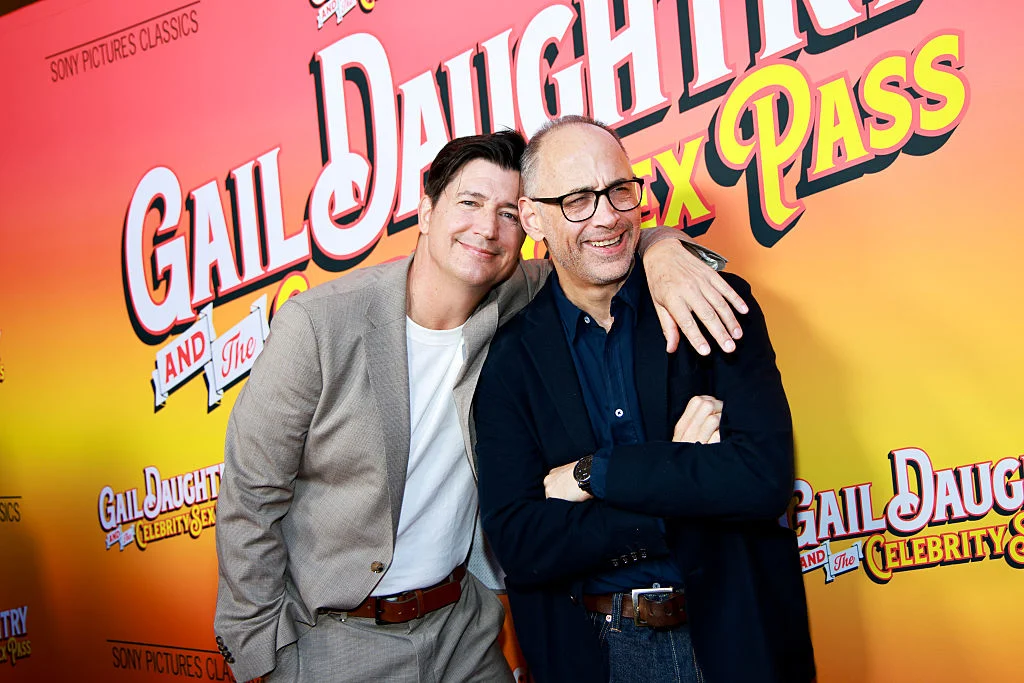
At the 2026 Sundance Film Festival, the premiere of the high-concept comedy Gail Daughtry and the Celebrity Sex Pass brought long-time creative partners David Wain and Ken Marino to the forefront of the industry’s conversation. While audiences were captivated by the film’s whimsical, Wizard of Oz-inspired narrative—starring Zoey Deutch as the titular Gail and Jon Hamm as her elusive "celebrity pass"—the most compelling story to emerge from the festival wasn’t just about the finished product. It was about the blistering, unconventional seven-day sprint that birthed the script.
During their appearance on the Filmmaker Toolkit Podcast, Wain and Marino peeled back the curtain on their writing partnership, detailing a high-intensity, time-compressed methodology that has allowed them to complete three successful feature scripts, including The Ten (2007) and Wanderlust (2012). For writers often paralyzed by the "blank page" syndrome, the duo’s admission that they operate without a formal concept until the clock starts ticking is not just surprising—it is a radical disruption of traditional Hollywood development.
The Genesis of the "12-Hour" Writing Rule
The origins of this disciplined approach are deeply rooted in the practical realities of film production. According to David Wain, who directed Gail Daughtry, the idea was to bridge the gap between the rigorous, clock-bound environment of a movie set and the often-leisurely pace of the writing phase.
"The exercise is sourced out of the idea that, when you’re shooting something, you get there at seven in the morning and you do a 12-plus hour day, and there’s no wiggle room," Wain explained. "You’re on the clock, people are getting paid, so we just thought to ourselves, ‘Maybe writing could benefit from the same kind of rigor.’"
This commitment requires the pair to show up at 7:00 a.m. and remain in the writing chair, entirely uninterrupted, until 7:00 p.m. for seven consecutive days. By treating the screenwriting process like a blue-collar shift, they have managed to strip away the distractions of daily life and the debilitating perfectionism that often stalls creative projects.

A Chronology of the Seven-Day Sprint
The timeline for a Wain-Marino collaboration is remarkably condensed. Rather than spending months in "treatment hell" or iterative outlining, the duo operates on a strict, accelerated schedule:
- Day 1 & 2: The Concept Discovery. Unlike many writing teams that bring fully formed ideas to the table, Wain and Marino begin with a clean slate. Their first 48 hours are dedicated to answering a single question: "So what could a movie be about?" By the end of the second day, they must have a complete, structural outline ready to go.
- Day 3–7: The Execution. With the skeleton in place, the partners move into high-gear drafting. They average 20 pages a day, maintaining a steady, aggressive momentum. The primary rule is simple: "The goal was simply to walk out after seven days with a first draft," Marino stated. "Not a good first draft, just a first draft."
- The Post-Draft Cooling Period. Once the seven days conclude, the pair prints the draft, physically handles the manuscript, and then sets it aside for several weeks. This "distance" allows them to return with a fresh perspective, beginning the true, long-term work of retooling and refining the narrative.
Supporting Data: Why This Method Works
The effectiveness of this method lies in its ability to circumvent the "ramp-up" cost of writing. As Wain noted, stopping for a day or two creates a mental friction that makes it difficult to re-enter the creative headspace. By pushing through for seven straight days, the writers maintain a state of continuous creative flow.
This method was, in part, a necessity born from the changing lives of the two creators. As both men transitioned from the nomadic lifestyle of their early comedy days—specifically their time with the legendary sketch troupe The State—into fatherhood and family life, finding the time to co-write became increasingly complex. Their past, which included creating the iconic cult classic Wet Hot American Summer, taught them that the best comedy often arises from constraints.
"By forcing the writing, something comes out," Wain said. "It’s actually a discipline we learned when we were doing sketch comedy with The State, where sometimes you just write something, even if you don’t have a great idea, and something will come out of it."
Official Perspectives and the "Elf" Theory
The industry is taking notice of this "sprint" style, and the duo is not alone in their search for ways to bypass the internal critic. Marino drew a direct parallel to a technique recently discussed by Weapons writer/director Zach Cregger.

Cregger’s "Elf Theory" provides a psychological hack for writers: you imagine you have hired a low-paid, not-too-bright elf to write your first draft. Because you know the "elf" is incapable of perfection, you lose the fear of writing "bad" scenes. You simply allow the elf to finish the job. Once the "elf script" is completed, the professional writer takes over, refining, polishing, and elevating the material into something human and coherent.
For Wain and Marino, their seven-day window serves as their internal "elf." It provides the raw, unpolished, and sometimes chaotic substance necessary to begin the real work.
Implications for Modern Filmmaking
The implications of the Wain-Marino model for the wider entertainment industry are significant. In an era where "development" can take years—often resulting in scripts that are "over-thought" and stripped of their initial vitality—the seven-day sprint offers a path to reclaiming spontaneity.
1. Reducing Development Fatigue
By setting a hard deadline, the writers eliminate the risk of "development fatigue," where a project is tweaked and rewritten into obscurity before it ever enters production.
2. High-Concept Flexibility
The fact that Gail Daughtry—a complex, multi-layered journey involving celebrity satire and surrealist tropes—was conceived from scratch in under 48 hours proves that high-concept storytelling does not necessarily require a long gestation period.

3. Collaboration as a Performance
For writing teams, the "12-hour-a-day" model forces a level of interpersonal synergy that is rarely achieved in remote or disjointed writing sessions. It demands a level of honesty and quick-decision-making that keeps the narrative energy high.
Conclusion: A New Standard?
As Gail Daughtry and the Celebrity Sex Pass hits theaters on July 10, 2026, via Sony Pictures Classics, the conversation surrounding its creation serves as a powerful reminder to the next generation of filmmakers. Creativity, at its core, is a muscle that requires consistent, often brutal exercise.
While not every writer can or should replicate a seven-day sprint, the philosophy shared by David Wain and Ken Marino is undeniable: the most important step in any creative endeavor is the act of finishing. By embracing the "bad" first draft and prioritizing momentum over perfection, they have created a sustainable, albeit intense, model for success in a fickle industry.
For those looking to learn more about their process, the full interview on the Filmmaker Toolkit podcast provides a deeper dive into the mechanics of their partnership and their reflections on a career that has spanned the evolution of modern American comedy. As the industry continues to search for efficiency in the face of changing production models, the seven-day sprint may well become the gold standard for those looking to turn a spark of an idea into a tangible, production-ready script.










