

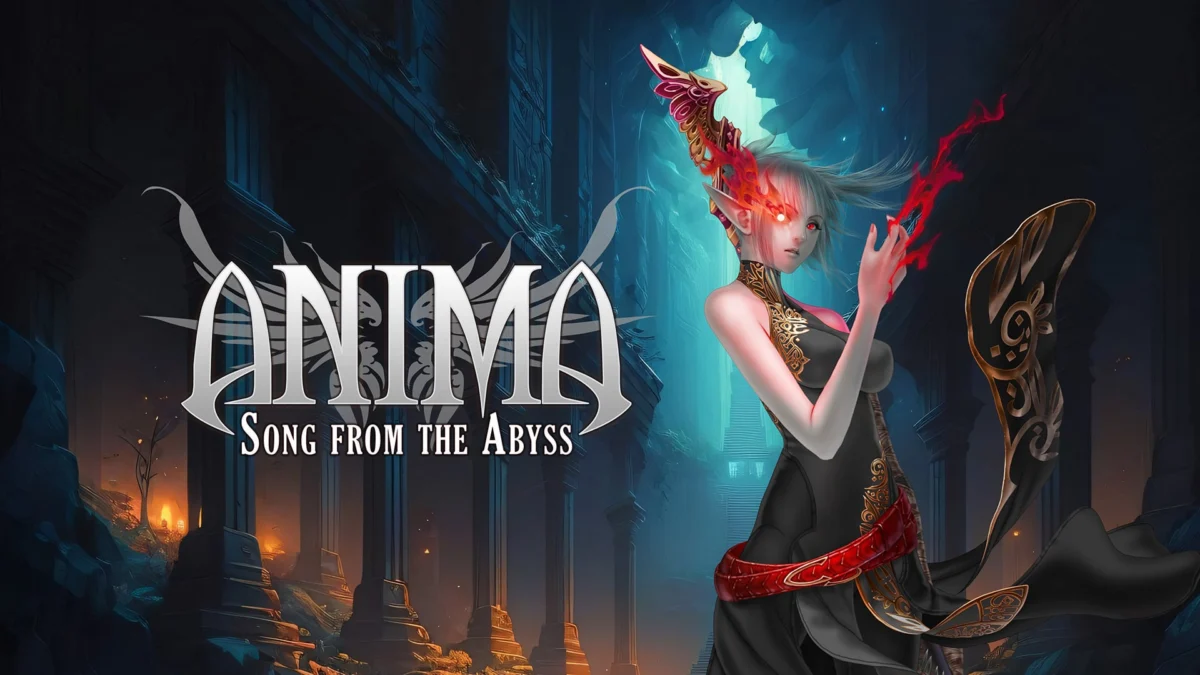
Anima Project Unveils Ambitious Action RPG for PlayStation 5, Xbox Series, and PC
In a significant announcement for fans of dark fantasy and action RPGs, Anima Project has confirmed that its highly anticipated title, Anima: Song from the Abyss, is slated for a 2027 release. The game, set within the rich and acclaimed universe of Anima: Beyond Fantasy, will immerse players in a perilous journey through a world fraught with ancient secrets, formidable dangers, and a cast of unforgettable characters. Launching on PlayStation 5, Xbox Series, and PC via Steam, Anima: Song from the Abyss aims to deliver a fast-paced, fluid combat experience coupled with a deep, narrative-driven adventure that promises to unravel the profound mysteries hidden within a realm known only as the Abyss.
The reveal was accompanied by a new trailer, offering a tantalizing glimpse into the game’s atmospheric setting, dual protagonists, and the enigmatic conflict that underpins its narrative. With its distant release window, Anima Project appears to be setting the stage for a meticulously crafted experience, leveraging the capabilities of current-generation consoles and PC to bring their vision of the Anima universe to life with stunning detail and immersive gameplay.
Main Facts: A Glimpse into the Abyss
Anima: Song from the Abyss emerges as a pivotal entry in the action RPG landscape, drawing from a well-established and beloved dark fantasy lore. The core announcement solidifies several key details that will define the game’s launch and player experience.
Game Title and Core Concept
The title itself, Anima: Song from the Abyss, immediately evokes a sense of profound mystery and potential tragedy, tying directly into the game’s central narrative themes. Players are promised a "dark fantasy adventure" where they will "Descend into the Abyss," suggesting a journey into a perilous, perhaps even existential, unknown. This concept aligns perfectly with the established tone of the Anima: Beyond Fantasy universe, known for its intricate lore, morally ambiguous characters, and cosmic-level threats.
Genre and Gameplay Pillars
At its heart, Anima: Song from the Abyss is an Action RPG. This genre designation implies several core gameplay mechanics: real-time combat, character progression through experience and equipment, exploration of interconnected environments, and a strong emphasis on narrative unfolding through player interaction. Anima Project specifically highlights "fast-paced, fluid combat" and a "deep narrative-driven experience," indicating a balance between visceral action and compelling storytelling. The promise of controlling "two distinct protagonists" further suggests varied gameplay styles and perspectives, enriching both combat encounters and narrative exploration.
Development Studio
The game is being developed by Anima Project, a studio that has previously demonstrated its commitment to the Anima: Beyond Fantasy intellectual property. Their dedication to expanding this universe suggests a deep understanding and respect for its intricate lore, which bodes well for fans hoping for an authentic adaptation. Their experience within this specific IP could be crucial in translating the rich tabletop RPG experience into a compelling video game format.
Target Platforms
Anima: Song from the Abyss is confirmed for release on PlayStation 5, Xbox Series X|S, and PC via Steam. This choice of platforms underscores the developers’ ambition to deliver a high-fidelity experience, taking advantage of the increased processing power, faster loading times, and advanced graphical capabilities offered by current-generation hardware. A PC release on Steam ensures broad accessibility for a significant player base, often enthusiasts of deep RPG experiences.
Release Window
The announced release year of 2027 positions Anima: Song from the Abyss as a long-term project. While seemingly distant, this extended development cycle allows Anima Project ample time for meticulous crafting, iterative refinement, and the potential to integrate cutting-edge technologies and design principles. For an ambitious ARPG with a strong narrative focus and complex lore, such a timeline is often indicative of a commitment to quality and scope rather than a lack of progress. It also suggests that the studio is planning for a polished launch, avoiding the pitfalls of rushed development cycles.
Chronology: From Tabletop Origins to Digital Horizon
The journey of Anima: Song from the Abyss is rooted in a rich legacy, evolving from its origins as a tabletop role-playing game into an ambitious digital adaptation. While the immediate chronological details of the game’s development are still unfolding, its foundation is firmly set in the established history of the Anima: Beyond Fantasy universe.
The Genesis of Anima: Beyond Fantasy
The Anima: Beyond Fantasy universe first came into existence as a Spanish-language tabletop RPG, created by Carlos García and Anima Project Studio. Launched in the early 2000s, it quickly garnered a dedicated following for its intricate world-building, complex magic system, and a lore steeped in dark fantasy, myth, and existential philosophy. Unlike many fantasy settings that draw primarily from Western European folklore, Anima blends elements from various mythologies, including Asian influences, creating a unique and distinct identity. Its reputation for depth, detailed character creation, and challenging narrative potential established it as a significant presence in the tabletop RPG community, eventually leading to English translations and international recognition.
Prior Digital Adaptations (or lack thereof)
While the Anima: Beyond Fantasy universe has seen success in its tabletop form, its transition to video games has been relatively sparse. This makes Anima: Song from the Abyss a particularly anticipated title, as it represents a significant effort to translate the expansive lore and unique atmosphere of the tabletop game into an interactive digital format. Previous attempts or smaller projects have existed, but none have aimed for the scale and visibility suggested by the 2027 console and PC release of Song from the Abyss. This new title therefore stands as a potential landmark, introducing the Anima universe to a much broader audience of gamers who may not be familiar with its tabletop origins.
The Development Timeline of Song from the Abyss
While specific milestones for Anima: Song from the Abyss are not publicly detailed beyond the 2027 release window, the announcement itself marks a crucial point in its development chronology. The unveiling of a new trailer and a firm (albeit distant) release year indicates that the project has moved beyond conceptualization and into a significant production phase. Game development, especially for ambitious ARPGs, typically follows a multi-year cycle:
- Pre-production: Concept art, core design documents, technical feasibility studies, initial prototypes.
- Production: Asset creation (models, textures, animations), core gameplay implementation, level design, narrative writing, programming. This phase is often the longest and most intensive.
- Alpha/Beta: Internal and external testing, bug fixing, balance adjustments, performance optimization.
- Polish and Release: Final quality assurance, marketing push, launch.
Given the 2027 target, it’s reasonable to assume that Anima Project is currently deep within the production phase, dedicating considerable resources to building out the game’s world, refining its combat mechanics, and meticulously weaving its narrative tapestry. The time allows for a comprehensive approach, potentially incorporating player feedback from future betas or early access periods if the developers choose to engage the community earlier.
The In-Game Chronology: A Descent into the Abyss
The narrative provided for Anima: Song from the Abyss outlines a specific chronological sequence of events that kicks off the player’s adventure:
- The Imperial Zeppelin Incident: An imperial zeppelin, carrying "dangerous cargo"—a powerful relic from a forgotten civilization—descends into chaos. Most of its crew mysteriously vanish, stalked by an unknown force.
- Soren’s Desperate Act: Soren, the last surviving knight guarding the dirigible, attempts to protect the vessel and its cargo. In a desperate bid, he unknowingly frees a legendary entity imprisoned within the relic.
- The Crash and Awakening: The zeppelin crashes into the depths of the Abyss. The freed entity, revealing herself as Noein, emerges.
- The Pact: Noein offers Soren a chance at survival in exchange for his help. Their quest: to uncover the truth behind a mysterious "song" that caused the disappearance of an ancient civilization and led to Noein’s eternal imprisonment.
This sequence establishes a clear inciting incident, an immediate goal, and a larger overarching mystery that will drive the game’s narrative. The "song" and the "ancient civilization" hint at a deeper, more cosmic conflict that players will gradually uncover as they traverse the Abyss.
Supporting Data: Unpacking the Universe and its Potential
The brief announcement, while concise, is rich with implications and connections to a broader universe. To truly appreciate Anima: Song from the Abyss, one must delve into the "supporting data" that underpins its existence.
The Acclaimed Universe of Anima: Beyond Fantasy
The most significant piece of supporting data is the direct link to the Anima: Beyond Fantasy universe. This isn’t just a generic fantasy setting; it’s a meticulously crafted world known for its:
- Deep Lore: Anima boasts an extensive mythology, complex history, diverse cultures, and powerful factions. Its world, Gaïa, is rife with ancient secrets, forgotten gods, powerful magical organizations, and the ever-present threat of the Abyss, a dimension of primordial chaos and malevolent entities.
- Unique Aesthetic: Blending high fantasy with gothic horror, Eastern influences, and even elements of steampunk (as evidenced by the imperial zeppelin), Anima creates a visually distinct and thematically rich atmosphere.
- Moral Ambiguity: Characters and factions in Anima rarely fit into simple good-versus-evil archetypes. Decisions often have far-reaching and complex consequences, fostering a mature narrative.
- Powerful Entities: The universe is populated by beings of immense power, from ancient spirits and demons to god-like entities, making the "legendary entity" Noein a fitting character within this framework. The "song" that caused a civilization’s disappearance further points to a grand, potentially cosmic, scale of events.
For fans of the tabletop RPG, this connection is a strong indicator of the game’s potential depth and authenticity. For newcomers, it signals a setting that goes beyond typical fantasy tropes, promising a truly unique experience.
The Developer: Anima Project
Anima Project, as the name suggests, is intimately linked with the Anima: Beyond Fantasy IP. This direct relationship suggests a profound understanding of the source material’s intricacies, nuances, and fan expectations. Unlike external studios adapting a licensed property, Anima Project likely possesses an intrinsic vision for how the Anima universe should translate into an interactive medium. Their previous work, even if not widely known in the video game sphere, has been centered around this universe, lending credibility to their ability to faithfully represent its complex lore and distinctive atmosphere. This internal expertise is a critical asset in ensuring the game feels authentic to its origins while innovating within the action RPG genre.
The Action RPG Framework
The choice of Action RPG as the genre is significant. It implies certain design philosophies:
- Real-time Combat: Unlike turn-based RPGs, ARPGs prioritize immediate player input and skill-based combat. The promise of "fast-paced, fluid combat" suggests a system that is responsive and engaging, possibly incorporating combos, dodges, parries, and a variety of abilities.
- Character Progression: Players can expect to customize their protagonists through skill trees, gear acquisition, and statistical improvements. Given the Anima universe’s detailed character archetypes (warriors, mystics, summoners), the game likely offers diverse build options.
- Exploration: ARPGs often feature expansive worlds, dungeons, and hidden areas. The description of "exploring a world filled with secrets" aligns with this, suggesting players will be rewarded for venturing off the beaten path.
- Narrative Integration: While action-oriented, a "deep narrative-driven experience" means the combat and exploration serve the story, rather than being mere distractions. This is crucial for an IP like Anima, where lore is paramount.
Analysis of the "Release Window Trailer"
The trailer, though brief, provides valuable visual and auditory supporting data:
- Visuals: Dark, gothic aesthetic with hints of an advanced, albeit decaying, civilization. The imperial zeppelin itself is a blend of steampunk and fantasy. Character designs, particularly Soren’s knightly armor and Noein’s ethereal form, align with high-quality dark fantasy art. Environments show crumbling ruins, eerie forests, and perhaps glimpses into the Abyss itself, emphasizing desolation and mystery.
- Dual Protagonists in Action: While not explicitly showing a "tag-team" combat system, the trailer features both Soren and Noein. Soren appears to be a more physical, melee-focused combatant, wielding a large sword and heavy armor. Noein, in contrast, showcases magical abilities, suggesting a more ranged or spell-casting playstyle. The ability to control two "distinct" protagonists implies a strategic element, perhaps allowing players to switch between them to tackle different challenges or combine their strengths in combat.
- Atmosphere: The trailer’s music is orchestral and dramatic, perfectly complementing the dark fantasy tone. Voice acting is present, delivering lines that are serious and foreboding, further cementing the game’s mature themes.
- Combat Flow: Snippets of combat show real-time action, particle effects for magical attacks, and UI elements typical of an ARPG (health bars, ability icons). The combat appears dynamic, reinforcing the "fast-paced, fluid" description.
- Narrative Teases: The trailer includes key dialogue that echoes the game’s description, particularly the opening lines about the knight and the monster, and the reference to the "song." These serve to deepen the mystery and set the emotional tone.
Official Responses: The Vision from Anima Project
Anima Project’s official overview of Anima: Song from the Abyss serves as the primary "official response," articulating their vision and the core tenets of the game. This statement is crucial for understanding the developers’ intentions and the experience they aim to deliver.
The Philosophical Opening
The official overview begins with a cryptic yet profound exchange: "The knight was about to die, and the monster, standing before him, asked. ‘Would you sing for me?’" This opening immediately establishes a dark, existential, and perhaps poetic tone. It suggests themes of sacrifice, desperate bargains, and the power of intangible forces (like a "song") within a world on the brink. This philosophical hook aligns well with the deeper, more introspective elements often found in the Anima: Beyond Fantasy tabletop RPG. It sets the stage for a narrative that explores not just physical threats, but also the psychological and moral dilemmas faced by its protagonists.
Core Gameplay Promise
Anima Project explicitly states that Anima: Song from the Abyss is an "action RPG" featuring "fast-paced, fluid combat" and a "deep narrative-driven experience." This reinforces their commitment to delivering a hybrid experience that satisfies both players seeking engaging real-time combat and those who prioritize rich storytelling and lore exploration. The emphasis on "fluid" combat suggests a focus on responsive controls and dynamic animations, aiming for a satisfying moment-to-moment gameplay loop. The "deep narrative" implies a complex plot, well-developed characters, and significant world-building, crucial for an IP like Anima.
Dual Protagonist System
The confirmation that "Players will control two distinct protagonists" is a key design choice highlighted by the developers. This isn’t just a narrative device but a core gameplay mechanic. It suggests that players will experience the world from different perspectives, potentially utilizing unique abilities, combat styles, and even narrative paths for each character. This could lead to strategic gameplay, requiring players to switch between characters to overcome specific obstacles or enemies, and adds significant replayability and depth to the storytelling. The trailer confirms these protagonists are Soren, the knight, and Noein, the legendary entity.
Narrative Blueprint
The detailed synopsis provided by Anima Project lays out the foundational plot points:
- The Catalyst: The imperial zeppelin incident, the vanishing crew, and the "unknown force" set the immediate stakes. This establishes a sense of urgency and mystery.
- Soren’s Role: Soren, the "last surviving knight," is framed as a protector and ultimately, an unwitting catalyst for a larger catastrophe by freeing Noein. His character arc is likely to involve grappling with the consequences of his actions and his newfound alliance.
- Noein’s Emergence and Pact: Noein, a "legendary entity imprisoned within the artifact," is presented as both a source of the problem and a potential solution. Her offer to Soren, a "single chance at survival" in exchange for help uncovering the truth, forms the central quest. This dynamic creates an intriguing relationship between the two protagonists, built on mutual necessity and shrouded in mystery.
- The Core Mystery: The overarching goal—to "uncover the truth behind the song that caused the disappearance of the ancient civilization… and the reason for her eternal imprisonment"—establishes a grand, high-stakes mystery that transcends the immediate survival of Soren and Noein. This cosmic scale is characteristic of the Anima universe.
Absence of Key Features List (as provided in source)
While the provided text indicates "Key Features" with an empty list, this often implies that specific mechanics or unique selling points are still under wraps or being finalized. For a game in development, especially with a distant release date, developers often hold back detailed feature lists until they are confident in their implementation. This allows for flexibility in design and avoids making promises that cannot be kept. The current focus is on the narrative premise and general gameplay feel.
Implications: Shaping the Future of Anima and the ARPG Landscape
The announcement of Anima: Song from the Abyss for 2027 carries significant implications, not only for the Anima: Beyond Fantasy franchise but also for the broader action RPG genre and the expectations of players.
For the Anima: Beyond Fantasy Universe
- Expanded Reach: A high-profile video game release on major consoles and PC will undoubtedly introduce the Anima universe to a vast new audience. Many gamers may not be familiar with the tabletop RPG, and Song from the Abyss could serve as their gateway into its rich lore and distinct aesthetic. This could lead to a resurgence of interest in the tabletop game and potentially other adaptations.
- Canonical Expansion: While details on its canonicity are yet to be fully revealed, Song from the Abyss has the potential to significantly expand the established lore of Gaïa. Introducing new characters, exploring previously unseen regions like the Abyss, and unraveling ancient mysteries will enrich the universe for existing fans.
- Validation of the IP: A successful video game adaptation would validate Anima: Beyond Fantasy as a robust and adaptable intellectual property, capable of thriving across different media. This could open doors for future games, novels, or other forms of entertainment within the universe.
For the Action RPG Genre
- Narrative Depth: In a genre often dominated by loot and combat mechanics, Anima: Song from the Abyss‘s explicit emphasis on a "deep narrative-driven experience" could set a high bar for storytelling in ARPGs. If successful, it could influence other developers to invest more heavily in compelling narratives within their action-oriented titles.
- Dual Protagonist Innovation: The "two distinct protagonists" mechanic, if implemented creatively, could offer a fresh take on ARPG gameplay. It could introduce new strategic layers to combat, puzzle-solving, and exploration, moving beyond the traditional single-character focus.
- Dark Fantasy Niche: While dark fantasy is a popular subgenre, Anima‘s unique blend of influences offers a distinct flavor. Its success could highlight the demand for more varied and philosophically rich dark fantasy experiences within the ARPG space, moving beyond purely gothic or Lovecraftian themes.
Implications of a 2027 Release Window
- Ambitious Scope: A distant release date often signifies an ambitious project. It implies that Anima Project is planning a game of considerable scale, complexity, and graphical fidelity, requiring extensive development time. Players can reasonably expect a highly polished and content-rich experience.
- Leveraging Future Technology: Releasing in 2027 means the game will be developed entirely for current-gen (and potentially future iterations of) console hardware and high-end PCs. This allows the developers to push visual boundaries, implement advanced physics, and create truly immersive worlds without the constraints of cross-generational development.
- Market Positioning: By 2027, the current console generation will be well-established, and the market for high-quality, narrative-driven ARPGs will likely be mature. A well-executed Anima: Song from the Abyss could carve out a significant niche, especially if it delivers on its promises of unique lore and engaging gameplay.
- Building Anticipation: While a long wait, a distant release also allows for a prolonged marketing cycle, gradually building anticipation through future reveals, gameplay demonstrations, and community engagement. This strategic approach can cultivate a dedicated fanbase even before launch.
In conclusion, Anima: Song from the Abyss stands as a promising venture into the depths of dark fantasy. With its foundation in a beloved tabletop universe, its commitment to a deep narrative and fluid combat, and its ambitious 2027 release target, Anima Project is poised to deliver a significant new entry into the action RPG genre. The journey into the Abyss promises to be one filled with mystery, danger, and unforgettable characters, inviting players to uncover a song that echoes through time and perhaps, reshape the destiny of an entire world.











No comments yet. Be the first to join the conversation!