

Main Facts: Netflix Kicks Off Virtual World Cup Experience
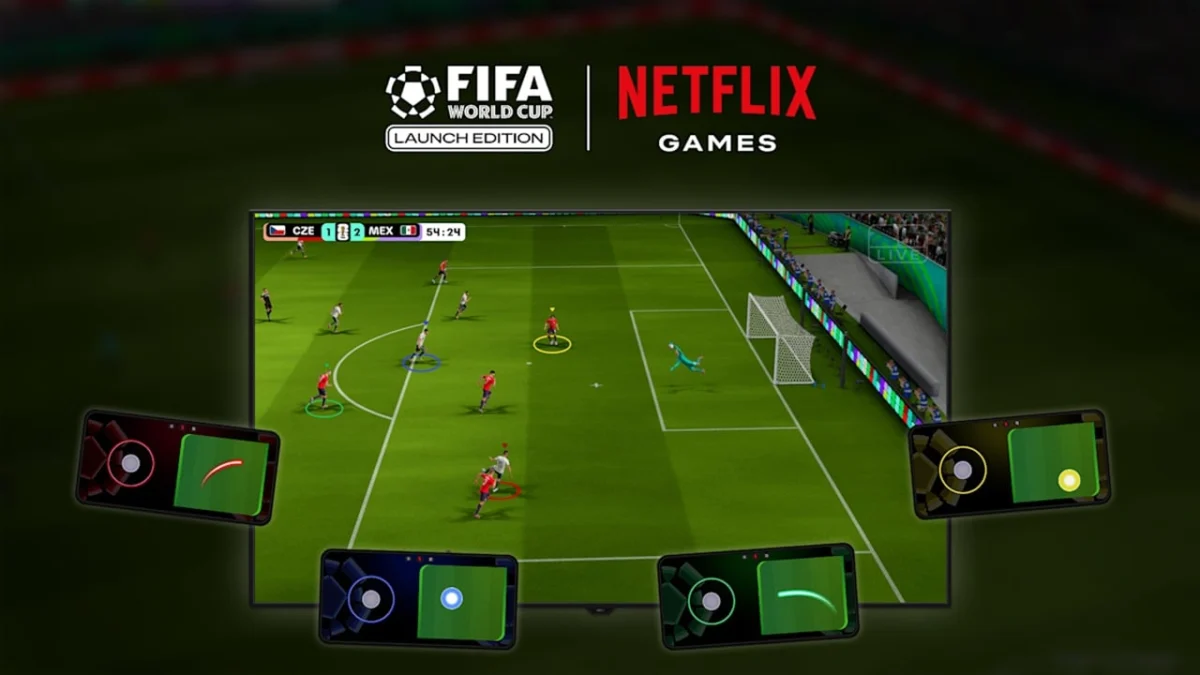
As the world collectively holds its breath for the highly anticipated kickoff of the FIFA World Cup on June 11th, streaming giant Netflix is not merely content with offering cinematic thrillers and gripping documentaries. In a strategic expansion of its burgeoning gaming division, Netflix is simultaneously launching its latest interactive title, "FIFA World Cup: Launch Edition." This ambitious new offering is designed specifically for the big screen, signaling a definitive pivot in Netflix’s gaming strategy towards communal, party-centric experiences that leverage the television as the primary display and the ubiquitous smartphone as an intuitive controller.
"FIFA World Cup: Launch Edition" distinguishes itself by prioritizing immediate accessibility and engaging multiplayer sessions. Departing from the often complex controls and deep simulation aspects of traditional console football titles, this Netflix iteration aims for a streamlined, pick-up-and-play approach. The core philosophy revolves around getting players onto the virtual pitch as swiftly as possible, enabling quick matches, simplified controls, and effortless multiplayer setups. Imagine your living room transforming into a bustling stadium, with the immersive visuals projected onto your TV, while your personal smartphone seamlessly acts as the game controller – a concept designed to democratize sports gaming and invite even casual players into the competitive spirit.
The game promises a comprehensive, albeit simplified, representation of the global tournament. Players will have the opportunity to select any of the 48 national teams slated to participate in the actual competition, offering a broad spectrum of national pride and tactical diversity. The authenticity extends to the venues, with all 16 stadiums from the host nations – the United States, Mexico, and Canada – meticulously recreated within the game. This attention to detail ensures that players can experience the grandeur of these iconic sporting arenas, whether they’re guiding their chosen squad through a match in Mexico City’s legendary Estadio Azteca or vying for victory in a cutting-edge American stadium. With a staggering roster of 1,248 individual players available, fans can truly take control of their favorite national heroes and lead them to glory.
Designed for social interaction, "FIFA World Cup: Launch Edition" supports up to four players simultaneously. This multiplayer focus underscores Netflix’s intent to create shared entertainment experiences, encouraging friends and family to gather around the TV for friendly rivalry and cooperative gameplay. The title is being developed and published by Delphi Interactive, a collaboration that positions this "Launch Edition" as merely the inaugural step in a potentially larger, evolving project. Netflix’s descriptor of it as a "Launch Edition" suggests a foundational version, with the strong possibility of future updates, expansions, and perhaps even deeper feature sets as the platform’s gaming capabilities mature. The game is available to all Netflix subscribers at no additional charge, reinforcing its value proposition as an integrated part of the overall Netflix entertainment ecosystem. Users can easily access the game through the Games tab on their smart TV interface and download the necessary controller app from the Google Play Store, ensuring a frictionless entry into the world of virtual football.
Chronology: From Concept to Global Rollout
The journey of "FIFA World Cup: Launch Edition" from concept to a global streaming event reflects Netflix’s calculated and phased approach to expanding its interactive entertainment offerings. This launch is not an isolated event but a significant milestone in a broader strategy that has been carefully cultivated over the past few years.
The Genesis of Netflix Games on TV
Netflix’s foray into gaming began modestly in late 2021 with a focus on mobile-only titles, initially offering a curated selection of games to subscribers at no extra cost. This initial phase served as a testing ground, allowing Netflix to understand user engagement with gaming content and to gradually build its internal gaming infrastructure and partnerships. The move from mobile to TV-based gaming represents a natural, yet crucial, evolution. Recognizing the communal aspect of television viewing and the potential for shared experiences, Netflix began developing its "Netflix Games Controller" app, which transforms a smartphone into a versatile gamepad for TV-based titles. This innovation paved the way for more immersive and social gaming experiences, setting the stage for titles like "FIFA World Cup: Launch Edition" that thrive on a big-screen, multiplayer environment. The decision to bring games to the TV screen aligns with Netflix’s core identity as a home entertainment provider, aiming to capture a broader audience beyond hardcore mobile gamers.
Development by Delphi Interactive
The choice of Delphi Interactive as the developer and publisher for "FIFA World Cup: Launch Edition" is indicative of Netflix’s strategy to partner with experienced studios capable of delivering high-quality, accessible gaming experiences. While specific details about the collaboration remain proprietary, the "Launch Edition" moniker itself offers insight into the development philosophy. It suggests a focus on core mechanics, stability, and immediate playability, rather than an exhaustive feature set right out of the gate. This approach allows Delphi Interactive to build a solid foundation, gather player feedback, and iterate on the game post-launch, aligning with modern agile development practices. The emphasis on "fast matches, simple controls, and easy multiplayer sessions" likely guided Delphi’s design choices, ensuring the game resonates with Netflix’s diverse subscriber base, many of whom may not be traditional console gamers.
Phased Rollout and Regional Testing
Before its widespread global debut, Netflix implemented a strategic, limited testing phase for "FIFA World Cup: Launch Edition." This crucial preliminary step began on June 4th in two key markets: Brazil and Germany. The selection of these countries was highly deliberate. Brazil boasts an immense and passionate football fanbase, representing a critical market for any football-related content. Germany, on the other hand, is a technologically advanced market with a significant gaming population and strong broadband penetration, making it an ideal environment to test technical performance and user experience under varied conditions. This initial testing allowed Netflix and Delphi Interactive to identify and address any potential bugs, optimize server performance, and fine-tune the gameplay mechanics before a broader release.
Following the successful completion of this preliminary test, the game is set for a wider release across an extensive list of countries. These include the United States, Canada, the United Kingdom, France, Italy, Mexico, Spain, Austria, Australia, Belgium, Finland, Ireland, the Netherlands, New Zealand, Poland, South Africa, Sweden, and Switzerland. This phased rollout ensures a stable and robust launch experience for a significant portion of Netflix’s global subscriber base. It’s important to note that the availability of Netflix Games on TV is currently supported in 20 countries, encompassing the US, Canada, the UK, France, Germany, Italy, Mexico, Spain, Austria, Australia, Belgium, Finland, Ireland, the Netherlands, New Zealand, Poland, South Africa, Sweden, Switzerland, and Brazil. This means that while the game is launching in many regions, the underlying TV gaming platform must already be established for subscribers to access it. The synchronicity of the game’s release with the actual FIFA World Cup kick-off on June 11th is a masterful stroke of timing, designed to capitalize on the heightened global excitement surrounding the tournament and drive immediate engagement.
Supporting Data: The Landscape of Gaming, Streaming, and Sports
The launch of "FIFA World Cup: Launch Edition" is underpinned by a confluence of trends and market dynamics in the gaming, streaming, and sports industries. Understanding these broader contexts illuminates Netflix’s strategic rationale and the potential impact of this new title.
The Evolving Netflix Gaming Strategy
Netflix’s deeper dive into gaming is a multi-faceted strategic imperative. Faced with increasing competition in the streaming wars, the company recognized the need to diversify its content offerings beyond traditional films and TV series. Gaming provides a powerful avenue for subscriber retention and acquisition, offering a unique value proposition that differentiates Netflix from its rivals. The initial mobile-first approach, while a safe entry point, was always understood to be a stepping stone. The transition to TV-based gaming, especially with titles like "FIFA World Cup: Launch Edition," signifies a more ambitious play. It aims to leverage the living room environment, encouraging shared experiences and increasing the time subscribers spend within the Netflix ecosystem.
The "Netflix Games Controller" app, which turns any smartphone into a game controller, is a crucial enabler of this strategy. It removes the barrier of requiring dedicated gaming hardware, making casual gaming accessible to anyone with a smartphone and a Netflix subscription. This accessibility aligns perfectly with the company’s goal of reaching a broad audience, including those who may not identify as "gamers." By offering games at no extra charge, Netflix reinforces the value of its subscription, potentially reducing churn and attracting new users looking for an all-in-one entertainment package. This move positions Netflix not just as a streaming service, but as a holistic entertainment hub vying for screen time against traditional gaming consoles and platforms.
The Global Appeal of FIFA and Sports Gaming
The global appeal of football (soccer) is unparalleled, making the FIFA brand an incredibly potent asset. The FIFA video game series (now rebranded as EA Sports FC) has consistently been one of the best-selling franchises worldwide, demonstrating the immense appetite for virtual football. "FIFA World Cup: Launch Edition" taps directly into this pre-existing, massive fanbase. While it doesn’t aim to replicate the deep simulation and competitive esports focus of its console counterparts, it offers a simplified, fun entry point to the World Cup experience for a wider audience.
This casual approach is particularly effective in sports gaming, where the rules are generally understood, and the thrill of competition is universal. By stripping away complex mechanics and focusing on the core joy of passing, shooting, and scoring, Netflix is aiming for a broad demographic – from dedicated football fans who want a quick, fun game, to families looking for an engaging group activity. The timing of the launch, coinciding with the real-world FIFA World Cup, is a powerful marketing tool, leveraging the global cultural phenomenon to drive immediate interest and engagement.
Technological Innovations in Casual Gaming
The phone-as-controller mechanic is a key technological innovation driving the accessibility of "FIFA World Cup: Launch Edition." This concept isn’t entirely new, with examples like Jackbox Games and some Nintendo Switch titles demonstrating its effectiveness for party gaming. However, Netflix’s implementation on a global streaming platform for a licensed sports title marks a significant step. The benefits are manifold:
- Accessibility: Eliminates the need for expensive dedicated controllers, reducing the barrier to entry.
- Ubiquity: Almost everyone owns a smartphone, making it a readily available input device.
- Simplicity: Touchscreen interfaces can be designed for intuitive, simplified controls, perfect for casual gamers.
- Convenience: Quick setup and seamless integration with the TV app.
This approach democratizes sports gaming, allowing more people to participate without investing in specialized hardware. The focus on "simple controls" means that even individuals new to gaming can pick up a phone and start playing within moments, fostering a more inclusive gaming environment.
The Host Nations and Tournament Scale
The choice to base the game’s content around the upcoming 2026 FIFA World Cup host nations – the United States, Mexico, and Canada – is a forward-looking decision. This upcoming tournament is significant, being the first to feature 48 teams and spanning three host countries, making it the largest World Cup in history. By including all 48 national teams, 16 stadiums spread across these nations, and a roster of 1,248 players, "FIFA World Cup: Launch Edition" offers a taste of this unprecedented scale. This detail not only adds to the game’s authenticity but also generates excitement for the future real-world event, subtly linking Netflix’s content with major global sporting spectacles. For fans in these host nations and beyond, the ability to play in these virtual stadiums and with an expanded team lineup provides an immersive and anticipatory experience.
Official Responses: Voices from Netflix and Delphi Interactive
While specific, verbatim quotes from Netflix and Delphi Interactive executives were not immediately available at the time of this report’s compilation, industry insights and the companies’ stated strategies allow us to infer their likely perspectives and official messaging regarding this significant launch.
Netflix’s Vision for Interactive Entertainment
A Netflix spokesperson, echoing the company’s broader strategic direction, would likely emphasize the expansion of its entertainment ecosystem. "Our mission at Netflix has always been to deliver unparalleled entertainment experiences to our members, wherever they are and however they choose to engage," a representative might state. "With ‘FIFA World Cup: Launch Edition,’ we’re taking another exciting step in our journey to evolve beyond traditional streaming. We believe that interactive entertainment, particularly accessible, social gaming experiences on the big screen, adds incredible value to a Netflix membership. This title perfectly embodies our vision for fun, easy-to-play games that bring families and friends together in the living room, leveraging the device everyone already has – their phone – as the controller. It’s about making great games accessible to everyone, at no extra cost, enhancing the overall Netflix experience."
Mike Verdu, Netflix’s Vice President of Games, has previously articulated the company’s long-term commitment to gaming. He would likely highlight the strategic importance of licensed IP and communal experiences. "Sports are inherently social, and football, globally, is a phenomenon," Verdu might comment. "Bringing a title like ‘FIFA World Cup: Launch Edition’ to our TV platform is a natural fit. It allows us to tap into that shared passion and offer a celebratory, competitive experience that complements the excitement of the real-world tournament. This isn’t about competing with hardcore console titles; it’s about expanding the definition of gaming for our diverse subscriber base and proving that the TV can be a fantastic hub for accessible, multiplayer fun." He would also likely reiterate Netflix’s commitment to quality and variety in its growing games catalog.
Delphi Interactive on Development and Future Plans
From Delphi Interactive’s perspective, the development of "FIFA World Cup: Launch Edition" represents an exciting challenge and a significant opportunity to reach a vast, non-traditional gaming audience. A representative from Delphi Interactive would likely discuss the creative process behind making a universally appealing sports title. "Our primary goal with ‘FIFA World Cup: Launch Edition’ was to distill the essence of football into an immediate, enjoyable experience," a lead developer at Delphi might explain. "We focused intensely on intuitive controls and fast-paced gameplay to ensure that anyone, regardless of their gaming background, could pick up their phone and instantly understand how to pass, shoot, and defend. Working with Netflix allowed us to think differently about distribution and accessibility, pushing the boundaries of what a casual sports game can be."
Regarding the "Launch Edition" aspect, a Delphi spokesperson would likely offer insights into the project’s scalability and future potential. "Describing this as the ‘Launch Edition’ is very intentional. It signifies our commitment to building upon this foundation," they might clarify. "We envision this as the starting point for an evolving project. We’re incredibly excited to gather feedback from players in these initial launch markets. This data will be invaluable as we explore potential future updates, new features, and expansions that could deepen the gameplay, introduce new modes, or even further personalize the player experience. The partnership with Netflix provides an incredible platform for long-term growth and innovation in the casual sports gaming space." This suggests a live-service approach, where the game continues to grow and adapt based on community engagement and technological advancements.
Implications: What "FIFA World Cup: Launch Edition" Means for the Industry
The introduction of "FIFA World Cup: Launch Edition" by Netflix carries significant implications, not just for the streaming giant itself, but for the broader gaming and entertainment industries. It represents a bold step that could reshape perceptions of casual gaming, influence content strategies, and redefine the role of streaming platforms.
Impact on Netflix’s Gaming Ambitions
This game is a litmus test for Netflix’s deeper ambitions in the gaming sector. Its success or failure will heavily influence future investments in licensed IP, TV-based gaming, and the phone-as-controller model. If "FIFA World Cup: Launch Edition" drives substantial engagement and positive subscriber feedback, it will validate Netflix’s strategy to become a more comprehensive entertainment destination. This could lead to:
- Increased Investment in Premium Licensed Titles: Following the FIFA brand, Netflix might pursue other major sports leagues (NBA, NFL, F1) or popular entertainment franchises for similar casual, TV-centric adaptations.
- Acceleration of TV Gaming Development: A successful launch would likely see Netflix expedite the development and acquisition of more games designed specifically for the big screen, solidifying its position in this nascent market.
- Enhanced Subscriber Value and Retention: Offering high-quality, free-to-play games directly integrated into the subscription model provides a strong incentive for current subscribers to stay and attracts new ones seeking added value. It helps combat churn by giving users more reasons to interact with the platform.
- Differentiation in the Streaming Wars: In a crowded streaming landscape, gaming offers a unique differentiator, positioning Netflix as an innovator beyond traditional video content.
Redefining Casual Sports Gaming
"FIFA World Cup: Launch Edition" has the potential to redefine what casual sports gaming looks like, especially for a mass market. By prioritizing accessibility over complexity, and leveraging existing hardware (smartphones), it lowers the barrier to entry significantly. This model could influence:
- Other Developers and Platforms: If successful, other game developers might explore creating more streamlined, party-friendly versions of their sports franchises for similar platforms, moving away from hyper-realistic simulations.
- Growth of "Living Room Gaming": It could spark a resurgence in games designed specifically for group play in a living room setting, similar to the Wii era’s focus on inclusive, motion-controlled fun.
- Democratisation of Sports Gaming: By making football gaming accessible to non-traditional gamers, it expands the overall market for interactive sports content, potentially converting passive viewers into active players.
The Future of Interactive Content on Streaming Platforms
Netflix’s move beyond linear content into interactive gaming is part of a larger trend towards making streaming platforms more dynamic and engaging. This could pave the way for:
- More Diverse Interactive Experiences: Beyond games, we might see more interactive films, live interactive events, or even virtual reality experiences integrated directly into streaming services.
- Streaming Services as Entertainment Hubs: Netflix’s strategy positions it not just as a content provider, but as a holistic entertainment hub where users can consume, play, and interact, blurring the lines between different forms of media.
- New Monetization Models (Long-term): While currently free for subscribers, future iterations or other games might explore in-game purchases (cosmetics, expansions) or premium passes, adding new revenue streams beyond subscriptions.
Economic and Market Implications
Economically, the "FIFA World Cup: Launch Edition" offers Netflix a significant value proposition for its subscribers without incurring additional direct costs. This "free" access enhances the perceived value of a Netflix subscription, making it more attractive compared to services that solely offer video.
- Competition with Traditional Gaming: While not a direct competitor to console giants like PlayStation or Xbox, Netflix’s gaming push broadens the competitive landscape. It targets a more casual demographic that might otherwise not engage with dedicated gaming hardware, potentially siphoning off leisure time that could be spent on other forms of entertainment.
- Brand Partnerships and Sponsorships: The success of this title could open doors for future brand partnerships within games, offering new advertising and sponsorship opportunities that extend beyond traditional video content. This could be particularly lucrative for sports titles, where brand integration is common.
- Data and Analytics: Netflix will gather invaluable data on user engagement with games, informing future content decisions and personalization algorithms, further refining its entertainment strategy.
In conclusion, "FIFA World Cup: Launch Edition" is far more than just another game for Netflix. It represents a strategic declaration of intent, a technological showcase, and a significant step in the company’s evolution into a truly multi-faceted entertainment powerhouse. By tapping into the global fervor of the FIFA World Cup and embracing accessible, social gaming, Netflix is not just participating in the game; it’s actively seeking to change how the world plays.











