Nana Wu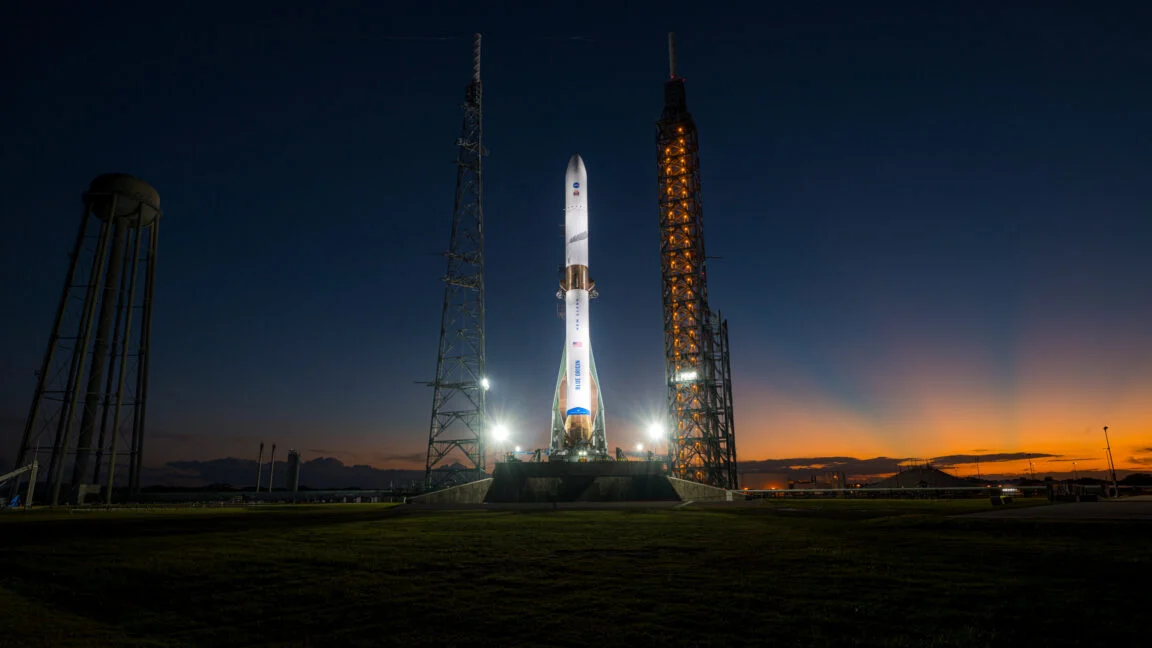
The landscape of private space exploration shifted dramatically on Thursday evening when a catastrophic failure decimated the launch infrastructure at Space Launch Complex 36A (LC-36A) in Florida. The explosion, which consumed a 7×2 variant of Blue Origin’s New Glenn rocket, represents a sobering reality check for the company’s ambitious launch cadence and its critical role in NASA’s Artemis program. While the loss of the vehicle itself is a financial blow, the physical destruction of the launch pad and its associated support systems poses a much more daunting hurdle for Jeff Bezos’ aerospace firm.
Main Facts: The Anatomy of a Launch Failure
The incident occurred during preparations for what was intended to be a routine orbital delivery mission. The vehicle, a 7×2 configuration—the smaller variant of the New Glenn fleet—suffered an anomaly that resulted in a total vehicle loss. Fortunately, the mission’s primary cargo, a batch of Amazon’s Project Kuiper low-Earth orbit (LEO) internet satellites, was not on the pad at the time of the explosion. The satellites remained secured in a nearby integration facility, effectively mitigating the loss of high-value hardware.
However, the collateral damage to the launch site is extensive. Initial assessments suggest that the infrastructure at LC-36A is severely compromised. Reports from industry observers indicate that at least one of the facility’s lightning suppression towers is likely beyond salvage, and the transporter-erector—the complex mechanical system responsible for moving and uprighting the massive rocket—may have sustained irreparable damage.
This incident marks a critical juncture for Blue Origin. Having spent 25 years in development and billions of dollars in capital investment, the company has reached a stage where high-profile failures are scrutinized not just by shareholders, but by international space agencies relying on their technology to maintain a human presence on the lunar surface.
Chronology: From Ambition to Anomaly
To understand the magnitude of this event, one must look at the timeline of Blue Origin’s recent operational history. For years, the company operated in the shadow of its competitors, favoring a methodical, "step-by-step" approach to engineering.
- Mid-2024: Blue Origin accelerated its testing protocols, aiming to establish New Glenn as a reliable heavy-lift launch vehicle capable of challenging SpaceX’s dominance.
- Thursday Evening: The countdown for the 7×2 mission proceeded. As systems reached the final stages of pre-flight checks, a catastrophic failure occurred. The vehicle ignited prematurely or experienced an internal structural breach, leading to an immediate conflagration.
- Post-Explosion: Emergency services at Cape Canaveral Space Force Station were deployed to contain the fire, which threatened to spread to adjacent support structures.
- Friday Morning: Damage assessment teams began surveying the wreckage. The findings were grim: the launch mount, fueling interfaces, and critical ground support equipment (GSE) were left in a state of disrepair that effectively shutters the pad for the foreseeable future.
Supporting Data: The Road Ahead for New Glenn
The New Glenn architecture is divided into two primary variants: the 7×2, which utilizes seven BE-4 engines on the first stage, and the more powerful 9×4, which features nine engines. The 9×4 is the linchpin of Blue Origin’s lunar strategy. NASA has explicitly integrated the Blue Moon Mark 2 lander—designed to be launched atop the 9×4—into its plans to maintain a regular, sustainable human presence on the Moon.
The 9×4 is intended to serve as the workhorse of the fleet, providing the heavy-lift capacity required to ferry cargo and crew to lunar orbit and the surface. In light of the recent explosion, industry analysts suggest that Blue Origin may undergo a strategic pivot. By consolidating all engineering and financial resources toward the 9×4 variant, the company might be able to leapfrog the rebuild of the 7×2 systems, though this remains speculative.
Furthermore, the company has been constructing a second launch site nearby, designated LC-36B. While this facility is currently in the early stages of development, the destruction of 36A forces a difficult decision: repair the existing facility or fast-track the construction of the second. Sources suggest that completing the second launch tower might actually prove more efficient than retrofitting the charred ruins of 36A. Nevertheless, even with aggressive scheduling, a return to flight for New Glenn in 2026 is now considered highly improbable. A launch in the first half of 2027 would be a heroic achievement, requiring an unprecedented level of coordination and capital expenditure.
Official Responses and Stakeholder Impact
The response from the aerospace community has been measured, reflecting the high stakes involved. NASA, which has invested heavily in Blue Origin’s lunar lander program, is undoubtedly monitoring the situation with extreme concern. The agency relies on both SpaceX’s Starship and Blue Origin’s Mark 2 to fulfill the mandate of the Artemis missions. A delay in the New Glenn flight schedule creates a ripple effect, potentially pushing back lunar landing milestones and straining the logistical support required for long-term Moon base operations.
Blue Origin, for its part, remains insulated by the vast financial resources of its founder. Jeff Bezos has consistently funneled his Amazon-derived wealth into the company, viewing Blue Origin as a long-term infrastructure project for the human race. The financial wherewithal provided by Bezos ensures that the company can sustain this failure without the existential threat that might shutter a smaller, venture-backed startup.
"The company has the capital and the mandate to recover," noted one industry analyst. "The question isn’t whether they can afford to fix this; it’s whether they can regain the operational momentum lost in this single night."
Implications: The Lunar Landscape
The broader implications of this failure cannot be overstated. The global race to the Moon is not merely a competition of prestige; it is a race of logistics. If the launch vehicle meant to carry the lunar lander is grounded for 18 to 24 months, the cadence of the entire Artemis program is threatened.
1. The Pressure on NASA
NASA faces a difficult choice: continue to rely on the current development trajectory or seek alternative launch partners to mitigate the risk of further delays. While the agency is keen to see Blue Origin succeed, it cannot afford for its lunar aspirations to be held hostage by a single launch site’s failure.
2. The Shift to 9×4
The destruction of the 7×2 vehicle may paradoxically accelerate the maturation of the 9×4 program. By forcing the company to re-evaluate its reliance on the smaller variant, Blue Origin may find that the most logical path forward is to commit fully to the more capable, heavy-lift version of the rocket. This would involve a significant redesign of internal manufacturing workflows and a massive surge in labor at the Florida site.
3. The "Silver Lining" Narrative
While corporate communications have pointed to the survival of the Amazon Kuiper satellites as a sign of success, this is a minor consolation in the context of the larger mission. The hardware was never in danger because it wasn’t on the vehicle, but the launch opportunity was lost. The pressure on the Project Kuiper constellation to deploy its network remains high, and any delay in the New Glenn timeline forces Amazon to consider alternative launch providers, further complicating the company’s internal logistics.
Conclusion: A Test of Resolve
The fire at LC-36A is a reminder that spaceflight remains an inherently dangerous and unpredictable endeavor. For all the simulation, modeling, and rigorous pre-flight testing, the physical reality of liquid-fueled rockets remains unforgiving.
Blue Origin stands at a crossroads. The next eighteen months will determine whether the company can transform this disaster into a turning point. If they can successfully expedite the completion of LC-36B and focus their efforts on the 9×4 variant, they may emerge as a leaner, more focused organization. However, if the repairs continue to encounter bureaucratic and technical delays, the company risks falling further behind in the escalating race to secure the lunar frontier.
Jeff Bezos has built an organization that is historically resistant to the pressures of quarterly earnings and short-term public perception. Now, he faces a different kind of pressure: the clock of the Artemis program and the expectations of a global audience that has been waiting for the New Glenn to deliver on its promise. The path to the Moon is never a straight line, but for Blue Origin, the road just became significantly more treacherous. The focus now turns to the recovery crews at Cape Canaveral, whose work over the coming months will dictate the future of one of the most significant private space initiatives in human history.


 Lina Hope