Layla Zulfa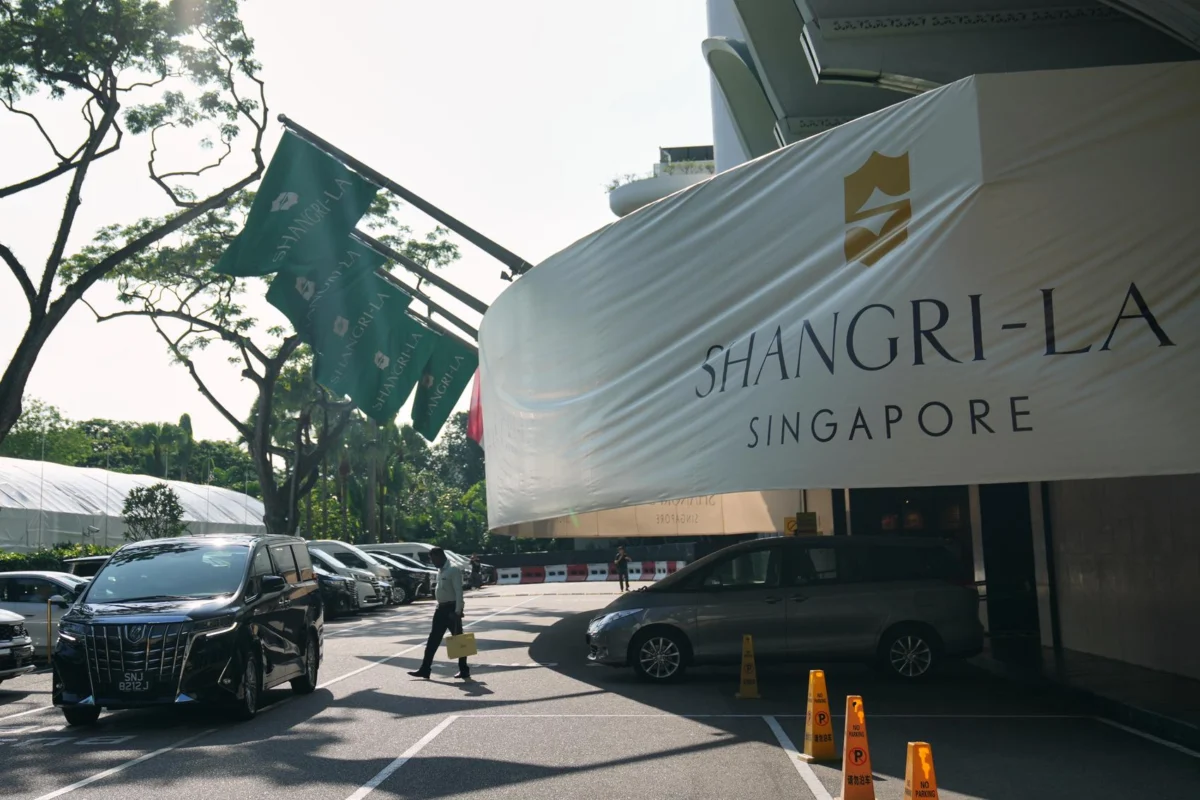
SINGAPORE — The global security architecture faces its most precarious moment in decades as defense ministers, top-tier diplomats, and strategic analysts converge in Singapore for the 2026 Shangri-La Dialogue. Hosted by the International Institute for Strategic Studies (IISS), this year’s summit arrives against a backdrop of cascading crises: an intensifying war in Ukraine, the shuttering of the Strait of Hormuz due to regional conflict in the Middle East, and a deepening power struggle in the Indo-Pacific.
As the international community grapples with these overlapping challenges, the summit serves as a litmus test for the durability of the current global order, specifically regarding the shifting nature of American commitments and the rise of a more assertive China.
The Core Conflict: A New Era of Indo-Pacific Uncertainty
The primary focus of this year’s dialogue is the rapid modernization of the People’s Liberation Army (PLA) and the resultant anxiety among regional stakeholders. For years, the Shangri-La Dialogue has functioned as a barometer for U.S.-China relations. However, the 2026 iteration is complicated by the Trump administration’s unpredictable diplomatic pivot.
Only two weeks removed from a high-stakes summit in Beijing between President Donald Trump and Chinese leader Xi Jinping, the atmospheric pressure in Singapore is palpable. During that meeting, President Trump characterized the Chinese leader as a "great leader," signaling a potential thaw in rhetoric. Yet, beneath the surface, the geopolitical reality remains fraught. Xi Jinping reportedly warned that the Taiwan issue remains the "first red line" that must not be crossed, raising questions about whether the Trump administration might view the democratic island’s security as a negotiable asset rather than a strategic imperative.
The Taiwan Question and the "Negotiating Chip" Doctrine
The most significant point of friction involves the $14 billion arms package for Taiwan, currently stalled in the executive branch. President Trump has publicly described this package as a "very good negotiating chip," a remark that has sent shockwaves through regional capitals. While the U.S. continues to provide sophisticated weaponry to Taipei, the administration’s overt ambivalence—contrasting sharply with the long-standing U.S. policy of "strategic ambiguity"—has created a power vacuum. Analysts fear that if the U.S. signals a willingness to trade Taiwan’s security for trade concessions with Beijing, the regional security architecture could collapse, emboldening Beijing to accelerate its timeline for "reunification."
Vietnam: The Delicate Balancing Act
A focal point of the conference’s opening day is the keynote address by Vietnamese leader To Lam. Having consolidated unprecedented power in Hanoi by holding both the roles of Communist Party general secretary and president, Lam represents a nation at the center of the regional tug-of-war.
A Three-Front Strategy
Vietnam’s foreign policy is currently defined by a high-wire act of necessity:
- The China Factor: As Vietnam’s largest two-way trade partner, Beijing remains an economic lifeline. However, territorial disputes in the South China Sea remain a constant source of friction, with frequent maritime confrontations between Vietnamese fishermen and Chinese coast guard vessels.
- The Washington Pivot: The U.S. is currently Vietnam’s largest export destination. Washington has been aggressive in its diplomatic overtures, aiming to displace Russia—Hanoi’s traditional defense supplier—with modern American military hardware.
- Internal Skepticism: Despite elevating diplomatic ties with the U.S., internal documents leaked earlier this year suggest that the Vietnamese military remains profoundly wary of Washington. The documents revealed contingency planning against a potential "war of aggression" from Western powers, highlighting that historical mistrust remains a potent force in Hanoi’s strategic calculations.
Lam is expected to focus his address on "consensus-building," emphasizing that the stability of the Indo-Pacific relies on multilateral cooperation rather than bloc-based confrontation.
Chronology: A Year of Escalation
The road to the 2026 Shangri-La Dialogue has been paved with rapid-fire shifts in global stability:
- Early 2026: Russia intensifies its ballistic missile campaigns against Ukrainian infrastructure, prompting a desperate appeal from President Volodymyr Zelenskyy to the U.S. Congress for additional air defense ammunition.
- March 2026: Tensions in the Middle East boil over as new attacks threaten the tenuous ceasefire in the Iran war, resulting in the de facto closure of the Strait of Hormuz.
- May 2026: President Trump visits Beijing. The "fantastic future" rhetoric is met with global confusion, particularly regarding the status of U.S. defense guarantees for Taiwan.
- June 2026: The Shangri-La Dialogue commences. The absence of a high-level Chinese delegation is noted, with Beijing opting for a lower-level representation—a potential sign of diplomatic distancing or a strategic cooling-off period.
Supporting Data: The Economic and Military Toll
The ripple effects of these conflicts are not merely diplomatic; they are economic. The closure of the Strait of Hormuz has created a massive bottleneck in global energy markets. With 20% of the world’s oil supply typically transiting this artery, the subsequent price spike has exacerbated inflation in the Eurozone and Asia, further complicating the internal political stability of nations attending the summit.
Meanwhile, the U.S. Department of Defense continues to push for a robust posture in the Indo-Pacific. Defense Secretary Pete Hegseth, in his second appearance at the event, is expected to outline a "common-sense approach" to national security. Pentagon officials maintain that the threat from the PLA is "real and imminent," citing the expansion of China’s nuclear arsenal and its persistent grey-zone tactics in the Taiwan Strait.
Official Responses and Strategic Implications
The U.S. Perspective
The Pentagon’s messaging, delivered by Secretary Hegseth, is carefully calibrated to avoid contradicting President Trump’s recent conciliatory stance toward Beijing. While the administration is keen to maintain its "America First" posture, the defense establishment is clearly signaling that it will not abandon the regional alliances that have underpinned Pacific stability for decades. Whether this "common-sense" approach includes the release of the $14 billion Taiwan arms package remains the most anticipated announcement of the weekend.
The Beijing Perspective
Beijing’s choice to send a lower-level delegation—much like the absence of Defense Minister Dong Jun last year—speaks volumes. It suggests that China may view the Shangri-La Dialogue as a Western-dominated forum that is increasingly incapable of addressing its core concerns. By keeping its representation modest, Beijing maintains a degree of strategic ambiguity, refusing to play by the conference’s traditional diplomatic rules.
The European Outlook
While the summit is geographically focused on Asia, the presence of defense officials from Poland and Lithuania underscores the globalized nature of modern warfare. With the war in Ukraine entering a critical phase, these nations are looking to the U.S. to ensure that the focus on the Indo-Pacific does not come at the cost of European security. The fear, expressed by several European delegates, is that a "tri-polar" world is emerging—one where the U.S., China, and Russia maneuver for advantage while smaller nations are forced into uncomfortable alignments.
Conclusion: The Fragility of Consensus
As the Shangri-La Dialogue progresses, the central question remains: can the world’s powers find a common framework for stability when the very definitions of "security" and "alliance" are being rewritten in real-time?
The shift from a post-Cold War era of cooperation to an era of "transactional diplomacy"—exemplified by the Trump-Xi meeting and the potential trading of security guarantees for economic leverage—suggests that the coming years will be defined by unpredictability. For the delegates in Singapore, the challenge is not just to manage the current crises in Ukraine, the Middle East, and the South China Sea, but to prevent the collapse of the multilateral systems that have prevented great-power conflict for the better part of a century.
As Secretary Hegseth prepares to take the stage, the world will be listening for any sign of whether the United States intends to act as the architect of a new stability, or whether it is preparing to retreat into a more guarded, narrow definition of its own interests. The answer will likely dictate the course of global affairs for the remainder of the decade.


 Neng Nana
 Asro
Asro