

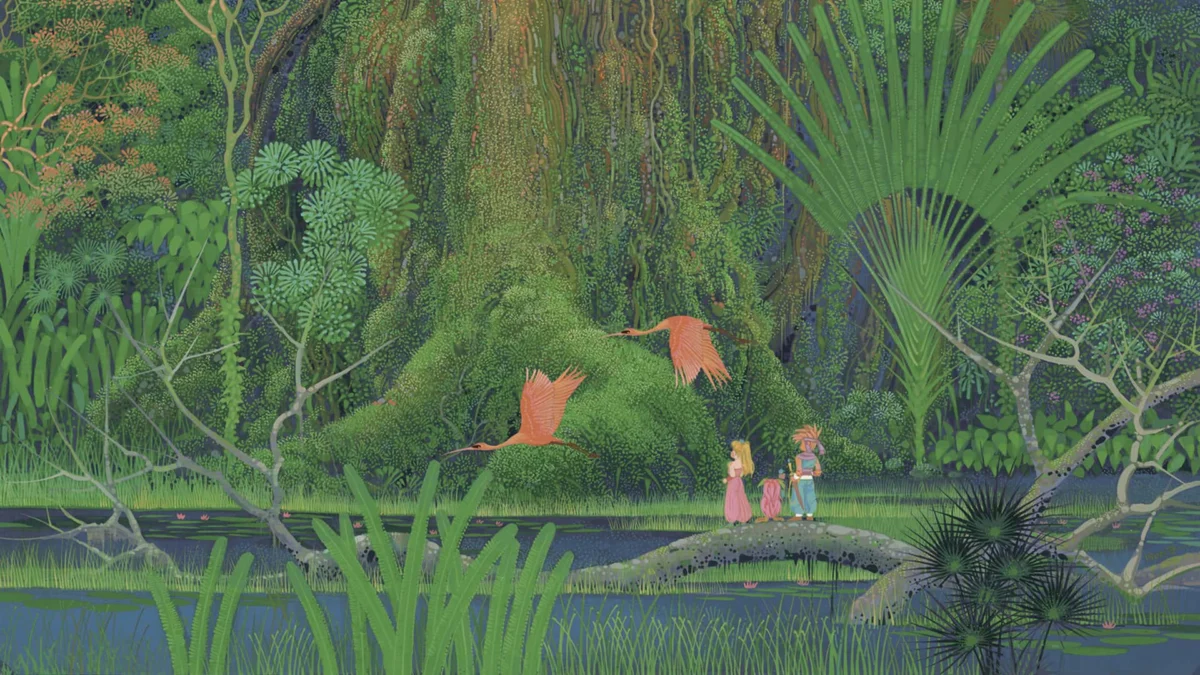
Secret of Mana remains one of the most polarizing entries in the pantheon of classic role-playing games. To revisit Square’s 1993 masterpiece is to engage in a complex dialogue between technical frustration and aesthetic transcendence. While the title is frequently lauded for its vibrant, lush pixel art and ambitious real-time combat, it is equally—and perhaps more frequently—derided for its clunky hit-detection, erratic pacing, and a narrative that, in its English translation, often feels like a fragmented skeleton of a grander vision.
Yet, there is an enduring, gravitational pull that keeps players returning to the world of Potos and the Mana Tree decades later. This pull is not found in the menus or the combat mechanics, but in the auditory landscape. The soundtrack, composed by Hiroki Kikuta, acts as the game’s emotional nervous system, elevating a fundamentally flawed experience into something approaching the sublime.
The Chronology of an Auditory Legend
The development of Secret of Mana (originally Seiken Densetsu 2 in Japan) was marked by the transition from the experimental roots of the Final Fantasy spin-off series to a standalone action-RPG powerhouse. When Hiroki Kikuta joined the project, he was tasked with crafting a soundscape that could distinguish the title from the turn-based dominance of its contemporaries.
Kikuta’s approach was revolutionary for the time. Rather than merely writing melodies that supported the gameplay, he treated the 16-bit sound chip of the Super Nintendo as a canvas for experimental texture. The composition process involved a meticulous layering of synthesized instruments, sampling techniques, and an unconventional application of Western and Eastern musical motifs. The result was a sound that felt "organic" despite its digital origin. It is a soundtrack that has since been cemented as one of the greatest achievements of the 16-bit era, sitting comfortably at the summit of game audio history.
Supporting Data: The Mechanics of Mood
The brilliance of the Secret of Mana score lies in its utility as a narrative surrogate. Because the written dialogue is often brief, dry, or missing the necessary emotional weight to ground the stakes, Kikuta’s music fills the void. As the Romantic poet Samuel Taylor Coleridge once noted regarding the "willing suspension of disbelief," the music acts as the catalyst that allows players to accept the game’s world as real, even when the gameplay falters.
The Legend of an Old World: "Fear of the Heavens"
The game begins not with a tutorial, but with an auditory thesis statement. "Fear of the Heavens" introduces the player to the world with a chilling, otherworldly cry—a synthesized beast that serves as the opening salvo of the adventure. As the screen fades into a slow, somber piano melody laden with heavy reverb, the player is struck by a sense of historical weight. It creates the impression of a lost epoch echoing through the corridors of time. When the piece transitions into a bright, major-key harmony during the legendary text crawl, it provides the player with a sense of hope, effectively grounding the mythos of the Mana Tree in a way that words alone could never achieve.
The Adventure Begins: "Into the Thick of It"
Perhaps the most iconic piece in the entire library is "Into the Thick of It." This track accompanies the player’s exit from the village of Potos and their first foray into the untamed wilderness. Kikuta utilizes a harpsichord-based ostinato, a repetitive pattern that suggests an ever-expanding horizon. The harsh, metallic timbre of the harpsichord evokes the feeling of antiquity—the sense that the world is much older and more dangerous than the protagonist.
The melody that follows is a masterclass in thematic tension. The flutes are airy and thin, oscillating between joy and a palpable trepidation. The track "trips"—its keys shifting abruptly as if the protagonist is losing their footing on wild, uneven terrain. It is the sound of innocence meeting the vastness of the unknown, creating a perfect synthesis of excitement and anxiety.
Hauntingly Alien: "Ceremony"
The game’s capacity for darkness is best represented by "Ceremony," a track that arguably stands as one of the most unsettling compositions in RPG history. By utilizing Indonesian gamelan-inspired lead lines and microtonal clashes that defy Western expectations, Kikuta crafts a soundscape that feels fundamentally "other." When the heroes reach the temple where the brainwashed populace is held, the visual horror—horned demon statues and masked figures—is amplified by the song’s bowed glass textures and intermittent, ghostly vocal howls. The music forces the player to feel the corruption of the land, leaving an imprint of dread that persists long after the encounter concludes.
Official Perspectives and Industry Impact
Hiroki Kikuta’s influence on the industry cannot be overstated. In various retrospectives and interviews, contemporaries have cited Secret of Mana as a watershed moment for game audio. The soundtrack proved that atmospheric, non-linear composition could serve as a primary storytelling device. It moved the medium away from simple "looping background noise" and toward "environmental sound design."
By prioritizing texture and mood over traditional pop-sensible melodies, Kikuta paved the way for the cinematic scores that would define the late 90s and the modern indie RPG renaissance. The music acts as an emotional anchor; when the game’s pacing slows or the player feels frustrated by the hit-boxes of a boss fight, the score reminds the player of the stakes, the beauty, and the "sublime" nature of the quest.
Implications for Future Game Design
The legacy of Secret of Mana carries a critical lesson for modern developers: mechanical perfection is not the sole determinant of a game’s success. While modern titles often prioritize frame-rate stability and balanced combat loops, the "soul" of an experience is frequently found in the marriage of art style and audio composition.
The implications are clear:
- Atmosphere as a Narrative Tool: When a story is constrained by technical limitations or a lack of budget for extensive dialogue, the music must carry the emotional burden.
- The Power of Aural Dissonance: Kikuta’s willingness to use unsettling intervals and alien sounds proves that players value "mood" over mere "catchiness."
- The Longevity of Texture: A soundtrack that experiments with unconventional instruments and sound design ages better than one that relies on the "standard" sounds of its era.
Conclusion: A Masterclass in Emotive Design
Secret of Mana is undeniably a flawed artifact. It is a game of highs and lows, of beautiful landscapes and frustrating design choices. Yet, it remains a "tangibly emotive masterclass." As I finish my fifth playthrough of the game, I am struck by how little the music has aged. It continues to provide the same shivers, the same sense of awe, and the same feeling of profound melancholy that it did upon its release.
By skilfully joining aural sensation with visual stimuli, Kikuta created an experience that transcends the limitations of the hardware. For those who can appreciate the interplay between the game’s flaws and its musical brilliance, Secret of Mana offers an experience that is, in the truest sense of the word, unforgettable. It remains a testament to the fact that when music is allowed to dictate the mood, the player is not just playing a game—they are living in a world.











No comments yet. Be the first to join the conversation!