

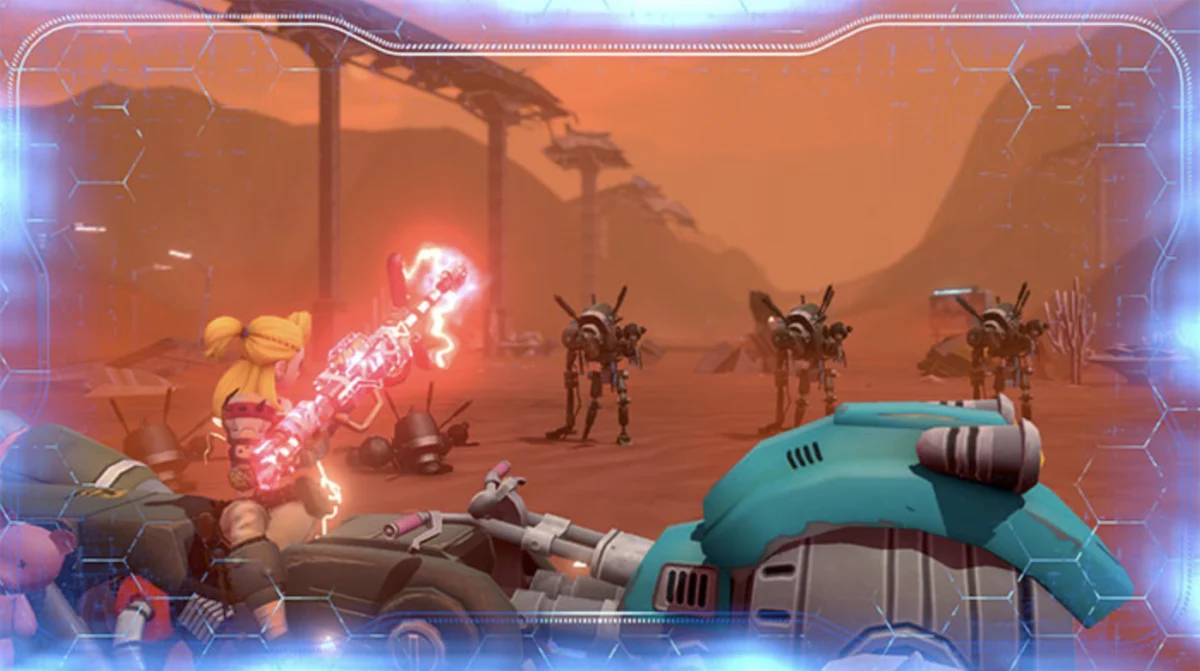
Starbites, a budget-friendly role-playing game, arrives on the Nintendo Switch and other platforms with a compelling premise: a society built on inescapable debt, a protagonist yearning for escape, and a catastrophic event that plunges them deeper into despair. While the game’s core concept and early narrative elements hint at something potentially engaging, a closer examination reveals a title that struggles to translate its ambitious ideas into a polished and satisfying experience. Ultimately, Starbites is a game that, despite its low price point, is significantly hindered by its rudimentary gameplay, uninspired storytelling, and, most critically, its profoundly disappointing technical performance on the Nintendo Switch.
A World Drowning in Debt: The Narrative Setup
The narrative of Starbites unfolds on the planet Bitter, a world where inhabitants are born into a perpetual cycle of debt. Survival on this desolate planet is a constant struggle, dictated by the whims of ruthless loan sharks. Amidst this grim reality, the protagonist, Lukida, manages to scrape together enough funds for a ticket off-world, a symbol of her hope and impending freedom. Her excitement is palpable as she shares this life-changing news with her friends, Badger and Gwendoll. However, this moment of triumph is brutally cut short. As Lukida departs, a colossal and menacing robot emerges, annihilating her and her personal motorbot – a specialized mecha unit. The ensuing chaos leaves Lukida waking up in Delight, a city ironically named, with even greater debt and her precious ticket vanished. This devastating turn of events ignites a quest for answers, propelling Lukida into a journey far more extensive and perilous than she could have ever imagined.
The Journey Unfolds: Story and Character Development
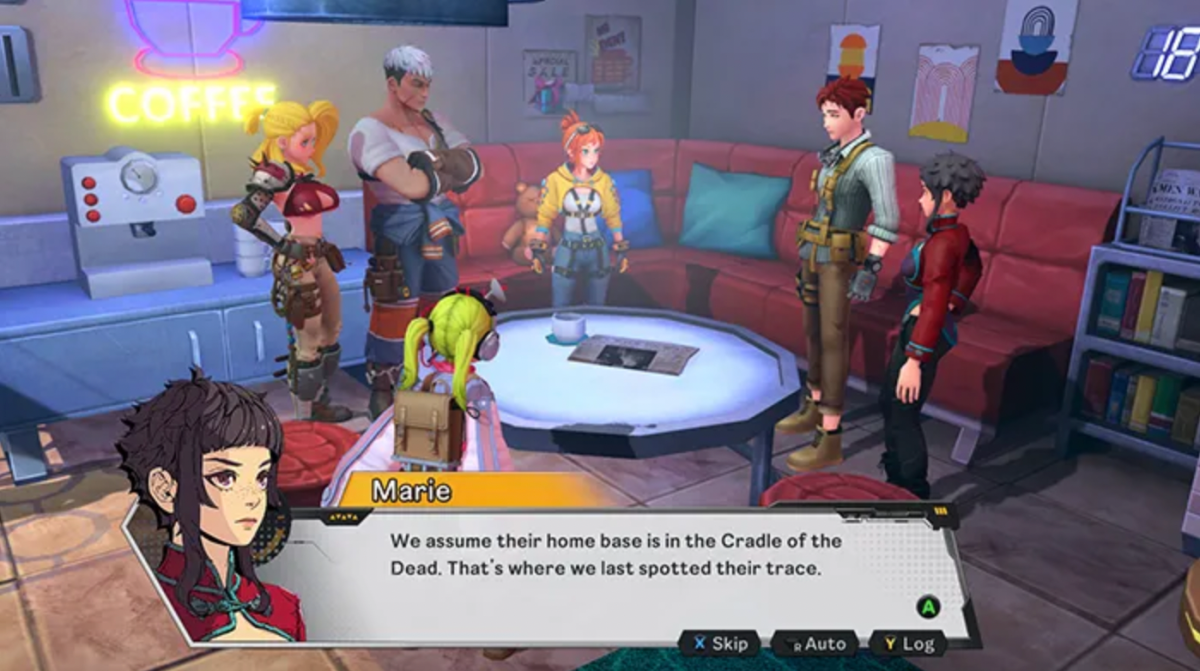
The narrative of Starbites is, at best, functional. While it presents a unique dystopian setting, the story rarely ventures beyond predictable plot points. Lukida, the protagonist, occasionally shines through as a compelling character, her determination to overcome her circumstances resonating with players. However, her allies, including Badger and Gwendoll, often fall into predictable archetypes and stereotypes, serving more as functional party members than fully fleshed-out individuals. The player’s affection for these characters often stems from their utility in combat rather than genuine emotional connection developed through narrative arcs. While moments of humor punctuate the gameplay, the overarching structure of the story makes it remarkably easy to anticipate upcoming events and plot twists, diminishing the sense of surprise and engagement. The narrative, therefore, feels like a missed opportunity to truly explore the thematic depth of its debt-ridden society and the personal struggles of its inhabitants.

Combat Mechanics: A Familiar Turn-Based Formula
The combat system in Starbites adheres to a well-trodden turn-based RPG formula. A visual timeline prominently displayed in the upper left corner of the screen dictates the order of actions for both the player’s party and their adversaries. During battles, Lukida and her two accompanying allies can choose to attack, utilize skills or items, or adopt a defensive stance. Each character possesses distinct damage types, and the game indicates enemy weaknesses, encouraging strategic targeting.
A "Driver’s High" mechanic can be triggered by accumulating enough damage, both dealt and received, thereby amplifying a character’s power. Furthermore, exploiting enemy weaknesses can lead to "break" opportunities, allowing supporting characters to unleash a single follow-up attack. While standard encounters are generally manageable, they can become repetitive due to the game’s simplicity. Boss battles, on the other hand, can pose a significant challenge, though this often feels more like an artificial extension of combat due to the sheer amount of damage enemies can absorb before being defeated. Ultimately, the combat, while functional, offers little in the way of innovation, relying on systems that players have encountered numerous times before in other RPGs.
Visual Presentation: A Significant Disappointment on Switch
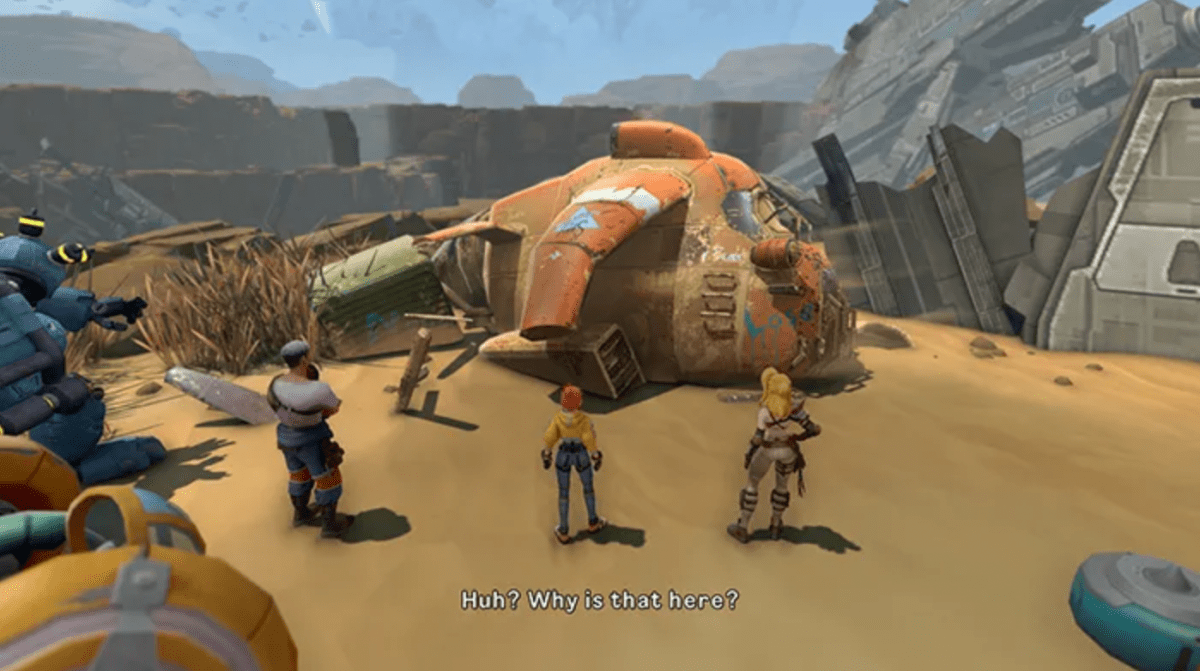
The most glaring issue with Starbites on the Nintendo Switch is its abysmal visual presentation and performance. Regardless of whether the game is played in docked or handheld mode, the textures appear consistently subpar. The metallic surfaces of robots, the interiors of buildings, and the desolate exteriors of planets are rendered with a low resolution and a persistent blurriness that detracts significantly from the visual experience. NPC character models are particularly poorly realized, while even the major characters lack the finer details that would make them visually distinct and engaging during exploration. The game’s setting, which frequently features barren and uninspired planetary landscapes, is further exacerbated by this poor visual fidelity, making large sections of the game feel even more monotonous and unappealing. This lack of visual polish is a considerable barrier to immersion and enjoyment.
Performance and Stability: A Technical Nightmare on Switch
Beyond its visual shortcomings, Starbites suffers from severe performance and stability issues on the Nintendo Switch. The frame rate frequently drops during movement across the world map and exhibits noticeable stuttering when specific abilities are employed in combat. These performance hiccups are not mere inconveniences; they actively impede the gameplay experience.
Perhaps the most critical flaw is the game’s propensity to crash. The reviewer deliberately delayed the review to ascertain if a recurring issue – the game abruptly crashing when transitioning between areas, particularly in the latter acts of the game – would be addressed through updates. Unfortunately, these crashes persisted, rendering the game frustratingly unreliable. Such fundamental stability problems are inexcusable for any release, let alone a game that aims to be an accessible budget title.
Conclusion: A Budget RPG Not Yet Ready for Prime Time
In its current state, Starbites on the Nintendo Switch is a difficult game to recommend. While the promise of a budget RPG with an intriguing premise is alluring, the execution falls far short of expectations. The story and combat mechanics, while functional, are largely uninspired and fail to offer anything new to the genre. The game’s significant visual deficiencies, coupled with its poor performance and frequent crashing, create an experience that is often more frustrating than fun.
It is conceivable that future patches might improve the stability and performance of Starbites, potentially making it a more passable experience. However, as it stands, this budget RPG is not yet ready for Nintendo Switch owners. The recommendation is to either wait for a potential demo, a significant sale on other platforms, or to hold off entirely until the game receives substantial technical improvements. The current iteration on the Switch is a testament to how technical limitations and unpolished design can undermine even the most promising of concepts, leaving players with a bitter taste of what could have been.
Starbites is available on Nintendo Switch, PlayStation 5, Xbox Series X, and PC. A Switch 2 version is reportedly in development, though a release date has not yet been announced.











No comments yet. Be the first to join the conversation!