Nana
Nana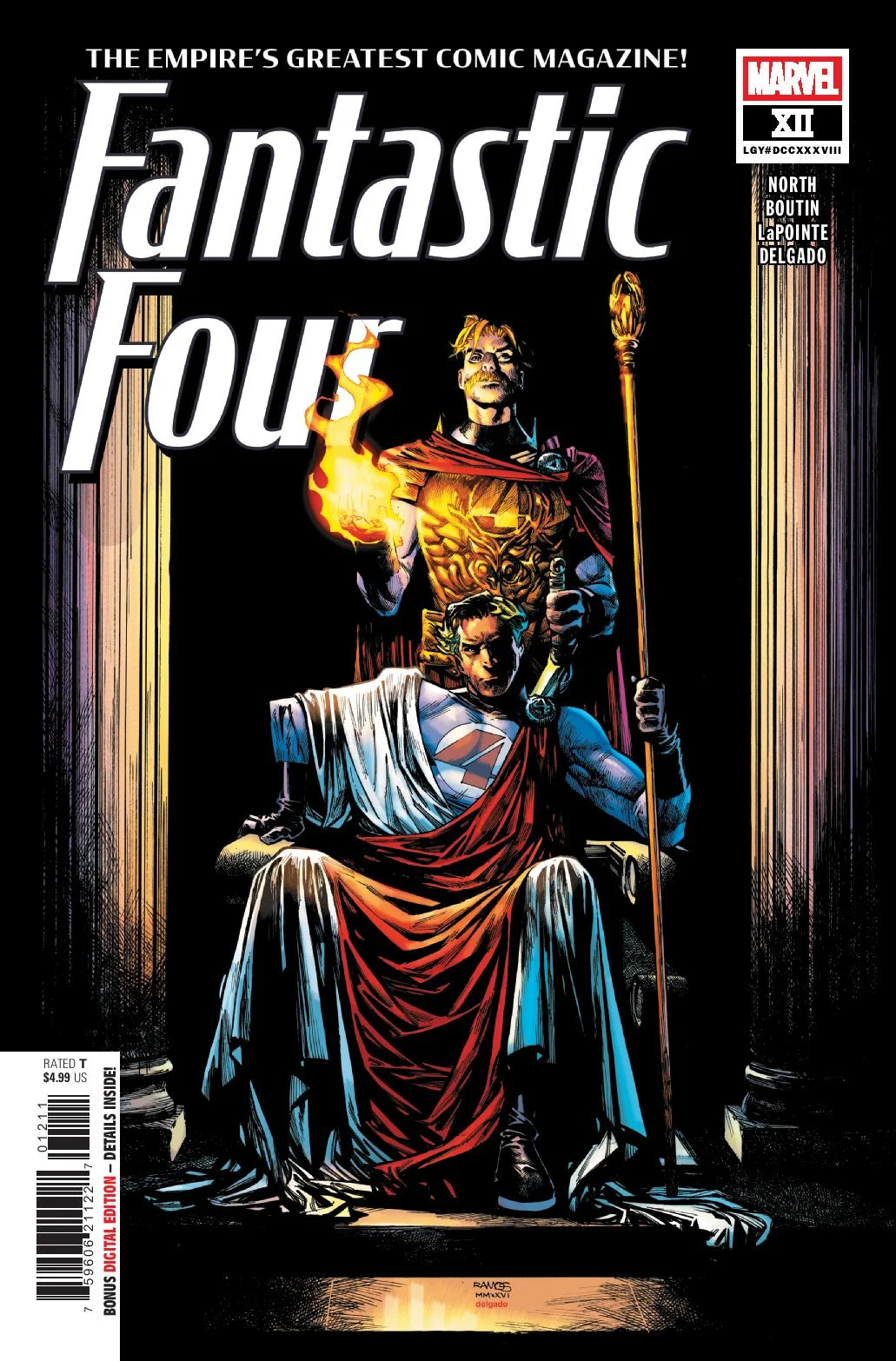
Introduction: The New Frontier of Extraterrestrial Incursion
The Marvel Universe has long served as a cosmic punching bag for extraterrestrial civilizations. From the Kree-Skrull War to the various attempts by the Annihilation Wave to dismantle Earth’s defenses, the planet has seen it all. However, in the upcoming Fantastic Four #12, writer Ryan North and artist Pat Boutin introduce a tactical shift that threatens the very foundation of the Marvel timeline.
After repeated failures to conquer Earth in the modern era, a new faction of alien aggressors has identified the one vulnerability that Reed Richards and his family have rarely had to account for: the fragility of the past. By initiating their invasion in Ancient Rome, these invaders are not merely looking to occupy territory; they are attempting to erase the history of humanity itself. This issue promises a high-stakes narrative that forces Reed and Johnny Storm to operate under the most restrictive of constraints: maintaining the sanctity of the timeline while fighting a war on a front where the Fantastic Four have no technological or social advantage.
Main Facts: A Battle Across Eras
The core premise of Fantastic Four #12 centers on a strategic "end-run" around the modern-day defense systems of the Baxter Building. Recognizing that the Fantastic Four are almost unbeatable in the 21st century, the invaders have retreated to the Roman Republic, targeting a nexus point that could lead to the complete dissolution of the modern era.
Key elements of the issue include:
- The Deployment: Reed Richards and Johnny Storm are the sole members of the team capable of traversing the temporal rift to intercept the threat.
- The Objective: The duo must successfully repel the alien incursion and restore the historical timeline to its original configuration—a task that, in the Marvel Universe, is historically prone to disastrous "butterfly effect" consequences.
- The Creative Team: Ryan North, known for his cerebral and often humorous approach to the Fantastic Four, teams up with artist Pat Boutin to bring the grandeur of Ancient Rome to life, contrasted against the high-tech, plastic-like flexibility of Reed’s abilities.
- The "Stretch" Factor: Marvel has teased a new, unprecedented application of Reed Richards’ elastic physiology, promising a visual spectacle that pushes the boundaries of his classic power set.
Chronology of the Conflict
The narrative structure of the issue, as indicated by the provided preview pages, follows a rapid escalation of tension. The chronology of events within the issue is as follows:
- The Detection: Reed Richards identifies a temporal anomaly that threatens the continuity of the Western world.
- The Insertion: The team realizes that their standard gear is insufficient for the Roman period, forcing a tactical adjustment.
- The Confrontation: Upon arriving in Rome, Reed and Johnny are forced to blend into the social fabric of the time while simultaneously identifying the disguised alien presence.
- The Escalation: The aliens, utilizing advanced technology that appears like "magic" to the Roman populace, begin their campaign of destabilization.
- The Climax: A high-speed race against time to prevent the Roman Senate from falling to an influence that could change the future of the entire world.
Supporting Data: Why Ancient Rome?
From a historical and narrative perspective, selecting Ancient Rome is a brilliant move by North. Rome serves as the bedrock of Western governance, law, and military strategy. If an alien force were to seize control of the Roman Senate or alter the outcome of the Punic Wars, the ripple effects would be catastrophic.

In the lore of the Fantastic Four, Reed Richards is constantly obsessed with the variables of the future. By forcing him into the past, North removes his access to his supercomputer banks and the resources of the Future Foundation. He is left with only his intellect and his brother-in-law, whose impulsive nature—a recurring theme in the duo’s dynamic—serves as a constant potential complication to Reed’s meticulous planning. The preview images provided suggest that the art team has paid significant attention to the historical aesthetic, ensuring that the visual contrast between the "future-tech" invaders and the marble-and-toga setting of Rome is sharp and impactful.
Official Responses and Creative Direction
While Marvel Comics typically keeps specific plot points under wraps, Ryan North has spoken at length in recent interviews about his desire to explore the "functional" side of the Fantastic Four’s powers.
"When you have a character like Reed, whose power is essentially unlimited flexibility, it’s easy to fall into the trap of just having him punch things," North noted in a recent press release regarding the series. "But with Fantastic Four #12, we wanted to see how he uses that elasticity to solve problems that aren’t just physical. It’s about geometry, physics, and the sheer audacity of being a super-scientist in a world that doesn’t understand science yet."
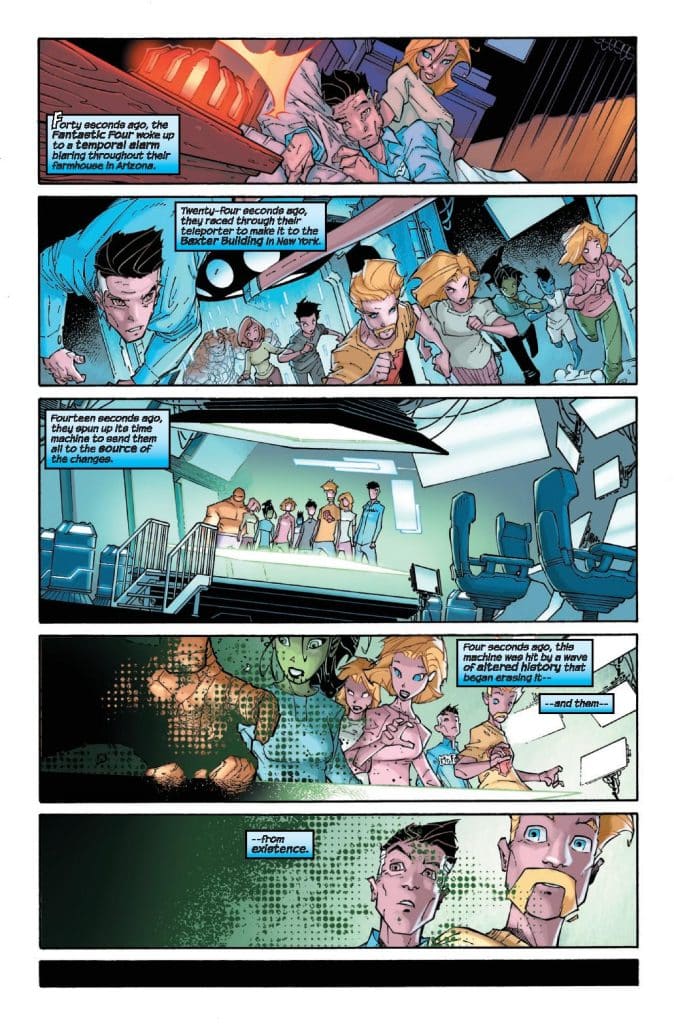
The publisher has also highlighted the artistic growth in this issue. Pat Boutin’s work on this run has been lauded for its ability to handle the "quiet moments" of the team—the bickering, the research, the familial tension—as well as the explosive combat sequences. By centering the story on only two members of the team, the narrative space for character development is significantly expanded.
Implications: The Burden of History
The primary implication of Fantastic Four #12 is the question of "The Fixed Point." If the Fantastic Four successfully defend Rome, how much of their interference is actually what caused history to unfold as it did?
This is the classic temporal paradox that defines the best of sci-fi storytelling. If Reed and Johnny are fighting to keep history "as it once was," they are essentially acting as the silent guardians of the status quo. However, the sheer presence of a man stretching his limbs across the Roman Forum is bound to leave some sort of mark on history. The implications of this are twofold:

- Narrative Stability: Does this event lead to a larger arc regarding the integrity of the Marvel timeline? Marvel has flirted with the concept of "Temporal Erasure" before, and a failure here would arguably be the most significant catastrophe in the publisher’s recent history.
- Character Dynamics: The relationship between Reed and Johnny is often defined by the "Father/Son" or "Professor/Student" dynamic. By putting them in a high-stakes environment where Johnny’s fiery temperament could accidentally alter the timeline, the story is testing the limits of their professional and familial trust.
Conclusion: A Must-Read for Fans of High-Concept Sci-Fi
As the Fantastic Four continue their modern tenure, Fantastic Four #12 stands out as a "done-in-one" style adventure that rewards long-time readers while providing a perfect entry point for new fans. The blend of historical setting, high-stakes science fiction, and the unique character interplay between the stretching genius and the hot-headed hero makes this a standout installment.
The artistic choices, characterized by the dynamic scale of Reed’s powers and the atmospheric rendering of Ancient Rome, suggest a visual feast. With the promise of a "new way" for Reed to use his powers, readers should expect an issue that challenges both the imagination and the established lore of the Marvel Universe.
As the invaders learn the hard way: history may be written by the victors, but it is defended by the Fantastic Four. Fans are encouraged to pick up Fantastic Four #12 upon its release to see exactly how the team handles the weight of the past.

 Sagoh
Sagoh
 Ammar Sabilarrohman